Emergency Plumbing
Water where it should not be, at any hour. Shutoff guidance on the call, then a pro on the way.
Read moreStatewide · answered day and night
Pueblo to Fort Collins, the canyon towns to the eastern plains. We connect you with experienced local plumbing pros who understand basements, hard water, clay soils and what a Colorado January does to an uninsulated line.
A person answers, not a form. Tell us what is happening and we will tell you what to do.
How it works
Plumbing emergencies are not a browsing activity. You want to describe it to someone who has heard it before and get a truck moving. That is the design of this site.
Where the water is, what you have tried, whether you have found the main shutoff. If something needs doing in the next two minutes, we say so on the call.
Your town, your ZIP and the job decide the routing. A canyon address on a February night is a different dispatch problem from a metro address at noon.
The plumber who arrives prices the actual failure before anything starts, so you approve a number first. Completed work carries a workmanship guarantee.
Not an emergency, just a decision you keep putting off?Water heater noises, a toilet that runs, a faint sewer smell in the basement. Those calls are cheaper now than in January.
Talk to a Plumber TodayCoverage
Colorado is not one plumbing market. A 1900s Denver bungalow on galvanized lines, a new Windsor subdivision and a Nederland cabin fail in completely different ways. Pick your region to find your town.
Denver, Aurora, Arvada, Littleton, Westminster, Thornton, Parker, Castle Rock, Golden and the Jefferson County foothill towns.
Fort Collins, Greeley, Loveland, Windsor, Wellington, Berthoud, Estes Park and the Weld County farm towns.
Boulder, Longmont, Louisville, Lafayette, Erie, Niwot, Lyons and the canyon communities above them.
Colorado Springs, Fountain, Monument, Manitou Springs, Woodland Park, Peyton and the Teller County high country.
Pueblo, Cañon City, Florence, Colorado City, Penrose, Beulah, Rye and the smaller southern communities.
Idaho Springs, Black Hawk, Central City, Granby, Bailey, Pine, Pinecliffe and Rollinsville.
Elizabeth, Kiowa, Simla, Fort Morgan, Akron, Merino, Roggen, Yoder and the surrounding plains towns.
Not sure which region you are in? Tell us the town or ZIP and we will place it.
What we get called about
Emergencies first — that is most of the phone traffic from November to March. Then drains and sewers, water heaters and boilers, water quality, fixtures, gas lines, irrigation, wells and septic.
Water where it should not be, at any hour. Shutoff guidance on the call, then a pro on the way.
Read moreThe winter call. Crawlspaces, rim joists and exterior walls, thawed safely and repaired properly.
Read moreThe ice has already split the line. Isolate, cut back to sound pipe, repair, then find out why.
Read moreA bill that climbed, a meter that will not settle, a damp wall. Found before anything is opened up.
Read moreKitchen, laundry and basement lines that back up on a schedule. Cabled or jetted, then checked.
Read moreRoot intrusion, offset joints, collapsed clay — dug or lined, whichever the camera says.
Read moreThe one machine standing between a finished basement and a bad spring thaw.
Read moreNo hot water, not enough, or a tank that rumbles. Diagnosed before anyone talks replacement.
Read moreWhy a heater specified for sea level struggles at 7,000 feet, and how to size it right.
Read moreHard water is a quiet tax on every appliance. Softening is maintenance, not luxury.
Read moreAutumn's cheapest insurance. Miss it and the backflow preventer goes first.
Read moreOff municipal water, the pressure tank and pump controls are part of your plumbing.
Read moreIf water is running, call before reading further. Everything else here can wait.
Why Colorado is its own market
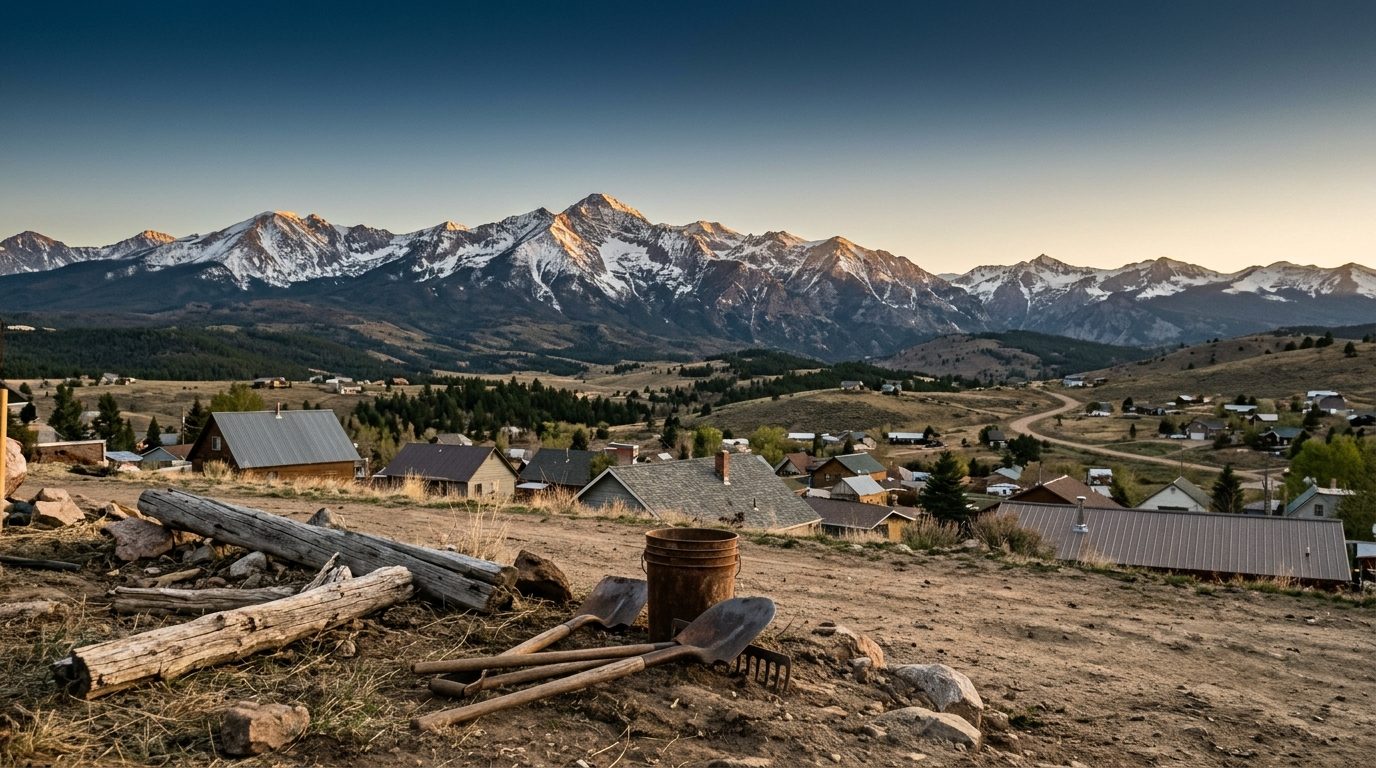
Plumbing advice written for a mild, soft-water part of the country does not transfer here. Colorado homes have basements and crawlspaces. The water carries a heavy mineral load. The soil swells and shrinks. And the elevation range across the communities on this site spans thousands of feet, which changes how fuel-burning appliances behave.
Pipes rarely burst because water expanded in one spot. An ice plug forms in the coldest section, flow stops, and pressure builds downstream of the blockage until the pipe fails at whatever was already weakest — a solder joint, a threaded fitting, a section thinned by hard water.
The vulnerable places are consistent statewide: unheated crawlspaces, rim joists, exterior walls with a supply line run through the insulation instead of behind it, garages with a laundry hookup, and hose bibs left with a hose attached. Colorado's rapid swings make it worse than a steadily cold climate — a 60-degree afternoon followed by a single-digit night gives no cue to worry, and the freeze happens in a crawlspace nobody has opened since summer.
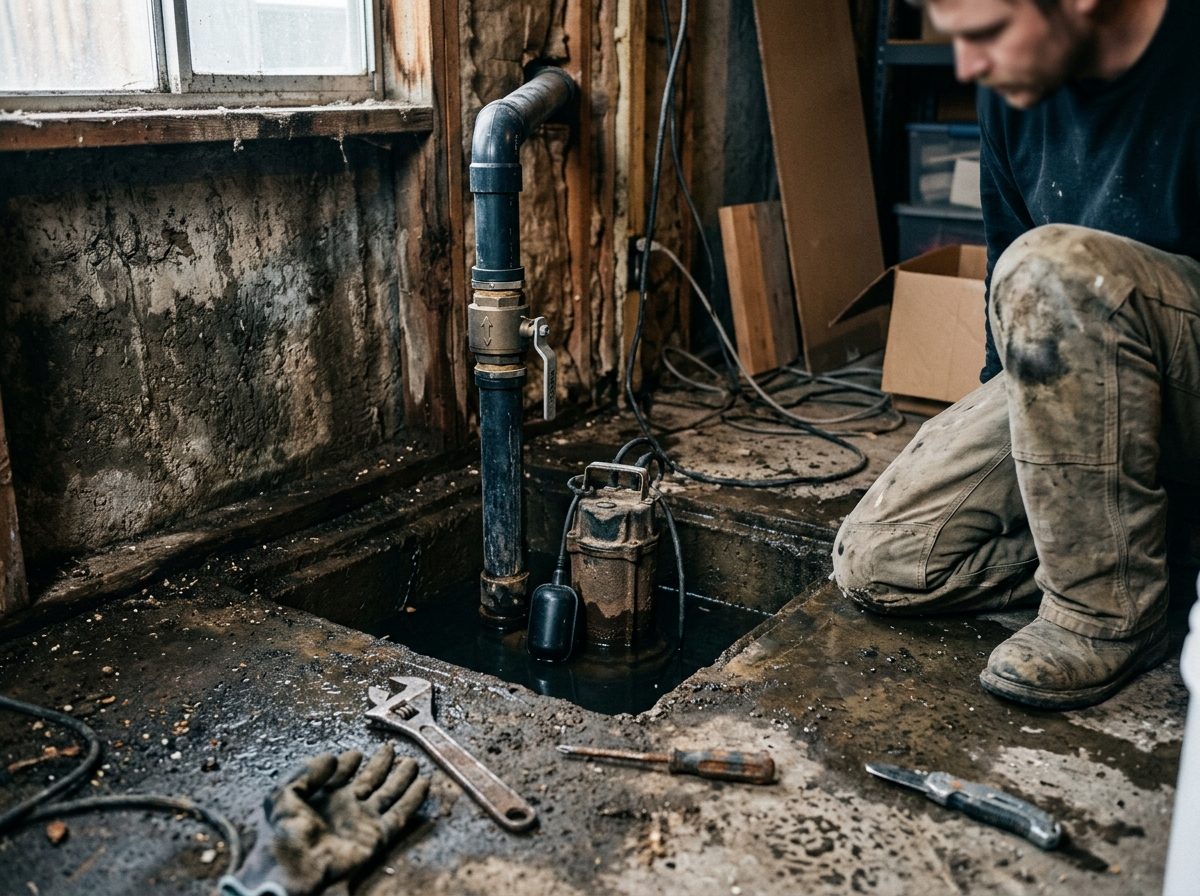
A basement is an asset until something upstream fails, at which point it is the lowest point in the building and everything arrives there. Sump pumps, pit maintenance, battery backup and discharge lines that do not freeze are part of that story — as is the fact that a sewer backup shows itself first in the lowest fixture in the house.
Key point
If water is coming up through a basement drain rather than down from above, stop using water anywhere in the house — every flush adds to what is backing up — and call.
Much of Colorado's supply carries a substantial mineral load, and hardness varies noticeably by water district — sometimes between towns that share a border. Minerals fall out of solution fastest wherever water is heated, so the visible symptoms are fixture scale, clogged aerators and showerheads that lose pattern.
Thinner air holds less oxygen per cubic foot, so anything that burns gas needs setup appropriate to its elevation. The correction that suits 4,600 feet out on the plains is not the one that suits 5,280 in Denver, 6,000-plus in Colorado Springs, or 8,000-plus in a mountain town.
The same water heater model can be correct in Fort Morgan and wrong in Nederland. Elevation is a specification, not a footnote.
Large parts of the Front Range sit on soils that swell when wet and shrink when dry. That movement shifts foundations over the years, and it does not spare buried pipe. Sewer laterals develop offsets and low spots where waste slows and solids settle, which is why the same house can need a drain cleared every eighteen months with no obvious cause inside.
Automatic irrigation is close to universal on the Front Range, and parts of the system do not tolerate freezing. An autumn blowout is inexpensive; a backflow preventer cracked by trapped water is not, and neither is a split lateral found when you charge the system in April.
Cross a municipal boundary — common on the eastern plains, in the mountain communities and across much of southern Colorado — and the water system becomes yours: a pressure tank, pump controls, a pressure switch and a longer run of line before anything reaches a fixture.
We will not quote a repair sight unseen — but the pro who arrives prices it before starting, and you approve that number.
The Colorado year
Four predictable pressure points. Almost every seasonal call is one of these, and most are cheaper to prevent than to fix.
Autumn
Irrigation blown out before the first hard freeze, hoses off every bib, frost-free bibs actually checked — a hose left attached defeats one entirely. Second homes get winterized now, not in December.
Deep winter
The busiest stretch of the year. Know where your main shutoff is before you need it, and keep a cabinet door open on any sink against an outside wall during a cold snap.
Spring
Snowmelt plus saturated ground is when sump pumps get tested for real, and when a pump idle since October declines to start. Ground movement shows up now as a new drain problem.
Summer
The right window for the unglamorous work: flushing the water heater, descaling a tankless unit, checking pressure, replacing a tired regulator before winter loads it again.
Open the faucet the line feeds, keep flame away from the pipe, and get us on the phone while you look for the shutoff.
Colorado communities covered
ZIP codes in the service area
Regions, plains to high country
Phone line, holidays included
Straight answers
We are a referral service. We answer the phone, work out what is actually happening at your house, and connect you with an experienced independent local plumbing professional who covers your community. The work itself is performed by that independent contractor, who prices the job and stands behind it.
Yes. The line is staffed around the clock, weekends and holidays included, because that is when the calls that cannot wait come in. Overnight in winter the most common call is a frozen or split pipe, and getting the main shut off in the first few minutes changes how much damage you face.
Front Range metro addresses are usually fastest, often same-day and frequently within a couple of hours for an emergency. Foothill, mountain and plains addresses depend on distance, canyon roads and weather. We give you a realistic window on the phone rather than an optimistic one, and tell you what to do while you wait.
Calling us costs nothing and we do not quote prices over the phone, because nobody can honestly price a repair they have not seen. The pro who comes out gives you upfront pricing before any work begins, so you approve a number first.
135 communities across seven regions: Denver metro, Northern Colorado, Boulder County, Colorado Springs and Pikes Peak, Pueblo and southern Colorado, the mountain communities and the eastern plains. That runs from Pueblo and Cañon City up to Fort Collins and Wellington, plus the canyon towns and the plains as far out as Akron and Merino.
Open the faucet the frozen line feeds so melting water has somewhere to go, and find your main shutoff now so you are not looking for it later. Apply gentle heat with a hair dryer or heat lamp working from the faucet back toward the blockage.
Much of Colorado has genuinely hard water, and hardness varies by water district even between neighbouring towns. Minerals drop out of solution fastest where the water is heated, so sediment builds in the bottom of a tank and insulates the burner from the water it is trying to heat.
For anything that burns fuel, yes. Thinner air means less oxygen per cubic foot, so gas water heaters and boilers need altitude-appropriate sizing and setup, and the correction at 8,000 feet in a mountain town is not the correction at 4,600 feet on the plains.
Yes, and outside municipal boundaries that is normal rather than unusual. A plumbing pro handles the pressure tank, the pipework, the pump controls and everything downstream of them inside the house, and can tell you when a problem is really a well or septic contractor question instead.
Describe it to someone who has heard it before. We will tell you what to shut off, then get a pro moving.
(833) 621-2904 — answered 24/7, statewide.