Everything that goes wrong with a shower is either in front of the wall or behind it, and the difference in cost between those two is the single most important thing to understand before work starts.
A trim kit, a cartridge, a diverter, a shower head, a drain cover — all in front of the wall, all straightforward.
What the symptom tells you
Dripping shower head. Nearly always the valve cartridge. It is a repair, usually with a stocked part for the major brands, and it does not need the wall opened on most valves because the cartridge comes out from the front.
Temperature swings when a toilet flushes. Either an older valve with no pressure balancing, or a failed pressure-balance or thermostatic element in a valve that has one.
Water will not get hot enough, or gets too hot. Check the water heater first, then the valve's temperature limit stop, which is an adjustable feature on most modern valves and frequently just needs setting. Genuinely inadequate hot water across the house is a water heater question.
Diverter will not hold — water runs from the spout while the shower is on. A worn diverter, either in the tub spout or in the valve.
Everything in front of the tile is a service call. Everything behind it is a project. The whole skill is knowing which side of the tile your problem is on before anyone picks up a chisel.
Valves, and why they matter more than the finish
The valve is the part of a shower nobody sees and everybody feels, and it is where the money should go.
Pressure-balancing valves maintain the hot-cold ratio when pressure changes elsewhere in the house, which is what stops the scald when a toilet flushes.
Thermostatic valves hold a set temperature rather than a set ratio, and adjust to changes in the incoming temperature too. They are noticeably better in use, particularly where hot water temperature varies, and they are the right choice in a bathroom being rebuilt anyway.
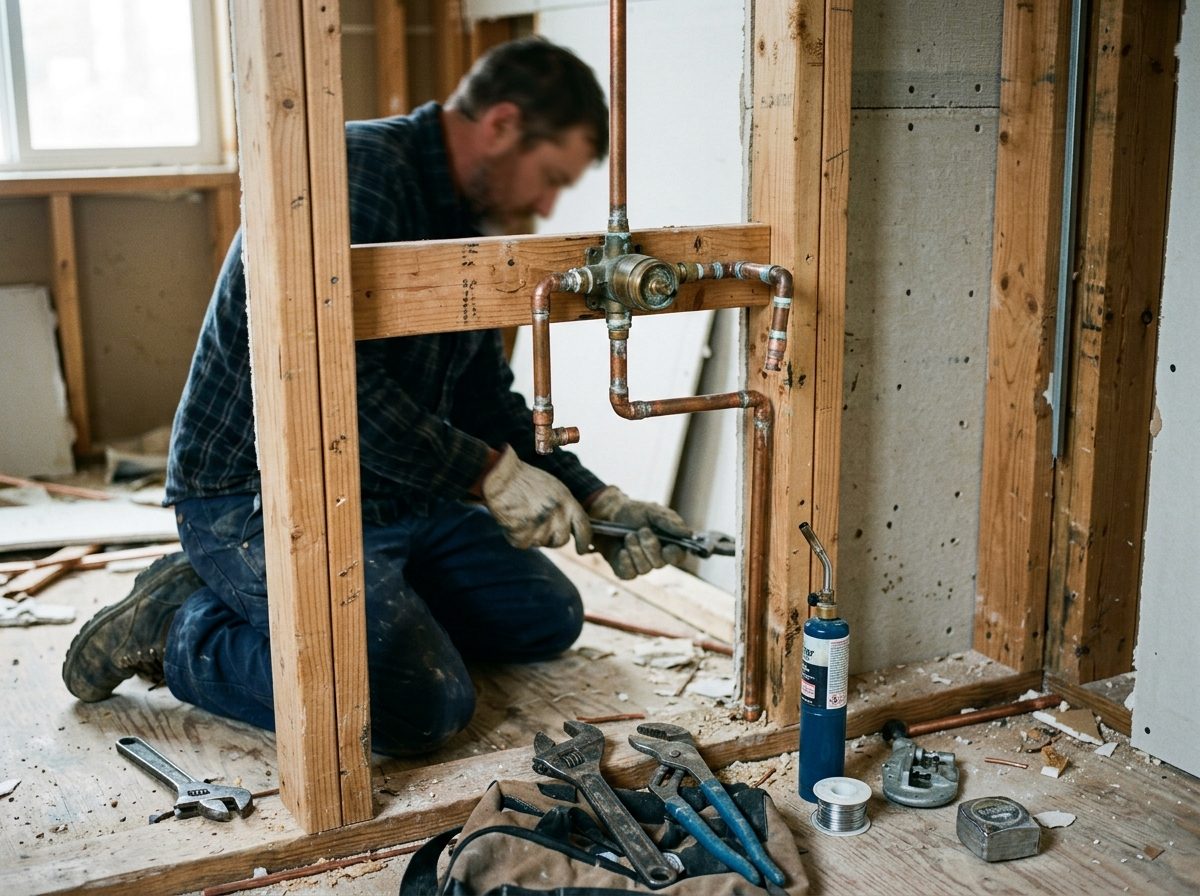
Trim versus rough-in. The critical thing to understand: the valve body inside the wall and the trim on the outside are separate purchases, and they are not interchangeable across brands.
Integral service stops. Many good valve bodies include small stops that let the shower be isolated for cartridge work without shutting off water to the house. Worth specifying.
In front of the wall
Cartridge and trim
Drips, temperature swings, stiff handles. A service call, parts usually stocked.
Behind the wall
Valve body and rough-in
Needs access. Fit a widely supported brand so future trim changes stay simple.
Under the floor
Drain and pan
Leaks here damage the ceiling below. Worth diagnosing carefully before opening anything.
Colorado specific
Hot water capacity
Multiple outlets need flow the heater can actually deliver against cold incoming water.
Finding a shower leak properly
A stain on the ceiling below a bathroom is the most misdiagnosed problem in residential plumbing, because four different faults produce an almost identical mark.
The sensible approach is elimination, in order, testing one thing at a time and waiting between tests.
Fill the tub and leave it. If it leaks with standing water and nothing running, the fault is the tub drain or overflow assembly, not the supply.
Run the shower carefully, avoiding the walls and the door. If it leaks only then, suspect the drain connection or the pan.
Splash the walls and the door surround deliberately. If it leaks only after that, the failure is in the tile, grout, caulk joint or door seal — a waterproofing problem, not a plumbing one.
Pressurise the valve without running water. A leak with the valve closed and nothing draining points at the valve body or the supply piping in the wall.
Each test needs time, because water takes a while to travel and appear. Rushing through them all in ten minutes tells you nothing. Where access is genuinely impossible, leak detection equipment shortens the process considerably — and it is cheaper than opening the wrong wall.
Remodel rough-in — decisions to make early
If a bathroom is being rebuilt, the plumbing decisions have to happen before the tile does, and several of them are effectively permanent.
Drain location and size. Showers commonly use a larger drain than tubs, and moving a drain means opening the floor and reworking the connection with correct fall — a joist-direction problem as much as a plumbing one. Decide where the drain is before the framing is closed.
Tub or shower. Beyond preference: tubs need the drain in a specific position relative to the overflow, and freestanding tubs need supply and drain routed to wherever the tub sits, which is much harder after the floor is finished.
Valve height and depth. Set for the finished wall thickness, which means the tile assembly has to be known before the valve is set. A valve set too deep leaves the trim unable to seat; too shallow and it stands off the wall.
Waterproofing. The membrane or pan system beneath the tile is what actually keeps water out of the structure — the tile is just the surface. This is where corner-cutting causes the failures that appear three years later as spongy floors and ceiling stains. It is worth every dollar spent.
And the practical one: if the walls are open, this is the moment to deal with anything else nearby. Replacing old supply piping, adding shutoffs, upgrading a nearby toilet rough-in. Opening a wall twice costs far more than doing everything once.
Hard water, and the fixtures that suffer
Colorado water is hard nearly everywhere, and showers show it first.
Scale blocks the fine passages in shower heads and body sprays, producing the erratic spray pattern that everyone eventually accepts as normal. It builds up in cartridge passages, making handles stiff and shortening cartridge life. It leaves the film on glass doors that no amount of cleaning permanently removes. And it accumulates in the water heater at the same time, which is the more expensive half of the problem.
Practical measures: unscrew shower heads and soak them in a mild acid descaler once or twice a year, which restores the spray genuinely well. Choose heads with rubber nozzle tips that can be rubbed clear. Expect cartridges to be a periodic consumable rather than a lifetime part. And where hardness is high, treat the water — a softener protects every fixture in the house and pays for itself first in the water heater.
One decision that saves the most money later
When the wall is open, fit a valve body from a major brand with widely available cartridges and a large trim range. The valve body costs a fraction of the tiling around it, and it determines whether the next twenty years of repairs and style changes are afternoon jobs or demolition jobs. It is the cheapest good decision in a bathroom remodel and the one most often skipped in favour of a fixture that looks better in the showroom.
Temperature swinging when a tap runs? Usually a cartridge, sometimes pressure. Both are diagnosable.
Ask About Temperature SwingsWhat drives the price
We refer to independent contractors and cannot quote for them, but the cost bands in shower and tub work are wide and worth understanding.
Front-of-wall work is inexpensive: cartridge replacement, trim swaps on a compatible valve, shower head and spout changes, descaling, tub drain and overflow gasket replacement, and clearing a slow tub drain. These are ordinary service calls.
Behind-the-wall work is a different scale, because access dominates. Replacing a valve body means opening the wall, and the cost depends heavily on what the wall is finished with — drywall on the other side is a modest repair, tile is not. An access panel from an adjacent closet, where one is possible, can turn an expensive job into a reasonable one and is always worth asking about.
Drain work under a tub or shower means access from below or lifting the floor. In a slab-built house that is a substantially bigger job than in a house with a basement or crawlspace beneath.
Full remodel plumbing covers rough-in for supply, drain and vent, valve and fixture setting, waterproofing coordination, permit and inspection. Moving fixtures costs far more than keeping them where they are, and moving the drain is the most expensive single change you can make.
Whatever the scope, the money-saving principle stays the same: diagnose before demolishing, and do everything that needs the wall open in one visit.
- Descale the shower head before assuming the valve is at fault
- Set the valve's temperature limit stop rather than living with scalding risk
- Test a ceiling stain one cause at a time before opening anything
- Fit a widely supported valve body whenever the wall is open
- Check combined flow of multiple outlets against your hot water capacity
- Ask whether an access panel can avoid opening tile
Planning a bathroom? The plumbing decisions come before the tile, and a few of them are permanent. Call before the walls close.
Talk through a rough-inValves, drains and waterproofing
Shower and bathtub questions
Nearly always a worn valve cartridge. On most modern valves the cartridge comes out from the front, so it is a service call rather than a wall-opening job, and parts for the major brands are commonly stocked.
Either the valve has no pressure balancing at all, or it has one and the element has failed. Modern code requires balanced valves for showers precisely because of scald risk.
Take the head off, remove the screen and any flow restrictor, and soak the whole thing in a mild acid descaler. In Colorado water that resolves it most of the time, and the improvement is dramatic.
One of four things, and they need testing apart rather than guessing. Fill the tub and leave it — a leak with standing water points at the drain or overflow.
Only for trim designed to fit the valve body already in the wall, which generally means staying within the same manufacturer and valve series.
A pressure-balancing valve holds the hot-to-cold ratio steady when pressure changes elsewhere in the house, which prevents scalding. A thermostatic valve holds a set temperature and compensates for changes in incoming temperature as well, which feels noticeably better in use.
You can, provided the supply and the water heater can deliver the combined flow — and that is a tighter constraint in Colorado than most spec sheets assume, because our incoming water is cold and every gallon needs a larger temperature rise.
It is the most expensive single change in a bathroom remodel, because it means opening the floor, reworking the connection with correct fall, and working around joist direction.
Almost always waterproofing rather than plumbing. The membrane or pan beneath the tile is what keeps water out of the structure, and shortcuts there fail on exactly that timescale — showing up as spongy tile, loose grout at the base, or a stain on the ceiling below.
It shortens their life. Scale accumulates in the fine passages of cartridges and shower heads, making handles stiff, spray patterns erratic and cartridge life shorter.
A service call, or a project. Know which first.
Cartridges, valve bodies, drains and remodel rough-in — 135 Colorado communities, one number.
(833) 621-2904 — answered 24/7, statewide.