Plumber in Green Mountain Falls, CO — 24/7 by phone
Home / Areas / Colorado Springs & Pikes Peak / Green Mountain Falls
Green Mountain Falls is a small village tucked into Ute Pass, with a housing stock that runs old and a substantial share of properties used seasonally rather than year-round. Those two facts, plus the canyon's cold, account for most of what happens here.
A small village in the pass
The village sits on narrow lanes on the canyon floor and up the slopes, with buildings close together on small lots. Access is frequently the hardest part of a call — limited parking, crawlspaces entered from outside, steps rather than paths.
Saying what the approach looks like when you call is not a formality. It determines who takes the job, what equipment they bring, and whether the work gets done on the first visit rather than the second.
Narrow or stepped access? Say what the approach looks like when you call.
Ask about access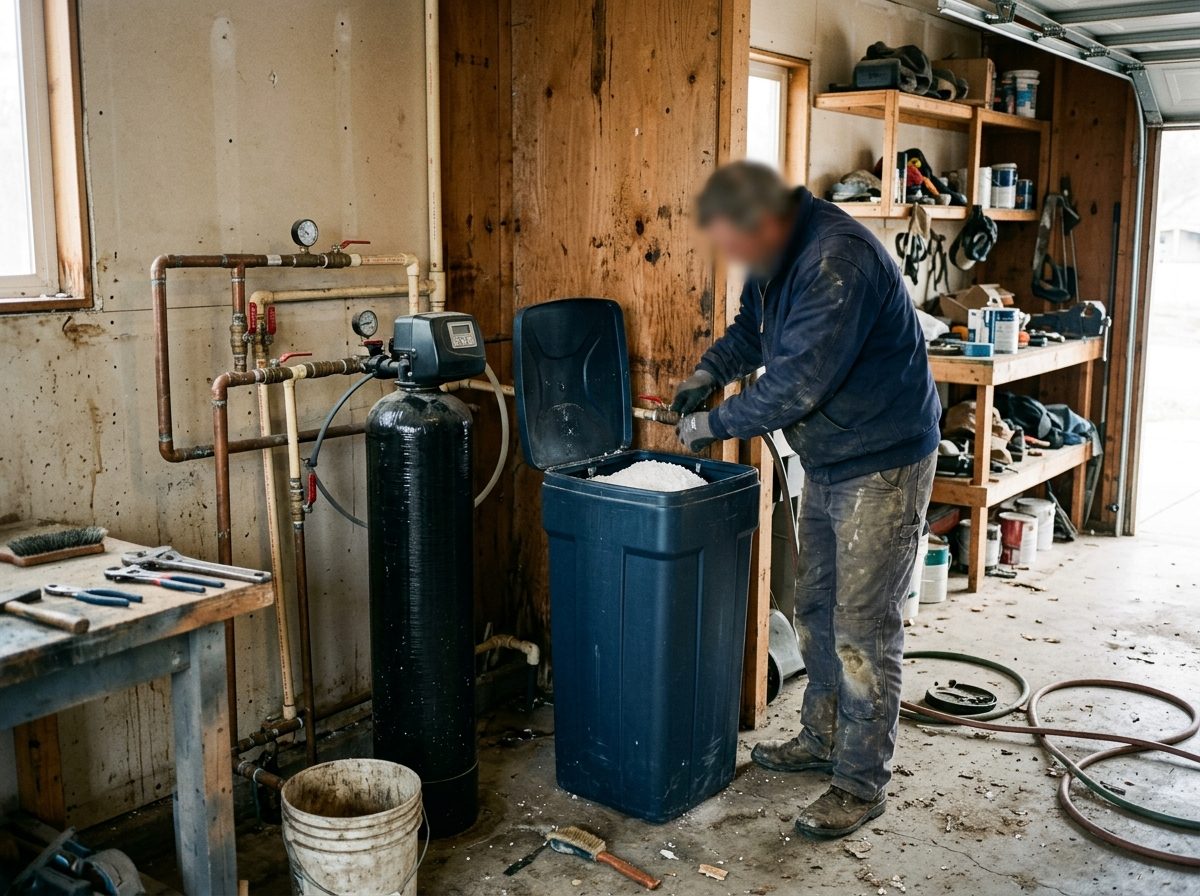
Buildings that stand empty
An occupied building is a monitored building — taps run, warm air moves, someone notices when the heat stops. An empty one has none of that, so a tripped furnace, a power cut or a dead heat tape becomes a burst pipe with days of unattended water behind it.
For a property standing empty through winter, draining is the dependable answer: water off at the source, the system drained from its lowest point, taps opened so air can replace water, the heater and appliances dealt with, and antifreeze rated for plumbing in traps. Done properly the building can sit at any temperature; done partially it holds water in exactly the low points that split.
Property empty or let seasonally? Draining it properly removes the risk rather than managing it.
Ask about winterising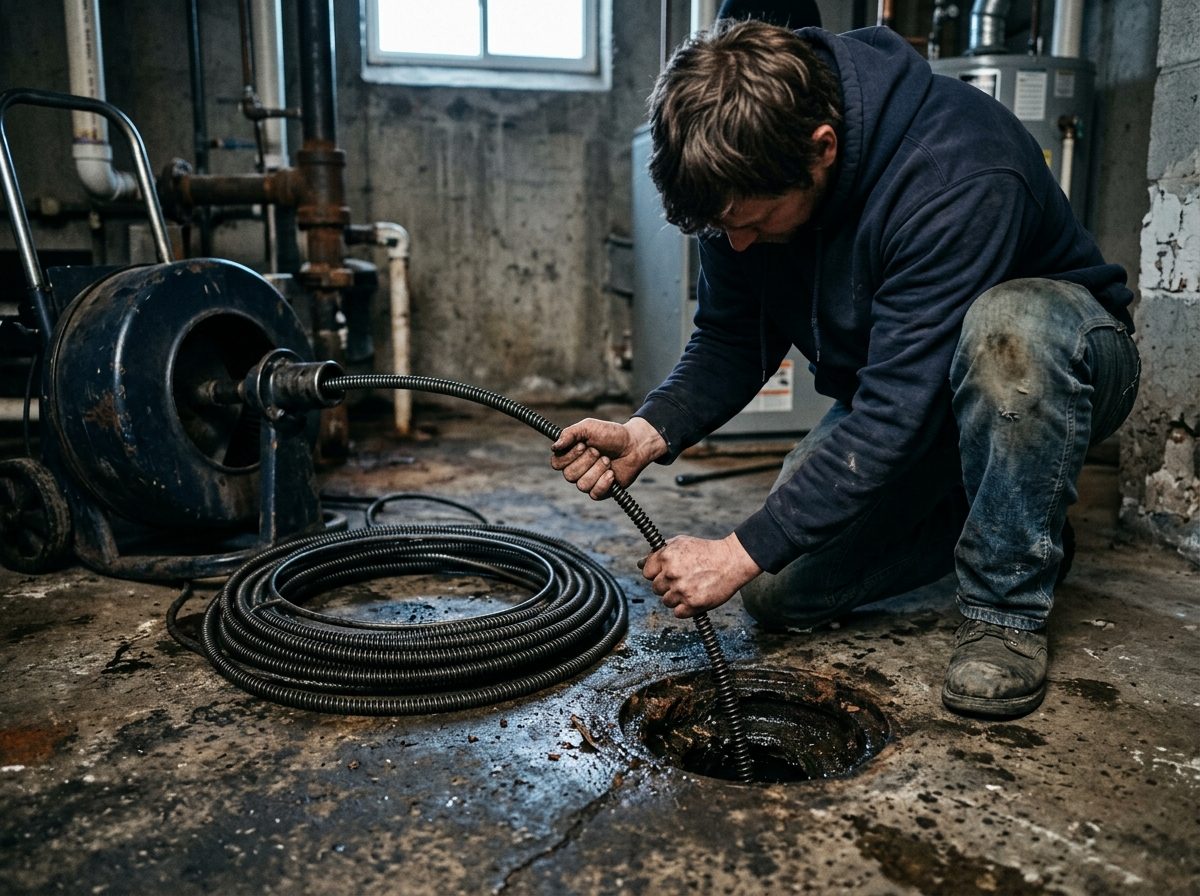
Old pipe, many alterations
Much of the housing is old and has been altered repeatedly. Expect mixed materials within a single run, undersized sections, and fittings inside walls that no drawing shows. Where dissimilar metals were joined without the correct fitting, the junction corrodes; where a replacement section was undersized, it throttles flow through the rest of the line.
That makes small clues valuable. Which fixtures are affected and which are not, whether flow changed after previous work, and where damp appears relative to where water is used all narrow the search considerably before anything is opened up.
On a building this old it is also worth knowing where the drain cleanout is, because in housing of this era it is not always where a plumber would expect and occasionally there is not one at all. If you know where yours is, say so when you call — locating it is sometimes the longest part of the visit.
Narrow lanes and winter
Cold air drains downhill and pools on the canyon floor, and steep sides keep parts of the village in shade through much of a winter day. Pipe in crawlspaces, under decks and against north walls therefore stays cold far longer than the daily high suggests.
Where a run has frozen once it will freeze again unless the exposure changes, so insulation and air sealing come before heat tape. And tape needs testing each autumn, because it fails silently through age, rodent damage or having been unplugged during other work.
Heat tape never tested? It fails silently — check it before the first freeze.
Ask about freeze protectionArriving at a cold cabin
Close the main shutoff before applying heat anywhere, then check the lowest ceiling and the crawlspace for damp. A split line starts leaking the moment it thaws.
Cast iron waste stacks
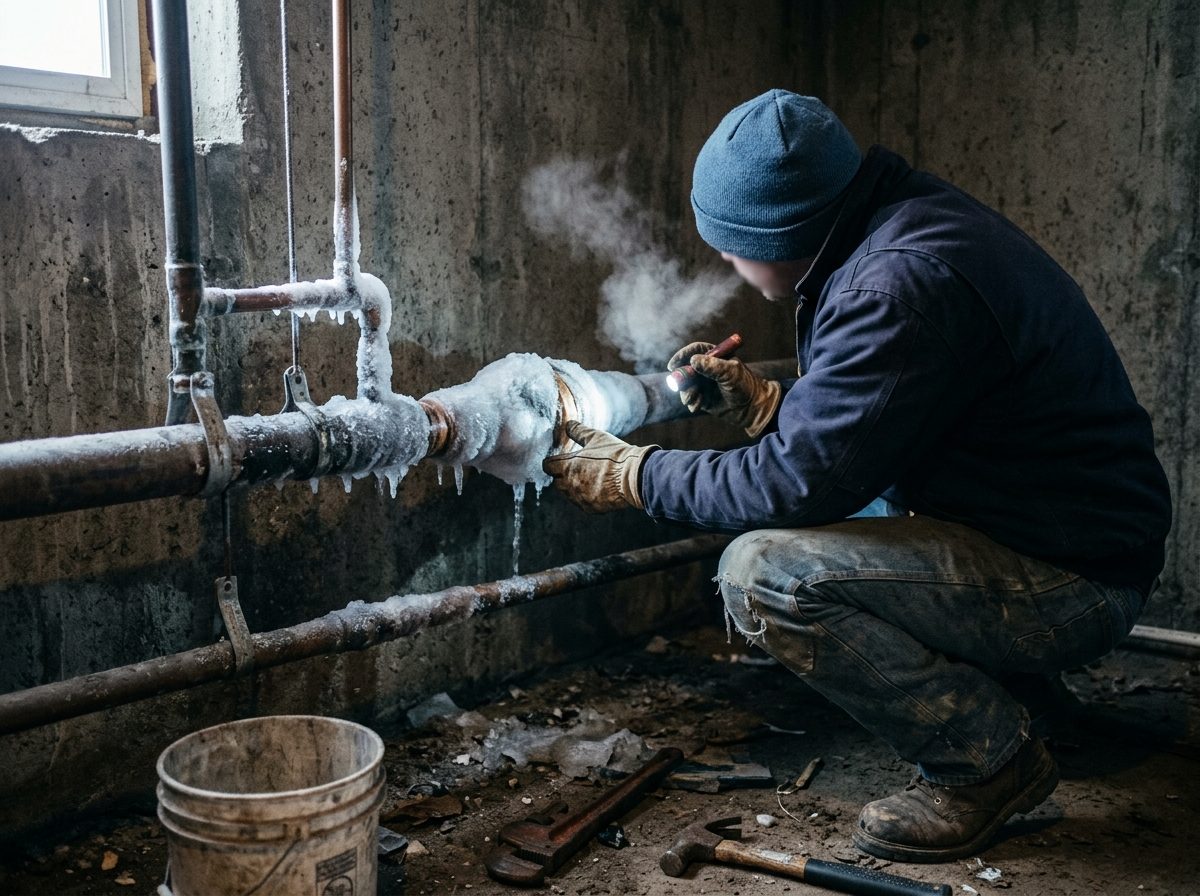
In older buildings the vertical waste stack and often the underfloor drainage is cast iron, joined at hub-and-spigot connections originally packed with oakum and lead. It is a durable material and plenty of it is still doing its job after ninety years — but it fails from the inside, gradually, and by the time it shows on the outside it has usually been deteriorating for a long time.
The pattern is specific. Corrosion attacks the bottom of horizontal runs and the lower part of the stack, where waste sits longest, thinning the metal until the base of the pipe is effectively gone while the top of it still looks sound. That produces slow drainage that no amount of clearing improves, rust staining and flaking on the outside of the pipe, damp or a smell in a basement or crawlspace, and eventually a hole. A stack that sounds dull rather than sharp when tapped, or that sheds rust scale when handled, is telling you something.
Replacement is normally done in sections rather than wholesale, using plastic joined to the remaining iron with proper couplings, and the sensible scope is decided by access rather than by ambition — the parts reachable from a basement or crawlspace are straightforward, while a stack buried in a finished wall is a different proposition. What is worth avoiding is repeated clearing of a line that is not blocked but corroded, which is a common way to spend the cost of the repair twice over without getting it. A camera run distinguishes the two quickly.
Nearby communities
Green Mountain Falls sits in Ute Pass beside Cascade, with Woodland Park and Manitou Springs either side.
Green Mountain Falls
Seasonal property questions answered
Water off at the source, the system drained from its lowest point, taps opened so air can replace water, the heater and any appliance holding water dealt with, and antifreeze rated for plumbing in traps and toilet bowls. Never automotive antifreeze. Done thoroughly the building can sit unheated safely.
Not much, and it can be worse, because water left in low points is exactly what splits when it freezes — and partial draining gives false reassurance. If the building will be empty through winter, it is worth having the job done properly once rather than approximated each year.
Narrow lanes, limited parking, steps and outside-entry crawlspaces determine what equipment can reach the work. A drain machine or camera reel that cannot get to the cleanout is no use at all. Describing the approach when you call means the right kit turns up first time.
It depends how the joins were made. Dissimilar metals connected without the correct fitting corrode where they meet, and undersized replacement sections throttle flow through the rest of the run. Mixed material is common in old housing; badly made transitions are what leak.
Usually, with gentle even heat applied from the open end of the line toward the blockage so meltwater can escape. Never a torch or rapid heat. Shut the water off first, because if the pipe has already cracked, thawing simply reveals it and starts the leak.
Cold air sinks and pools on a canyon floor, so overnight temperatures here sit below the regional figure, and steep sides keep parts of the village in shade through the day. Pipe that would be fine down the pass is not necessarily fine here.
Someone local who can physically check it, plus a remote temperature alarm you actually receive. Early warning matters more than any repair arrangement, because the difference between a small problem and a catastrophic one is how many days water runs before anyone notices.
Usually same-day for urgent problems, since the Springs service area is close. Winter conditions on the pass and the local access are the variables rather than distance. You will get an honest window plus instructions on what to shut off while you wait.
If it is cast iron, the pipe may be corroded rather than blocked — the bottom of horizontal runs thins and roughens from the inside, and nothing you clear out changes that. Rust staining on the outside, flaking scale, or a dull sound when tapped are signs. A camera run settles it before you pay to rod it again.
Usually not. It is normally done in sections, with plastic joined to the sound remaining iron using proper couplings, and the practical scope is set by access — runs reachable from a basement or crawlspace are straightforward, while a stack inside a finished wall is a bigger decision. Doing the accessible parts first is a legitimate approach.
Ute Pass, any hour
Green Mountain Falls, Cascade, Manitou Springs and Woodland Park.
(833) 621-2904 — answered 24/7, statewide.