Plumber in Manitou Springs, CO — one call, any hour
Home / Areas / Colorado Springs & Pikes Peak / Manitou Springs
Manitou Springs has some of the oldest housing in the Pikes Peak region, built into a narrow canyon on steep lots. Both facts matter on a service call: the pipe is old enough that materials are the story, and the access is tight enough that it affects who can do the work and how long it takes.
Some of the oldest housing in the region
Expect the full pre-war inheritance here: galvanised steel supply lines narrowed by decades of internal corrosion, cast-iron drain stacks that hold waste at their low points, and clay sewer laterals with a joint every few feet. Flow that collapses when two fixtures run, water that runs discoloured after a few days away, and drains that slow and clear on a cycle of months are the usual tells.
Layered over that is a century or more of remodelling, much of it done in tight spaces with whatever fitted. What is behind the plaster is frequently a surprise to everyone, including the owner, which is why a first visit is often as much investigation as repair — and why a plan with an order of work beats a single headline number.
Several things at the end of their life? Ask for an order of work rather than one big number.
Ask for a plan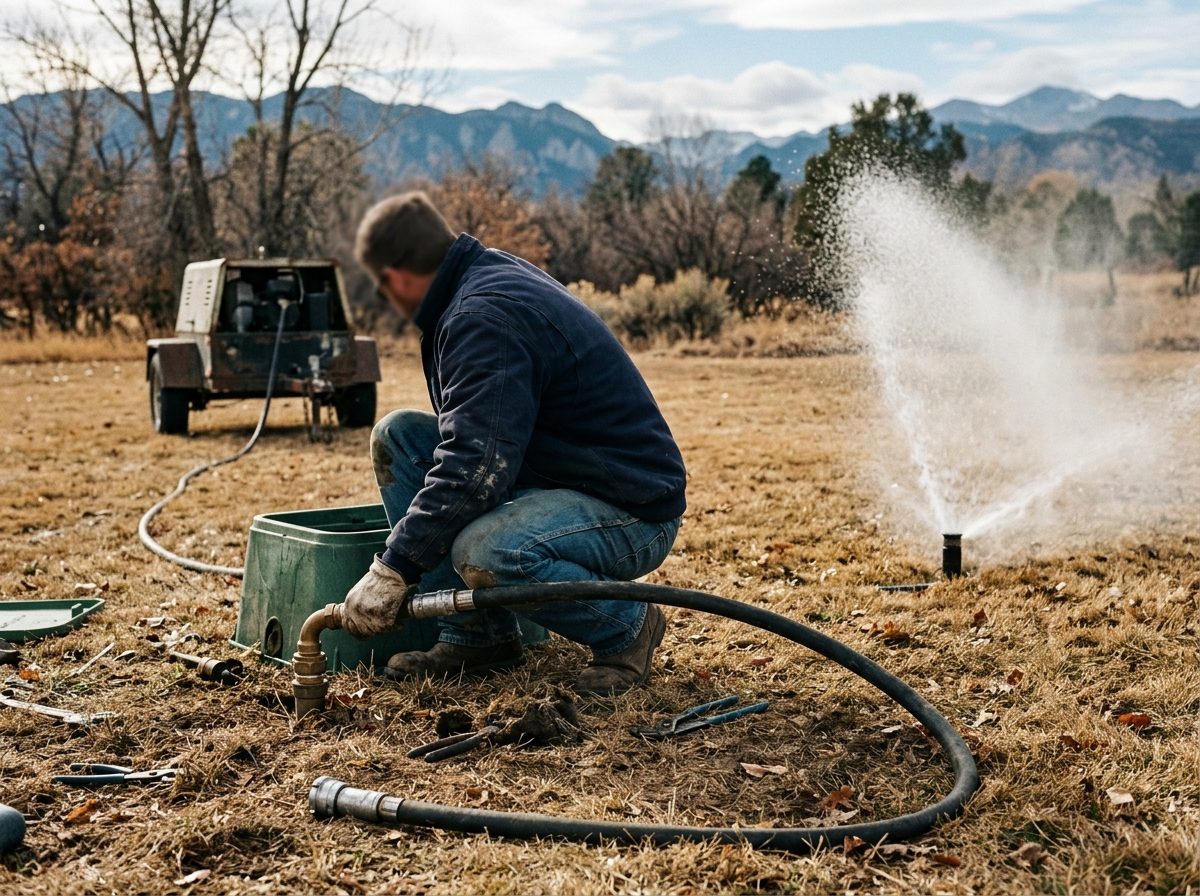
Steep lots and narrow streets
Access shapes the job here more than in most towns. Steep driveways, staircases instead of paths, narrow streets with limited parking, and crawlspaces entered from outside all affect what equipment can reach the work and how long it takes to get there.
Say what the access looks like when you call — how many steps, whether a van can park, whether the crawlspace is reachable. It is not a formality: it determines who takes the job and whether the right tools arrive on the first visit rather than the second.
Finding a leak in historic construction
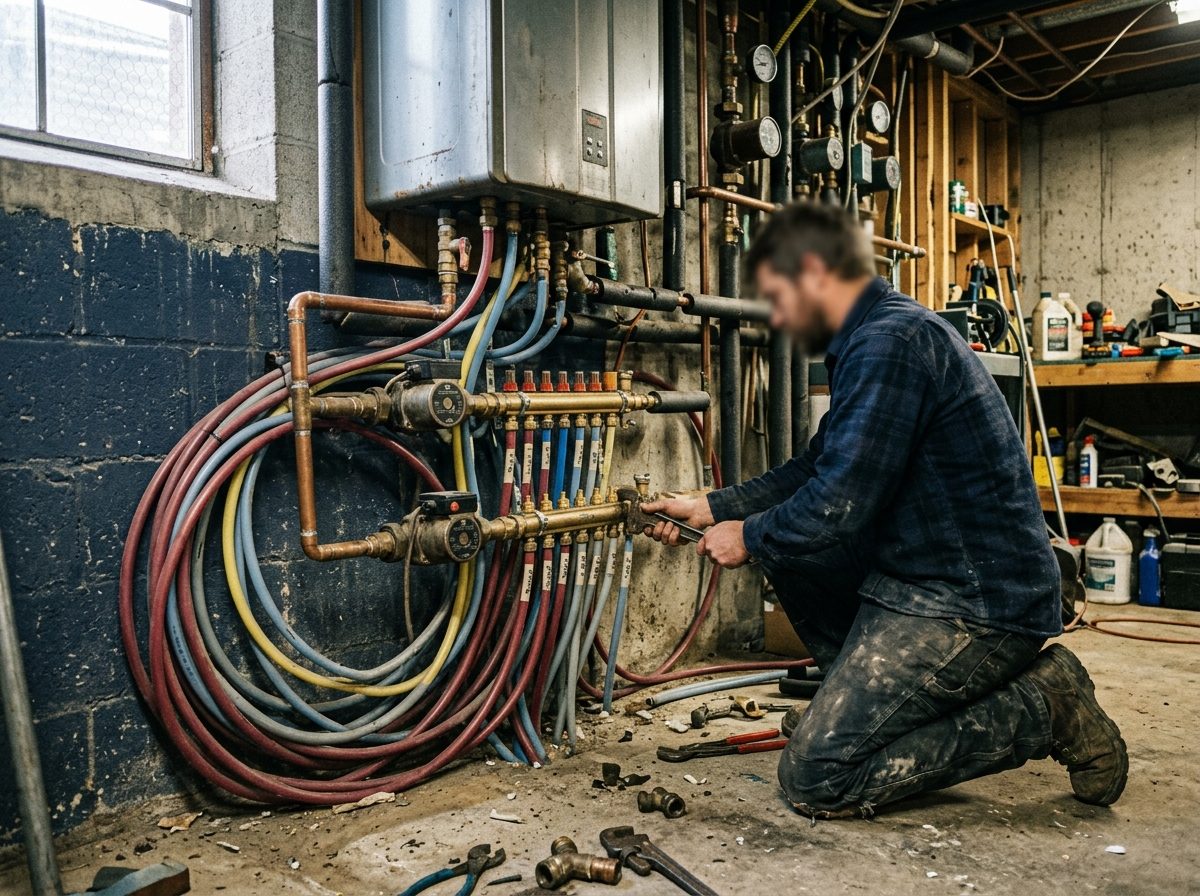
In houses of this age, leaks are usually at old fittings behind finished surfaces, and the finishes are often worth protecting. That makes non-destructive detection worth considerably more than the price difference suggests: acoustic listening, thermal imaging and moisture mapping locate water through plaster and tile, so the only opening made is the one the repair actually needs.
You can narrow it down first. Rule out toilets with food colouring in the tank — a failed flapper passes water silently and explains a surprising share of mystery bills. Then run the meter test: everything off, note the meter and the low-flow indicator, read again an hour later. Movement means water is leaving the system, and closing the main shutoff and repeating tells you whether the loss is inside the house or in the buried service line.
Bill up, nothing visible? Run the meter test first, then call with the result.
Ask about finding a leakCanyon cold and empty houses
The canyon runs colder than the city below, gets less winter sun on the north side, and channels wind. Pipe in the crawlspaces and additions of an old house finds those conditions reliably, and heat tape — where it exists — is often older than anyone remembers.
A large share of property here is rented short-term or occupied seasonally, and vacancy is what turns a cold snap into a burst pipe: no running taps, no one to notice a furnace fault, hours of unattended water. If a property sits empty in winter, either winterise it properly or make the heat genuinely reliable and have someone able to reach it.
Property empty or let short-term? The pre-winter conversation prevents the expensive one.
Ask about winterising a propertyIf you arrive to a frozen house
Close the main shutoff before thawing anything. A pipe that has already split releases water the moment it thaws, and with the water off you get a controlled repair instead of a flood.
Lead in old plumbing, and how to find out
In housing of this age lead can be present in three different places, and they are worth separating because they carry different risk and different remedies. A lead service line, running from the main into the building, is the most significant; lead-based solder at copper joints, used until it was prohibited in the mid-eighties, is the most widespread; and brass fittings and older fixtures can contribute small amounts even where neither of the first two applies.
The reason to establish it rather than assume is that the water gives no indication at all — lead has no taste, smell or colour at the levels that matter, and a house can look immaculate while having a lead service line. Identifying a service line is often possible visually where it enters the building: lead is dull grey, soft enough to mark with a key, and has a characteristically bulbous joint where it meets other pipe. A water test is what settles the question, and it needs to be a first-draw sample taken after water has stood in the pipes, because a flushed sample understates it.
Where lead is present, the responses are staged. Replacement of a service line is the durable answer and water providers often have programmes bearing on it, so it is worth asking rather than assuming the whole cost falls on the property. Point-of-use filtration rated for lead protects drinking and cooking water in the meantime, which matters most where there are children in the household. And the interim habit that genuinely helps is running the tap until it is cold before drawing water to drink, since the water that has been standing in the pipe is the water that has picked something up.
Nearby communities
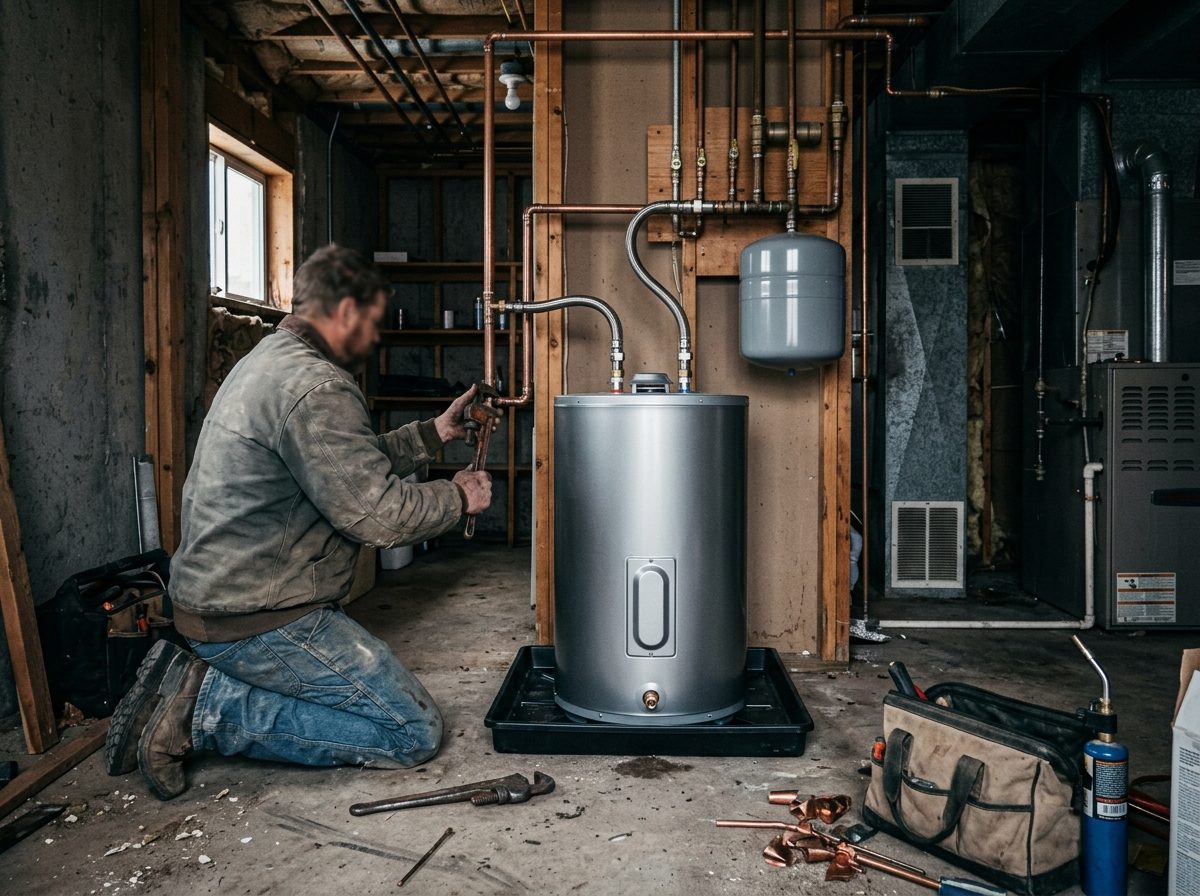
Manitou sits at the mouth of Ute Pass, with Colorado Springs below and the Pikes Peak communities above.
Manitou Springs
Manitou Springs plumbing questions answered
It makes them less predictable rather than automatically dearer. Old materials, tight access and a century of undocumented remodelling mean more investigation before the work, and finishes that cost more to open and restore. That is why an order of work with rough costs against each step is more useful here than a single number.
That is exactly what leak detection is for. Acoustic equipment hears escaping pressurised water through finishes, thermal imaging finds temperature differences behind surfaces, and moisture meters map how far water has spread. The opening that follows should be the one the repair needs, in the place the equipment identified.
Because steep lots, stairs, narrow streets and outside-entry crawlspaces determine what equipment can physically reach the work. A jetter or a camera reel that cannot get to the cleanout is no use. Describing the access when you call means the right tools and the right person turn up on the first visit.
Decide between winterising and heating properly, and do not split the difference. Winterising means water off, system drained, traps and appliances dealt with. Heating properly means a reliable heat source, a remote temperature alarm you actually receive, and someone local who can reach the property when it alerts.
Usually same-day for urgent problems, since the Springs service area is minutes away. Winter weather and access are the variables rather than distance — ice on a steep drive changes the answer. You will get an honest window plus instructions on what to shut off while you wait.
Most likely galvanised steel supply pipe narrowed by internal corrosion. Testing pressure at an outdoor hose bib separates house from supply: if what arrives is normal and interior flow is not, the pipe is the constraint. Repiping the affected runs is the durable fix, and it can be staged rather than done all at once.
On a hydronic system that usually means air trapped in that circuit, a valve that has stopped opening, or a circulation problem on that zone. It is worth noting what the boiler gauge reads when the system is hot, because that detail speeds up the diagnosis considerably and sometimes points at pressure rather than at the radiator.
Yes, and especially before buying. Clay laterals in a canyon with mature trees are likely to have root intrusion or misalignment, and the sewer is the one major system a standard home inspection does not look inside. The camera converts a guess into a plan and a defensible price.
Look where the supply enters the building — lead is dull grey, soft enough to scratch with a key, and has a distinctive swollen joint where it connects to other pipe. A first-draw water test, taken after water has stood in the pipes rather than after flushing, is what confirms it. Water with lead in it tastes and looks entirely normal.
Manitou and Ute Pass
Manitou Springs, Cascade, Green Mountain Falls and the Pikes Peak communities above.
(833) 621-2904 — answered 24/7, statewide.