Plumber in Monument, CO — one call, any hour
Home / Areas / Colorado Springs & Pikes Peak / Monument
Monument sits high on the Palmer Divide, and that elevation is the single most consequential fact about plumbing here. It changes how gas appliances have to be specified, it lengthens and hardens the winter, and it puts a meaningful share of properties on private wells rather than town supply.
Seven thousand feet changes the appliance
Gas-fired appliances lose rated output as air thins. A water heater or tankless unit specified from a sea-level table can therefore be genuinely undersized by the time it is installed and working in January, when incoming water is at its coldest and demand is at its highest. Derating, combustion air and venting all belong in the conversation before the unit is bought rather than after it is on the wall.
Households usually notice it as a heater that is perfectly adequate for nine months and cannot keep up for the coldest ten weeks. Tankless units are the most sensitive, because their output is a temperature rise across a flow rate and altitude squeezes both ends of that equation.
Replacing a water heater? Ask about altitude sizing before you buy the unit.
Ask about heater sizing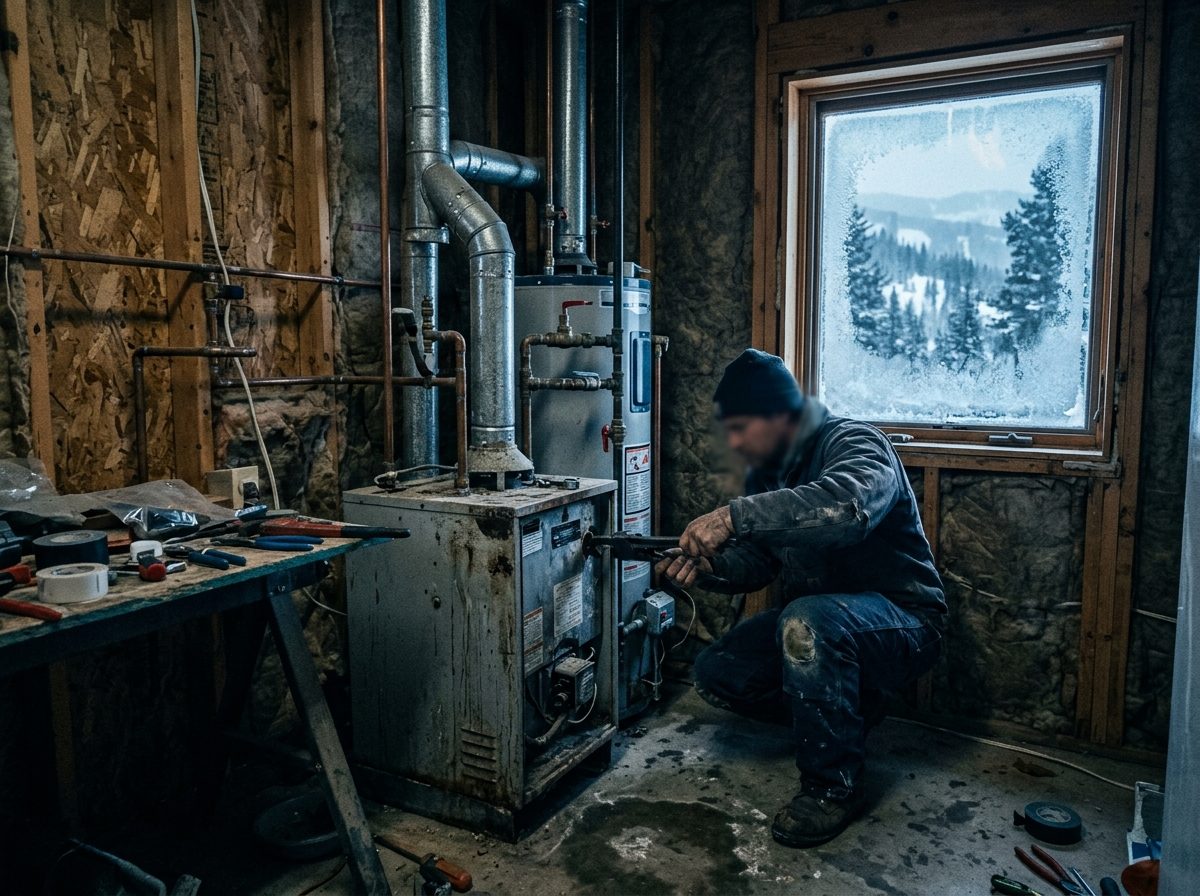
Town water and well water
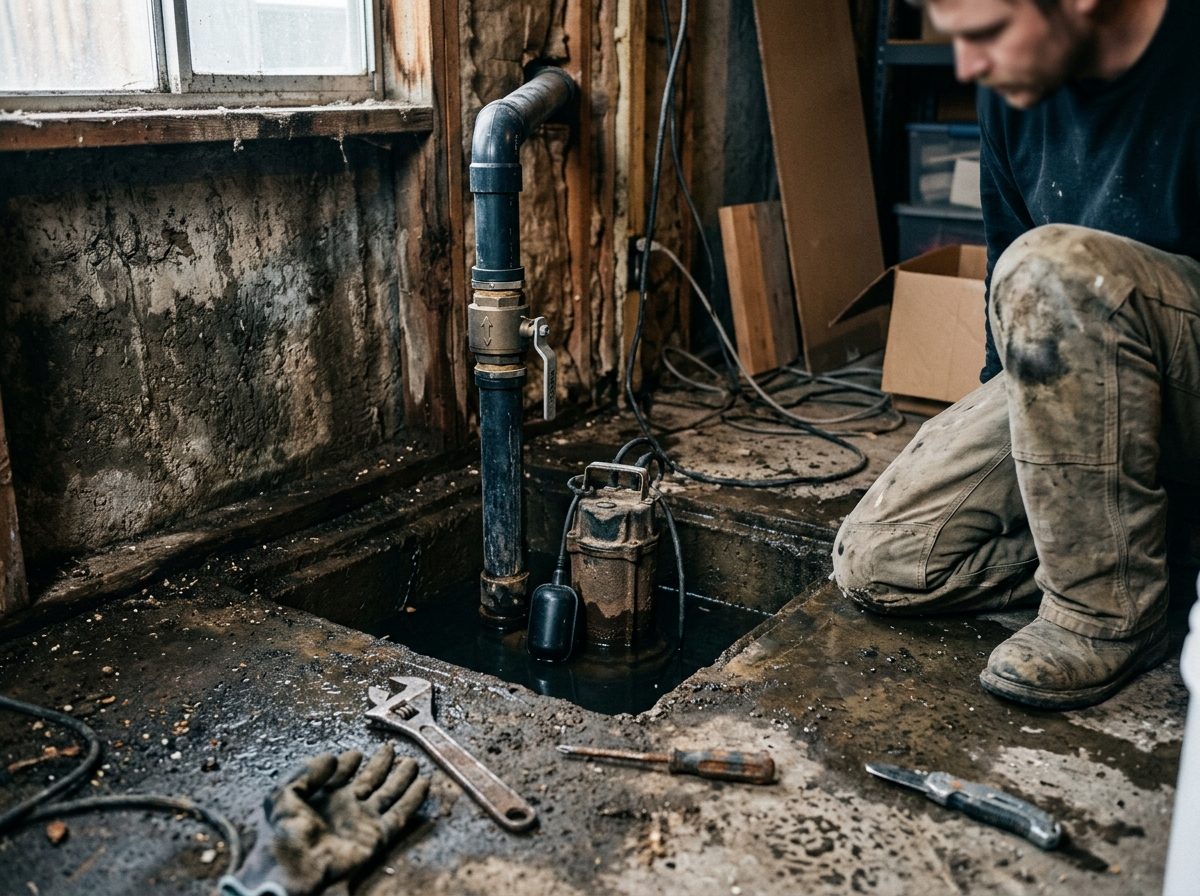
Some addresses here are on town supply and some are on private wells, and the difference decides which trade you need. Everything from the pressure tank into the house is ordinary plumbing work. The pump, the drop pipe and the wiring down the casing are well-system work and need specific equipment.
The classic well symptom is no water at all, which can be the pump, the pressure switch, the tank, the wiring or a tripped breaker — in roughly that order of frequency, and cheapest first. Saying what the pressure gauge reads and whether the pump runs at all narrows it enormously before anyone drives out. Pressure swinging up and down every few seconds is usually a waterlogged tank, and short-cycling destroys pumps quickly.
Cold, wind and the Palmer Divide
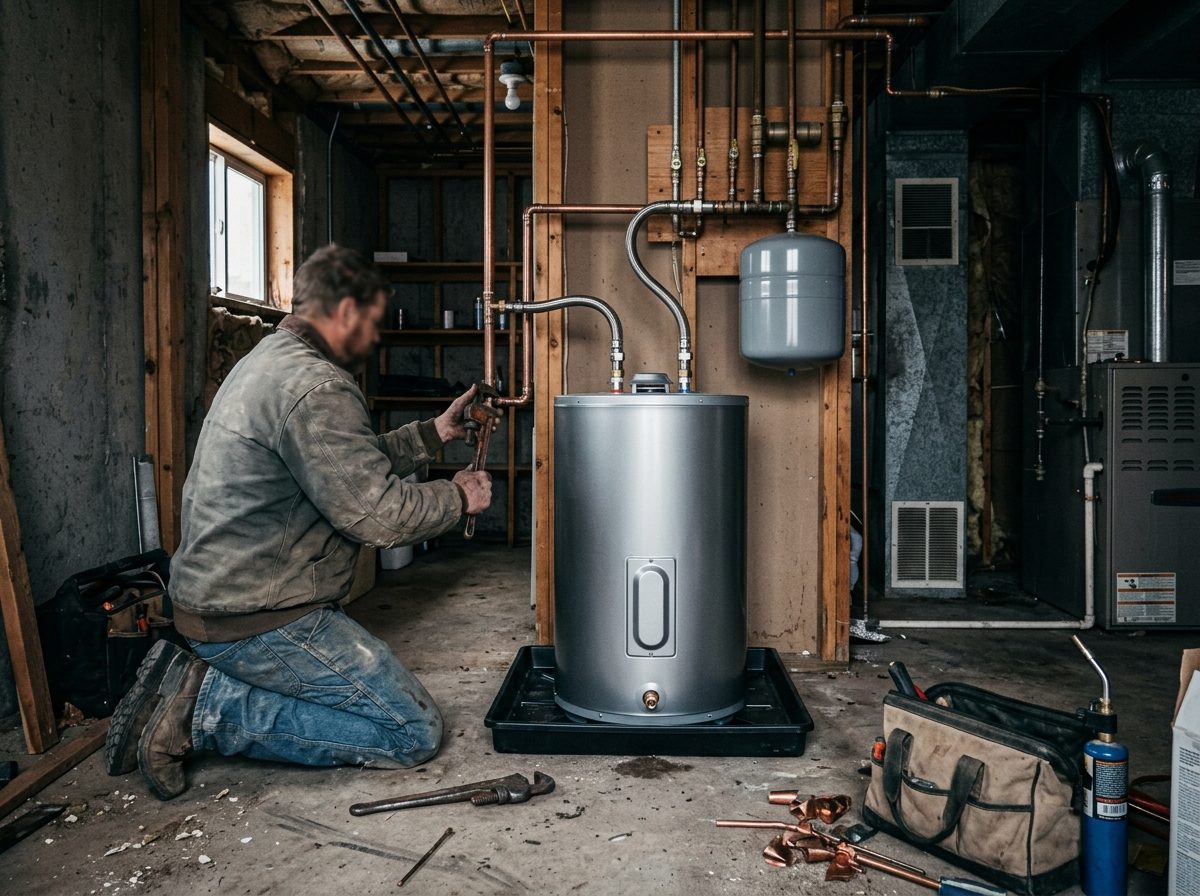
Winter here is longer and harder than in the city below, and the Divide catches wind and snow that the Springs sometimes misses entirely. Exposed pipe loses heat much faster than still air at the same temperature, and frost runs deeper.
The vulnerable places are the usual ones plus a few local ones: hose bibs with hoses attached, garage walls, crawlspaces vented in summer and never closed, well houses, and lines to outbuildings that are heated least and remembered last. Heat tape deserves particular attention — knowing where yours runs and confirming it still works before the first hard freeze is one of the highest-value ten minutes available.
Property sitting empty this winter? Winterising properly beats leaving the heat low and hoping.
Ask about winterising a propertyHard water and heater life
Mineral content is significant here, on wells and town supply alike. Scale settles in the bottom of the water heater and insulates the burner from the water above it, so run times lengthen and the tank ages faster than the label promises; on electric units it coats the elements directly.
Flushing annually is the cheapest life extension available, and it matters more at altitude where the heater is already working harder in winter. If you are considering treatment, test the water first — a well with iron and hard town water call for different equipment, and sizing matters more than brand.
Scale on everything? Test the water before buying any treatment.
Ask about hard waterIf a line stops flowing
Close the main shutoff before thawing anything. If the pipe has already split, thawing simply reveals it — and with the water off you get a controlled repair instead of a flood.
The water connections on your heating system
Several things attached to a heating and cooling system use water, and because they are thought of as HVAC rather than as plumbing they tend to fall into a gap where nobody maintains them. A whole-house humidifier takes a small supply feed and has a drain. A high-efficiency furnace produces acidic condensate that has to be neutralised and drained. An air conditioner produces condensate too. Each of those is a small water connection in a mechanical space, and each of them leaks.
The humidifier is the most common offender because it runs only in winter and is forgotten in summer. Its supply is usually a small saddle or compression connection that weeps slowly, and its drain blocks with mineral deposits, at which point water finds the floor instead. A furnace condensate line does the same thing, and because the condensate is acidic it damages what it sits on while doing it. None of these produce a dramatic failure; they produce a slow one that is discovered as a stain, a rusted furnace base, or a damp patch on a finished ceiling below.
The maintenance is trivial once someone owns it. Look at these connections at the start and end of the season they run in. Confirm the drains actually run, by pouring water through them rather than assuming. Replace a humidifier pad on schedule, since a clogged one makes the unit work wetter than it should. And where the mechanical space is above finished rooms, a drain pan with a route out, and an inexpensive water alarm on the floor, cover the failure that would otherwise be found by looking at a ceiling.
Nearby communities
Monument sits on the Palmer Divide between Colorado Springs and Castle Rock, with Palmer Lake and the Academy just down the road.
Monument, Colorado
Monument plumbing questions answered
For anything gas-fired, yes. Thinner air means less oxygen for combustion, so manufacturers derate output above certain elevations and sometimes specify different orifices or models. A unit sized from a sea-level table can fall short here in midwinter when inlet water is coldest. Have the sizing conversation before the purchase, and include venting and combustion air.
It depends where the fault is. From the pressure tank into the house is ordinary plumbing. The pump, drop pipe and casing wiring are well-system work requiring specific equipment. Describing what the pressure gauge reads and whether the pump runs at all usually settles which trade should be sent, and saves a wasted visit.
That is typically a waterlogged pressure tank. The tank holds an air charge behind a bladder, and when that fails the pump switches on and off every few seconds instead of once every few minutes. Short-cycling wears pumps out quickly, so it is worth addressing early rather than living with it.
Either winterise it properly — water off, system drained, traps and appliances dealt with — or keep the heat genuinely reliable with a remote temperature alarm and someone local who can reach the property. Leaving a thermostat low and hoping is how burst pipes happen, because a furnace fault has hours to work with nobody present.
Usually same-day for urgent problems, with an honest window rather than a fixed time. Weather is a real factor on the Divide — snow and ice affect both travel and access — and during a hard freeze the whole region is busy at once. Mention road and driveway conditions when you call.
Yes, and it is quick. Heat tape fails quietly: rodent damage, age, or simply being unplugged during a remodel and never reconnected. A line that never froze before and froze this year is very often tape that stopped working. Check it before the first hard freeze rather than after.
For most households the return shows up in water heater and appliance life. Test first, because the right equipment for a well with iron differs from the right equipment for hard town water, and size it to the household. Confirm there is a practical place for the loop and a drain for regeneration before buying.
Roughly every three to five years for a normal household, sooner with heavy use or a smaller tank. Slow drains everywhere at once rather than at a single fixture, a lush green stripe over the field, or backups after a heavy-use weekend all mean the tank or field needs attention rather than the plumbing.
Often a condensate or humidifier line rather than the plumbing. High-efficiency furnaces and air conditioners both produce condensate that has to drain, and humidifier drains block with mineral scale — at which point the water goes on the floor. Pour water through the drain lines to see whether they actually run; that usually identifies it in a minute.
The Palmer Divide, any hour
Monument, Palmer Lake, the Academy and the northern El Paso County communities.
(833) 621-2904 — answered 24/7, statewide.