Plumber in Colorado Springs, CO — 24/7 by phone
Home / Areas / Colorado Springs & Pikes Peak / Colorado Springs
Two local conditions explain a surprising share of what goes wrong in Colorado Springs houses: soils that expand and contract with real force as they wet and dry, and an elevation high enough to change how gas appliances have to be specified. Neither is exotic, but both are routinely ignored by anyone applying a national rule of thumb to a house here.
Soil that moves the pipe
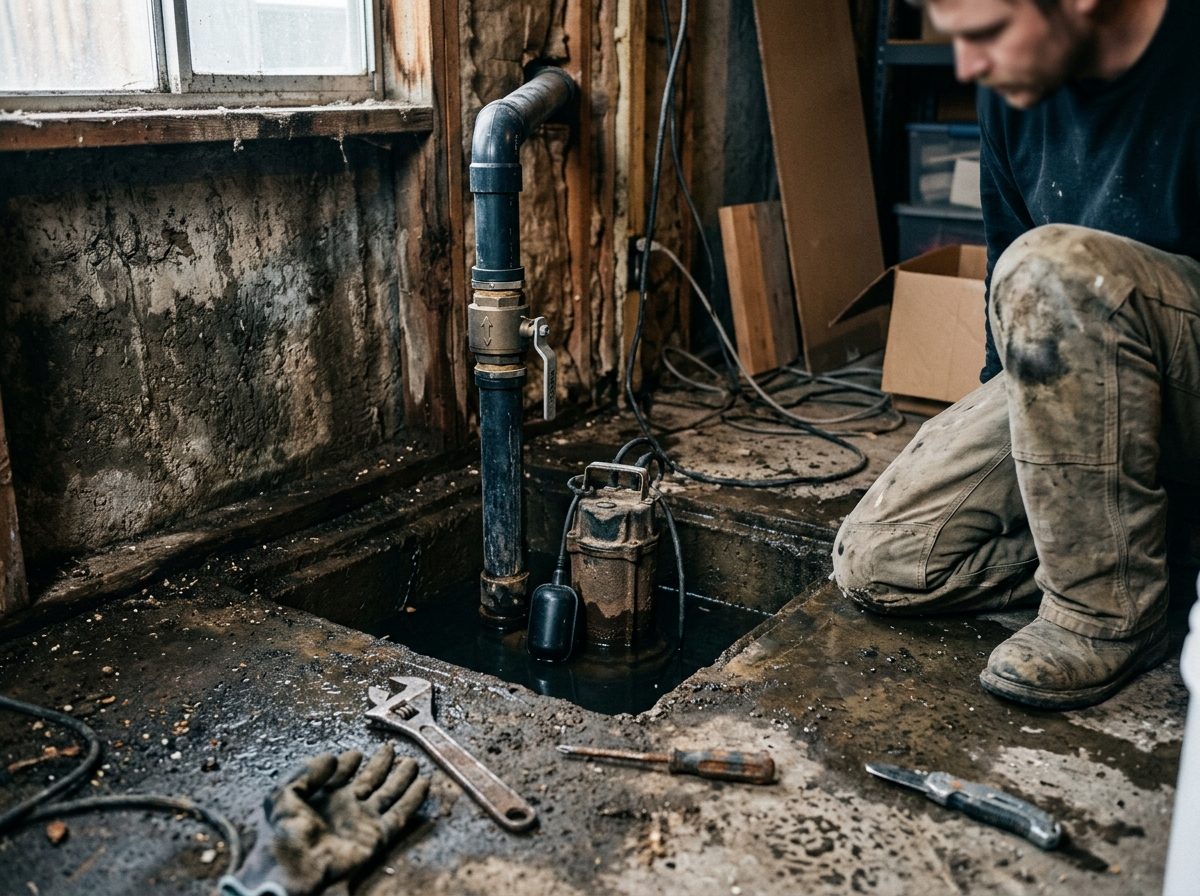
Large parts of El Paso County sit on expansive clay and claystone. Those soils swell when they take on water — with enough force to lift concrete — and shrink away when they dry. Anything buried in or under a slab gets worked through every cycle: the water service line from the street, the sewer lateral out to the main, and supply lines run beneath a basement or garage floor.
The failures that follow are recognisable. Sewer lines develop bellies where waste collects, or offset joints where two sections no longer line up, which is why a line that backs up at the same distance from the house every year is telling you about alignment rather than about what went down the drain. Supply lines under concrete fail at joints and fittings, and because they are out of sight the first symptoms are indirect — a warm patch on the floor, the sound of running water with everything off, a bill that climbed without a change in habits.
Drainage is the part homeowners can actually control. Downspouts that discharge next to the foundation, irrigation running against the wall, and ground that slopes toward the house all deliver water to exactly the place where expansive soil does the most damage. Fixing grade and extending downspouts is cheap, unglamorous and genuinely protective here.
Six thousand feet changes the appliance
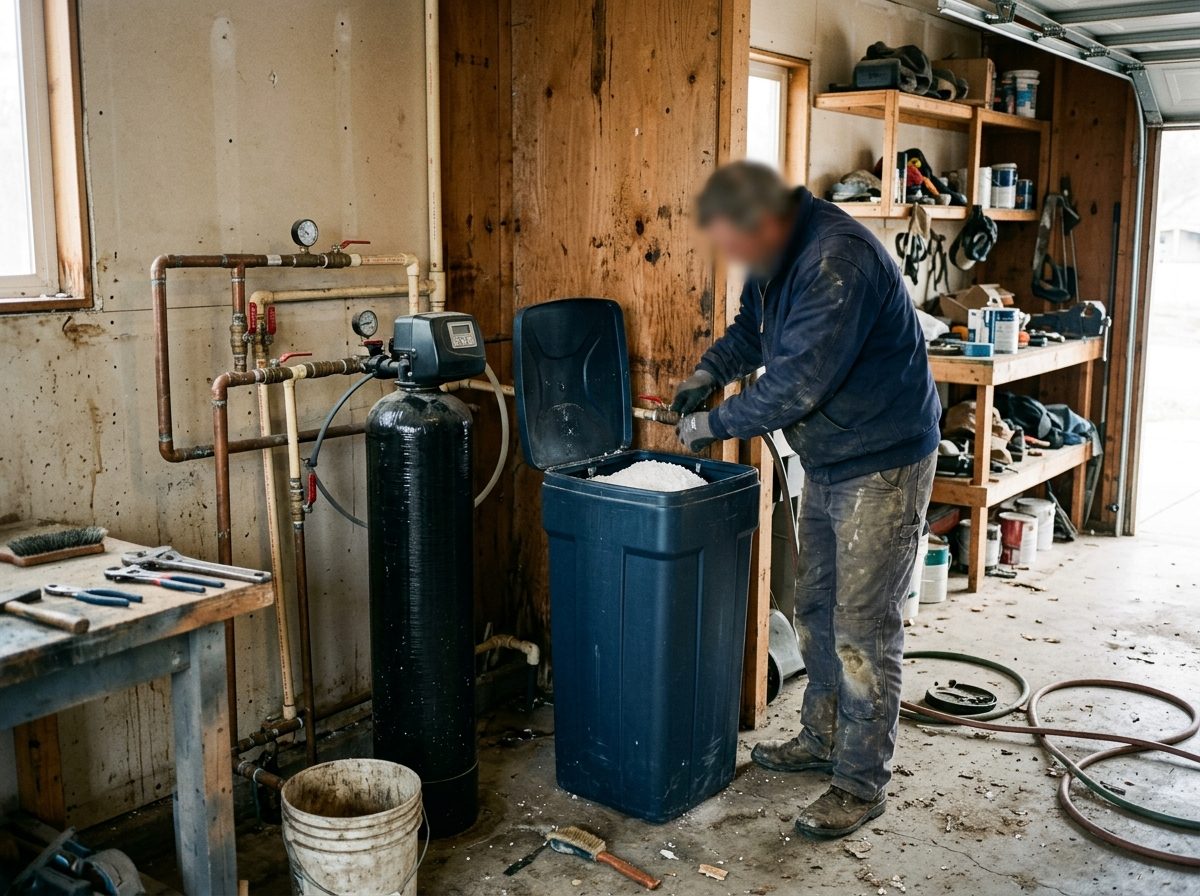
Gas-fired appliances lose rated output as air thins, and the city sits above six thousand feet with neighbourhoods considerably higher. A water heater or tankless unit chosen from a sea-level specification can therefore be undersized by the time it is installed and working in January, when incoming water is at its coldest and demand is at its highest. Derating, combustion air and venting all belong in the conversation before the unit is purchased rather than after it is on the wall.
Households usually notice it as a heater that is fine for nine months and cannot keep up for the coldest ten weeks. Tankless units are the most sensitive of all, because their output is a temperature rise across a flow rate and altitude squeezes both ends of that equation.
Replacing a water heater?Ask about altitude sizing before you buy the unit.
Ask about heater sizingToilets running, taps dripping? Check pressure before replacing fixtures one at a time.
Ask about high pressure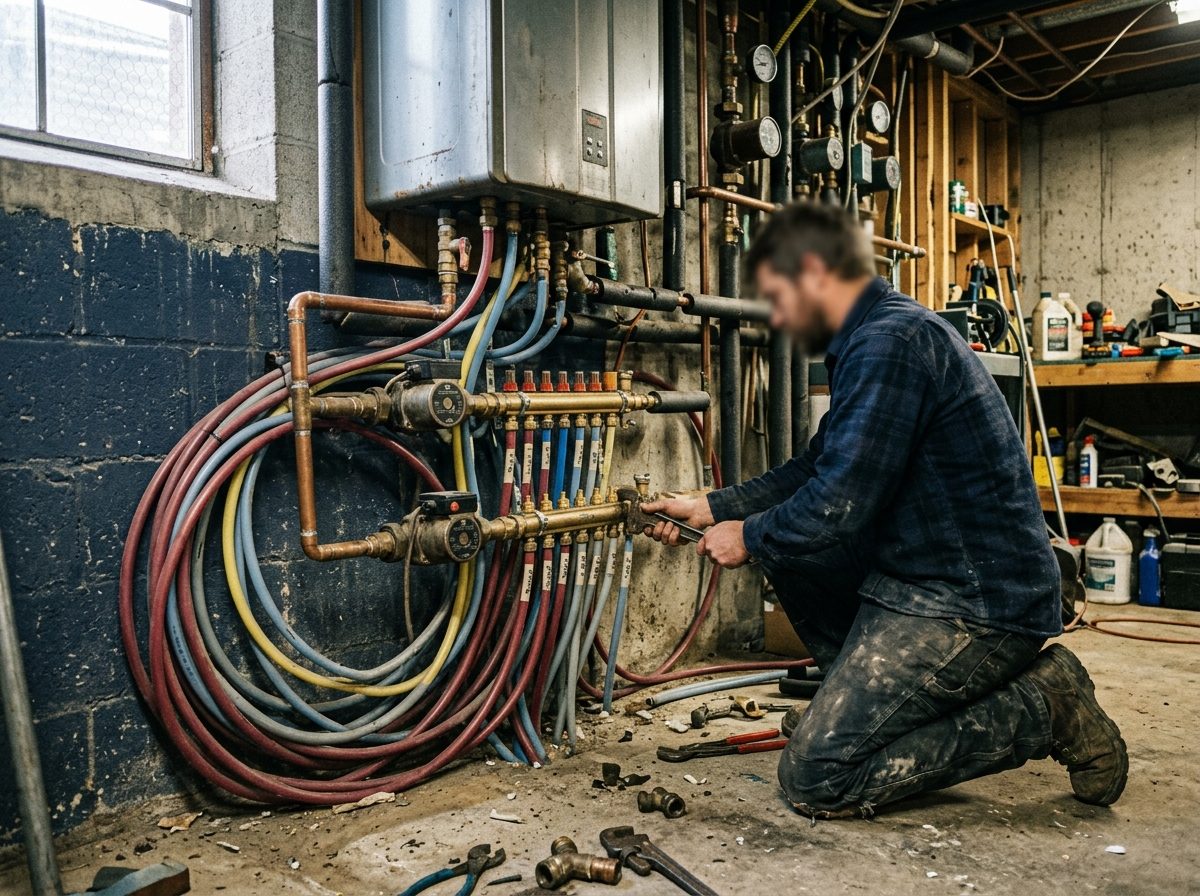
Pressure zones across the city
The Springs climbs a long way from the eastern plains to the foot of the mountain, and a distribution system serving that much elevation change runs at different pressures in different places. Some addresses sit low in a zone and see static pressure well above what household fixtures are designed for.
High pressure does not announce itself. It shows up as toilets that run, taps that drip, supply hoses that fail, a relief valve on the water heater that discharges periodically, and fixtures that wear out faster than they should. A gauge on an outdoor spigot costs very little and settles the question in a minute. If the reading is high, the pressure regulator is the part to address — a small component protecting every valve and appliance behind it.
Under contract on a house? A camera in the sewer beats a surprise after closing.
Ask about a pre-purchase checkBuying, selling and inheriting a plumbing history
This is a mobile housing market, with military and civilian relocation moving houses through owners faster than in most cities. Two consequences follow. Many houses carry layered repair histories that nobody currently living there can explain. And plumbing questions frequently arrive on a deadline — an inspection period, a closing date, a tenant moving in next week.
If you are buying here, the three checks worth paying for are a camera inspection of the sewer lateral, a static pressure reading, and an honest assessment of the water heater's age and condition. In soils that move, the sewer is the system most likely to be quietly compromised and the one a standard home inspection barely touches. Finding a belly or an offset joint before closing is a negotiation; finding it afterwards is a bill.
Worth doing this month
Walk the outside of the house after rain and watch where water goes. Anywhere it pools against the foundation is a place expansive soil will move, and moving soil is what breaks buried pipe. A downspout extension is the cheapest plumbing protection available in this city.
Nearby communities
The Springs sits at the centre of a wide service area, from the plains east of town up to the Teller County high country.
Colorado Springs
Colorado Springs plumbing questions answered
Expansive soils are the main reason. Clay and claystone here swell when wet and shrink when dry with enough force to move concrete, and a buried sewer lateral gets worked through every cycle. Instead of a simple blockage you get bellies where waste collects and offset joints where sections no longer line up. That is why repeated backups at the same distance deserve a camera rather than another cleaning.
For anything gas-fired, yes. Thinner air means less oxygen for combustion, so manufacturers derate output above certain elevations and sometimes specify different orifices or models. A unit sized on a sea-level table can fall short here in midwinter, when incoming water is coldest. Have the sizing conversation before the purchase, and include venting and combustion air.
Buy an inexpensive gauge and screw it onto an outdoor spigot. Readings well above the normal working range shorten the life of fixtures, hoses, valves and appliances, and the early symptoms are unglamorous — running toilets, dripping taps, a heater relief valve that discharges. If it reads high, look at the pressure regulator rather than replacing fixtures one at a time.
It is one of the classic signs of a hot water supply line failing under the concrete. Confirm it with the meter test: shut every fixture, note the meter reading and the low-flow indicator, then check again an hour later. Movement means water is leaving the system. Leak detection equipment can then locate the point without opening the whole floor, and the repair options include rerouting overhead rather than breaking concrete.
A camera inspection of the sewer lateral, a static pressure reading, and the age and condition of the water heater. Those three cover most of the real financial risk in this city. A standard home inspection does not put a camera in the sewer, and in soils that move that is exactly where the expensive surprises hide.
Same-day is normal across the city and a few hours is common for urgent problems. Neighbourhoods further out, and the higher addresses toward Teller County, add drive time. During a hard freeze everyone is busy at once, so you may get a next-morning window along with instructions on what to shut off in the meantime.
It is common, and it usually means the underlying cause was never addressed. Cleaning restores flow through whatever is in the way; it does not repair a cracked joint, lift a sagging section or remove the roots that will grow back. A camera run after clearing shows what is actually there, and that is what tells you whether annual maintenance, a spot repair or a liner is the right answer.
Treat it as urgent. Leave the building, do not operate switches or use a phone indoors, and call the utility from outside. Once the situation has been made safe, plumbing work on the gas line or appliance connection can follow. Guessing at the source yourself is not worth the risk, and a faint intermittent smell still deserves the same response.
The Pikes Peak region, any hour
Colorado Springs and the surrounding communities, answered 24 hours a day including holidays.
(833) 621-2904 — answered 24/7, statewide.