Plumber in Fountain, CO — 24/7 help by phone
Home / Areas / Colorado Springs & Pikes Peak / Fountain
Fountain shares the two defining local conditions of the Pikes Peak region — soils that move with moisture, and elevation high enough to matter for gas appliances — and adds a housing market that turns over quickly. Together those explain most of what goes wrong and most of the deadlines attached to fixing it.
Ground that moves buried pipe
Expansive clay and claystone are common across this part of El Paso County. Those soils swell when they take on water and shrink when they dry, and anything buried in or under concrete gets worked through every cycle: the water service line, the sewer lateral, and supply lines run beneath a floor slab.
The failures are recognisable. Sewer lines develop bellies where waste collects or offset joints where sections no longer line up, so a line that backs up at the same distance from the house year after year is telling you about alignment rather than about what went down the drain. Supply lines under concrete fail at fittings, and because they are out of sight the first signs are indirect — a warm patch on the floor, the sound of water with everything off, a bill that climbed without explanation.
Drainage is the part you control. Downspouts discharging next to the foundation and ground sloping toward the house deliver water exactly where expansive soil does the most damage, and extending a downspout is the cheapest protective plumbing work available here.
Same backup every year? A camera run tells you whether it is roots or alignment.
Ask about a repeat backup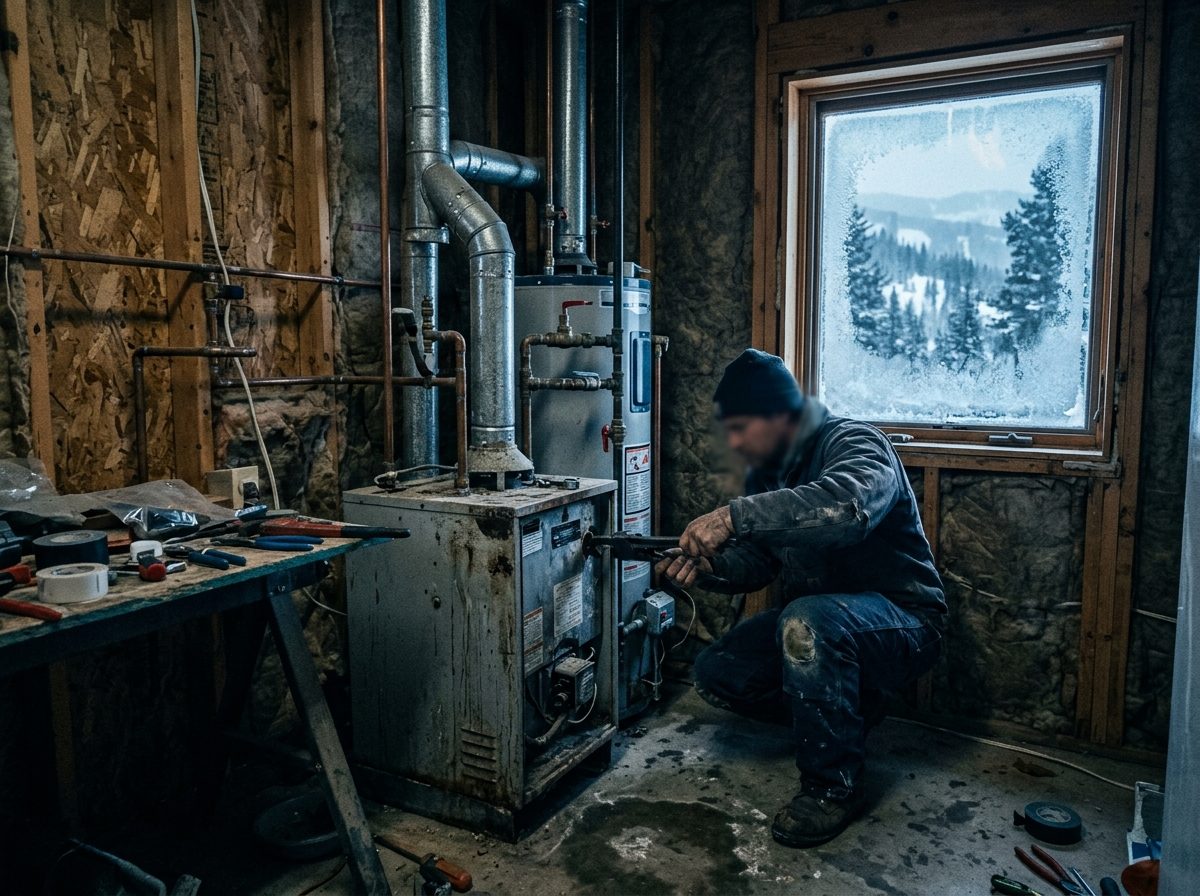
A market that turns over quickly
Housing here changes hands and tenants faster than in most towns, and that has two practical effects. Many houses carry layered repair histories nobody currently living there can explain. And plumbing questions frequently arrive on a deadline — an inspection period, a closing date, a tenant moving in next week.
For buyers, the three checks worth paying for are a camera inspection of the sewer lateral, a static pressure reading, and the age and condition of the water heater. For landlords, scheduled work at turnover — clearing main drains, replacing aged washer hoses, renewing worn toilet internals — costs far less than emergency response mid-tenancy.
Hard water and heater life
Mineral content is significant, and its cost is quiet. Scale settles in the bottom of the water heater and insulates the burner from the water above it, so run times lengthen and the tank ages faster than the label promises; on electric units it coats the elements. Aerators clog, shower heads block and fill valves stiffen.
Flushing annually is the cheapest life extension available, and at this elevation the heater is already working harder in midwinter. If you want treatment, test the water first so hardness is a number, and size any softener to the household.
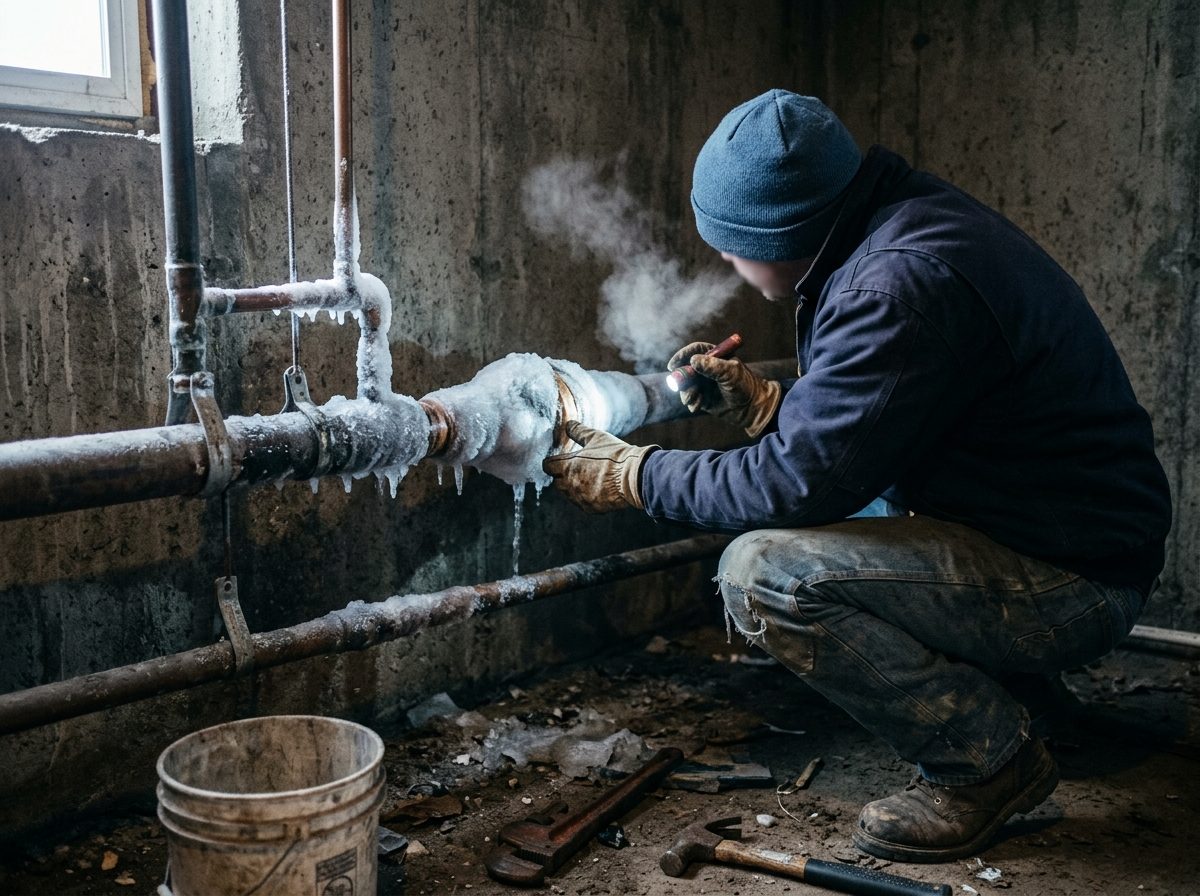
Heater falling short in winter? Altitude and inlet temperature both matter — ask before replacing.
Ask about your water heaterWind off the plains
Fountain catches wind off open ground to the east, and wind strips heat from exposed pipe far faster than the thermometer alone suggests. The vulnerable places are consistent: hose bibs with hoses still attached, garage walls, crawlspaces vented in summer and never closed, and lines in outside walls on the windward side.
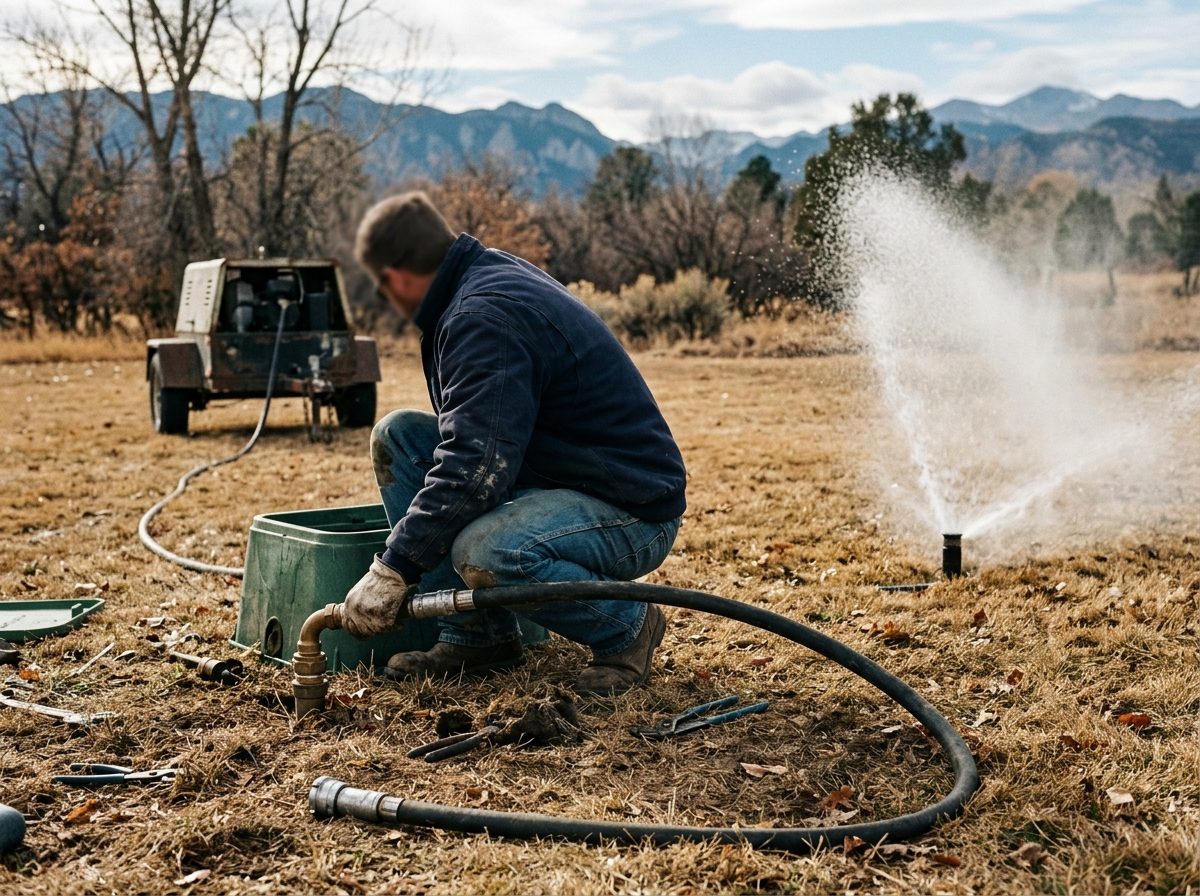
Disconnect hoses before the first hard freeze, get irrigation blown out with compressed air rather than merely drained, and open cabinet doors under sinks on exterior walls on the coldest nights. If a fixture stops flowing during a freeze, get the exposure dealt with even after flow returns, because ice can crack a pipe without releasing water until the thaw.
Cold snap forecast? Hoses off and cabinet doors open prevent most of it.
Ask about freeze protectionPipe that dates the house
In a town whose housing was built across several distinct waves, the material used for the supply pipe is often a reliable guide to when a house went up — and more usefully, to what is likely to need attention. Each era had a material that made sense at the time, and some of them have aged better than others.
Two are worth knowing about specifically. Galvanised steel, in the oldest housing, corrodes from the inside and closes its bore over decades, so the symptom is falling pressure rather than leaking — worst on the hot side, and worst when two fixtures are used together. Polybutylene, used widely in the late seventies through the mid-nineties, is the other: a grey or occasionally black flexible plastic, usually joined with plastic or metal insert fittings, which became notorious for failures at the fittings and is no longer used. Neither material is an emergency on its own, but both change how a house should be approached.
The practical value is in knowing what you have before something fails rather than after. It is usually visible at the water heater or where the supply enters the building, and it takes a minute to look. Where a house has polybutylene, it is worth knowing that insurers sometimes take a view on it, and that replacement is normally done as a planned repipe rather than in response to a burst. Where it has galvanised, staging the replacement — worst runs first, hot before cold, accessible sections while walls are open for other work — is the realistic route rather than doing it all at once.
Worth doing after rain
Walk the outside of the house and watch where water goes. Anywhere it pools against the foundation is a place expansive soil will move, and moving soil is what breaks buried pipe.
Nearby communities
Fountain sits just south of Colorado Springs, with the Academy, Peyton and the eastern plains communities within reach.
Fountain, Colorado
Fountain plumbing questions answered
Because the pipe rather than the blockage is the problem. Expansive soils move buried pipe through every wet-dry cycle, producing bellies where waste collects and offset joints where sections no longer align. Clearing buys months. A camera run shows what is actually there and decides between a spot repair, a liner and replacement.
It is a classic sign of a hot water supply line failing under the concrete. Confirm with the meter test: shut every fixture, note the meter and the low-flow indicator, then read again an hour later. Movement means water is leaving the system, and detection equipment can locate the point without opening the whole floor.
A camera inspection of the sewer lateral, a static pressure reading, and the age and condition of the water heater. Those three cover most of the real risk in this area. A standard home inspection does not put a camera in the sewer, and in soils that move that is exactly where expensive problems hide.
Clear the main drains rather than waiting for a blockage, replace washing machine hoses more than a few years old, renew tired toilet internals, and check the heater age and condition. That short list removes most emergency calls, and doing it while the property is empty is cheaper and inconveniences nobody.
Yes, for gas units. Thinner air reduces combustion output, so derating, venting and combustion air belong in the sizing conversation. Combined with cold January inlet water, that is why a heater which coped all summer can run short in midwinter. Size for winter conditions rather than for the average.
Same-day is normal and a few hours is common for urgent problems, given how close the Springs service area is. During a hard freeze the whole region is busy at once, so expect an honest window along with instructions on what to shut off while you wait.
Measure it with an inexpensive gauge on an outdoor spigot. Readings above the normal working range shorten the life of fixtures, hoses, valves and appliances, and the early symptoms are running toilets, dripping taps and a heater relief valve that discharges. If it reads high, look at the pressure regulator.
No. Chemical cleaners do not clear roots or a collapsed section, and they leave caustic liquid standing in the line, which makes the work hazardous for whoever opens it. Mechanical clearing followed by a camera is the right sequence, and it also tells you why the blockage happened in the first place.
Look at the water heater and where the supply enters the building — that is usually enough. Galvanised steel is dull grey threaded metal; copper is obvious; polybutylene is a grey or black flexible plastic with insert fittings, used from the late seventies to the mid-nineties. Knowing which you have before a failure changes how the house should be approached.
South of the Springs, any hour
Fountain, Colorado Springs, the Academy and the surrounding El Paso County communities.
(833) 621-2904 — answered 24/7, statewide.