Plumber in Pueblo, CO — 24/7 help by phone
Home / Areas / Pueblo & Southern Colorado / Pueblo
Pueblo has some of the oldest continuously occupied housing in Colorado, and a great deal of it still has its original plumbing. That single fact frames almost every service call here. The question is rarely whether something is worn out — it is whether this is the year you deal with it properly or patch it one more time.
A brick city with original pipe
The city grew as a steel town, and its neighbourhoods reflect that history: solid brick houses from the 1890s through the 1940s, built to last and plumbed with the materials of the day. Cast-iron drain stacks, clay sewer laterals and galvanised steel supply lines are all still in service in large numbers.
Each has a signature failure. Cast iron corrodes from the inside, roughening and narrowing until it catches waste at the low points and eventually perforates along the bottom of the pipe — the tells are recurring slow drains, a smell near the stack, and damp or flaking rust at its base in the basement. Galvanised supply pipe closes up internally until two fixtures cannot run at once, and the water runs rusty after the house has sat empty. Clay laterals crack, drop out of alignment and admit roots at the joints.
Because these houses have been repaired repeatedly over a century, the second thing that matters is documentation — or the absence of it. Successive owners have replaced sections in copper, in plastic, sometimes back into galvanised, and nobody wrote any of it down. A first visit to an older Pueblo house is often as much investigation as repair.
What to fix first
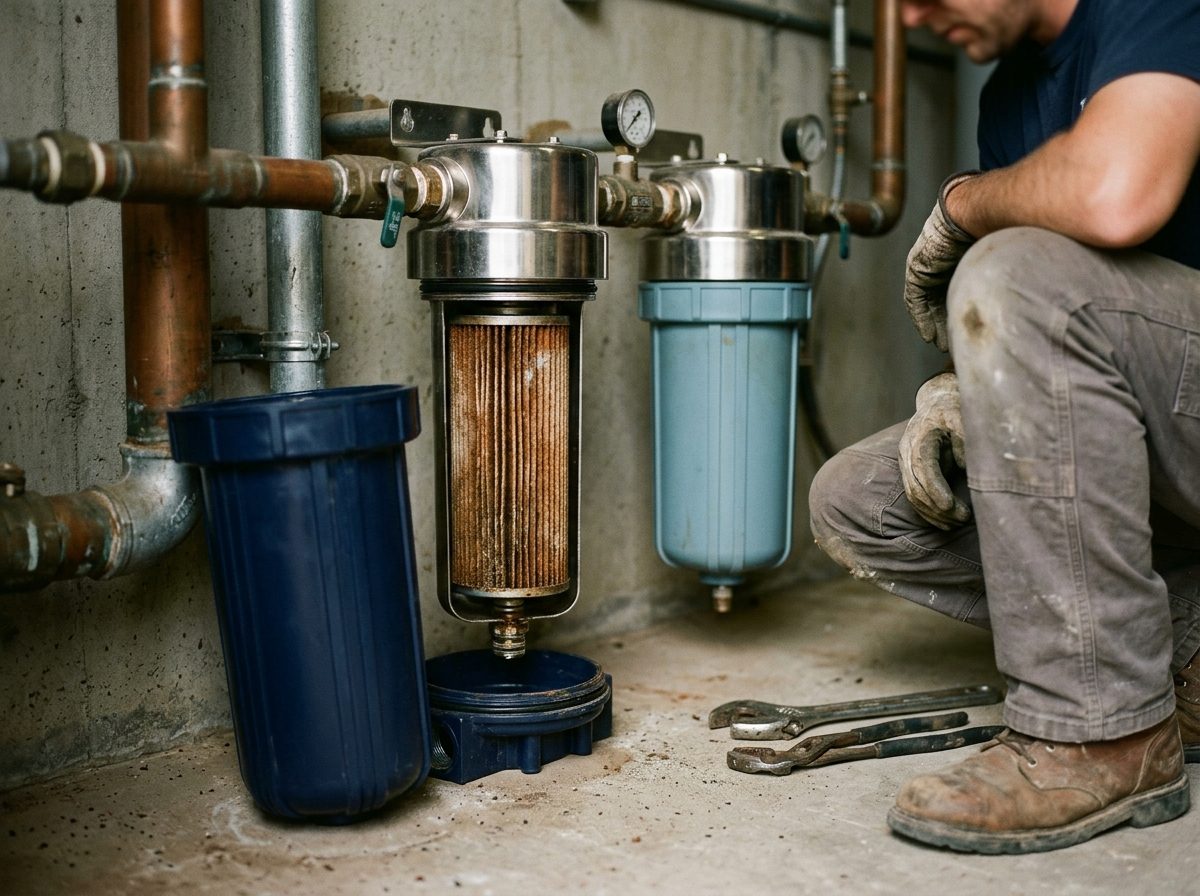
On a house where several systems are at the end of their lives, sequencing matters more than ambition. Three checks usually make the order obvious: a camera down the sewer lateral, a static pressure reading at an outdoor spigot, and the age and condition of the water heater.
From there, the drain stack often jumps the queue, because it is the failure that ruins finishes rather than merely inconveniencing you. Repiping can be staged — the runs feeding the fixtures you use most, one floor, or the horizontal mains in the basement first — and a plumber who insists that only a whole-house job is possible on day one is worth a second opinion. What you want is a plan with an order and a rough cost against each step, not a single number.
Several things at the end of their life?Ask for an order of work rather than one big number.
Ask for a planFixtures scaling up fast? Test the water before buying any treatment.
Ask about hard water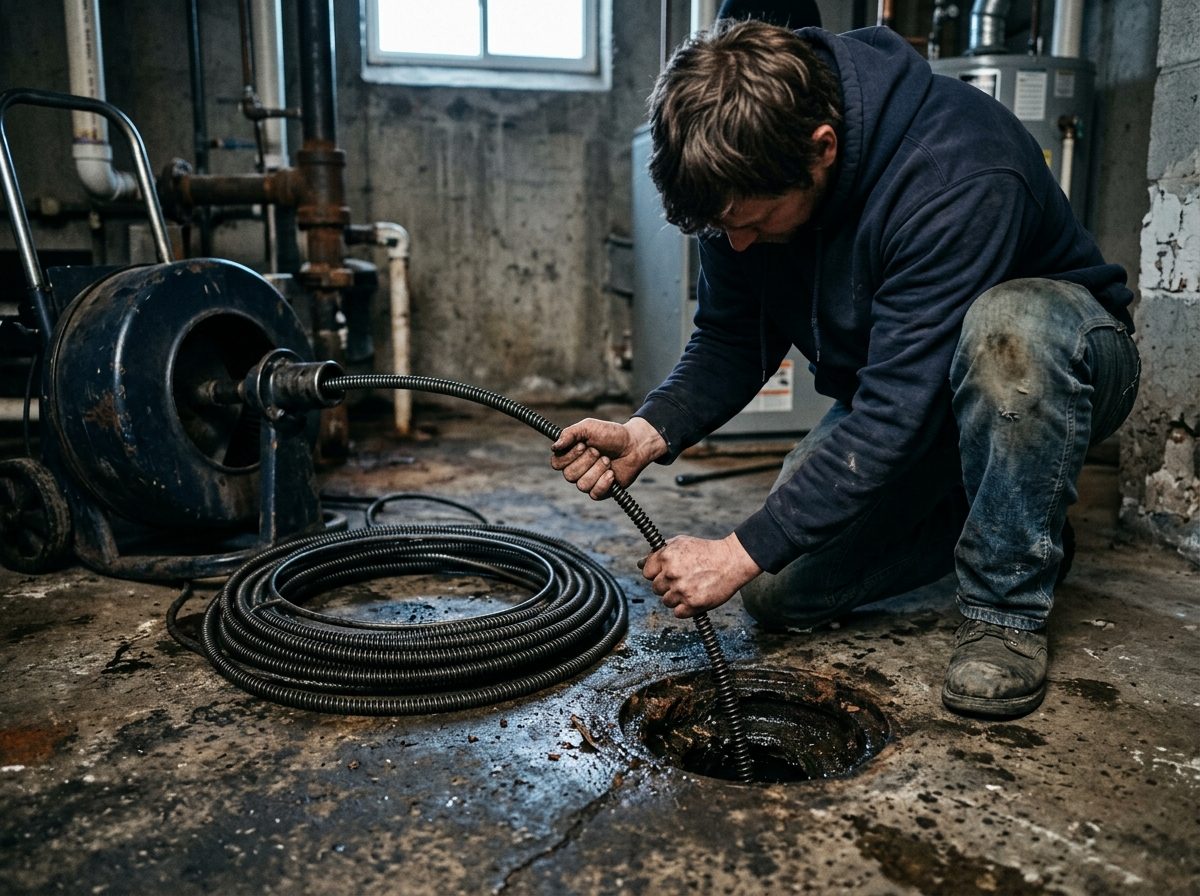
Mineral load and heaters
Water here carries a high mineral load, and the cost of that is quiet and cumulative. Scale collects in the bottom of the water heater and insulates the burner from the water above it, so run times lengthen and the unit ages faster than the label promises. On electric heaters it coats the elements. Aerators clog, shower heads block, fill valves stiffen, and appliances wear.
Flushing the tank annually is the cheapest life extension available and the job most often skipped. Beyond that, test before you treat: hardness, iron and sulphur call for different equipment, and an oversized softener costs more to buy and run without doing more good.
Old house, first cold snap? Hoses off and a shutoff that turns prevent most of it.
Ask about freeze protectionCold nights in an old house
Old brick houses have their own freeze profile. Pipes were often run through spaces that are no longer heated the way they once were — enclosed porches, additions, crawlspaces under later extensions, and walls that have been reinsulated everywhere except where the plumbing runs. A cold snap with wind finds those places reliably.
Two things help more than anything else. Disconnect hoses from exterior bibs before the first freeze, since a connected hose holds water against the bib and defeats its frost protection. And know where your main shutoff is and confirm it turns — in a house of this age, a valve that has not moved in decades sometimes will not close, and discovering that during a burst pipe is the worst possible timing. Replacing a seized shutoff is a small scheduled job.
If a pipe has split
Close the main shutoff first, then open the lowest taps in the house to drain the system and take pressure off the break. Photograph everything before cleanup starts if there is any chance of an insurance claim, then call.
Nearby communities
Pueblo is the hub for a large stretch of southern Colorado, and the towns around it share the same phone line.
Pueblo, Colorado
Pueblo plumbing questions answered
No, and often it should not be. Repiping can be staged by floor, by run, or by starting with the horizontal mains in the basement and the fixtures you use most. What sets the order is where flow is worst and where the pipe is easiest to reach. A contractor who presents a whole-house job as the only option on the first visit is worth a second opinion.
Slow drains upstairs that clear briefly and come back, a persistent smell near the stack, damp or staining on the wall around it, and flaking rust or moisture at its base in the basement. The failure is gradual until it is not. Since the stack usually runs inside a finished wall, much of the cost is access and finishes, which is why it is worth looking early.
It depends on what the camera shows. A line with root intrusion at one joint may run reliably on an annual clean; a line with a belly or an offset joint will keep blocking whatever you do. The point of the inspection is to tell you which situation you are in, so you are choosing between maintenance and repair on evidence instead of guessing.
For most households on hard supply the money comes back in appliance and heater life rather than in anything you notice at the tap. Test first so you know hardness in real numbers and whether iron is present, then size the equipment to your household. Also check there is somewhere sensible to plumb the loop and a drain for the regeneration cycle.
Do not force it, because a valve that snaps leaves you worse off than one that sticks. It is a small scheduled job to replace, and worth doing before you need it — in most cases the water can be shut off at the meter or the street while the work is done. In an older house this is one of the highest-value small repairs available.
Same-day is normal in the city and a few hours is common for urgent problems. Outside town — Avondale, Boone, Beulah, Rye, Colorado City — response depends on who is already working in that direction, and a scheduled visit is often faster in practice than waiting for an emergency slot.
Recurring blockages in the same place usually mean grease and scale built up on the pipe wall, not a single object in the way. Cabling punches a hole through the blockage and restores flow; it does not clean the pipe. Hydro jetting scours the wall back toward its original diameter, which is why it lasts longer on a line that keeps closing up.
Toilets first — a failed flapper passes water silently and continuously. Put food colouring in the tank, wait twenty minutes without flushing, and look for colour in the bowl. If they are clean, run the meter test: everything off, note the meter, read it again an hour later. Movement means water is leaving the system, and that is the point to bring in leak detection.
Ask for the work to be ranked by what fails worst rather than by what is most visible. Anything actively leaking comes first, then whatever protects the building — a shutoff that will not close, a relief valve discharging — then the appliance nearing the end of its life, then cosmetic items. That order changes the total cost more than any single choice within it.
Southern Colorado, any hour
Pueblo, Avondale, Boone, Colorado City, Rye, Beulah and the towns around them.
(833) 621-2904 — answered 24/7, statewide.