Plumber in Penrose, CO — one call, any hour
Home / Areas / Pueblo & Southern Colorado / Penrose
Penrose sits in the orchard and acreage country between Canon City and Pueblo. Lots are generous, a good share of properties are on private wells, and outdoor water is a much larger part of the picture than in any town.
Orchard country between the valleys
Properties here often have long-established plantings and the irrigation to support them, alongside outbuildings with their own supply. That means the plumbing extends well beyond the house, with several hundred feet of buried line on a typical holding.
The most useful information on a call is scope rather than symptom: how many structures take water, what the source is, and how far the furthest fixture sits from the pump or meter. Those three answers determine what parts and equipment are needed.
Water reaching more than one building? Say how many structures are involved.
Ask about a property visit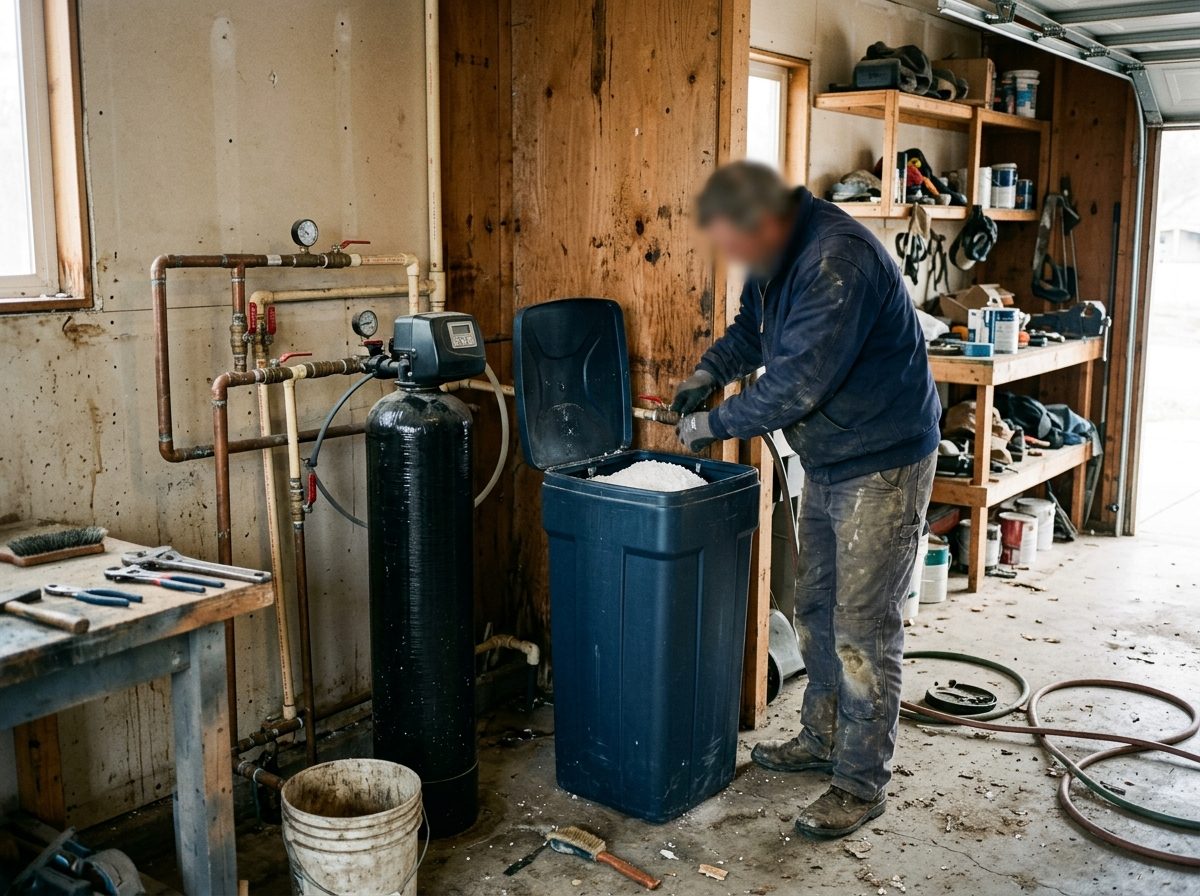
Wells and mixed supply
Some properties are on rural service and some on private wells, and the distinction decides both what fails and which trade should attend. On a well, three faults account for most calls: a pressure tank that has lost its air charge and is cycling the pump, a pressure switch that has stopped making contact, and a pump at the end of its life.
All three present as poor pressure or nothing at the tap, so what the gauge reads, whether the pump runs and whether the breaker has tripped are the answers that narrow it before anyone drives out.
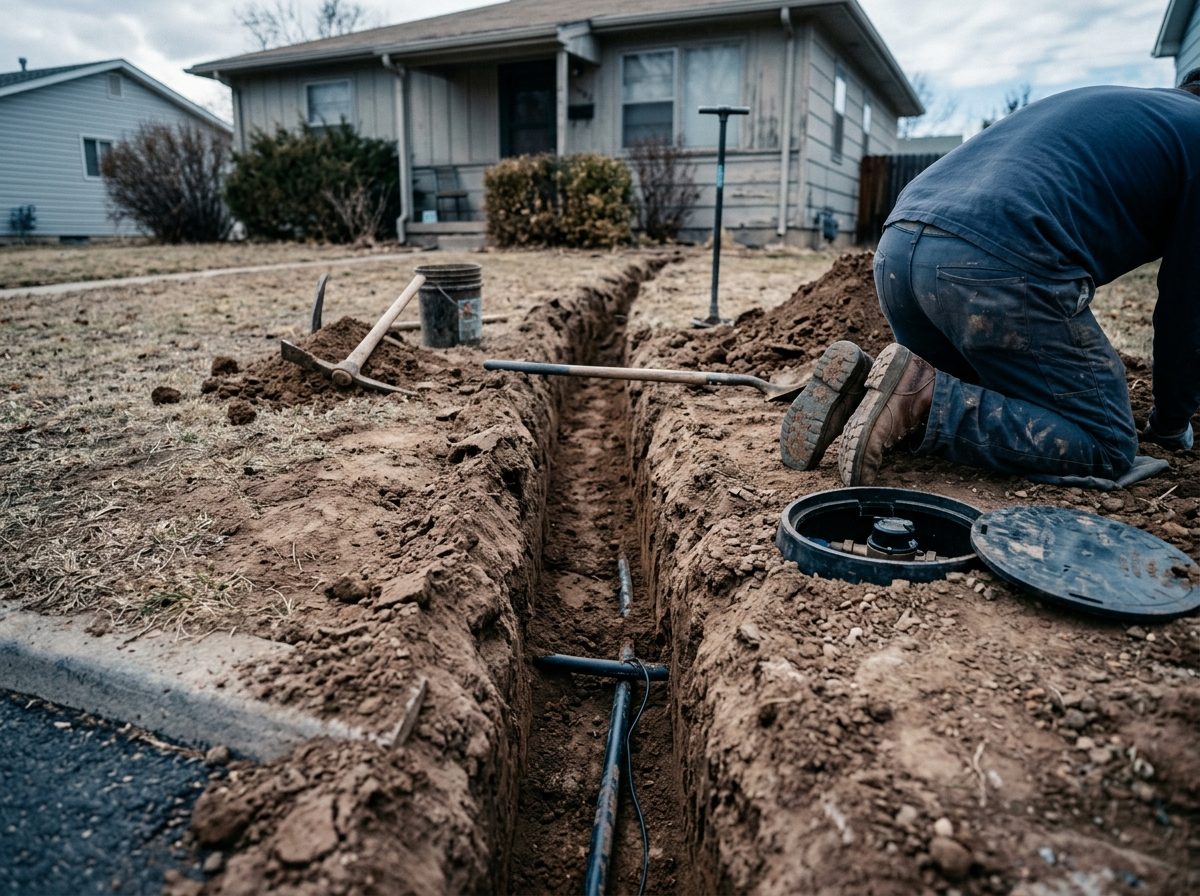
Buried runs on a large lot also bring a specific problem: a leak can continue for weeks without anything visible changing, because there is no ceiling to stain. The signs are indirect — pressure that has slowly fallen, ground that stays damp or unusually green, or a pump running more often than it used to. With everything shut off, movement at the gauge or meter over an hour confirms water is leaving the system, and isolation valves then narrow which run is at fault before anyone digs.
Hard water and appliances
Water here carries a heavy mineral load, and the water heater absorbs most of the damage. Sediment settles across the tank floor so the burner heats through scale rather than steel, run times lengthen and recovery slows. On electric models the elements scale directly and fail early.
Draining the tank annually is the cheapest life extension available, and the sacrificial anode rod deserves a look at the same time. On a well, test the water too — composition varies property to property, and hardness, iron and other results call for different equipment.
Heater slower than it was? Sediment and a spent anode rod are the usual pair.
Ask about heater maintenanceIrrigation and hydrants
With established plantings and generous lots, most of the water in use here is outdoors — and that is where most winter failures start. Irrigation not cleared with compressed air before the first hard freeze holds water at its low points and at the backflow device.
Where irrigation ties into domestic water, proper backflow protection matters as a safety measure rather than a formality, since the risk is contaminated water drawn back into the drinking supply. And hydrants that weep have usually stopped draining, which means the standpipe holds water and splits underground in the first hard freeze.
Sprinklers still charged? Compressed air clears what draining cannot reach.
Ask about winterisingDrip systems and the filter that protects them
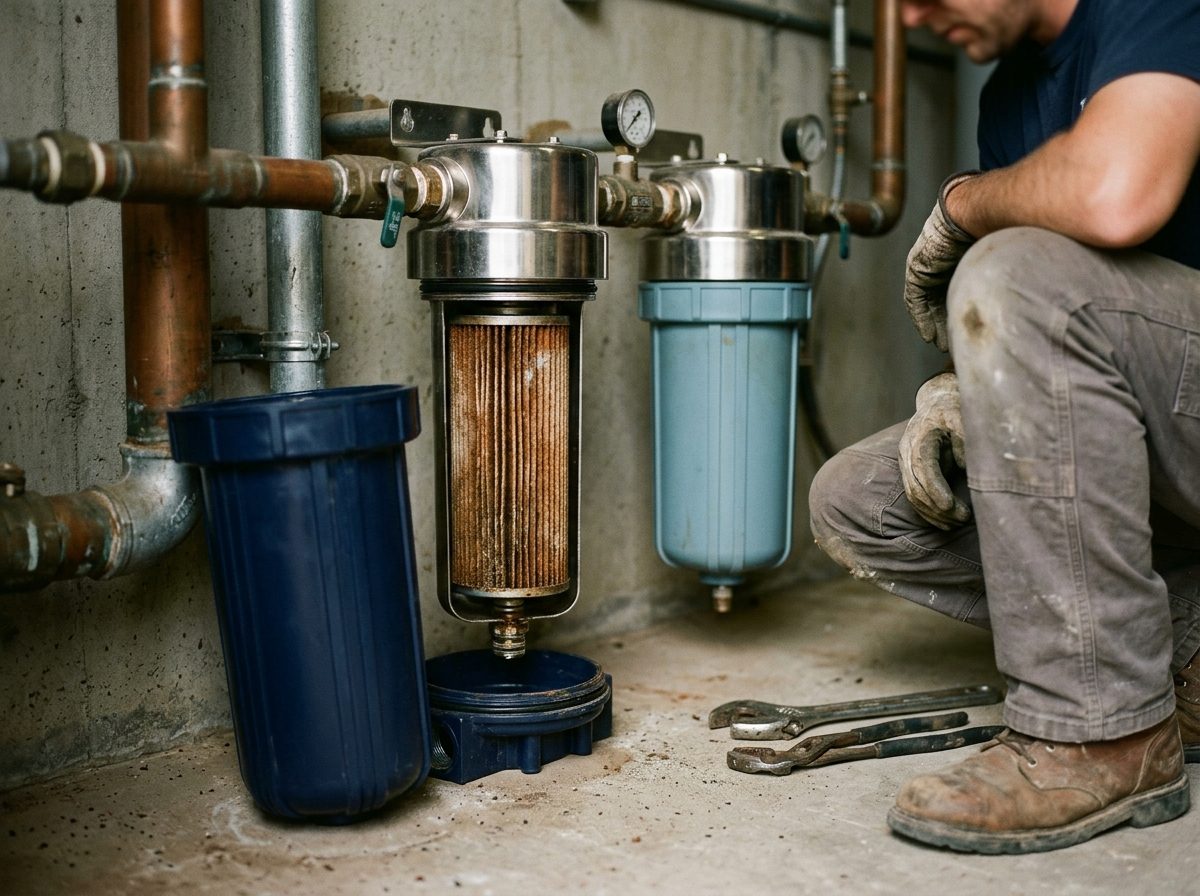
Orchard and vineyard ground here is commonly watered by drip rather than by spray, and drip has one vulnerability that decides whether it works: the emitters are small enough to block. Whatever the water carries — sand, silt, iron, organic matter from a ditch or a pond — ends up at the emitter, and a blocked emitter does not announce itself. The tree simply stops getting water while everything looks normal from the valve.
So the filter is not an accessory on these systems, it is the system. A screen or disc filter sized for the flow, positioned where it can be serviced, and cleaned on a schedule rather than when something wilts is what keeps the emitters clear. On ditch or surface water the filtration needs to be considerably more serious than on a well, and a pressure gauge either side of the filter is the cheapest diagnostic available — a growing difference between the two readings is the filter telling you it needs cleaning before any plant does.
Two other details matter. Drip runs at low pressure, so a pressure regulator suited to the emitters is part of a correct installation rather than an optional refinement — mains pressure will blow emitters and fittings off the line. And where a fill line or a drip system draws from anything other than a protected potable supply, the connection to the domestic system needs proper backflow protection, which is the one part of this that is a safety matter rather than a horticultural one.
Autumn walk-round
Irrigation cleared, every hose bib and hydrant tested, and the heater flushed. One visit before the first hard freeze, and most of the winter calls never happen.
Nearby communities
Penrose sits between Canon City and Pueblo in orchard and acreage country, with Florence and Rockvale nearby.
Penrose, Colorado
Penrose plumbing questions answered
It depends where the fault is. Everything from the pressure tank into the house is ordinary plumbing. The pump, drop pipe and wiring down the casing are well-system work needing specific equipment. Saying what the gauge reads and whether the pump runs settles which trade should come.
Where irrigation ties into domestic water, backflow prevention is standard practice and generally required, because the risk it addresses is contaminated water being drawn back into the drinking supply. The specific device depends on the system and your provider. Ask before a system is installed or reworked.
Before the first hard freeze, which can arrive in October. Draining is not enough on most systems, because low points and the backflow device hold water gravity cannot move. On a property with long runs and established plantings, booking early in the season is worth doing.
Scale is the usual explanation in mineral-heavy water. Sediment collects across the tank floor, insulates the burner from the water and forces longer run times; on electric units it coats the elements. An annual drain pushes the life back toward the manufacturer’s expectation.
That needs dealing with before winter. The hydrant drains its standpipe below the frost line each time it closes, and one that weeps has usually stopped draining. Water left in that pipe through a hard freeze splits it underground, turning a modest repair into digging.
Yes. Composition varies property to property in a way municipal supply does not, so a neighbour’s results tell you little. Hardness and iron affect appliances and fixtures; other results affect the people drinking it. Test before buying any treatment equipment.
Usually same-day for urgent problems, with Canon City and Pueblo both within reach. Larger properties sometimes take longer on site rather than to reach, because tracing water across several structures takes time. Mentioning the layout when you call helps.
Three to five years for most households, sooner where the tank is small or the household is large. Every drain slowing at once rather than one fixture is the classic signal, along with unusually lush growth over the field or a backup after a busy weekend.
Blocked emitters, most likely — they are small enough to clog with sand, silt or organic matter, and they do it silently while the valve and the lines look normal. Check and clean the filter first, then walk the line. Gauges either side of the filter tell you it needs cleaning before any plant shows it.
Yes — drip is designed for low pressure, and mains pressure will pop emitters and fittings off the line. A regulator matched to the system is part of a correct installation rather than an upgrade. Where the water is drawn from a ditch or pond rather than a protected supply, backflow protection at the domestic connection matters too.
Between the valleys
Penrose, Florence, Canon City, Rockvale and Coal Creek.
(833) 621-2904 — answered 24/7, statewide.