Plumber in Canon City, CO — 24/7 help by phone
Home / Areas / Pueblo & Southern Colorado / Canon City
Canon City sits low in the Arkansas River valley, which gives it a gentler winter than most of the state and a different set of plumbing priorities. Deep-freeze damage is less of a defining risk here than it is thirty miles north or two thousand feet up. What dominates instead is the condition of pipe that has been repaired repeatedly for a century, and water carrying enough mineral to shorten the life of everything it passes through.
A river-valley town, and what that means
The valley setting shows up in three practical ways. Frost depth is shallower than on the Divide or the northern plains, so buried lines and irrigation are at less risk in an average year — though a hard snap still finds an exposed hose bib. Groundwater is closer to the surface in places near the river, which matters for basements and crawlspaces. And the town is a base for river and canyon tourism, so a share of housing is let to visitors and sits between bookings.
None of that removes winter risk entirely. It shifts the emphasis: fewer catastrophic freeze-ups, more slow deterioration, and more problems that have been quietly developing for years before anyone rings.
Something has been getting worse slowly? Those are the cheapest problems to fix and the easiest to postpone.
Ask about a slow problem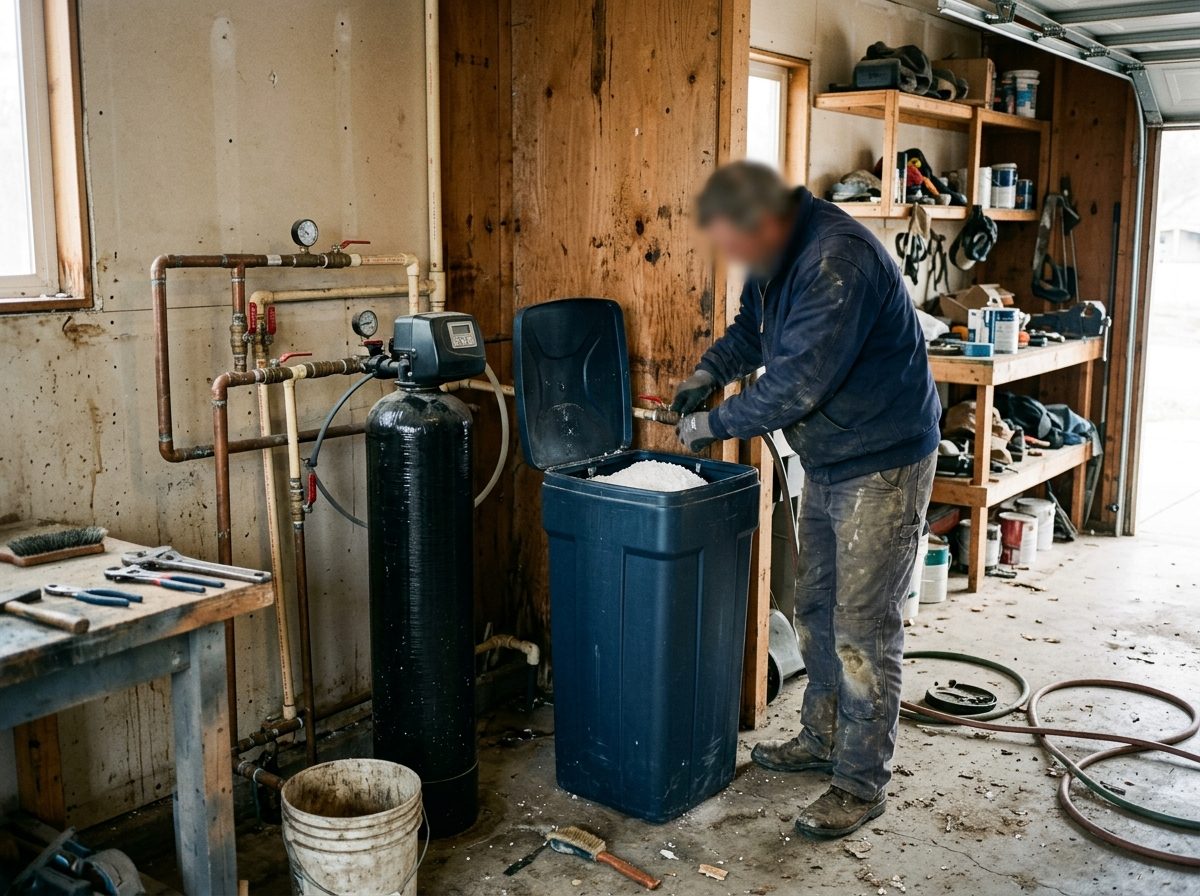
Pipe that is a patchwork
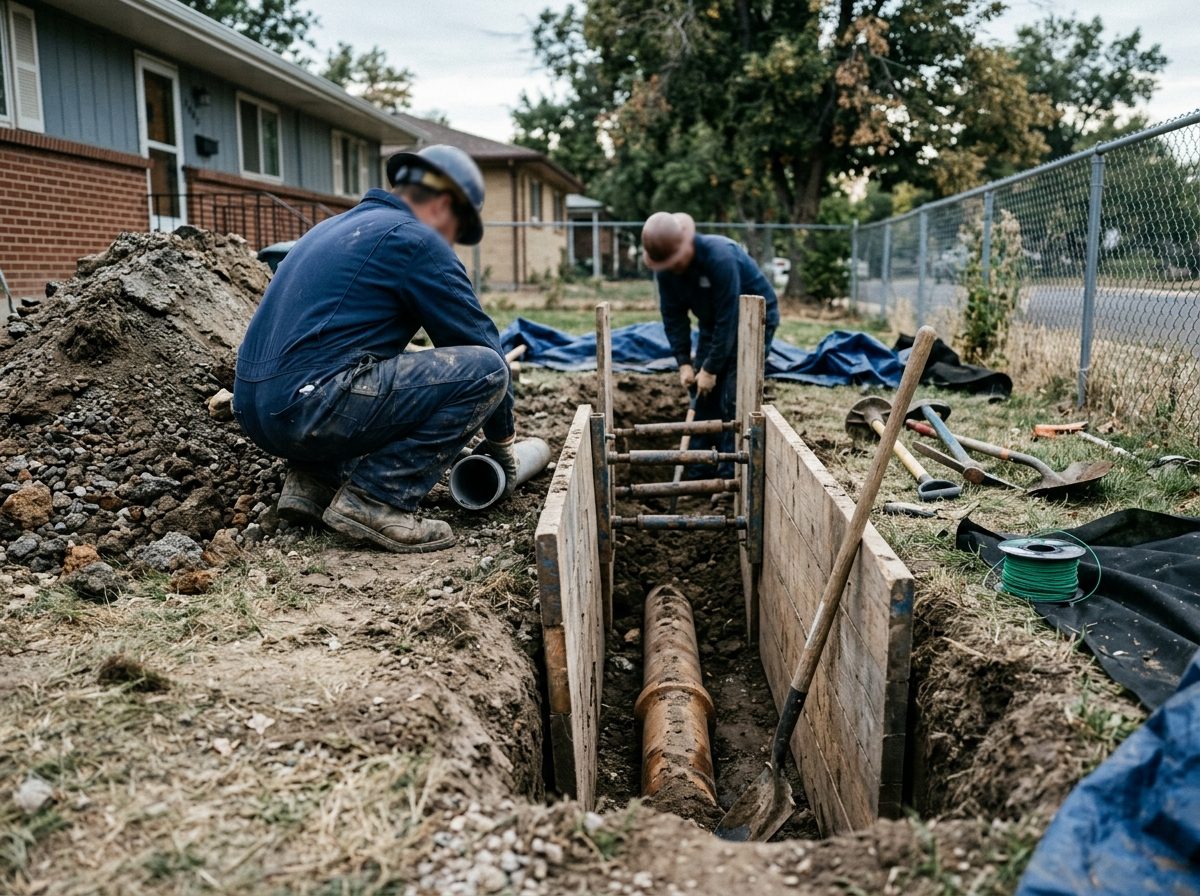
The distinguishing feature of plumbing in an old Fremont County house is not the original material — it is the number of times someone has interrupted it. A single run may start as galvanised steel, change to copper at a union somebody added in the 1970s, and finish in plastic fitted last decade.
Those transitions are where trouble concentrates. Dissimilar metals joined without the right fitting corrode at the junction. Undersized replacement sections throttle flow through an otherwise sound line. Fittings buried inside finished walls during a remodel become invisible until they weep. The practical consequence is that diagnosis here often means tracing what is actually installed, not assuming what should be, and that a good first visit may end with a written sequence rather than a repair.
It also means small clues carry weight. Discoloured water at one tap and not another, a joint that sweats only when the washing machine runs, flow that changed after a bathroom was redone — all of those point at a specific junction rather than at the house in general.
Minerals, anode rods and appliance life
Water here carries a heavy mineral load, and the appliance that suffers most is the water heater. Sediment collects across the tank floor and blankets the burner, so the unit runs longer for the same hot water. On electric models the elements scale directly and burn out early.
Two maintenance items matter more here than the average homeowner realises. Draining the sediment out of the tank once a year is the obvious one. Less obvious is the sacrificial anode rod: it is a consumable part designed to corrode instead of the tank lining, and in mineral-heavy water it can be used up years before the heater's warranty expires. Replacing a spent rod is cheap; replacing a tank that rusted through because nobody looked at the rod is not.
Filtration and softening solve different problems, so a water test is the sensible first step rather than a purchase. Hardness, iron and sulphur each call for different equipment, and sizing to the household matters more than the brand on the tank.
Heater older than five years? Ask about the anode rod — it is the part nobody checks.
Ask about heater maintenanceOff the grid of the town system
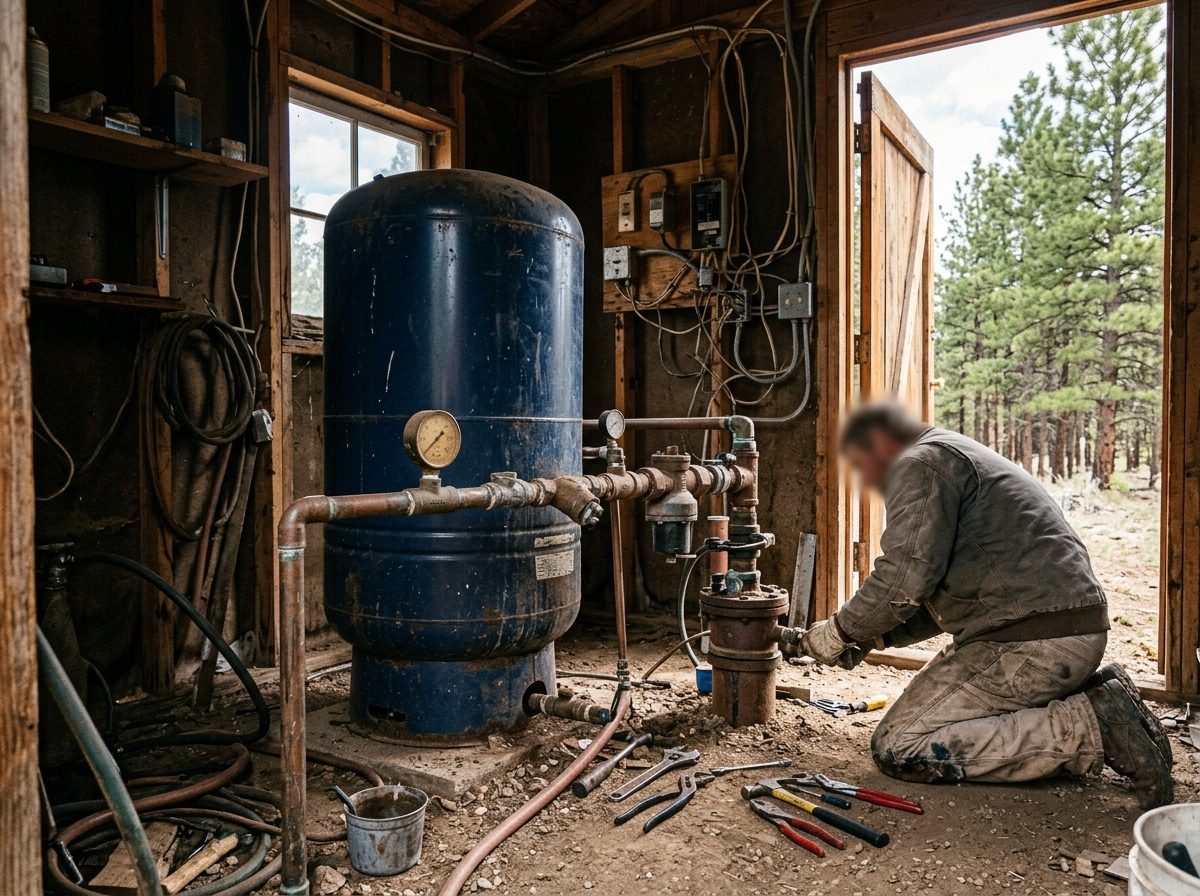
Move a few minutes out of town and properties come off the municipal system onto wells and septic. That changes what can go wrong and who should attend. Pressure tanks lose their air charge and set the pump cycling every few seconds, which wears it out quickly. Pressure switches fail. Pumps reach the end of their working life. All three arrive as the same complaint: nothing at the tap.
Septic systems, meanwhile, signal trouble by slowing every drain in the house at once rather than one fixture, and by making themselves obvious after a weekend with a full house. Pumping intervals of three to five years suit most households, less if the tank is small or the property is heavily used.
On a well outside town? Say what the pressure gauge reads — it narrows the fault fast.
Ask about a well systemWorth photographing today
Take a picture of your water heater's label and of the pipe where it enters the house. Those two images answer half the questions a plumber will ask on the phone, and they make the first visit considerably more productive.
Nearby communities
Canon City anchors the Fremont County end of the region, with Florence, Penrose, Rockvale and the upper Arkansas communities nearby.
Canon City, Colorado
Canon City plumbing questions answered
It is a sacrificial metal rod inside your water heater that corrodes in place of the tank lining. In mineral-heavy water it can be consumed within a few years, and once it is gone the tank itself starts corroding. Checking and replacing it is inexpensive, and it is the maintenance item most likely to add years to a heater in this area.
That usually means the problem is a specific section of pipe rather than the whole system, most often an old galvanised run feeding that fixture or a corroding junction where two different metals meet. Tracing which run serves that tap is the diagnosis, and replacing that section alone is frequently all the work required.
It can be, depending on how the joins were made. Dissimilar metals connected without the correct fitting corrode at the junction, and undersized replacement sections restrict flow through the rest of the line. Mixed material is not automatically bad — badly made transitions are, and they are worth finding before they leak.
They address different things. Softening removes the calcium and magnesium responsible for scale. Filtration targets sediment, taste, odour or specific contaminants depending on the media. A water test tells you which problem you actually have, and it costs a fraction of the equipment you might otherwise buy for the wrong reason.
In town, same-day is normal for anything urgent. Toward Coaldale, Howard and Hillside it depends on who is already working that direction, and for non-urgent work a booked slot usually happens sooner than waiting for a gap in an emergency schedule. Either way you will be told what to expect rather than what sounds good.
Near the river, groundwater is a genuine possibility alongside a plumbing leak, and the two need different remedies. The meter test separates them: with every fixture off, movement at the meter means water is leaving your system, while a still meter points at groundwater or condensation instead. That result decides who you need.
Look at the things heavy short-term use punishes: toilet internals, shower valves, washer hoses and the main drains. Between bookings is also the right moment to run water through every fixture, including the ones guests never touch, because unused traps dry out and let sewer smells into the house.
Yes, and the reason is specific: a camera shows the joins and the fall of the pipe, not just whether it is blocked today. In housing that has been added to over decades, the connections between old and newer sections are where roots enter and where waste catches. Knowing that before you buy or before you renovate changes the plan.
Sometimes, and the argument is strongest when a wall or floor is already open for other work — the marginal cost then is small and the alternative is opening it again later. Where nothing is open and the pipe is working, staging it by condition rather than replacing wholesale is usually the better use of money. Ask for the runs to be ranked.
It is one of the more worthwhile checks in a river-valley town with housing this age, because the sewer is the major system a standard inspection does not look inside. Clay laterals, root intrusion and sections that have lost their fall are all common and all invisible otherwise — and all expensive to discover afterwards.
Fremont County, any hour
Canon City, Florence, Penrose, Rockvale and the upper Arkansas valley.
(833) 621-2904 — answered 24/7, statewide.