Plumber in Howard, CO — one call, any hour
Home / Areas / Pueblo & Southern Colorado / Howard
Along the river, plumbing gains a complication most properties do not have: the ground itself holds water, and it holds more of it at some times of year than others. That changes how you diagnose water appearing where it should not be, and it changes what a crawlspace needs.
Living near the river
Proximity to the river means a water table that can sit close to the surface and rise seasonally with flow and snowmelt. Riverside ground also tends to be layered — sand, gravel and cobble in bands — which lets water move sideways more readily than clay does.
The practical effect is that damp in a crawlspace or a basement here has two quite different possible causes, and they need entirely different responses. One is a plumbing leak. The other is groundwater doing what groundwater does. Treating the second as though it were the first is a well-worn way to spend money without fixing anything.
Damp appearing seasonally? Timing is the clue that separates groundwater from a leak.
Ask what applies to you
Groundwater versus a leak
The test that separates them is straightforward and something an owner can run before calling. Shut every water-using fixture in the building, note the meter reading and the position of the low-flow indicator — or watch the pressure gauge on a well system — and check again an hour later with nothing touched.
Movement means water is leaving your plumbing, which points at a leak. A completely still meter with water still appearing means the water is not coming from your system at all, and no amount of leak detection will find a leak that does not exist.
Other clues help. Groundwater tends to appear after weather or seasonally, arrive from low down rather than above, and be cool and clean. A supply leak often produces a warmer patch if it is a hot line, may be audible with everything off, and does not correlate with rain. A waste leak smells. Reporting which of those fits saves a great deal of time.
Sumps and crawlspace water
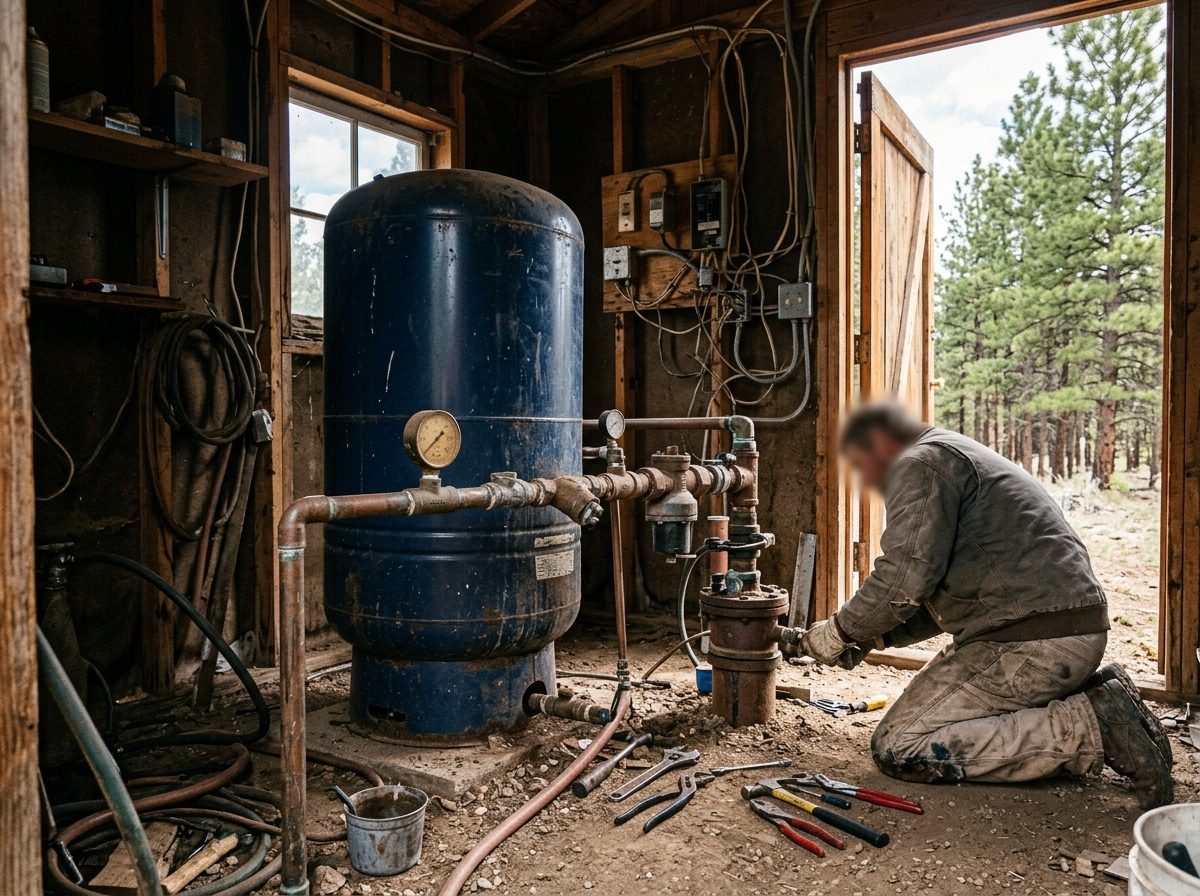
Where groundwater is the cause, the answer is management rather than repair. A sump pit collects water that reaches it and a pump lifts it away, and on a riverside property that is normal equipment rather than an admission of a problem.
What matters is that it works when needed. The pump most likely to fail is the one that has sat idle since last spring, and the moment it is needed is the moment the water table rises. Testing takes five minutes: pour two or three buckets into the pit and confirm the pump starts, clears the water and shuts off cleanly without short-cycling. If it hums without pumping, runs on, or does nothing at all, deal with it before the season rather than during it.
Two additions earn their cost where the consequence of failure is high: a check valve so lifted water does not run back into the pit, and a battery backup, since the storms that raise the water table are the ones that take the power out.
Pump not run since last spring? Test it with a bucket before the melt.
Ask about sump pumpsShallow ground and freeze depth
Riverside ground brings a second subject. Where bedrock or a high water table limits how deep pipe can be buried, water lines sometimes sit shallower than they ideally would — closer to the frost line than the same installation would be on deeper ground.
That matters because valley cold is real: cold air drains and pools here on still nights, so overnight temperatures can sit below what the regional forecast suggests. A line buried shallow in ground that freezes deeper than the installer assumed is a recurring winter problem rather than a one-off.
Where a line has frozen more than once, the durable answer is changing the exposure — reburying deeper where the ground allows, rerouting, or insulating the run properly — rather than thawing it again each winter and hoping. Heat tape is the fallback where nothing else is practical, and it needs testing each autumn because it fails silently.
Same line freezing every winter? Changing the exposure beats thawing it annually.
Ask about a recurring freezeInsulating a crawlspace properly
Most frozen pipe in a crawlspace is not a pipe problem, it is a crawlspace problem — and the usual response, wrapping the pipe in insulation, addresses the least important part of it. Insulation slows heat loss; it does not add heat. A pipe wrapped in foam with cold outside air moving past it will still freeze, just slightly later than it would have.
What actually changes the outcome is dealing with the air. Open foundation vents let outside air move through the space, so the first step is closing or fitting covers to them for the winter and sealing the gaps around where services enter. Insulating between the crawlspace and the outside — at the perimeter walls — keeps the space itself nearer the temperature of the house, which is the condition that protects everything in it. Insulating the floor above instead does the opposite: it keeps the house warm and the crawlspace cold, which is exactly wrong for the pipes.
Near the river the second consideration is moisture, and it interacts with the first. A ground vapour barrier laid over the soil stops the space acting as a humidifier, which matters because damp insulation loses most of its value and damp timber has other problems. Where ground water genuinely enters, drainage comes before insulation — there is no point insulating a space that takes standing water each spring. And whatever is done, the pipes should stay accessible: a crawlspace insulated so thoroughly that nobody can reach a fitting has traded one problem for another.
Run this before you call
The meter test. A still meter with water still arriving means the water is not from your plumbing — and that single hour saves paying someone to look for a leak that is not there.
Nearby communities
Howard sits along the Arkansas River west of Canon City, with Coaldale and Hillside the nearest neighbours.
Howard, Colorado
Riverside property questions answered
Not necessarily, and near the river it is often not. Run the meter test: shut every fixture, note the meter and low-flow indicator, and check an hour later. Movement means water is leaving your plumbing. A still meter with water still appearing means it is groundwater, not a leak.
Groundwater tends to appear after weather or seasonally, arrive from low down rather than above, and be cool and clean. A supply leak may produce a warm patch if it is a hot line, is often audible with everything off, and does not correlate with rain. A waste leak smells.
Yes. Where the water table sits close to the surface and rises seasonally, a sump pit and pump are ordinary equipment rather than a sign something is wrong. What matters is that the pump works when the water table rises, which is not the same as it being installed.
Pour two or three buckets of water into the pit. The float should lift, the pump should start, clear the water and shut off cleanly without short-cycling. If it hums without pumping, runs continuously, or does nothing, deal with it before the season rather than during it.
Where the consequence of failure is high, it earns its cost — because the storms that raise the water table are frequently the ones that take the power out. A check valve is worth having too, so water lifted out of the pit does not simply run back into it.
Often because it is buried shallower than ideal — bedrock or a high water table can limit depth on riverside ground — and valley cold air pooling on still nights means the ground freezes deeper than the installer assumed. It is a recurring exposure problem rather than bad luck.
Changing the exposure rather than thawing it again each year: reburying deeper where the ground allows, rerouting, or insulating the run properly. Heat tape is the fallback where none of that is practical, and it needs testing each autumn because it fails without any visible sign.
It depends who is already working this stretch of the valley, and you will be told plainly. For water appearing in a crawlspace the meter test is worth running first — it frequently changes what the visit is actually for, and occasionally shows that no plumber is needed at all.
The perimeter walls, if the aim is protecting the pipes. Insulating the floor above keeps the house warm and the crawlspace cold, which is the wrong way round for anything plumbed down there. Close the vents for winter, seal the gaps where services enter, insulate the perimeter, and lay a vapour barrier on the soil.
The upper Arkansas valley
Howard, Coaldale, Hillside and the country west of Canon City.
(833) 621-2904 — answered 24/7, statewide.