Plumber in Hillside, CO — one call, any hour
Home / Areas / Pueblo & Southern Colorado / Hillside
On steep ground, some properties do something a suburb never does: they get their water pressure from height rather than from a pump. A source or tank uphill, a pipe running down, and gravity doing the work. It is elegant and durable, and it has its own set of quirks that a conventional plumbing approach does not cover.
Pressure from height rather than a pump
The physics is simple: every foot of vertical drop between the water surface and the outlet produces pressure, and roughly two and a third feet of fall gives you one pound per square inch. So a tank a hundred feet above the house delivers something in the region of forty-three psi — perfectly usable household pressure with no electricity involved.
That last part is the appeal. A gravity system keeps working during a power cut, has no pump to fail, and needs no controls. Its constraints are equally fundamental: the pressure is whatever the height gives you and cannot be increased without moving the tank, and the flow depends on pipe diameter over what is often a long run.
Not sure how much fall you have? It determines your pressure entirely — worth measuring.
Ask about a gravity system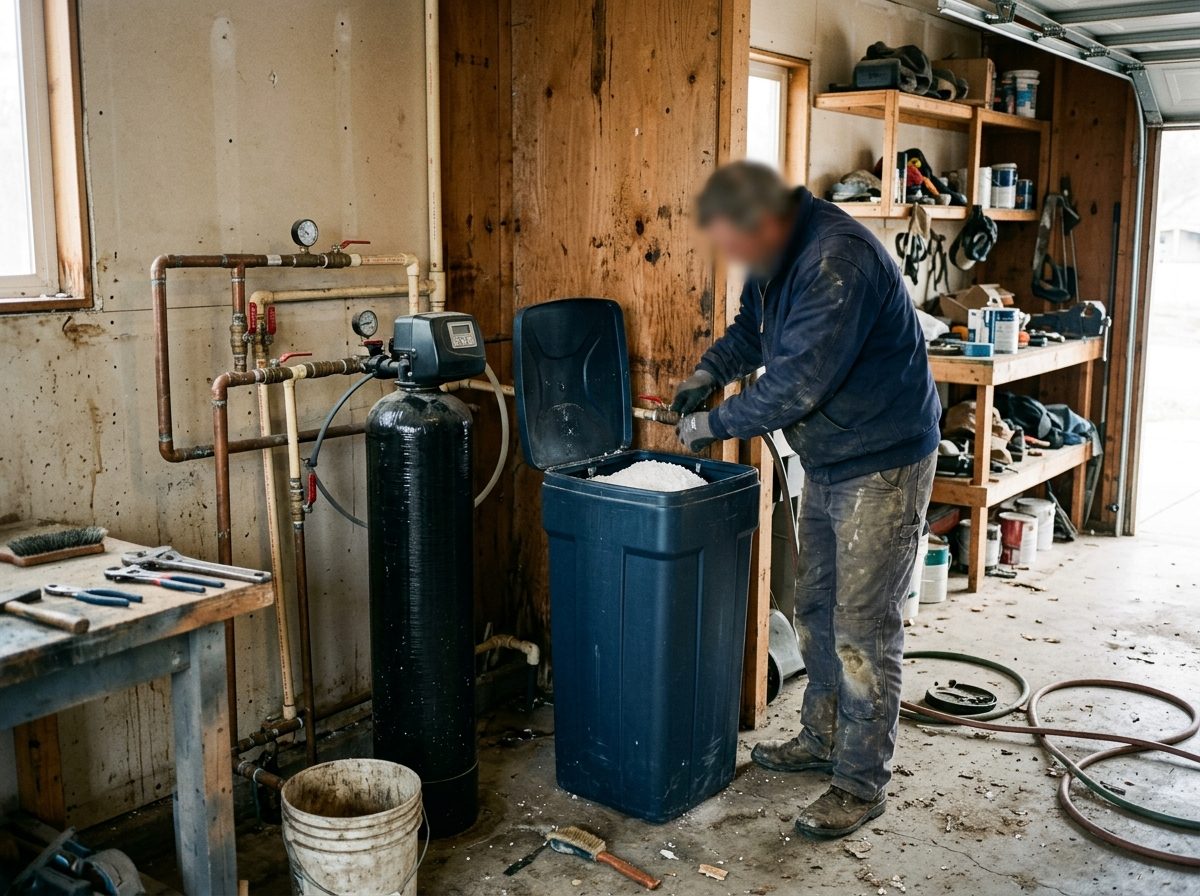
Spring boxes and collection
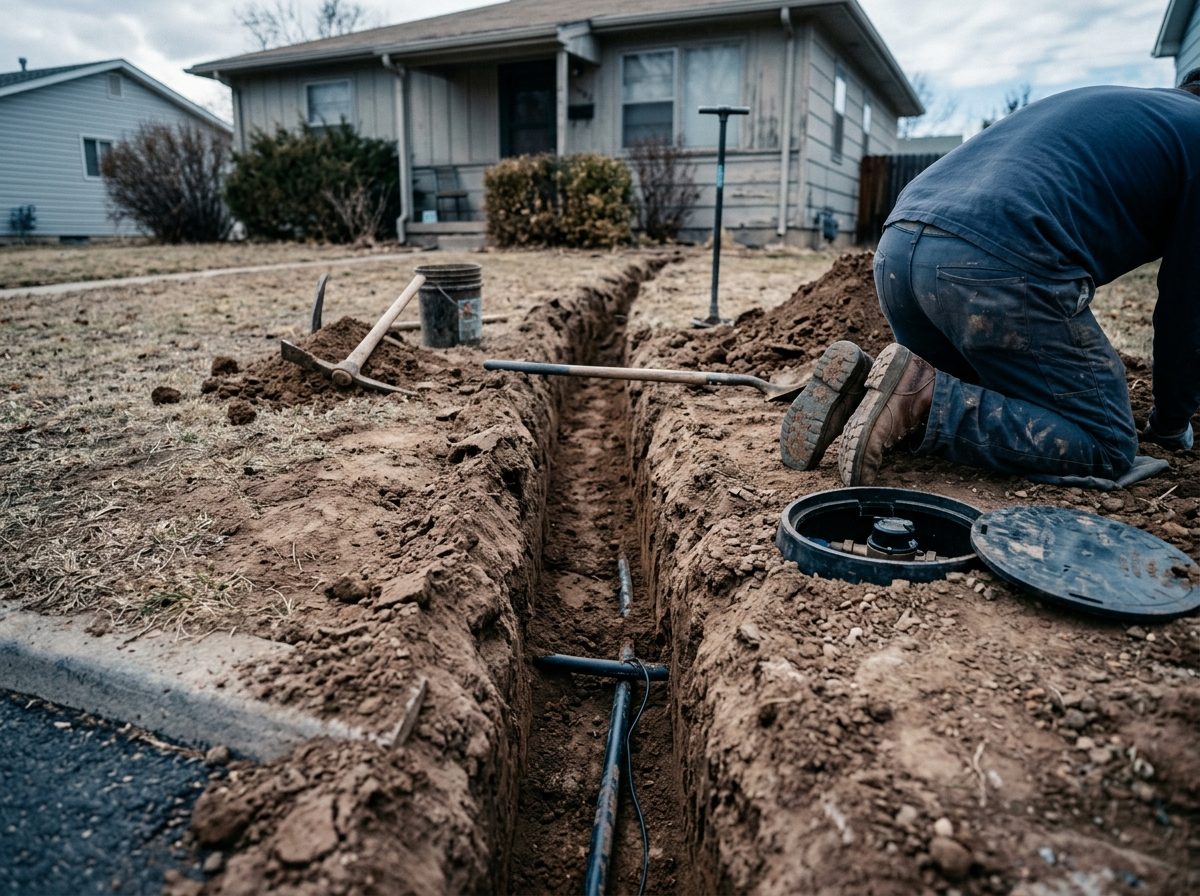
Where the source is a spring rather than a drilled well, the collection arrangement matters as much as the plumbing. A spring box is a structure that gathers water at the point it emerges and lets it settle before it enters the pipe, and its condition determines what the household receives.
The things that go wrong are physical. The box silts up and its capacity falls. Its cover fails, letting surface water, debris and animals in — which is a contamination route as well as a sediment one. The overflow blocks, so the box backs up and water finds another path. And the outlet screen clogs, which presents as a supply problem at the house when the source is fine.
Inspecting the collection point periodically is therefore part of owning this kind of system, and it is easy to neglect precisely because it sits some distance uphill and works quietly for years.
Getting usable pressure out of a hill
Two complaints recur on gravity systems, and they have opposite causes.
Too little pressure means insufficient fall, and the honest answer is that no fitting fixes it — the remedies are moving storage higher, accepting lower pressure with fixtures chosen to suit, or adding a booster pump and pressure tank, which reintroduces the power dependency the system avoided. Flow, as distinct from pressure, is often improved by larger diameter pipe on a long run, and that is worth checking before anything else.
Too much pressure is the less-expected complaint, and it happens where the fall is large. Above the range fixtures are designed for, every valve and seal in the building is under continuous stress and cheap components fail years early. A pressure-reducing valve at the house is the answer, and it is worth measuring rather than assuming — an inexpensive gauge on an outdoor tap settles it in a minute.
Fixtures failing faster than they should? On a steep site that is often too much pressure.
Ask about a pressure checkFreeze protection on a gravity system
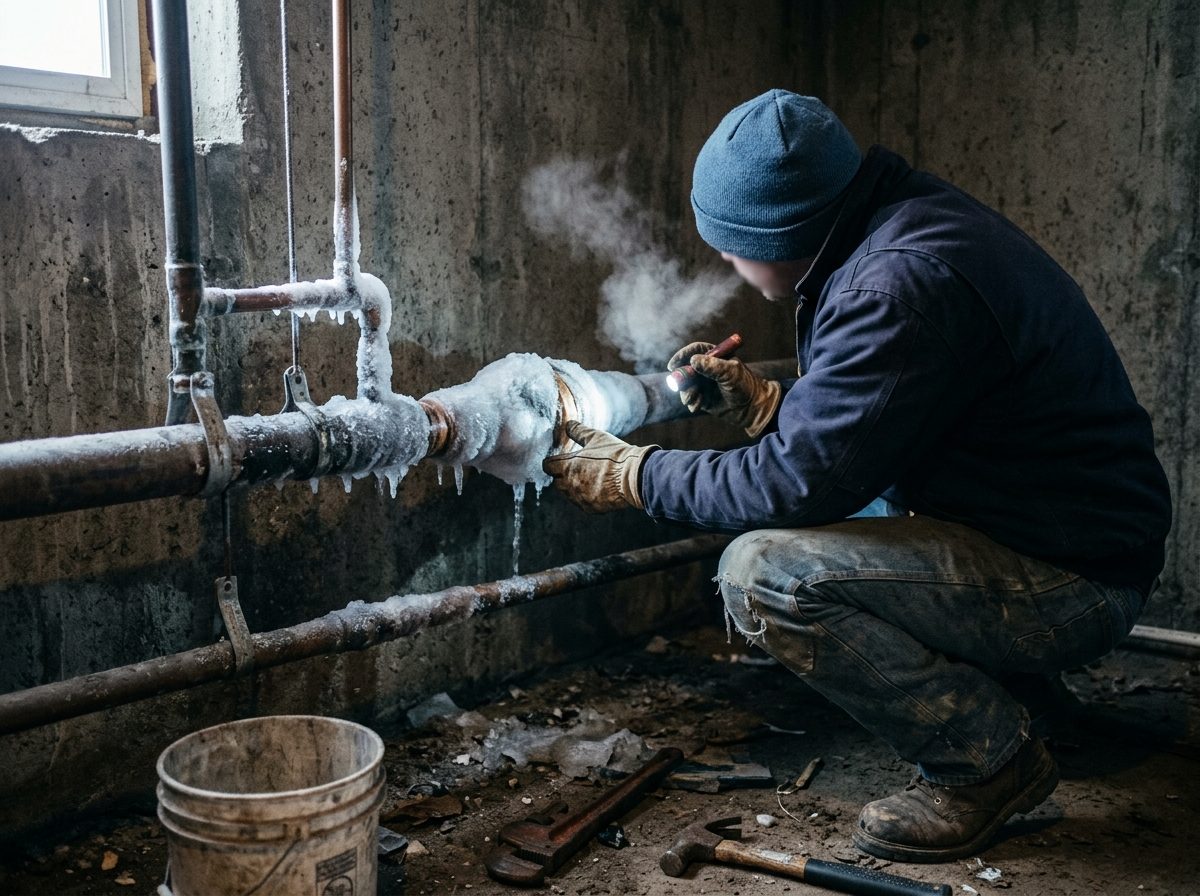
Gravity systems have a freeze characteristic worth understanding. Moving water resists freezing, so a line in continuous use is less vulnerable than a still one — which is why some properties deliberately run a small continuous flow through winter, using the overflow rather than storing what they do not need.
The vulnerable points are where water stands or where pipe is exposed: the collection box itself, any above-ground section of the run down, and the point where the line enters the building. A long buried run at proper depth is generally the safest part of the whole system.
Where a property is left unoccupied, the calculation changes completely. A gravity line with no flow through it in a cold snap will freeze, and because there is no pump to signal a problem, nothing indicates a fault until water either stops or appears. Draining down properly is the dependable approach, and on a gravity system that includes considering the run itself rather than only the plumbing inside the house.
Property unoccupied in winter? On a gravity system the run outside needs planning too.
Ask about winterisingSediment at the fixtures
On a gravity or spring-fed system, the first place sediment shows up is at the fixtures, and the symptoms get misread as pressure problems with some regularity. A tap aerator, a shower head and the inlet screens on a washing machine and dishwasher all have fine mesh in them, and fine mesh is exactly what catches grit carried down from a collection point.
The distinction worth making is local versus system-wide. If one tap is weak and the others are fine, the restriction is at that tap — unscrew the aerator, rinse the mesh, and it is usually resolved in two minutes. If every fixture in the building has weakened together, the cause is upstream: a blocked cartridge filter, a collection screen at the source, or a partly closed valve. Chasing the second as though it were the first is a common waste of an afternoon.
The habit that prevents most of it is upstream filtration, properly staged and actually maintained — a coarse filter catching the bulk of it so a finer one lasts, both sited where they can be reached and where they will not freeze. It is also worth knowing that appliance inlet screens exist, because a washing machine that has slowed to a crawl is frequently diagnosed as a failing machine when it has a blocked screen at the hose connection. After any work on the source or the line, expect a slug of sediment to arrive and plan to clean the screens rather than being surprised by it.
Two numbers to establish
The vertical fall from your water surface to the house, and the pressure you actually measure at a tap. If those two do not roughly agree, something in between is restricting the system.
Nearby communities
Hillside sits in the Wet Mountain valley, with Coaldale, Howard and the Canon City road the nearest links out.
Hillside, Colorado
Gravity-fed system questions answered
From height alone. Roughly every two and a third feet of vertical fall between the water surface and the outlet gives one pound per square inch, so a tank a hundred feet above the house delivers usable household pressure with no electricity and no pump involved.
It keeps working in a power cut, there is no pump to fail, and there are no controls to go wrong. For a remote property where a power outage and a hard freeze often arrive together, that independence is worth a great deal.
Pressure comes from height, so no fitting increases it. The options are moving storage higher, accepting lower pressure with fixtures chosen to suit, or adding a booster pump and pressure tank — which reintroduces the power dependency the system avoided. Check flow first, though: larger pipe on a long run often helps.
Yes, where the fall is large, and it is the less-expected complaint. Above the range fixtures are designed for, every valve and seal is under continuous stress and cheap components fail years early. A pressure-reducing valve at the house is the answer — measure with a gauge rather than assuming.
Physical things. It silts up and loses capacity. Its cover fails, letting surface water, debris and animals in — a contamination route as well as a sediment one. The overflow blocks so it backs up. And the outlet screen clogs, which looks like a supply problem at the house when the source is fine.
Periodically and deliberately, because it is easy to neglect — it sits uphill and works quietly for years. An annual look at the box, its cover, its overflow and its outlet screen catches the things that otherwise present as mysterious supply problems months later.
Because moving water resists freezing. A line in continuous use is far less vulnerable than a still one, so running a small continuous flow and letting the surplus overflow is a recognised approach on a gravity system where the alternative is a frozen run.
The run outside needs planning as much as the plumbing inside. A gravity line with no flow through it will freeze in a cold snap, and with no pump there is nothing to signal a fault until water stops or appears. Draining down properly has to include the run, not just the house.
Almost always the aerator on that tap — unscrew it and rinse the mesh. Fine screens catch grit, and on a spring or gravity system there is grit to catch. If every fixture has weakened together, the cause is upstream instead: a blocked filter cartridge, a screen at the collection point, or a valve not fully open.
The Wet Mountain valley
Hillside, Coaldale, Howard and the country west of Canon City.
(833) 621-2904 — answered 24/7, statewide.