Plumber in Beulah, CO — one call, any hour
Home / Areas / Pueblo & Southern Colorado / Beulah
In a heavily wooded valley, water is not only a domestic service — it is part of how a property is defended. That gives plumbing here a dimension it does not have on open ground, and it changes how storage, pumps and exposed pipework are worth thinking about.
Water supply where fire is the risk
Wooded mountain properties sit a long way from hydrants, and any water available on site depends on the property's own system continuing to work. That raises questions a suburban house never asks.
The most important is what happens without power. A submersible well pump stops when the electricity does, and a well with no pump is a hole in the ground — so a property whose entire water supply depends on grid power has no water available in precisely the circumstances where it might matter most. Generator provision sized to start the pump, or gravity-fed storage that needs no power at all, are the two answers, and they are worth thinking about deliberately rather than discovering.
Supply depends entirely on grid power? Worth planning before it matters, not during.
Ask about supply resilience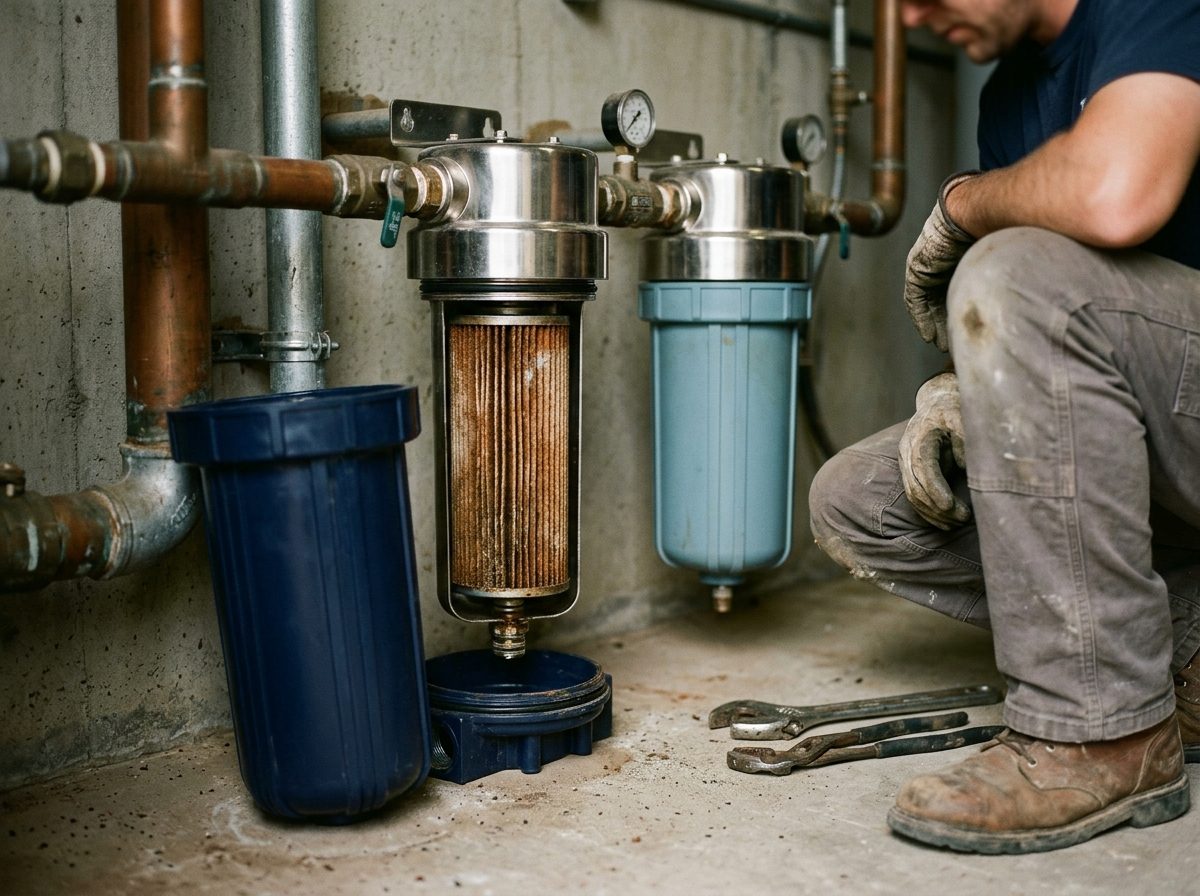
Storage that serves two purposes
Storage is the most useful single addition to a property like this, because it does two jobs. Day to day, a holding tank decouples what the household draws from what a modest well yields — which means ordinary plumbing behaviour from a well that could not otherwise support it.
Beyond that, stored water is available water. A tank with an outlet that does not depend on the household pressure system, and a connection that suits standard equipment rather than a garden hose thread, is considerably more useful than one plumbed only into the house.
The design points that matter are practical: where the tank sits relative to the house so gravity does some of the work, whether the outlet is reachable by vehicle, and whether the tank can be isolated from the household plumbing so drawing from it does not empty the house supply. Those are decisions to make when a tank is installed rather than afterwards.
Exposed pipe and what heat does
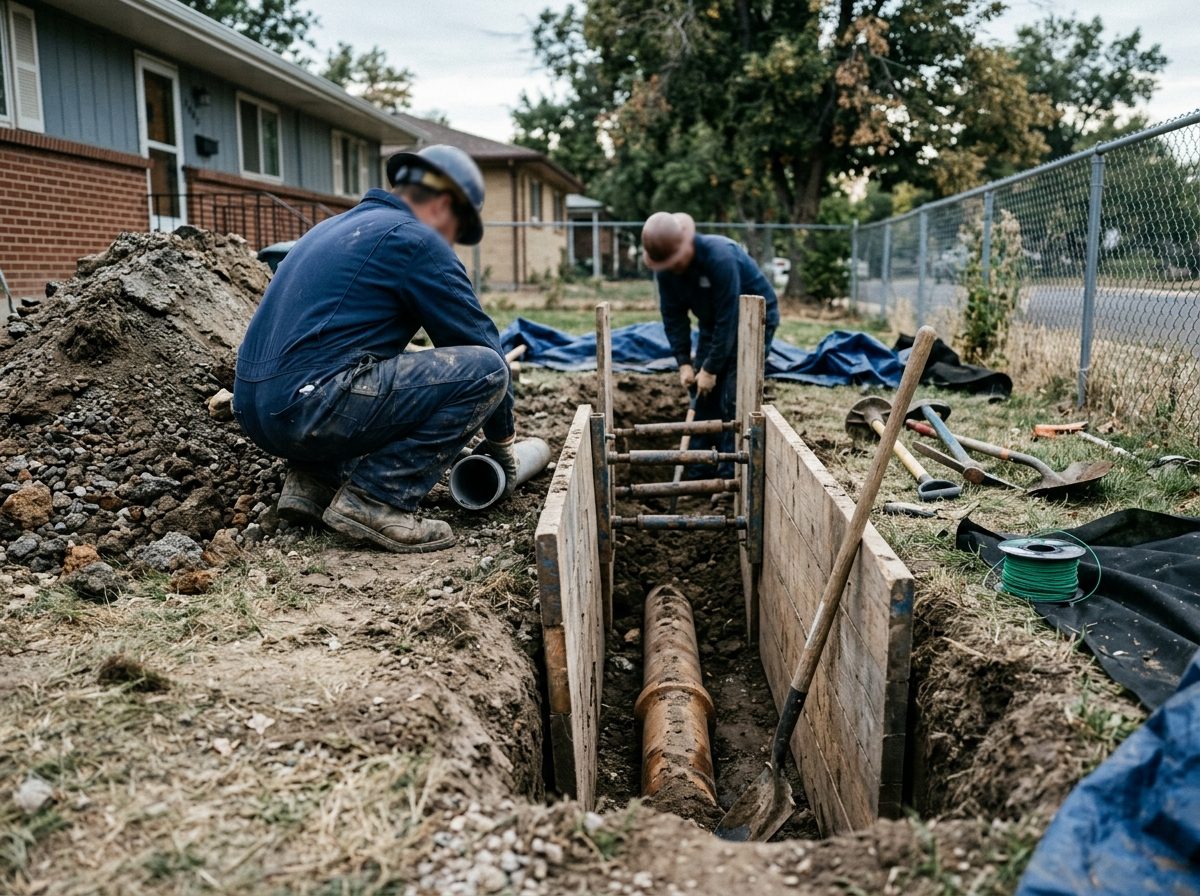
Plastic pipe is normal, appropriate and widely used in modern plumbing, and it has one characteristic worth understanding on a wooded property: it is not heat tolerant. An exposed plastic run in a crawlspace, under a deck, or feeding an outbuilding is vulnerable in a way copper is not.
That is not an argument against plastic pipe generally — it is an argument for thinking about where runs are exposed and whether they need to be. Burying a run that currently crosses open ground, routing supply to outbuildings underground rather than above, and keeping combustible material away from exposed pipework and tank fittings are all straightforward decisions.
The same logic applies to what pipe passes through. Runs in a crawlspace full of stored timber, or a well house used as a shed, combine two risks that would each be manageable separately.
Exposed runs to outbuildings? Burying them addresses more than one risk.
Ask about rerouting a runPlumbing in rebuilt and repaired houses
Where properties have been rebuilt or substantially repaired over the years, the plumbing frequently reflects that history in ways nobody documented. Sections replaced under time pressure, materials changed at junctions, runs rerouted around new construction, and older sections left in place because they were not in the way.
The practical consequence is that what is actually installed often differs from what anyone assumes, and a first visit may reasonably involve tracing before pricing. Small clues help: which fixtures are affected and which are not, whether flow changed after particular work, and where anybody has previously opened a wall.
It is also worth knowing that mixed materials are not inherently a problem — badly made transitions are. Dissimilar metals joined without the correct fitting corrode at the junction, and undersized replacement sections throttle flow through an otherwise sound line. Those are the points worth finding.
House rebuilt or heavily repaired? Whatever history you know is genuinely useful.
Ask about tracing a systemWhen a well serves more than one house
Shared wells are common on land that was divided between family or sold off in parcels, and they work perfectly well until something needs deciding. The plumbing question is straightforward — one source, one pump, several houses drawing from it — but the arrangements around it are what determine whether a fault is an inconvenience or an argument.
Three things make a shared well workable. Each house needs its own isolation valve, so a repair at one property does not shut the others off, and each ideally needs its own meter so use is visible rather than assumed. There needs to be clarity about who maintains the well, the pump and the shared line, and how the cost of a failure is split — written down rather than remembered, because the people who agreed it verbally are not always the people who own the properties later. And everyone on it should know where the wellhead, the pressure tank and the shared line actually run.
On the mechanical side, the thing to watch is peak demand rather than total use. Several households drawing at the same time is what causes pressure to collapse, and it is also what causes the pump to work harder than it was sized for. Where a shared well is marginal, storage is usually the answer — a cistern filled steadily and drawn from at normal rates suits a shared arrangement much better than everyone pulling on the bore at once. Formal agreements and any permit conditions attached to the well are worth confirming locally rather than assuming, since they vary.
Worth establishing once
What your water supply does without power, and whether stored water can be drawn without the household pressure system. On a wooded property those two answers matter more than any single repair.
Nearby communities
Beulah sits in a wooded valley west of Pueblo, with Rye, Colorado City and the Wet Mountain country nearby.
Beulah, Colorado
Wooded property questions answered
On a submersible well pump, it stops — and a well with no pump is a hole in the ground. A property whose entire supply depends on grid power has no water available in exactly the circumstances where it might matter most. Generator provision sized to start the pump, or gravity-fed storage, are the answers.
Often, for two reasons. Day to day it decouples what the household draws from what the well yields, which gives more consistent plumbing behaviour. Beyond that, stored water is available water on a property a long way from any hydrant — and that is a different kind of value.
An outlet that does not depend on the household pressure system, a connection that suits standard equipment rather than a garden thread, and a position that lets gravity do some work. Also the ability to isolate the tank from the house plumbing, so drawing from it does not empty the household supply.
Not generally — it is appropriate and widely used. The characteristic worth knowing is that it is not heat tolerant, so exposed runs in crawlspaces, under decks or feeding outbuildings are more vulnerable than copper would be. The answer is thinking about where runs are exposed rather than avoiding the material.
Burying it addresses more than one risk at once: heat exposure, freeze exposure and physical damage. Where burying is impractical, keeping combustible material well away from the run and its fittings is the minimum, and it costs nothing but attention.
It depends how the joins were made. Dissimilar metals connected without the correct fitting corrode at the junction, and undersized replacement sections throttle flow through the rest of the run. Mixed material is normal in a much-repaired house; the transitions are what deserve finding.
Because what is installed frequently differs from what anyone assumes. Sections get replaced under time pressure, materials change at junctions, runs get rerouted around new construction, and older sections stay in place because they were not in the way. None of it is usually documented.
Usually same-day for urgent problems, since Pueblo is within reach. Water supply and storage questions are different in character — they are planning conversations rather than emergencies, and they are worth having deliberately rather than after something has happened.
Who maintains the well, the pump and the shared line; how costs are split when something fails; and what happens if a property changes hands. Mechanically, each house wants its own isolation valve and ideally its own meter. The agreement matters most at the moment of a failure, which is exactly when nobody wants to be negotiating it.
West of Pueblo, any hour
Beulah, Rye, Colorado City and the Wet Mountain country.
(833) 621-2904 — answered 24/7, statewide.