Plumber in Rye, CO — 24/7 by phone
Home / Areas / Pueblo & Southern Colorado / Rye
Rye is a small mountain village below Greenhorn Mountain, south-west of Pueblo. It sits high enough and far enough out that plumbing here behaves like mountain plumbing rather than valley plumbing — longer winters, private water systems, and access that matters in February.
A mountain village below Greenhorn
Properties sit on wooded lots on winding roads, most on private wells and septic, many with outbuildings. Some are used seasonally rather than year-round, and that distinction matters a great deal for winter risk.
The useful information on a call is the property: the water source, how many structures take water, whether anyone is living there through winter, and what the last stretch of road and drive look like.
Property used seasonally? Say so — it changes the winter advice entirely.
Ask about winterising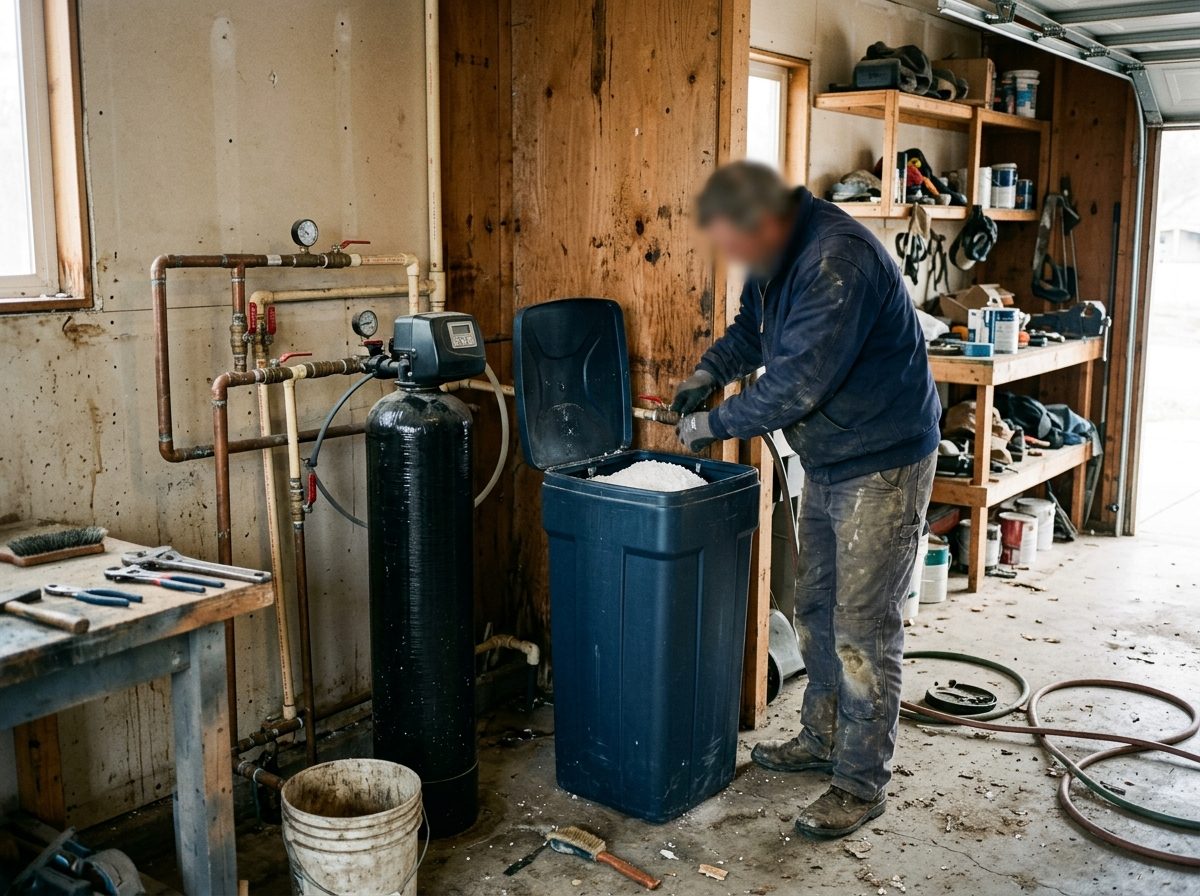
A longer freeze season than the valley
Winter starts earlier and finishes later here than in Pueblo, and mountain exposure means anything above ground loses heat quickly. Crawlspaces, well houses, outbuildings and pipe in additions built to a lower insulation standard are where trouble begins.
Heat tape carries much of the protection, and it fails silently through age, rodent damage or having been unplugged during other work. A line that has never frozen may be relying on tape that stopped working two winters ago, so testing it before the first hard freeze is among the highest-value ten minutes available.
For a building standing empty through winter, draining is the dependable answer rather than trusting a thermostat: water off at the source, drained from the lowest point, taps opened, appliances dealt with, and plumbing-rated antifreeze in traps.
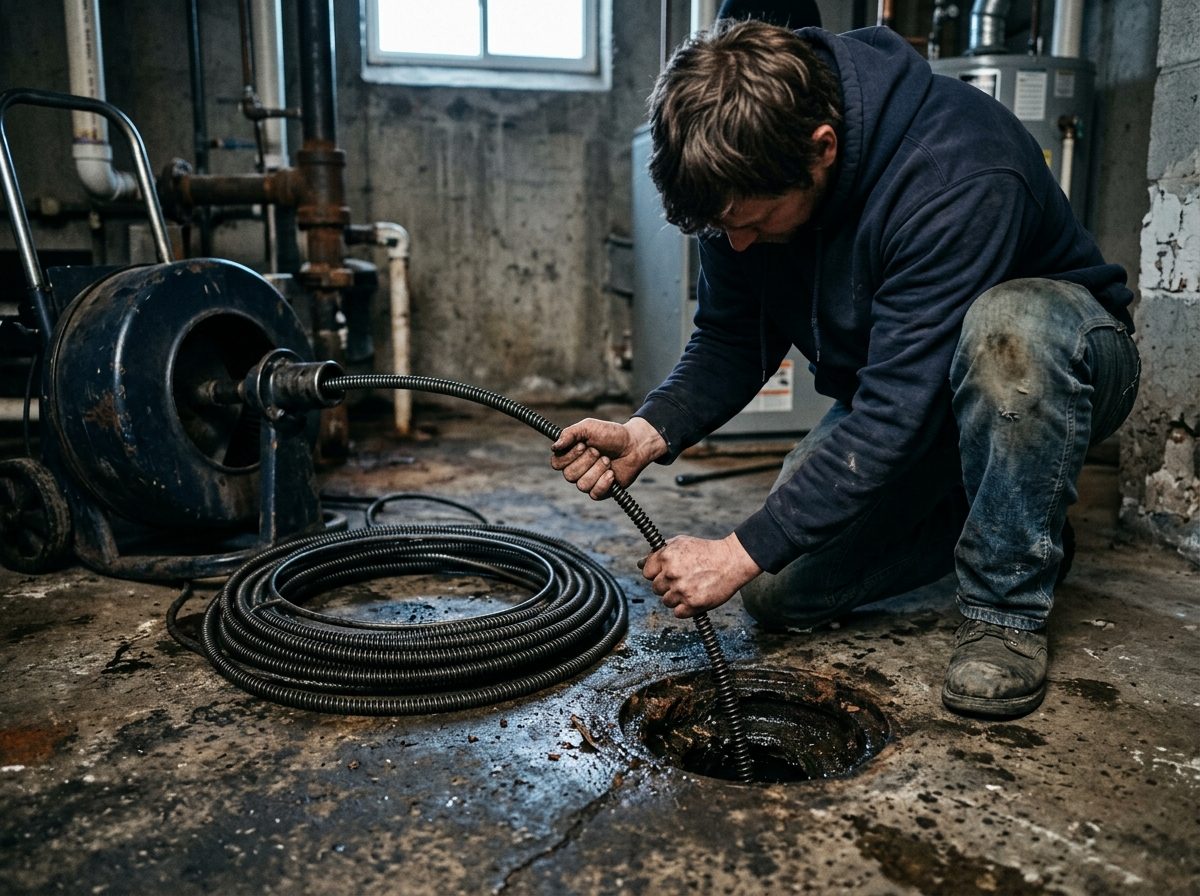
Wells and septic
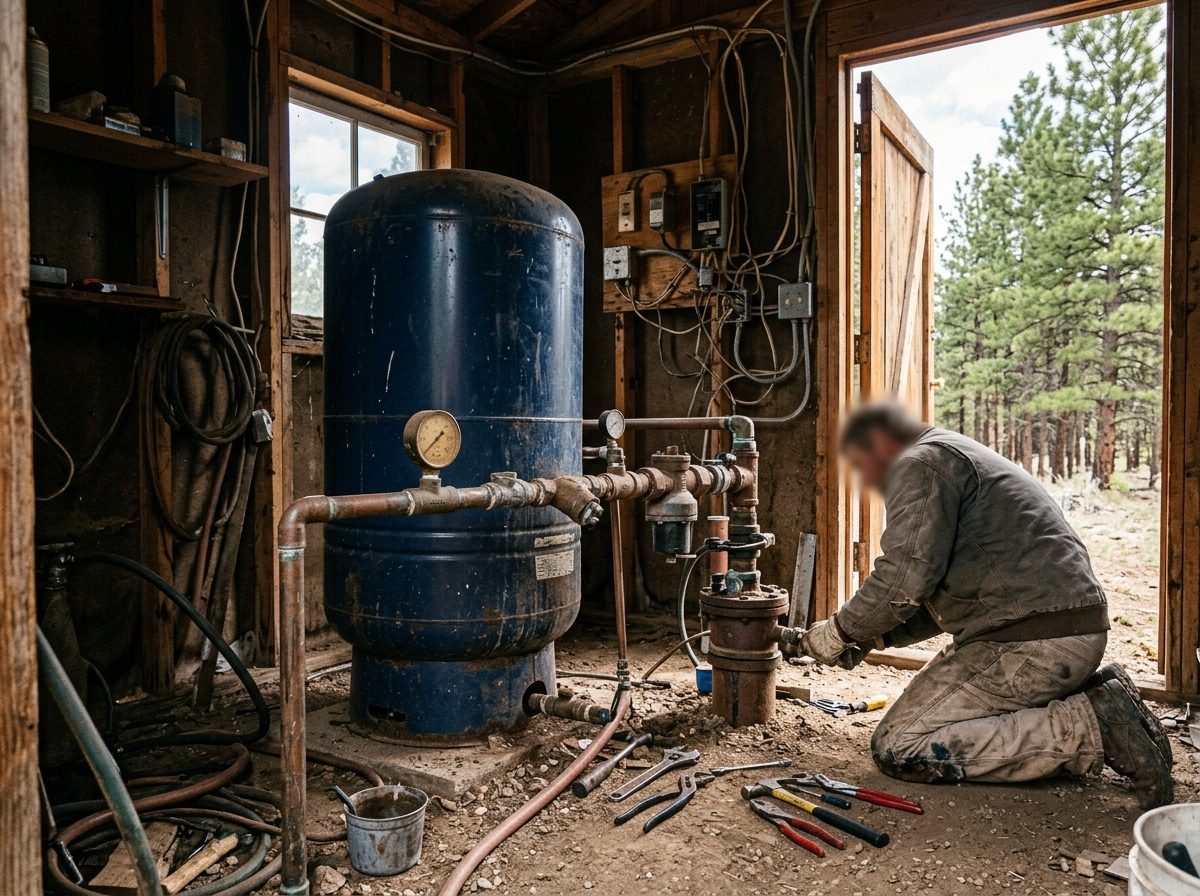
Three faults account for most well calls: a pressure tank that has lost its air charge and is cycling the pump, a pressure switch that has stopped making contact, and a pump at the end of its working life. All three present as nothing at the tap, so what the gauge reads and whether the pump runs are the two most useful things to report.
Septic systems need pumping every three to five years for most households, sooner where the property is used in bursts, and signal trouble by slowing every drain at once rather than one fixture.
Nothing at the tap? Gauge reading, pump noise, breaker — those three narrow it fast.
Ask about a well systemDistance and scheduling
Pueblo is within reach but not close, and mountain roads and drives are the real variable rather than distance. Ice, snow and steep private approaches all determine whether a service vehicle reaches a property, and in a storm the honest answer may be the following day.
Which is why the phone advice comes first, and why planned work is worth more here than in town. A pump showing its age, a heater at the end of its life, a hydrant that has started to weep — all cheap on a scheduled visit and expensive at short notice from an hour or more away.
Something clearly near the end of its life? Replacing it on a schedule costs far less up here.
Ask about planned workArriving at a cold house
Close the main shutoff before applying heat anywhere. A line that has already split releases water the moment it thaws, and with the water off what follows is a repair rather than a flood.
Hard water and a tankless heater
A tankless heater is an attractive proposition for a mountain property — no standing tank of water to protect from freezing, no standby heat loss, and hot water that does not run out. It has one requirement that gets underplayed at the point of sale, and on hard water it is the whole story: it needs descaling, periodically, as routine ownership rather than as a repair.
The reason is how it works. Water is heated instantly as it passes through a narrow heat exchanger, which means the hottest surfaces in the system are in permanent contact with flowing water in a very small passage. Scale builds on those surfaces, insulating them and narrowing the passage, and the unit responds by working harder. The symptoms are recognisable: hot water that fluctuates during a shower, a unit that cycles or reports faults, reduced flow, and eventually a failure that is expensive because the heat exchanger is the unit.
Managed properly, none of that happens. Descaling on a schedule suited to the water — more often on hard water than the manual’s default — keeps the exchanger clear, and a softener or scale-reduction treatment upstream lengthens the interval considerably. The other thing worth confirming before buying one is the gas supply: a tankless unit draws a much higher instantaneous load than a tank, and an existing line sized for the old appliance often cannot carry it to that point. Both of those are answerable in advance, which is where they belong.
Nearby communities
Rye sits in the mountains south-west of Pueblo below Greenhorn, with Colorado City and Beulah nearby.
Rye, Colorado
Greenhorn foothills questions answered
Because you sit considerably higher and more exposed. Winter starts earlier and lasts longer here, and mountain wind removes heat from anything above ground faster than still air at the same temperature. Pipe that would be fine in the valley is not necessarily fine here.
Water off at the source, the system drained from its lowest point, taps opened so air can replace water, the heater and any appliance holding water dealt with, and antifreeze rated for plumbing in traps and toilet bowls. Never automotive antifreeze. Done thoroughly it can sit unheated safely.
Tape can look fine and be dead. Age, rodent damage and being unplugged during unrelated work are the usual causes, none visible at a glance. Test it before the freeze season and check the whole length of the run, since tape often covers less pipe than people assume.
It depends where the fault is. From the pressure tank into the house is ordinary plumbing. The pump, drop pipe and casing wiring are well-system work needing specific equipment. Saying what the gauge reads and whether the pump runs settles which trade should be sent.
Three to five years for a full-time household, sooner where the tank is small or the property is used in bursts. Every drain slowing at once rather than one fixture is the classic signal, along with unusually green growth over the field or a backup after a busy weekend.
Sometimes, and access rather than distance decides it. Ice, snow and steep private drives all matter, and some contractors will ask you to meet them lower down. Describing the last stretch honestly means whoever takes the call arrives equipped rather than turning back.
Up here the case is stronger than in town. A planned replacement happens on a scheduled visit at a predictable price; a failure in January may mean days without water or hot water plus an urgent callout over difficult roads. Age and symptoms are what to judge on.
Usually, with gentle even heat applied from the open end of the line toward the blockage so meltwater can escape. Never a torch or rapid heat — that is how pipes split and buildings catch fire. Shut the water off first, because a cracked pipe starts leaking as it thaws.
It suits one well — no stored tank to protect, no standby loss, and hot water that does not run out. Two things to settle first: whether the gas line can carry its much higher instantaneous demand, and that descaling is accepted as routine maintenance, because on hard water scale in the heat exchanger is what eventually destroys the unit.
More often than the manual’s default on hard water — the interval should follow your tested hardness rather than a generic figure. Treatment upstream, either softening or scale reduction, lengthens it considerably. The signs you have left it too long are fluctuating temperature during a shower, reduced flow and fault codes.
The Greenhorn foothills
Rye, Colorado City, Beulah and the country south of Pueblo.
(833) 621-2904 — answered 24/7, statewide.