Plumber in Colorado City, CO — one call, any hour
Home / Areas / Pueblo & Southern Colorado / Colorado City
Colorado City is a dispersed community south of Pueblo, spread across foothill country below Greenhorn Mountain. Properties sit on large lots on private wells and septic, and the elevation means winter runs longer here than down in the valley.
A dispersed community below Greenhorn
There is little concentrated town. Houses sit on generous lots along winding roads, many with outbuildings, and the plumbing extends well beyond the walls of the house. Some properties have long drives that matter in winter.
The most useful information on a call is the property rather than the fixture: the water source, how many structures take water, and what the last stretch of driveway looks like. Those three answers shape the visit and determine what comes on the truck.
Property with outbuildings? Say how many take water when you call.
Ask about a property visit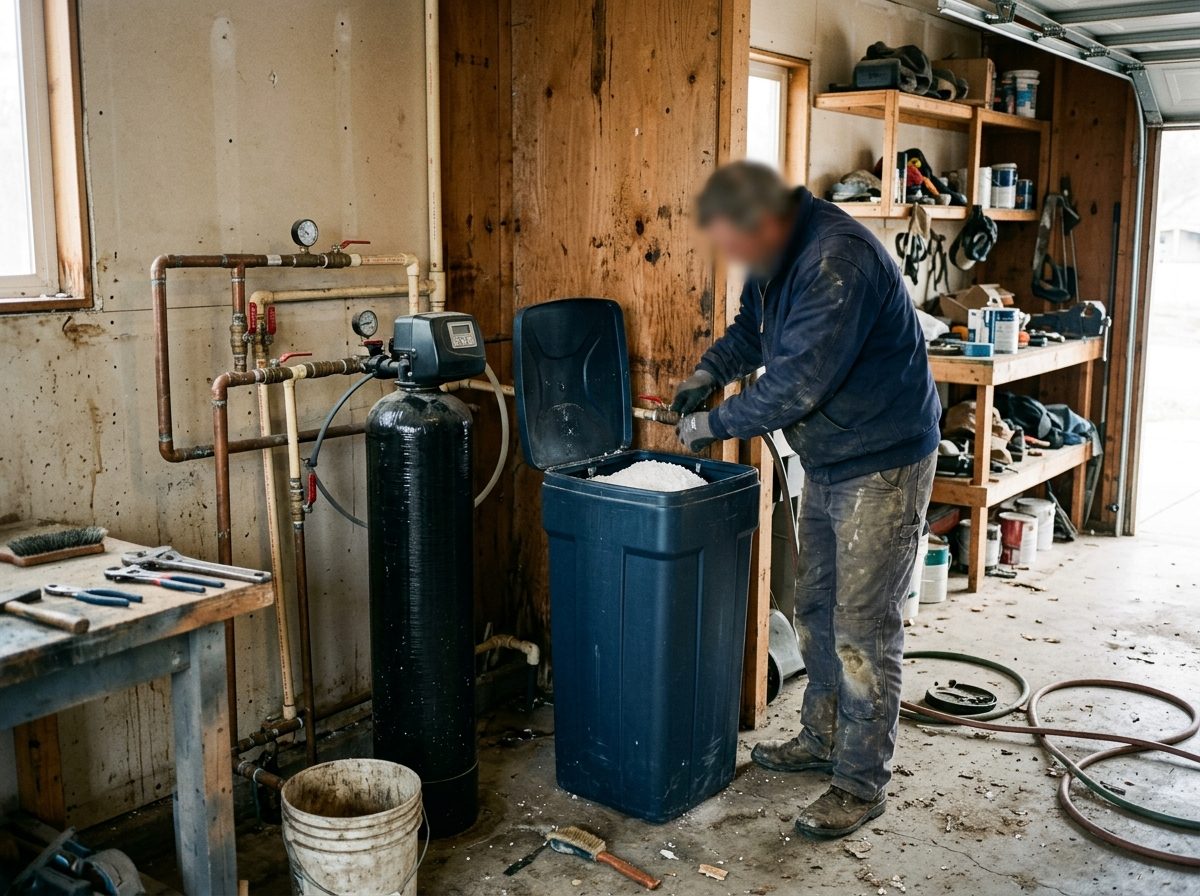
Wells, tanks and septic
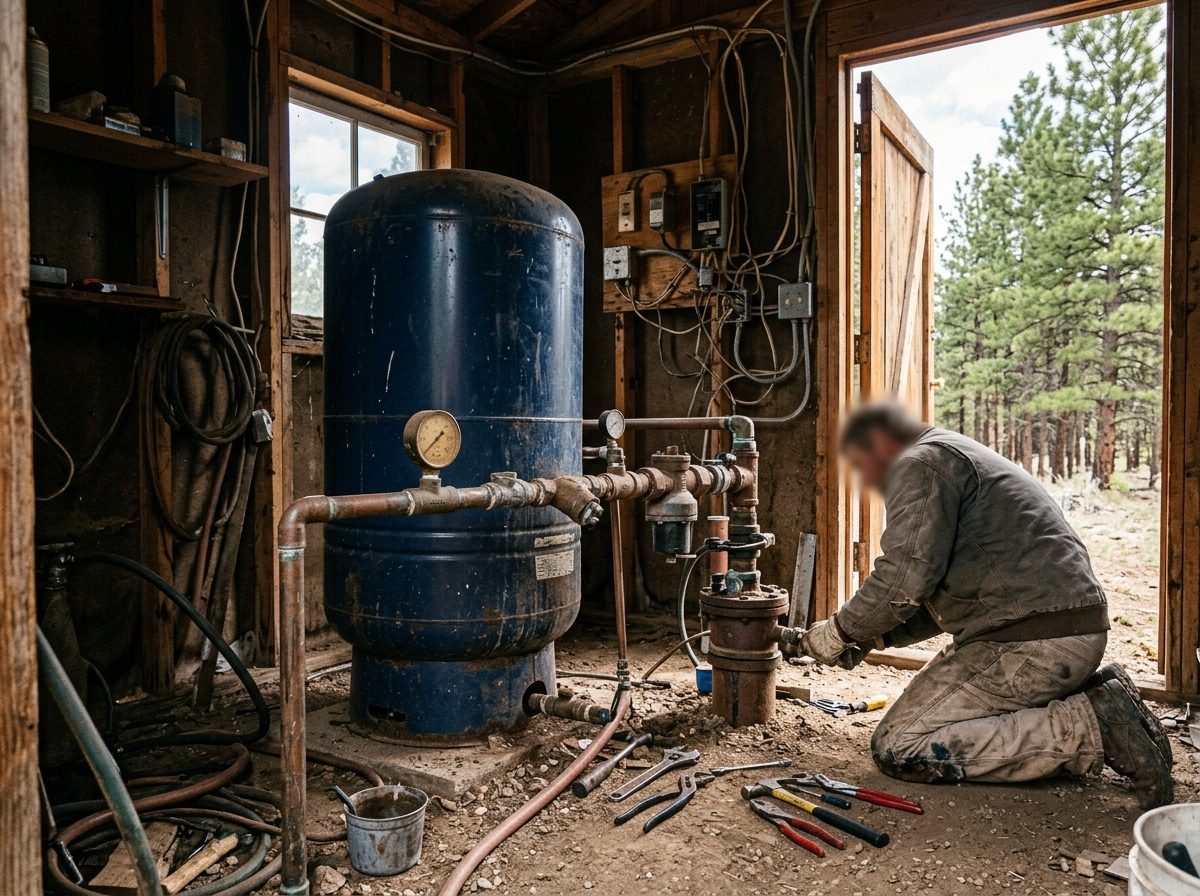
Three faults account for most well calls: a pressure tank that has lost its air charge and is cycling the pump every few seconds, a pressure switch that has stopped making contact, and a pump at the end of its working life. All three present as poor pressure or nothing at the tap.
What the gauge reads, whether the pump can be heard running, and whether the breaker has tripped are the three answers that narrow it before anyone drives out — and they decide which trade should attend, since the pump and casing wiring are well-system work while everything past the tank is ordinary plumbing.
Septic systems need pumping every three to five years for most households, and signal trouble by slowing every drain at once rather than one fixture.
Buried runs on a large lot bring their own problem: a leak can continue for weeks without anything visible changing. The signs are indirect — pressure that has slowly fallen, ground that stays damp or unusually green, or a pump running more often than it used to. With everything shut off, movement at the gauge over an hour confirms water is leaving the system, and isolation valves then narrow which run is at fault.
Mineral load and appliances
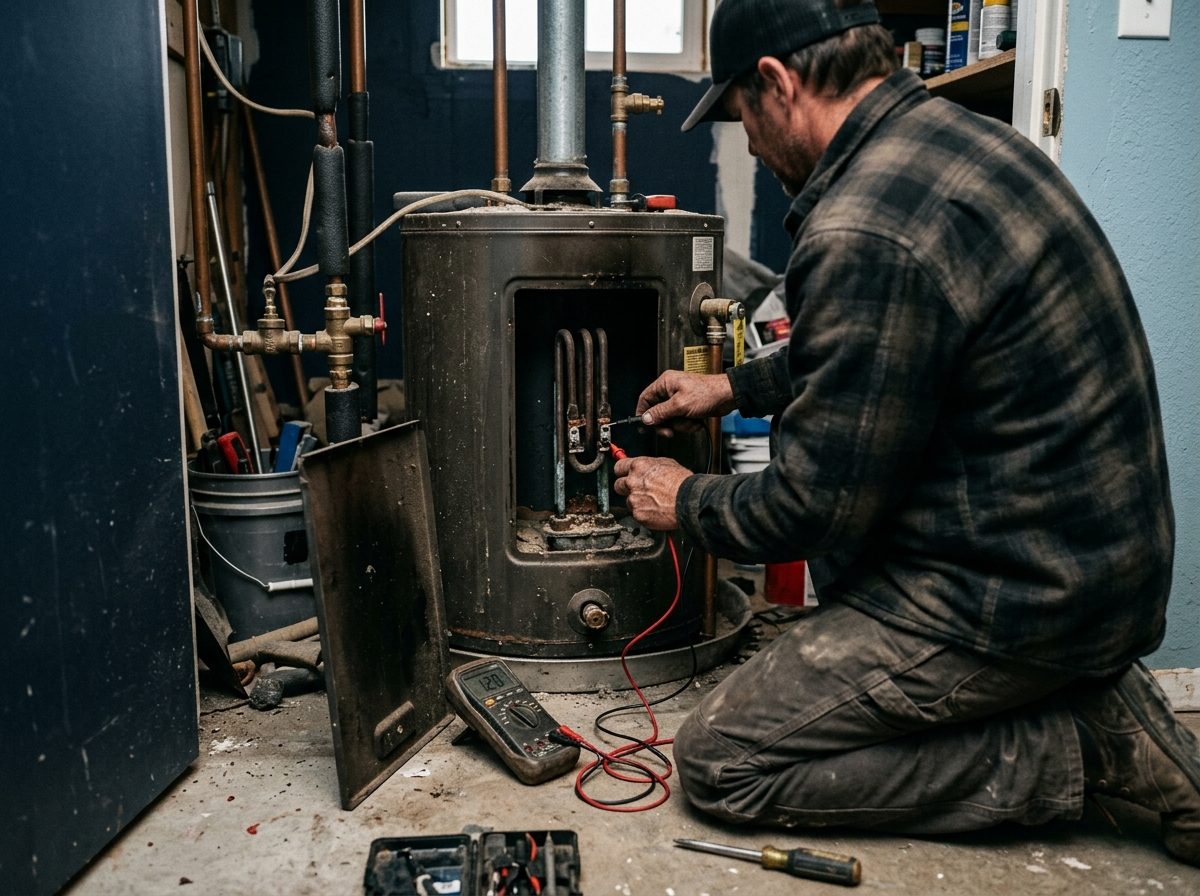
Water here carries a heavy mineral load, and the heater absorbs most of the cost. Sediment settles across the tank floor so the burner heats through scale rather than steel, run times lengthen and recovery slows. On electric units the elements scale directly and fail early.
Draining the tank annually is the cheapest life extension available, and the sacrificial anode rod is worth checking at the same time. Test the water before buying treatment, because on a well hardness, iron and other results call for different equipment and composition varies property to property.
Fixtures scaling up fast? Test the water before buying any treatment.
Ask about hard waterElevation and exposure
Sitting higher than Pueblo, winter here starts earlier and lasts longer, and foothill exposure means wind takes heat out of anything above ground. Crawlspaces, well houses and outbuildings are where trouble starts.
Where a building is not in use through winter, isolating its branch and draining it removes the risk rather than managing it. For lines that must stay live, insulation and air sealing come first and heat tape second — and tape needs testing each autumn because it fails without any visible sign.
Line stopped flowing? Close the main shutoff before anything gets thawed.
Ask about a frozen pipeThe rotten-egg smell, and where it comes from
A sulphur or rotten-egg smell in the water is common on private wells and it has two quite different sources. Working out which one you have takes about a minute and saves buying the wrong solution, which is the usual outcome otherwise.
The test is to run cold water and smell it, then run hot and smell that. If the smell is on the hot side only, it is almost certainly happening inside the water heater: sulphate-reducing bacteria living in the tank react with the sacrificial anode and generate hydrogen sulphide. That is a tank problem, and the remedies are tank remedies — disinfecting it, flushing it, and in many cases fitting a different type of anode, which changes the chemistry that is producing the smell. No amount of whole-house filtration will touch it.
If the smell is present on both hot and cold, it is in the supply itself and it is a treatment question rather than an appliance one. Hydrogen sulphide dissolved in well water is dealt with by oxidation followed by filtration, or by aeration, depending on concentration — and the concentration is what a test establishes. Either way it is worth knowing that the smell is a nuisance rather than a hazard in itself, but that the conditions producing it are worth understanding, and that it sometimes arrives alongside iron or manganese which need addressing at the same time.
Autumn short list
Hydrants and hose bibs tested, heat tape checked, the pump house looked at, and any unused branch isolated and drained. One visit covers all of it.
Nearby communities
Colorado City sits south of Pueblo below Greenhorn Mountain, with Rye, Beulah and Pueblo within reach.
Colorado City
Colorado City plumbing questions answered
It depends where the fault is. Everything from the pressure tank into the house is ordinary plumbing. The pump, drop pipe and wiring down the casing are well-system work needing specific equipment. Saying what the gauge reads and whether the pump runs settles which trade should come.
That is short-cycling, usually caused by a pressure tank that has lost its air charge. The tank holds a cushion behind a bladder so the pump runs once every few minutes rather than constantly. Left alone it wears the pump out quickly, so it is worth fixing promptly.
Three to five years for most households, sooner where the tank is small or the household large. Every drain slowing at once rather than one fixture is the classic signal, along with unusually lush growth over the field or a backup after a weekend with visitors.
Scale is the usual explanation in mineral-heavy water. Sediment collects across the tank floor, insulates the burner from the water and forces longer run times; on electric units it coats the elements. An annual drain pushes the life back toward the manufacturer’s expectation.
Yes. Composition varies property to property here in a way municipal supply does not, so a neighbour’s results tell you little. Hardness and iron affect appliances and fixtures; other results affect the people drinking it. Test before buying any treatment equipment.
Because you sit higher and more exposed. Winter starts earlier and lasts longer up here, and foothill wind removes heat from anything above ground far faster than still air at the same temperature. Pipe that would be fine in the valley is not necessarily fine here.
Usually same-day for urgent problems, since Pueblo is within reach. Longer drives and winter road conditions are the variables rather than distance alone. You will get an honest window plus instructions on what to shut off while you wait.
Tape can look intact and be dead. Age, rodent damage and being unplugged during unrelated work are the usual causes, none visible from a glance. Test it before the freeze season and check the whole length of the run, since tape often covers less pipe than assumed.
Check whether it is on hot only or on both. Hot only means it is happening in the water heater — bacteria reacting with the sacrificial anode — and the fix is disinfecting or flushing the tank and often changing the anode type. On both hot and cold it is hydrogen sulphide in the supply, which needs oxidation and filtration or aeration.
Generally not, because a softener is built to exchange hardness minerals rather than to remove dissolved gas — and if the source is the water heater it is not treating the right thing at all. That is the value of the hot-versus-cold check: it costs nothing and it stops the wrong equipment being bought for the problem.
South of Pueblo, any hour
Colorado City, Rye, Beulah and the Greenhorn foothills.
(833) 621-2904 — answered 24/7, statewide.