Plumber in Boone, CO — one call, any hour
Home / Areas / Pueblo & Southern Colorado / Boone
On a property with its own septic system, the waste side is the half of the plumbing most likely to cause an expensive surprise — and the half most often misunderstood. A septic system is two quite separate things that fail in different ways, and knowing which one is in trouble decides everything about what happens next.
The tank and the field are two problems
The tank's job is to hold waste while solids settle and separate. It fills with sludge over years, and pumping it out is routine maintenance — three to five years suits most households, sooner where the tank is small or the household is large.
The drainfield's job is to let the liquid disperse into the ground. It fails differently and much more expensively: when solids have been allowed to carry over into it, or when the soil has become clogged, the field stops accepting liquid and there is no pumping that fixes it. Replacing a field is an order of magnitude beyond pumping a tank, which is the entire argument for keeping to a pumping schedule.
Not sure when the tank was last pumped? If nobody knows, that is the answer — it is due.
Ask about a tank pump-out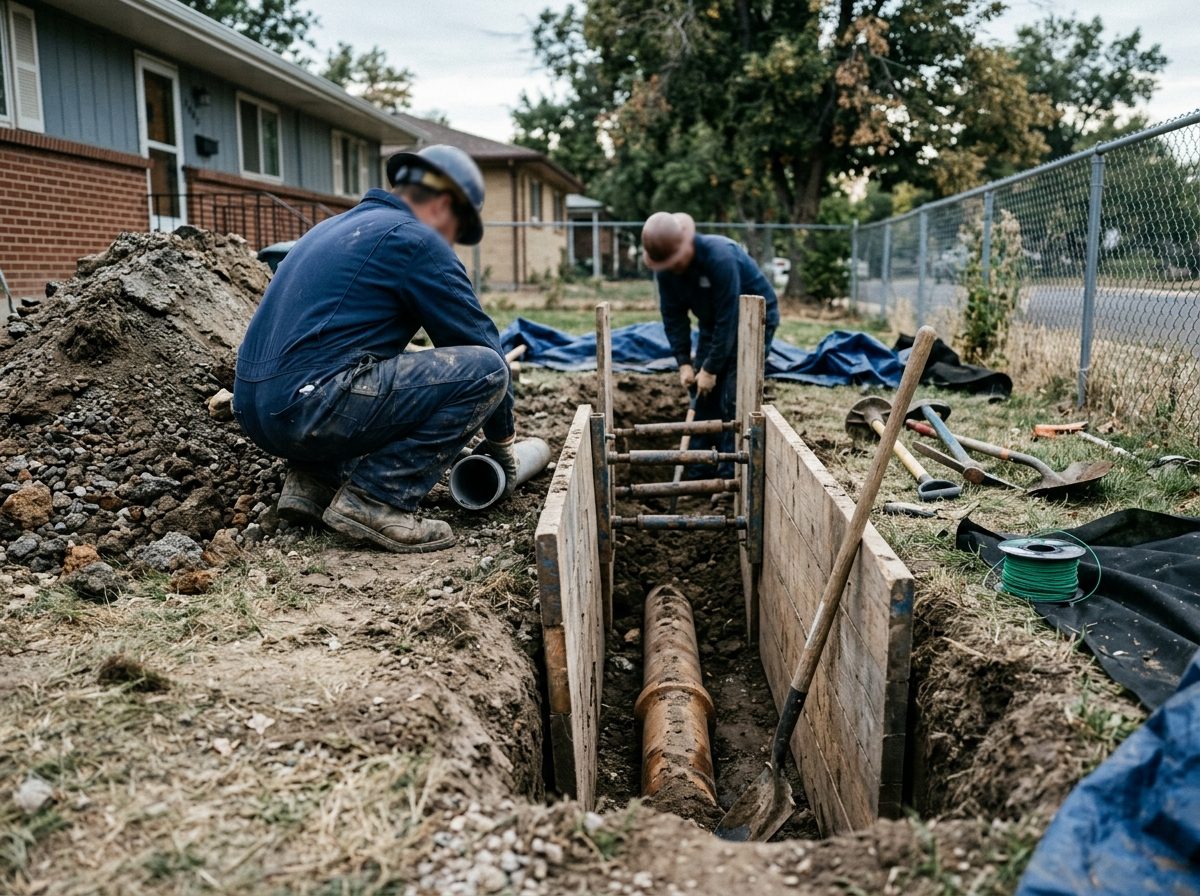
Valley soils and how fields fail
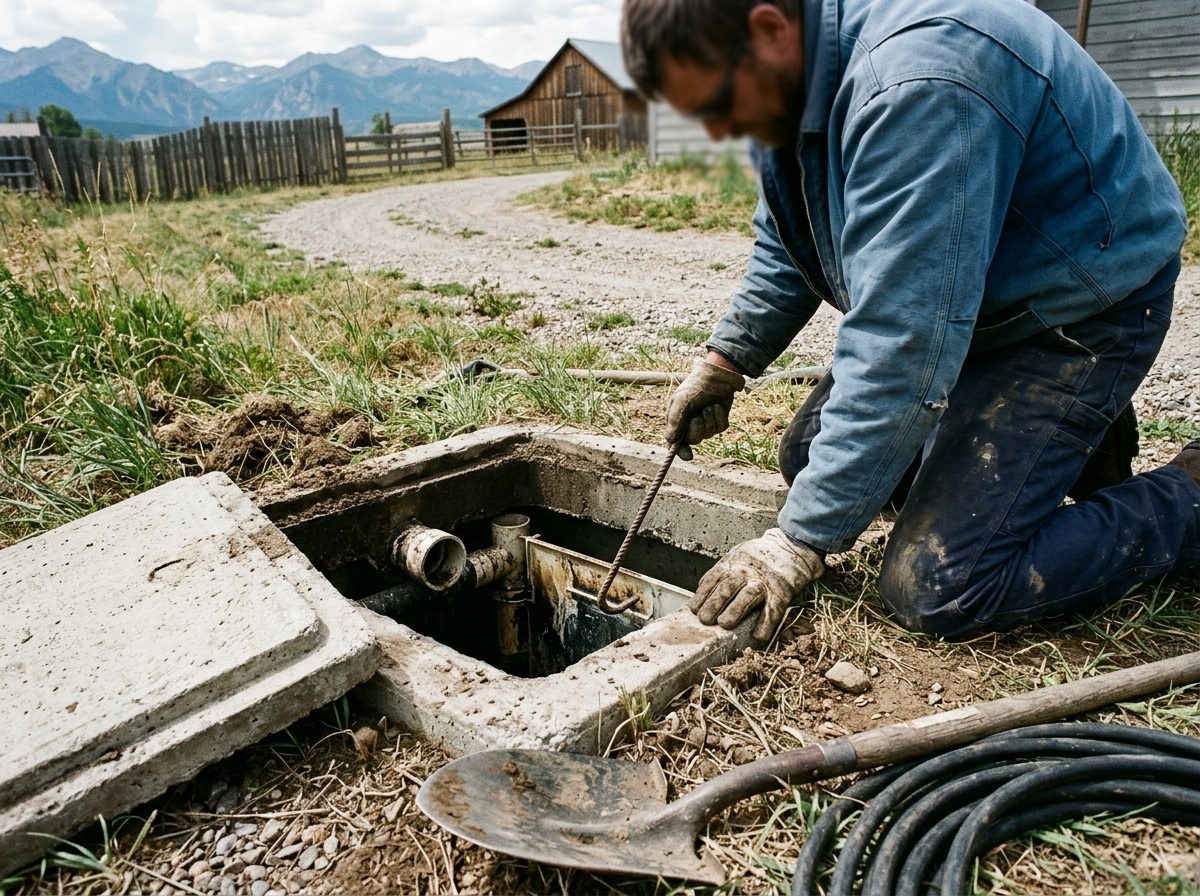
Drainfields depend on the soil around them staying permeable, and valley ground varies a great deal over short distances — sandier stretches that accept liquid readily, and tighter, siltier ground that does so slowly. On irrigated land there is a second factor: a field sitting in ground that is periodically saturated from irrigation has much less capacity to disperse anything.
The signs that a field rather than a tank is struggling are worth knowing. Unusually lush, dark green growth over the field, because it is being fertilised and watered. Soft or wet ground above it in dry weather. Smell outdoors near the field rather than indoors. And backups that return quickly after a pump-out, which indicates the liquid has nowhere to go.
What the household puts in
On a municipal sewer, what goes down the drain becomes somebody else's problem. On septic, it stays on your property and the tank has to process it — so household habits translate directly into how often you pay for pumping and how long the field lasts.
Grease is the main offender, because it does not break down and it carries over into the field. Wipes of every kind, including those sold as flushable, do not break down either. Coffee grounds add solids that never reduce. And large volumes of harsh cleaning product interfere with the biological action the tank depends on. None of that requires an austere household — it requires knowing that the drain is the front door to a system you own.
Recurring backups on septic? Habits, tank and field are three different causes.
Ask about a septic problemTelling a tank problem from a pipe problem
Two symptoms look similar from inside the house and mean completely different things. Every drain in the building slowing at once points at the tank or the field, because the whole system is backing up behind a single constraint. One fixture slowing on its own points at that fixture's trap or branch, and gurgling alongside it points at venting.
The distinction matters because the responses are unrelated. A tank problem needs pumping and possibly an assessment of the field. A branch problem needs clearing. And a line between house and tank that has been damaged or has sagged needs a camera to find, because clearing it repeatedly will not fix a pipe that has lost its fall.
One drain or all of them? That single answer decides what happens next.
Ask what applies to youFrozen vents and frozen septic lines
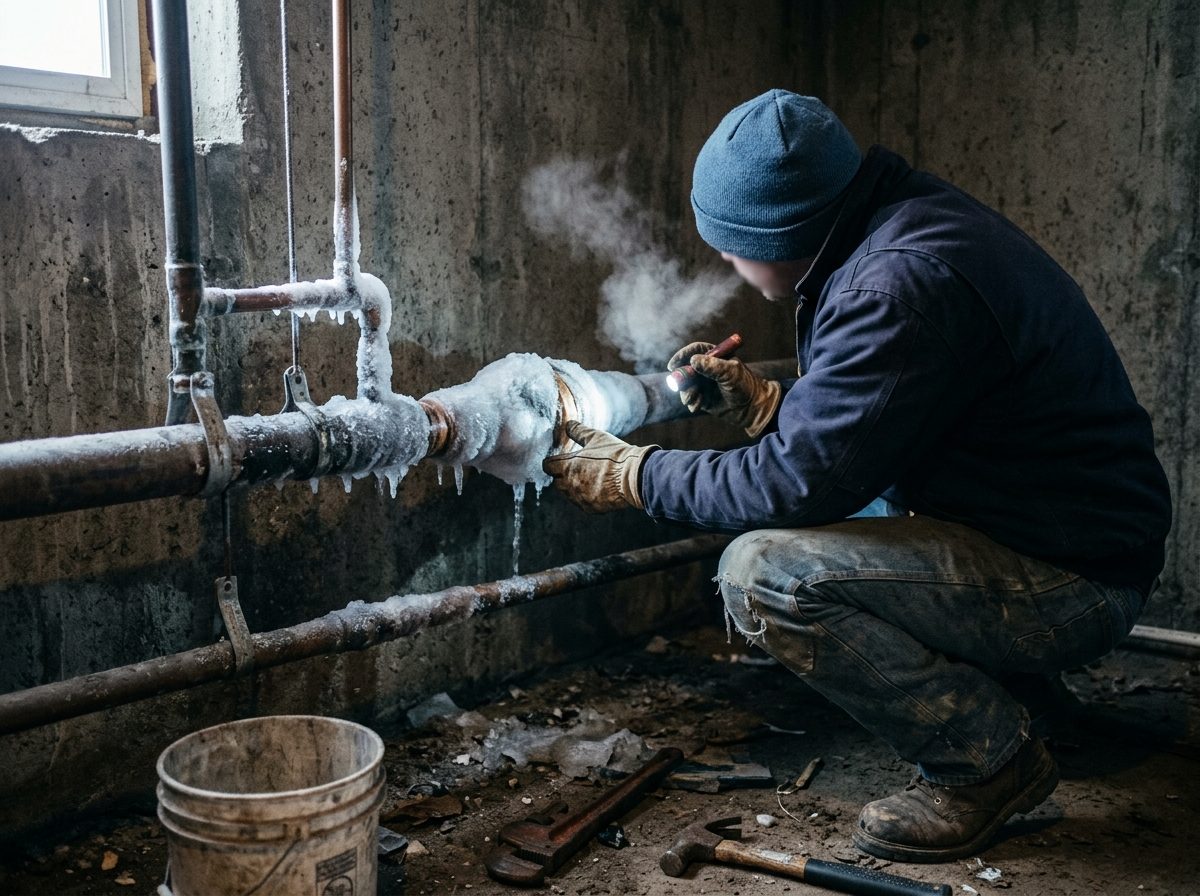
Drains can freeze, and it surprises people because drains are not under pressure and are usually assumed to be safe. The two places it happens are the vent terminal on the roof and the run between the house and the septic tank. Both have the same underlying cause: a line carrying small amounts of water intermittently, in cold air, with nothing to keep it clear.
A frozen vent terminal is the subtler of the two. Moisture in the warm air rising up the vent condenses near the cold top and builds a plug of ice, closing the vent without touching the drains themselves. The symptoms are then venting symptoms — slow drains across the house, gurgling, traps being pulled — appearing in the coldest week of the year and clearing when it warms. It is regularly misdiagnosed as a blockage further down.
A frozen line to the tank is more serious and usually has a specific cause: a run that is too shallow, a section with too little fall so waste sits in it, or a household whose use dropped off — an empty house or one down to one occupant sends too little warm water through to keep the pipe clear. Thawing it is a job for someone with the right equipment rather than anything improvised, and the durable fixes are about depth, fall and insulation. Where a property is used intermittently in winter, running warm water deliberately through the system is a reasonable interim measure rather than an old wives’ tale.
Write it on the tank lid
The date it was last pumped. It is the single most useful piece of information about a septic system, and it is almost never recorded anywhere the next owner will find it.
Nearby communities
Boone sits east of Pueblo in Arkansas valley farmland, with Avondale, Fowler and Pueblo nearby.
Boone, Colorado
Septic questions answered
Three to five years for most households, sooner where the tank is small or the household is large. It is routine maintenance rather than repair. Skipping it lets solids carry over into the drainfield, which is the failure that costs an order of magnitude more than pumping ever would.
The tank holds waste while solids settle, and it is emptied by pumping. The field disperses the liquid into the soil, and it cannot be pumped clean — once clogged it generally needs replacing. That is why a schedule for the tank is really insurance for the field.
Unusually lush dark green growth over it, soft or wet ground above it in dry weather, smell outdoors near the field, and backups that return quickly after a pump-out. That last one is the clearest: if emptying the tank buys only days, the liquid has nowhere to go.
That the whole system is backing up behind one constraint, which points at the tank, the field, or the line running out to them — not at any single fixture. Stop putting water into the house, then check when the tank was last pumped before assuming a blockage.
That is local — the trap or branch serving that fixture — and it does not indicate a septic problem. If there is gurgling alongside the slow drain, venting is the more likely cause than a blockage. Either way, clearing the branch normally resolves it.
Grease above all, because it does not break down and carries over into the field. Wipes of any kind including those sold as flushable, coffee grounds, and large volumes of harsh cleaning product that interfere with the biological action the tank relies on. All of them shorten the interval between pump-outs.
It can. A field sitting in ground that is periodically saturated has far less capacity to disperse liquid, so heavy irrigation over or beside a field works against it. Keeping irrigation and vehicle traffic off the field area is one of the cheapest ways to extend its life.
Two likely reasons. Either the field can no longer accept liquid, which pumping does not address, or the line between house and tank has sagged or been damaged and no longer carries waste properly. A camera in that line distinguishes them, and repeatedly clearing a pipe that has lost its fall will not fix it.
Yes, in two places particularly: the vent terminal on the roof, where rising moisture builds an ice plug and produces house-wide slow drains and gurgling in the coldest week; and the run to the tank, where a shallow depth, poor fall or reduced household use lets waste sit and freeze. The second needs proper thawing equipment rather than improvisation.
East of Pueblo, any hour
Boone, Avondale, Fowler and the surrounding farms.
(833) 621-2904 — answered 24/7, statewide.