Plumber in Florence, CO — one call, any hour
Home / Areas / Pueblo & Southern Colorado / Florence
Florence is a small town with old housing, and old housing means the plumbing conversation starts with materials rather than with components. Most of what fails here has been in service for many decades, and the useful question is which part of the system to deal with first.
Mining-era housing, original pipe
Expect galvanised steel supply lines, cast-iron drain sections and clay sewer laterals, in whatever combination successive owners have left behind. The signatures are consistent: flow that collapses when two fixtures run, discoloured water after the house has sat, drains that slow and clear on a cycle of months, and a smell near the stack when the drain line is failing internally.
Because repairs here have been layered over a century with no records, the first visit to a house often involves establishing what is actually installed before anything can be priced properly. That is normal, and it is why an order of work is more useful than one number.
Old house, several issues? Ask for an order of work rather than one big number.
Ask for a plan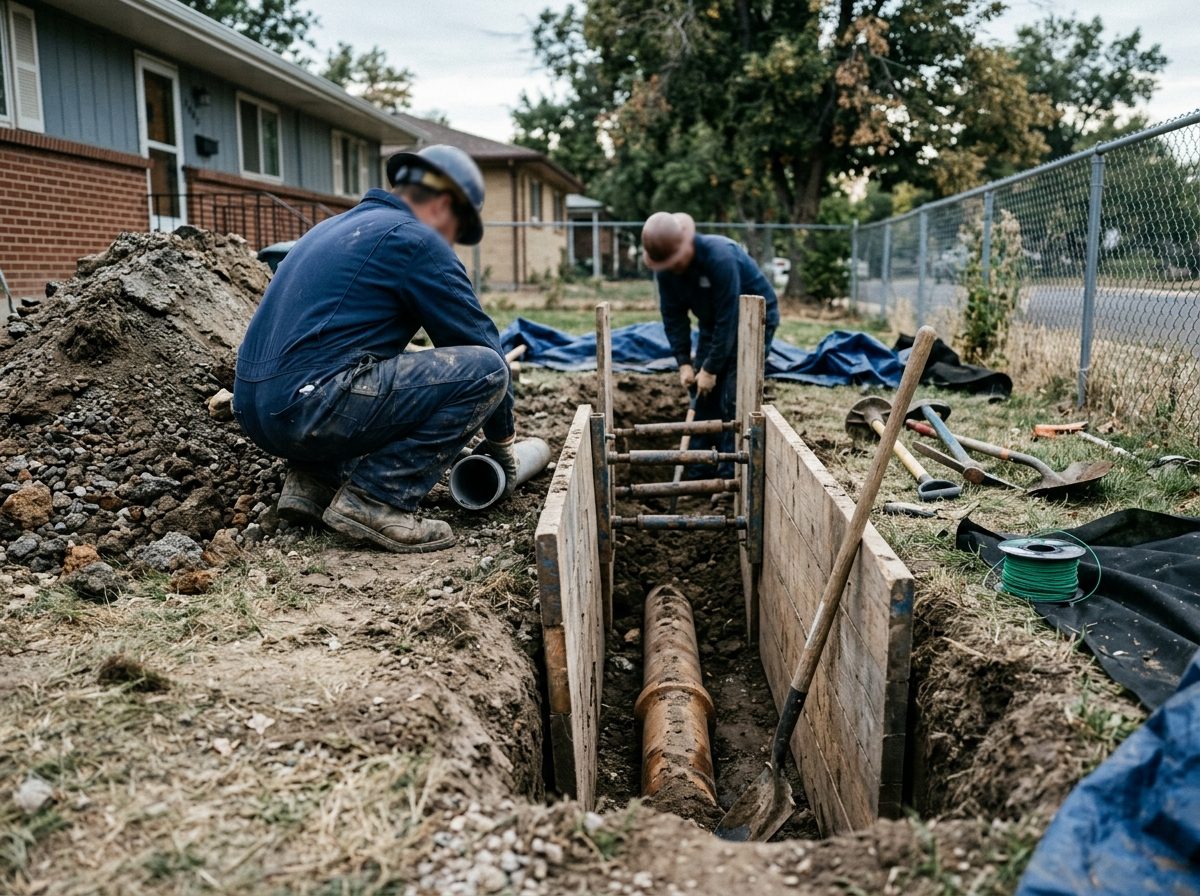
Drains, laterals and repeat blockages
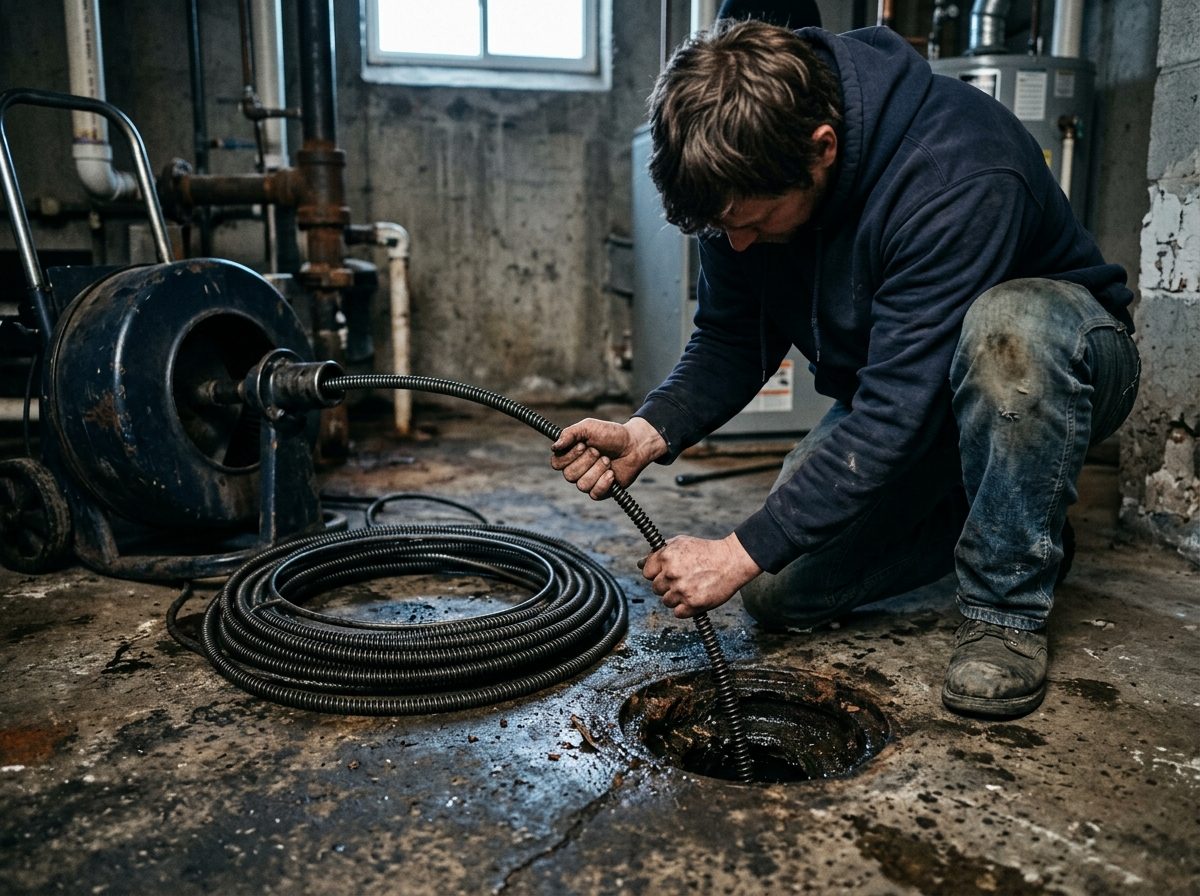
Recurring kitchen blockages are usually grease and scale on the pipe wall rather than one object in the way. Cabling makes a hole through the obstruction and restores flow, but the layer stays, which is why the same drain closes again in months. Jetting scours the wall back toward its original bore and holds far longer on a line with a history.
On the sewer side, a blocked main shows itself at the lowest opening in the house — a floor drain or the lowest toilet — rather than at the fixture you were using. Stop putting water into the house, get the line cleared, then have it camera inspected, because clearing restores flow while the camera explains why it stopped.
Mineral load and appliances
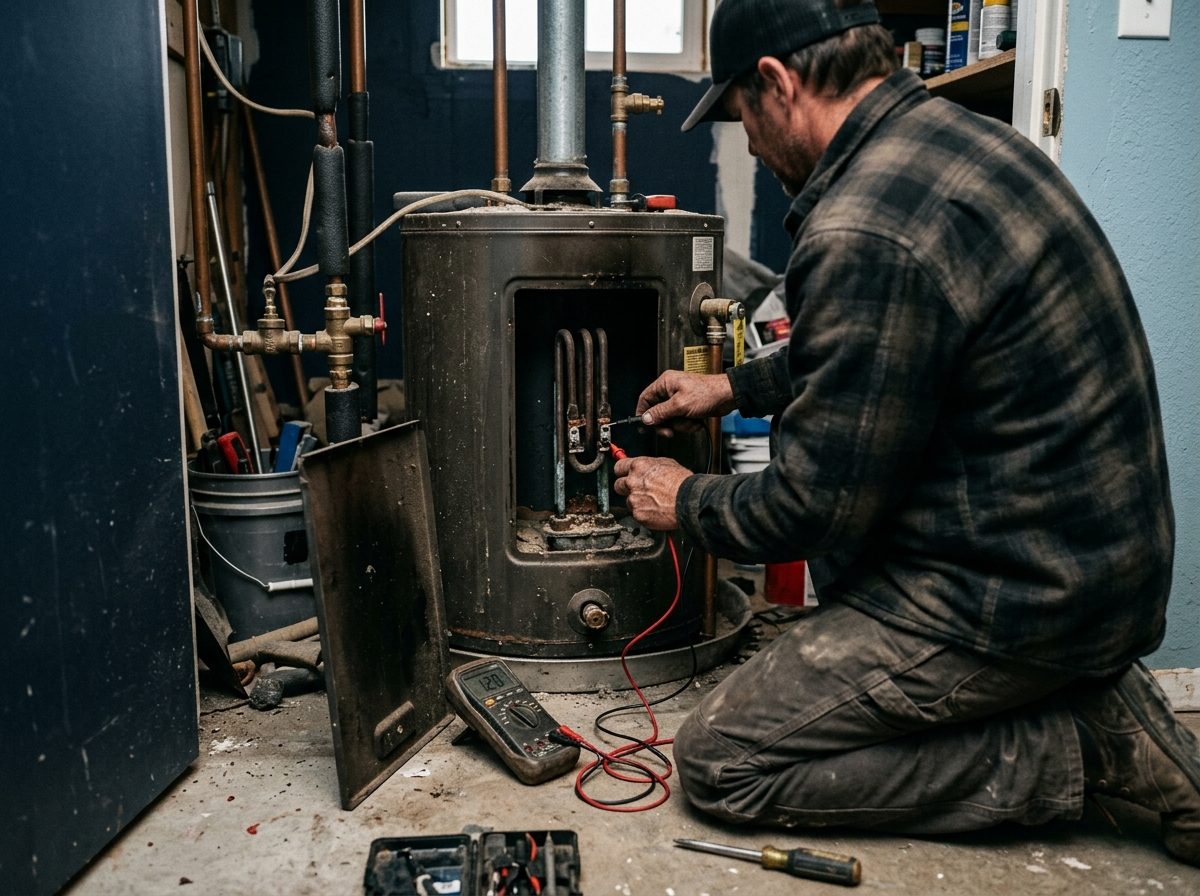
Water here carries a high mineral load, and its effects are quiet. Scale settles in the bottom of the water heater and insulates the burner from the water above it, so run times lengthen and the tank ages faster than the label promises; on electric units it coats the elements directly. Aerators clog, shower heads block, and toilet fill valves stiffen and start to weep.
Flushing the heater annually is the cheapest life extension available. If you are considering treatment, test the water first, because hardness, iron and sulphur call for different equipment and the right answer for a well differs from the right answer on town supply.
Heater working harder than it should? A flush is the cheapest maintenance in the house.
Ask about your water heaterSmall town, wide service area
Florence is small, and the contractors who cover it also cover a lot of surrounding country. That has two practical consequences worth knowing in advance. Emergency response depends substantially on who is already working in your direction that day. And routine work is best scheduled rather than requested at short notice, because a plumber driving out will want to combine the trip with other work nearby.
Making a list before you call genuinely saves money here — the heater, the leaking bib, the running toilet and the slow drain in one visit rather than four. If a neighbour needs something too, two jobs on one road is an easier trip to justify than one.
Several jobs to do? List them before you call — one trip can cover all of it.
Ask about a single visitA toilet that rocks, and why it matters
A toilet that moves when you sit on it is not a cosmetic annoyance — it is a seal being worked loose. The pan sits on a flange fixed to the floor, with a wax or rubber seal between them, and that seal only works while nothing moves. Every rock breaks it a little further, and what leaks out goes under the floor rather than across it, which is why the damage is usually found long after it started.
In housing of this age the underlying cause is often the flange rather than the toilet. Old cast iron flanges corrode, timber subfloors soften where there has been a slow leak, and floors that have had new covering laid over old raise the finished level so the flange now sits too low relative to it. Simply tightening the bolts on a rocking toilet is the instinctive response and frequently the wrong one — on a cracked flange or a soft floor it makes things worse, and over-tightening is a good way to crack the pan itself.
The tell-tale signs worth acting on are a toilet that moves at all, a smell near it that does not clear with cleaning, staining or springiness in the floor around the base, and a ceiling mark below it. Any of those mean the seal is worth pulling and looking at rather than watching. It is a small job when the flange and floor are sound, and it is the repair that gets considerably more expensive the longer a rocking toilet is used — because eventually the subfloor is part of the work.
One check today
Test the main shutoff. Valves that have not turned in decades sometimes will not close, and finding that out during a burst pipe is the worst possible timing. Replacing one is a small scheduled job.
Nearby communities
Florence sits in the Arkansas valley beside Canon City, with Penrose, Rockvale, Coal Creek and Colorado City close by.
Florence, Colorado
Florence plumbing questions answered
For urgent problems, it depends on who is already working nearby, and you will get a straight answer rather than a hopeful one. The phone advice matters as much as the arrival time, because knowing what to shut off in the first five minutes limits the damage. For routine work, a scheduled visit is usually faster in practice.
Grease and scale building on the pipe wall rather than a single object. Cabling clears a path and restores flow but leaves the layer behind, so it returns within months. Jetting scours the wall back toward the original diameter, which is why it lasts considerably longer on a line that has closed up repeatedly.
No. Repiping can be staged by floor, by run, or by starting with the horizontal mains and the fixtures you use most. What decides the order is where flow is worst and where the pipe is easiest to reach. Staging over a couple of years is a legitimate approach on an older house.
For most households on hard supply the return comes as longer heater and appliance life rather than anything obvious at the tap. Test first so hardness is a number and you know whether iron is present, then size the equipment to the household and check there is a drain available for the regeneration cycle.
Plan for it rather than wait. Tanks fail by leaking, not by warning, and a tank that lets go in a finished space costs far more in flooring and drywall than in plumbing. Age, rust at the fittings, damp underneath and how fast hot water runs out are the things to judge on.
That is the sensible way to do it out here, and it is how most work gets scheduled. Give a full list when you call so the right parts come on the truck. A second trip for a fitting that could have been on the first is the expensive part of small-town plumbing.
Usually a dry trap. A floor drain holds a water seal that blocks sewer gas, and if nothing has run into it for months the water evaporates. A bucket of water normally fixes it within minutes. If the smell persists after that, it suggests a venting problem or a break in the line, which is worth a camera.
Yes. The lateral is the one major system a standard home inspection does not inspect internally, and in housing this age it is both likely to be compromised and costly to repair. The camera turns a guess into a plan, and finding a problem before closing makes it a negotiating point.
Better not, without looking. The rocking has probably already broken the seal, and on a corroded flange or a softened subfloor tightening makes it worse — over-tightening also cracks pans. The seal wants pulling and inspecting, which is a small job while the floor is sound and a much larger one once the subfloor is involved.
The Arkansas valley, any hour
Florence, Canon City, Penrose, Rockvale and the surrounding communities.
(833) 621-2904 — answered 24/7, statewide.