Plumber in Castle Rock, CO — one call, any hour
Home / Areas / Denver Metro / Castle Rock
Castle Rock has grown quickly and mostly recently, which gives it a distinctive plumbing profile: very little old pipe, a great many houses of similar age, hard water, and enough elevation change across the town that pressure varies noticeably from one neighbourhood to the next.
A town that grew fast
Fast growth means cohorts. Streets and whole subdivisions went in within a year or two of each other, with the same appliances and the same components fitted by the same crews. Those parts then reach the end of their service lives together — water heaters, pressure regulators, expansion tanks, angle stops and fixture supply lines.
The practical value of knowing this is that it makes planning possible. If neighbours are replacing heaters, yours is a candidate for inspection rather than a gamble, and a planned replacement in a finished basement costs far less than an emergency one.
Neighbours replacing heaters? On a street built in one year, that is a useful warning.
Ask about a heater checkScale on everything? Test the water before buying any treatment.
Ask about hard water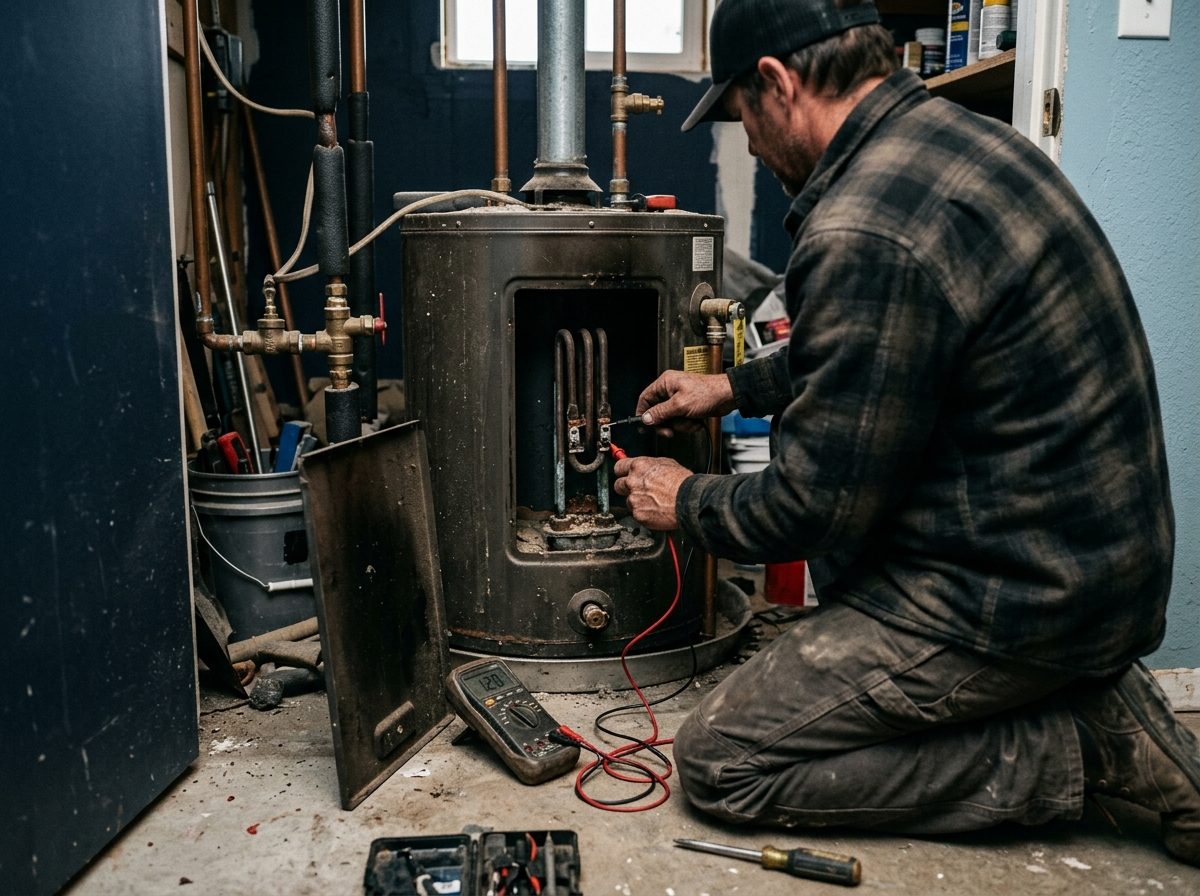
Hard water and heater life
Water here carries a substantial mineral load, and it is the most consistent cause of the bills people do not expect. Scale settles in the bottom of the water heater, insulates the burner from the water above it and lengthens run times; on electric units it coats the elements directly. Aerators and shower heads block, fill valves stiffen and start to weep, and dishwashers and washing machines wear faster.
Flushing the tank annually is the cheapest life extension available. Beyond that, test before you treat, so hardness is a number rather than an impression, and size any softener to the household. Whole-house filtration is a separate question from softening and solves different problems, so it is worth being clear which one you actually want.
Pressure zones on the hills
The town climbs and falls a good deal, and a distribution system serving that much elevation change runs at different pressures in different places. Some addresses sit low in a zone and see static pressure well above what household fixtures are built for.
The damage arrives as a scatter of small failures — running toilets, dripping taps, a washer hose that lets go, a relief valve that discharges — which individually look like worn parts and together point at pressure. An inexpensive gauge on an outdoor spigot answers it in a minute, and replacing a drifted regulator protects everything downstream.
Small failures adding up? Check pressure before replacing fixtures one at a time.
Ask about high pressureWind, elevation and freezing
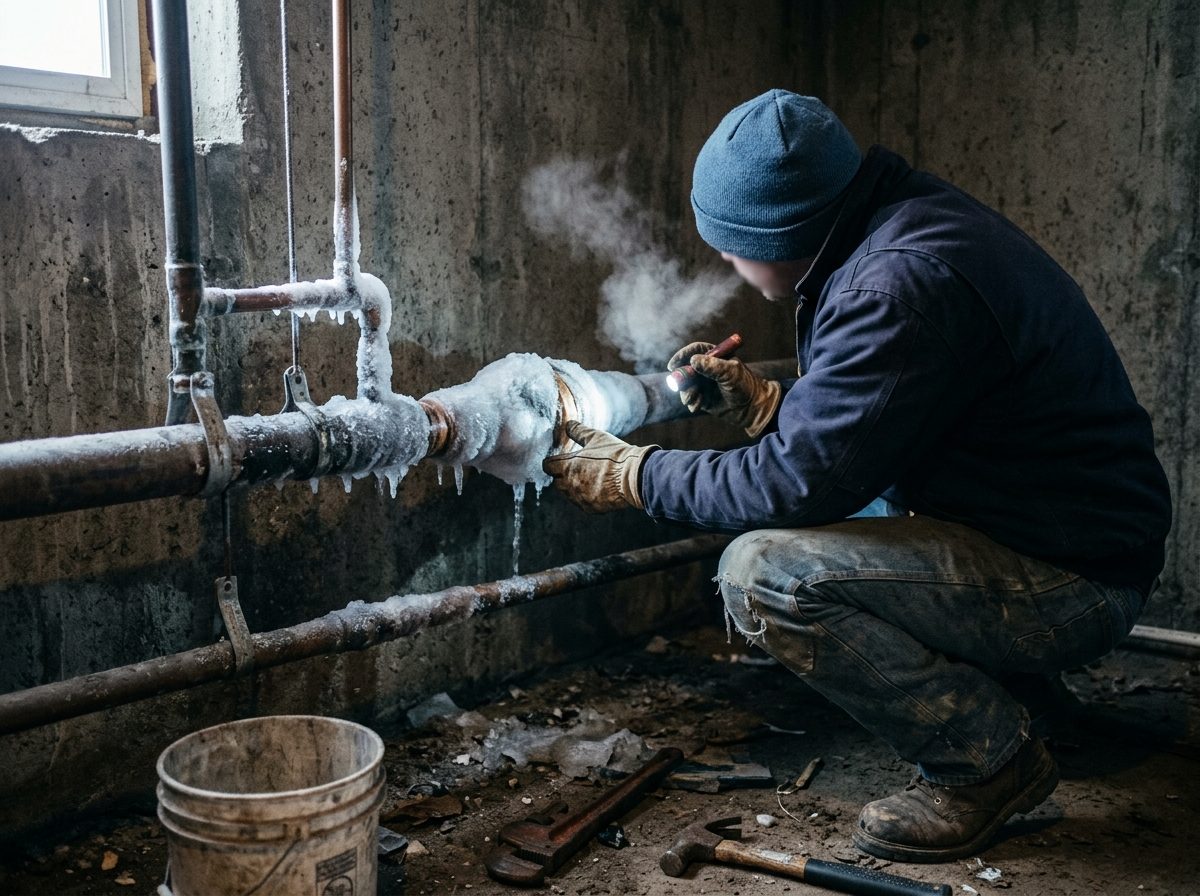
Castle Rock sits higher than much of the metro and catches more wind, so exposed pipe loses heat faster than the thermometer alone suggests. The vulnerable places are the usual ones: hose bibs with hoses attached, garage walls, crawlspaces with vents left open from summer, and lines in outside walls on the windward side.
Disconnect hoses before the first hard freeze, get irrigation blown out with compressed air rather than merely drained, and on the coldest nights open cabinet doors under sinks on exterior walls. If a fixture stops flowing during a cold night, treat it as worth attention even after flow returns — ice can crack a pipe without releasing water until the thaw.
What the ground does to the cost of a repair
The ground under much of this town is not soil in the sense a trench estimate assumes. Sandstone, cemented gravel and rock appear at shallow and unpredictable depths, sometimes changing across a single property, and that has a direct effect on any work involving a buried pipe. The same sewer repair can be a morning’s work on one street and a considerably larger job two streets away, and the difference is entirely below ground.
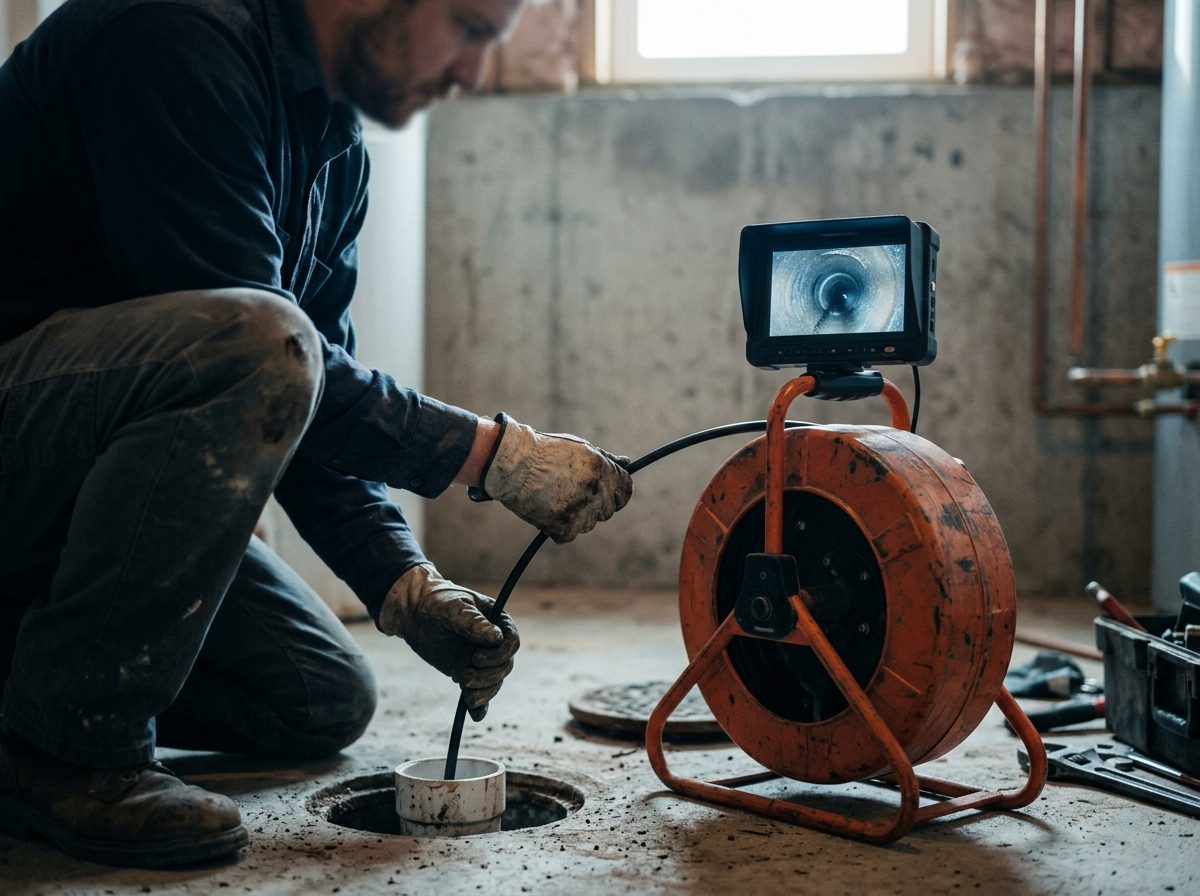
The practical consequence is that excavation estimates here carry more genuine uncertainty than on the plains, and it is better to be told that honestly at the outset than to discover it partway through. It also raises the value of everything that avoids digging. A camera inspection that establishes exactly where a fault is, and at what depth, converts exploratory excavation into a targeted one. Trenchless methods — lining an existing pipe, or pulling a new one through the old route — are worth asking about early rather than after a trench has been priced.
For a homeowner the useful preparation is knowing what is already recorded. Where the lateral and the water service run, how deep they sit, and what material they are, are questions worth answering while nothing is wrong. Anyone who has had a line opened here should ask for the route and depth to be noted from two fixed points on the building, because on this ground that note is worth real money the next time.
Two checks worth making
Measure your static pressure, and confirm the main shutoff turns. One tells you whether your fixtures are being quietly destroyed; the other decides how bad a burst pipe gets.
Nearby communities
Castle Rock anchors the south end of the metro, with Larkspur, Franktown, Sedalia and the Douglas County suburbs around it.
Castle Rock, Colorado
Castle Rock plumbing questions answered
For most households the money comes back as longer water heater and appliance life rather than anything obvious at the tap. Test the water first so hardness is a real number, then size the equipment to the household. Also check there is a practical place to plumb the loop and a drain for the regeneration cycle before committing.
They solve different problems. A softener addresses hardness — the calcium and magnesium that leave scale in heaters and on fixtures. Filtration targets particulates, taste, odour or specific contaminants depending on the media used. Deciding which you need starts with a water test rather than with a catalogue, and some households genuinely want both.
When several small things fail around the same time, suspect pressure rather than bad luck. High static pressure stresses every valve and seal in the house continuously. Measure it with a gauge on an outdoor spigot; if it reads above the normal working range, replacing a drifted pressure regulator is cheaper than replacing fixtures one by one.
It is common in hard-water areas. Sediment collects in the bottom of the tank, insulates the burner from the water and forces longer run times, which ages the unit faster than the label suggests. An annual flush pushes the life back toward what the manufacturer intended, and it is the single most valuable piece of heater maintenance available.
Same-day is normal and a few hours is common for urgent problems. Addresses out toward Larkspur, Franktown and Sedalia add drive time, and during a regional cold snap the whole south metro is busy simultaneously. You will get a realistic window rather than an optimistic promise, plus what to shut off while you wait.
Check whether you have a pit. Many houses were built with a pit and no pump, which reflects a decision about that lot in that year. If the basement is finished, a pump and check valve are cheap against the cost of flooring, and the moment they prove their worth is a fast melt or a summer storm.
Deal with the exposure rather than the pipe. Insulate the run properly, seal the air leaks that let cold air reach it, and where practical reroute the line into heated space. Heat tape correctly installed and actually plugged in is the fallback. Also disconnect hoses from bibs on that wall, since a connected hose defeats the frost protection.
Modestly, and it is worth mentioning to whoever specifies the unit. Gas appliances lose rated output as air thins, so derating, venting and combustion air belong in the sizing conversation. The effect is smaller here than in the high country, but combined with cold January inlet water it is enough to make an undersized unit feel undersized.
Often, yes — trenchless methods either line the existing pipe or pull a new one along the old route, needing access pits rather than a full trench. Whether it suits depends on the condition and shape of the existing line, which a camera inspection establishes. On this ground it is worth asking about before pricing an open trench.
The south metro, any hour
Castle Rock, Parker, Lone Tree, Larkspur and the Douglas County communities nearby.
(833) 621-2904 — answered 24/7, statewide.