Plumber in Louviers, CO — one call, any hour
Home / Areas / Denver Metro / Louviers
Louviers is a small historic village in northern Douglas County, built as a company town and still recognisably one. Its housing went up largely in a single period, which gives it an unusual plumbing characteristic: the problems arrive in step rather than at random.
A small historic village
The village is compact, the housing is old, and much of it shares an original design. That means the same materials in the same places, installed at the same time — supply pipe narrowed by decades of internal corrosion, drain lines that have roughened, and sewer connections of the same era as the streets.
Because the village is small, the contractors who cover it also cover the surrounding country. Emergency response is reasonable given the proximity to Littleton, and routine work is better booked than requested at short notice.
Old house, several issues? Ask for an order of work rather than one big number.
Ask for a plan
Uniform housing, uniform problems
The value of a housing stock built to one design is that a neighbour's experience is genuinely informative. If the house next door has needed its supply runs replaced or its drain line repaired, yours is a candidate rather than a coincidence — the same pipe has been in the ground and in the walls for the same length of time.
What complicates it is a century of individual alteration. Kitchens and bathrooms have been moved, additions built, and each round left its own fittings behind the plaster. So the shared starting point diverges, and the useful first step is establishing what is actually installed in your house rather than assuming the original design still holds.
Finding a leak in old construction
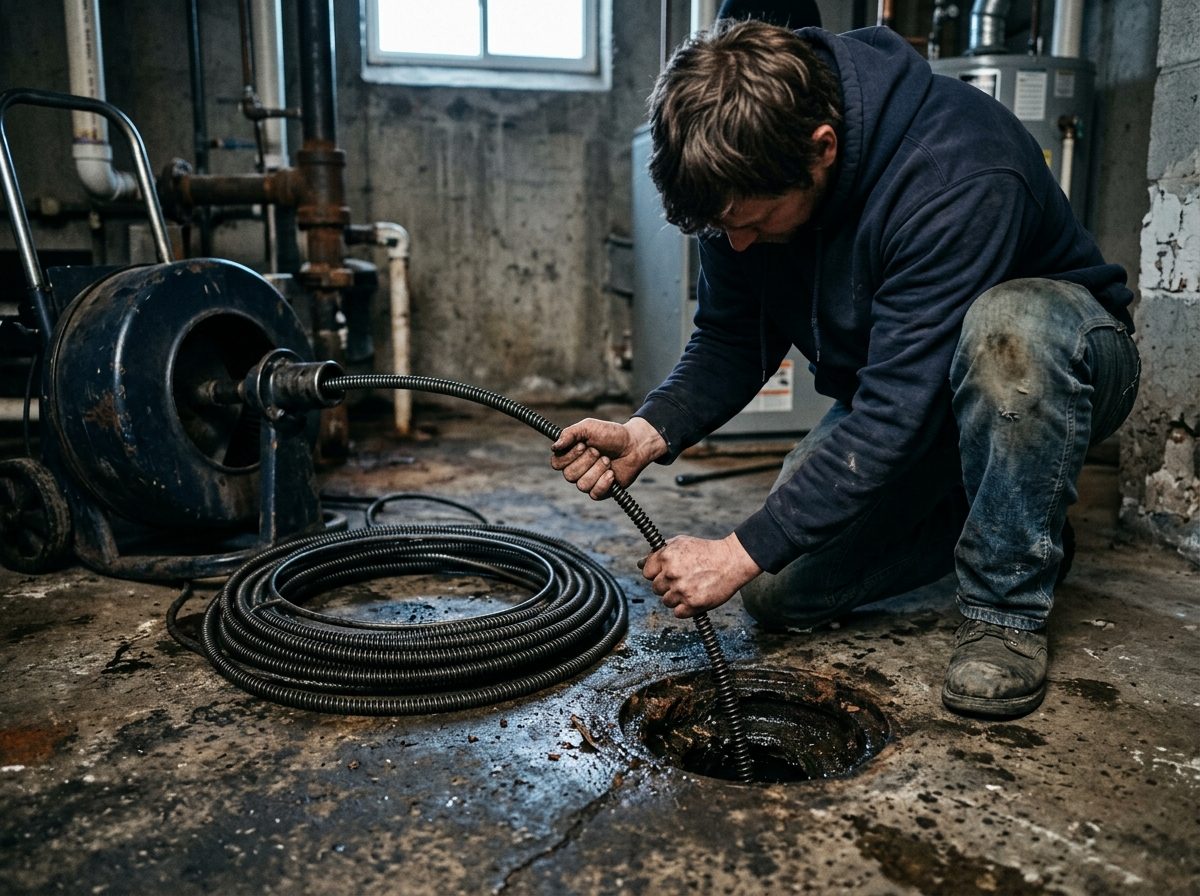
In houses of this age, leaks are usually at old fittings behind finished surfaces. Non-destructive detection is therefore worth more than the price difference suggests: acoustic listening, thermal imaging and moisture mapping locate water through plaster and tile, so the only opening made is the one the repair actually needs.
You can narrow it yourself first. Rule out toilets with food colouring in the tank — twenty minutes, no flushing, and colour in the bowl means a failed flapper. Then run the meter test: everything off, note the meter and the low-flow indicator, read again an hour later. Movement means water is leaving the system.
Bill up, nothing visible? Run the meter test first, then call with the result.
Ask about finding a leakCold nights in old walls
Old houses freeze in places that are no longer heated the way they once were: enclosed porches, additions built over crawlspaces, and walls reinsulated everywhere except where the plumbing runs. A cold snap with wind finds them reliably.
Disconnect hoses before the first freeze, since a connected hose holds water against the bib and defeats its frost protection. And find the main shutoff and confirm it turns — in a house of this age a valve that has not moved in decades sometimes will not close.
Shutoff seized? Replacing it is a small scheduled job — do it before you need it.
Ask about a shutoff valveIf a pipe has split
Close the main shutoff, then open the lowest taps to drain the system and take pressure off the break. Photograph everything before cleanup if a claim is possible, then call.
Hot water and heating in a small old house
The houses here are small, and small houses were built with small mechanical spaces. That single fact drives most hot water decisions in the village. A modern tank of the capacity a household now expects often will not fit where the old one stood, and even where it fits, the clearances required around a combustion appliance and the route for its vent may not be there any more.
Which is why the conversation usually starts with the space rather than the appliance. Sometimes the answer is a shorter, wider tank. Sometimes it is relocating the heater to a different part of the house, which costs more in pipe and less in compromise. And sometimes it is a tankless unit, which frees floor space and removes the standby loss, but needs a gas supply sized for a much higher instantaneous load and a vent route of its own — neither of which can be assumed in a house of this age.
Venting deserves particular attention. Old houses in this village have been altered, and it is not unusual to find an appliance vented into a chimney that was never lined for it, or sharing a flue with something else. That is a safety question rather than an efficiency one, and it is worth resolving at the point an appliance is replaced rather than leaving it for the next owner to inherit.
Nearby communities
Louviers sits between Sedalia and Littleton in northern Douglas County.
Louviers, Colorado
Louviers plumbing questions answered
Quite possibly, and that is genuinely useful information here. Where housing was built to one design at one time, the same materials have been in the ground and walls for the same period. Treat a neighbour’s experience as a prompt to have yours assessed rather than as a coincidence.
Usually supply pipe narrowed by decades of internal corrosion rather than a problem with the supply. Testing pressure at an outdoor hose bib separates the two: if what arrives is normal and interior flow is not, the pipe is the constraint. Replacing the affected runs is the fix.
That is exactly what leak detection is for. Acoustic equipment hears escaping pressurised water through finishes, thermal imaging finds temperature differences behind surfaces, and moisture meters map how far water has travelled. The opening that follows should be the one the repair needs.
Rule out toilets first with food colouring in the tank — twenty minutes, no flushing, and colour in the bowl means a failed flapper. Then run the meter test: shut everything off, note the meter and low-flow indicator, and read again an hour later. Movement means water is leaving.
No. It can be staged by floor, by run, or by starting with the horizontal mains and the fixtures you use most. What sets the order is where flow is worst and where the pipe is easiest to reach. Staging over a couple of years is legitimate on an older house.
Do not force it — a valve that snaps leaves you worse off than one that sticks. Replacing it is a small scheduled job, and in most cases the water can be shut off at the meter or street while the work is done. In an older house it is a high-value small repair.
Usually same-day for urgent problems, since Littleton and the south metro are close. For routine work a booked slot is sensible, and on a house of this age it also gives time for the right parts to come out with the truck.
Yes. The lateral is the one major system a standard home inspection does not look inside, and in housing this age it is both likely to have a problem and expensive to repair. Finding it before closing turns it into a negotiating point rather than a bill.
Sometimes, using a shorter and wider tank of the same capacity, but the limit is usually clearance and venting rather than the footprint. It is worth measuring the space and checking the vent route before choosing a unit, because discovering the problem on installation day means either a compromise or a second visit.
It can be, and the space saving is real. The two things to confirm first are whether the gas supply can carry the much higher instantaneous demand to that point, and whether a suitable vent route exists. Both are answerable in advance. Where hard water is present, factor in periodic descaling as part of ownership rather than as an unexpected repair.
Northern Douglas County
Louviers, Sedalia, Littleton and Castle Rock.
(833) 621-2904 — answered 24/7, statewide.