Plumber in Littleton, CO — 24/7 help by phone
Home / Areas / Denver Metro / Littleton
Littleton covers a long stretch of the south-west metro, and the plumbing calls split cleanly along the age line. Around the old town centre and the streets nearest it, houses are old enough that the original pipe is the story. Up on the ridges and out toward the county line, the pipe is fine and the problems are pressure, sizing and drainage.
Old Littleton and the newer ridges
The older core carries the standard pre-war and mid-century inheritance: clay sewer laterals, cast-iron drain sections and galvanised steel supply lines that have narrowed from the inside. The tells are consistent — flow that collapses when two fixtures run, water that comes out discoloured after a few days away, and drains that clear briefly then slow again.
The subdivisions built from the 1970s onward have a different signature. Materials are better, but whole streets went up in the same couple of years, so sewer laterals, water heaters and pressure regulators arrive at the end of their service lives together. When one neighbour replaces a heater, the rest of the street is often a year or two behind, and that is worth knowing because it turns a surprise into something you can budget.
Not sure how old your plumbing is? Say the year the house was built — it narrows the list fast.
Ask what to check firstBacking up right now? Stop running water into the house, then call.
Ask about a sewer backup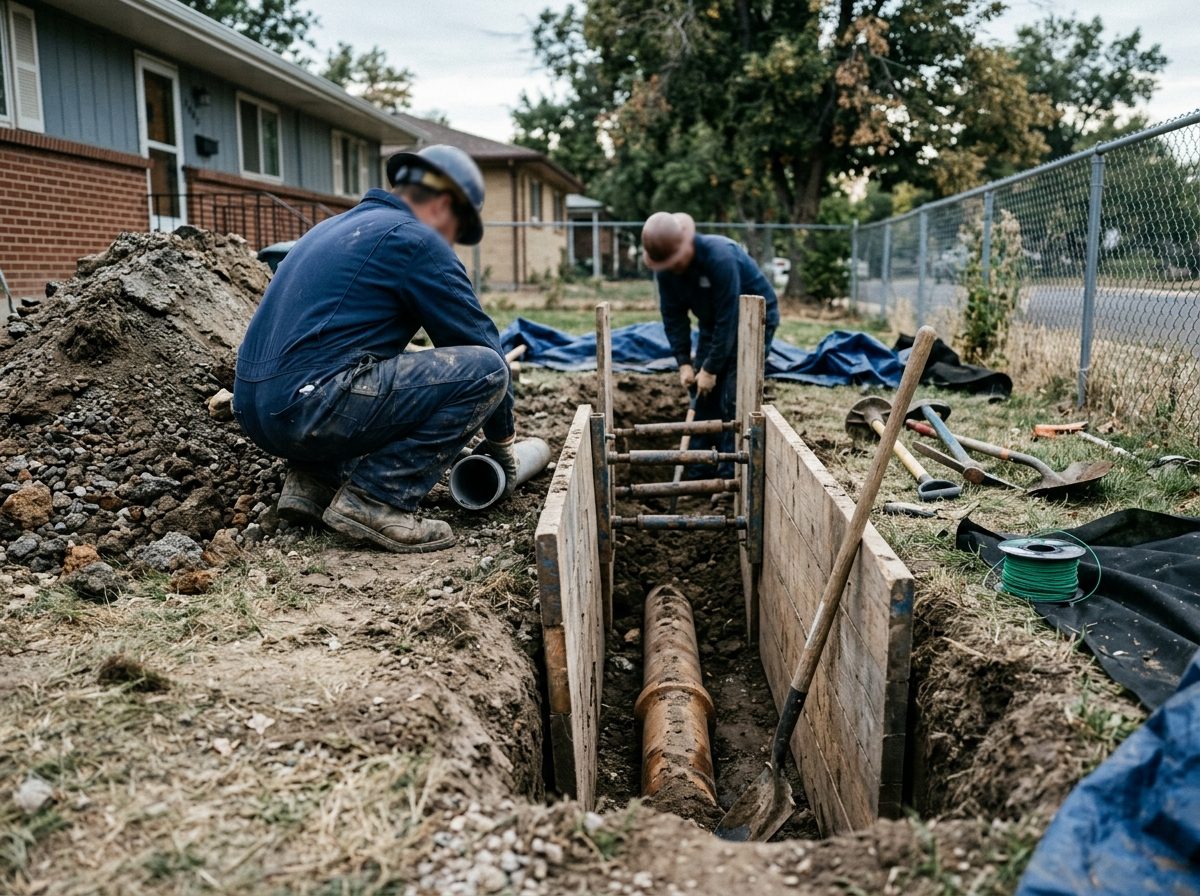
Laterals, roots and repeat backups
Mature street trees are common here, and clay laterals give roots a joint every few feet to find. A blocked main shows itself at the lowest opening in the house, which means the basement floor drain or the lowest toilet rather than the fixture you were using.
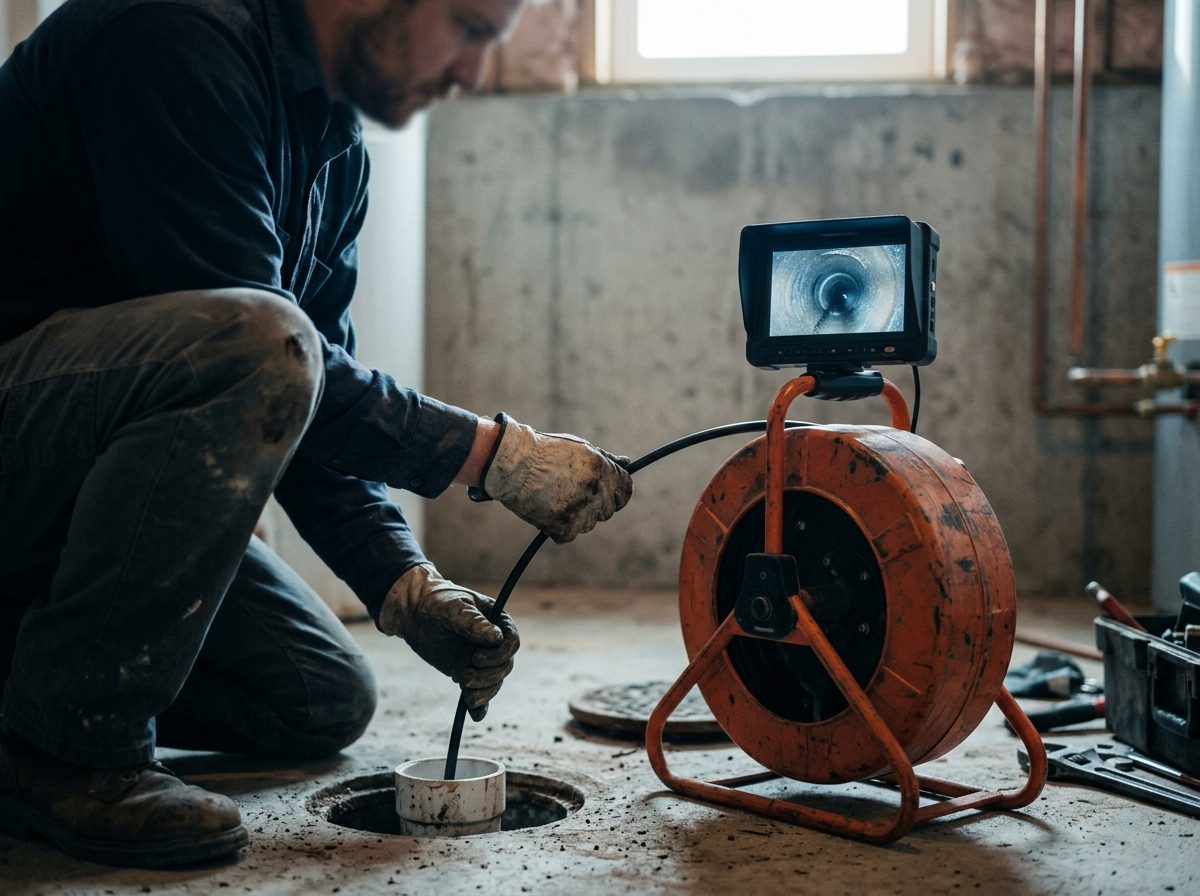
If that happens, stop putting water into the house — no laundry, no showers, no dishwasher — and get the line cleared and then camera inspected. Clearing restores flow; the camera explains why it stopped. That distinction is what separates an annual maintenance clean from a spot repair, a trenchless liner or a replacement, and it is worth insisting on before agreeing to any digging in an established front garden.
Basements and the pump nobody tests
Full basements are the norm, and a good share of them are finished, which changes the maths on water. A sump pump that has sat idle through a dry winter is the appliance most likely to fail exactly when it matters — during a fast melt or a summer downpour that drops an inch in twenty minutes.
Testing takes five minutes: pour a couple of buckets into the pit and confirm the pump starts, moves water and shuts off cleanly. If the basement is finished, price a battery backup or a second pump, because the cost of failure is flooring and drywall rather than plumbing.
Finished basement downstairs? Test the pump before the melt, not during it.
Ask about sump pumpsHow Littleton houses freeze
Freezes here are short and sharp, usually with wind, and they find the spaces nobody heats: an exterior hose bib with a hose still attached, a garage wall, a crawlspace vent left open since summer, a kitchen line running through an outside wall on a north face.
Disconnecting hoses in October prevents a large share of it, since a connected hose holds water against the bib and defeats the frost protection built into it. Worth knowing too: a frozen pipe often does not reveal itself until the thaw, when the split starts passing water again, so a line that stopped flowing on a cold night deserves attention even after flow returns.
Adding a bathroom to an older house
Adding a bathroom to a house built before anyone anticipated it is mostly a question about drainage rather than about supply. Getting water to a new fixture is usually straightforward; getting waste away from it, with the fall it needs and a vent that works, is what determines whether the project is simple or substantial. That is worth establishing at the design stage rather than after tiling has been chosen.
Three things decide it. Whether the new fixtures can reach the existing stack with adequate fall, which is a matter of distance and available floor depth. Whether the stack and the lateral have the capacity for the additional load, which on an older house is not automatic. And whether the new fixtures sit above the level of the sewer line — because below it, waste has to be lifted by a sealed pump rather than flowing away, and that is a different installation with its own vent, its own maintenance and its own failure modes. Establishing which situation you are in early changes the budget far more than any fixture choice will.
Find this before you need it
The main shutoff is usually on the street-side basement wall, often near the front. Find it today and check the handle turns — valves that have not moved in decades sometimes will not close, and replacing one is a small scheduled job compared with discovering it mid-burst.
Nearby communities
Littleton sits at the south-west corner of the metro, with Englewood, Denver and the Douglas County suburbs immediately around it.
Littleton, Colorado
Littleton plumbing questions answered
Same-day is normal and a couple of hours is common for anything urgent, because there are plenty of working plumbers across the south metro. The exception is a metro-wide cold snap, when everyone is on split lines at once — on those days expect an honest window, possibly next morning, plus instructions on what to shut off in the meantime.
It points at the main sewer lateral rather than a branch, because the floor drain is the lowest opening in the system. Stop running water into the house and get the line cleared, then inspected with a camera. In older Littleton neighbourhoods with mature trees, roots at a clay pipe joint are the most common cause by a wide margin.
Often not. Trenchless methods pull a new pipe along the path of the old one or line the existing pipe in place, which means access pits rather than an open trench. Suitability depends on pipe condition, depth and bends, so the camera inspection comes first. On a street of established gardens and mature trees it is usually worth asking about.
Pour two or three buckets of water into the pit and watch. The float should lift, the pump should start, move the water out and shut off cleanly without short-cycling. If it hums without pumping, runs continuously or does nothing, deal with it now. Do the test in early spring and again before the summer storm season.
Sediment is the usual explanation. Scale settles in the bottom of the tank, insulates the burner from the water and forces longer run times; on electric units it coats the elements directly. An annual flush pushes the life back toward what the manufacturer intended. Age plus damp under the tank means plan a replacement rather than wait for the failure.
It is worth a look. Ice can crack a pipe or fitting without releasing water while the blockage is still frozen, and the leak begins at the thaw, sometimes hours later and often inside a wall. Check for damp, listen for running water with everything off, and get the underlying exposure fixed before the next cold night.
It does, and it is easy to check with a gauge on an outdoor spigot. Pressure above the normal working range shortens the life of every valve, hose, fixture and appliance in the building, and the early symptoms are running toilets, dripping taps and a heater relief valve that discharges. If it reads high, look at the pressure regulator rather than replacing fixtures one at a time.
Yes, particularly on anything built before the 1970s or on a street with mature trees. The sewer lateral is the one major system a standard home inspection does not look inside, and it is among the most expensive to repair. Finding a belly, an offset joint or root intrusion before closing makes it a negotiation instead of a bill.
Littleton, around the clock
Every Littleton ZIP code, plus Englewood, Lone Tree, Morrison and the south metro nearby.
(833) 621-2904 — answered 24/7, statewide.