Plumber in Denver, CO — help on the phone at any hour
Home / Areas / Denver Metro / Denver
Denver plumbing is a conversation about age. Within a few miles you can go from a 1900s brick square with its original cast-iron stack, to a 1955 ranch with galvanised supply lines, to a 2019 infill duplex where nothing has failed yet and the first thing to go will be a builder-grade fitting nobody thought about. Knowing which house you are in tells you what is most likely happening before anyone arrives.
Denver housing, era by era
The pre-war core — Baker, Congress Park, Park Hill, Highland, Cole, Whittier and the streets either side of the parkways — was built with cast-iron drains, clay sewer laterals and galvanised steel water lines. All three of those materials have exceeded any reasonable service expectation, and they fail in ways that are recognisable rather than mysterious. Galvanised pipe narrows from the inside until two fixtures cannot run at once, and the water runs rusty after a weekend away. Cast iron roughens and holds waste at its low points, so a drain that clears and slows again every few months is telling you about the pipe rather than about what went down it.
The post-war ranch belt across southwest and northeast Denver has a different profile: shallow basements, original sewer laterals of the same age as the house, and water heaters that have been replaced once or twice. Those neighbourhoods produce a steady stream of sump pump, floor drain and heater calls rather than dramatic failures.
Then there is the infill: scrapes, duplexes and townhomes built since the mid-2000s across the north and west sides. Their plumbing problems are almost never about age. They are about installation details — a pressure regulator set high and left, a tankless unit sized without regard for winter incoming water temperature, or a stack of bathrooms sharing a vent arrangement that works until one fixture is added.
The lateral under the parkway trees
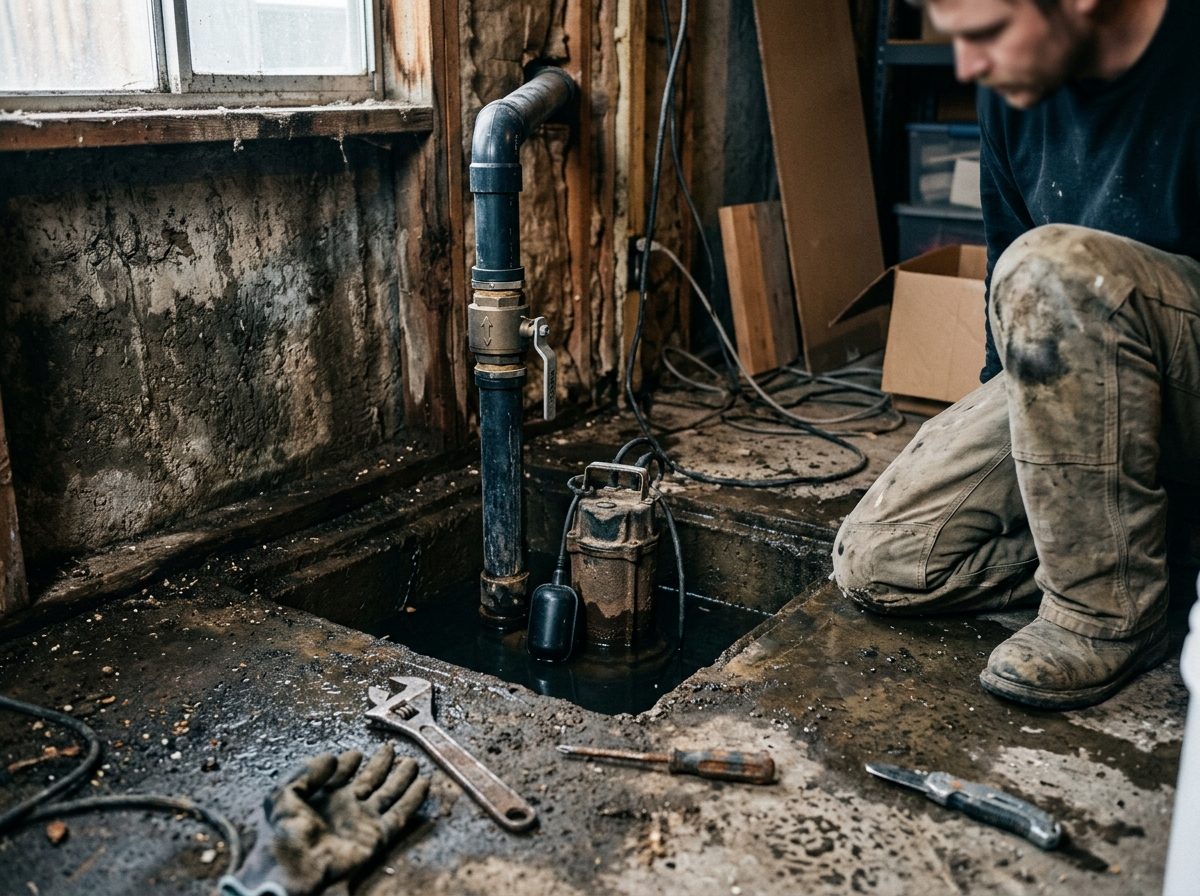
Denver's older neighbourhoods are shaded by mature elms, cottonwoods and silver maples, and those trees are the single biggest reason for sewer calls in the city. A clay lateral is built from short sections with joints every few feet. Roots find the joints, thicken inside the pipe, and catch everything that passes. The symptom is rarely the fixture you are using: it is the basement floor drain or the lowest toilet in the house, because that is where a backed-up main shows itself first.
The right sequence matters here. Clearing the line restores flow but tells you nothing about why it blocked. A camera run afterwards shows whether you are dealing with roots at one joint, a section that has dropped out of alignment, or a pipe that has effectively run out of life. That is what decides between annual cleaning, a spot repair, a trenchless liner that avoids digging up a mature front garden, and a full replacement.
If your house is pre-war and nobody has ever put a camera down the lateral, that is the most useful hundred-odd dollars available to you — and it is essential before buying one of these houses, because a standard home inspection does not look inside the sewer.
Backing up right now?Stop running water into the house, then call — that alone limits the mess.
Get help with a backupFrozen line tonight? Say which fixture stopped and where the pipe runs.
Ask about a frozen pipe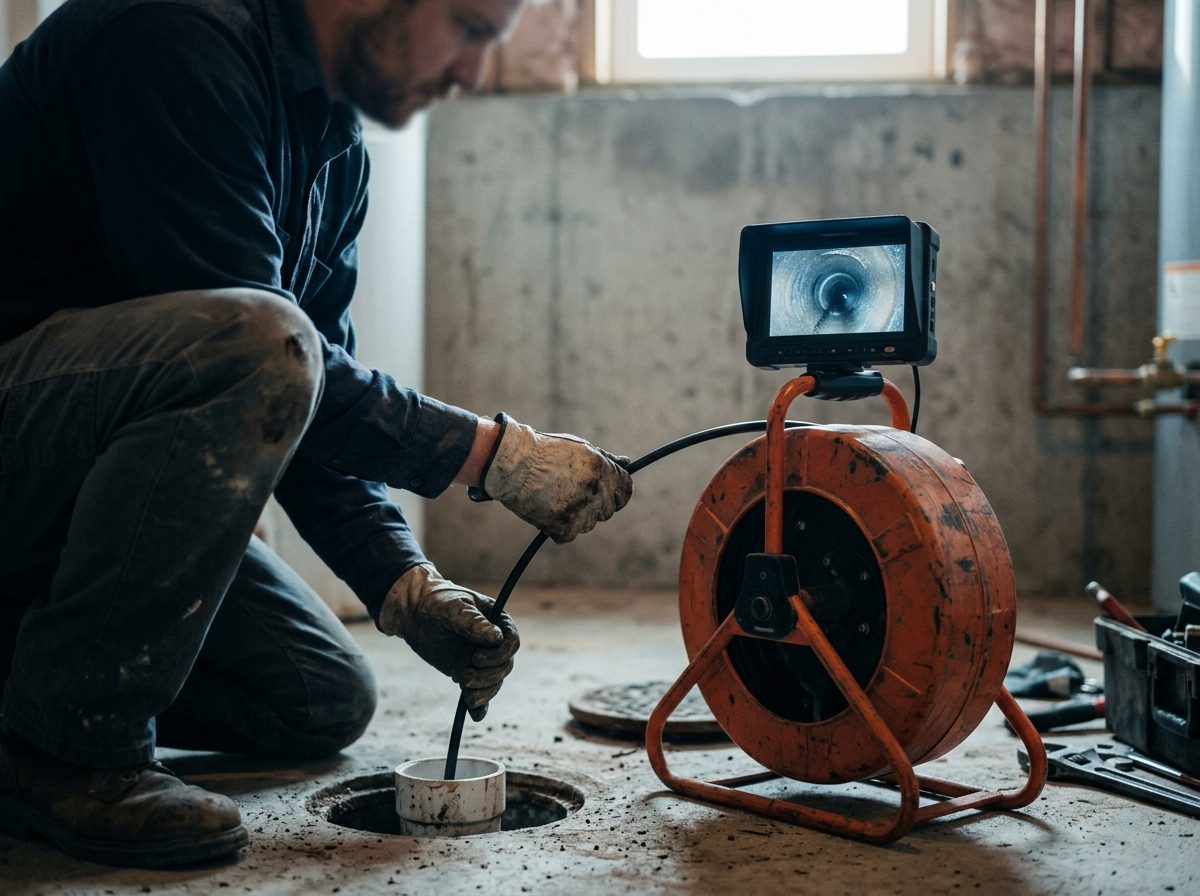
How Denver houses freeze
Denver does not freeze the way the mountains do. It freezes in short, sharp snaps, often with wind, and usually after a mild stretch that lulled everyone into leaving a hose connected. The pipes that split here are almost always in a space nobody heats: an exterior hose bib without a frost-proof valve, a garage wall, a crawlspace with a vent left open from summer, or a kitchen line running through an outside wall on a north face.
Two habits prevent most of it. Disconnect hoses in October, because a connected hose holds water against the bib and defeats the frost protection built into it. And on the coldest nights, open the cabinet doors under sinks on exterior walls so household heat reaches the pipe. The other thing worth knowing is that a frozen pipe often does not reveal itself until the thaw, when the split starts passing water again — so a line that stopped flowing during a cold night deserves attention even after it comes back.
Heater falling short? Age and sediment explain most of it — worth checking before it fails.
Ask about your water heaterPressure, scale and heaters
Static pressure varies across the city with elevation and distribution, and some Denver addresses sit high enough on the range that a failing pressure regulator quietly shortens the life of everything downstream. The symptoms are unglamorous: toilets that run, taps that drip, a washing machine hose that lets go, and heater relief valves that discharge. A gauge on an outdoor spigot costs very little and answers the question in a minute.
Scale is a moderate rather than severe problem on Denver supply, but water heaters still collect sediment, and sediment insulates the burner from the water it is meant to heat. Flushing the tank annually is the cheapest life extension available, and it is the maintenance item most often skipped in a city where basements are cluttered and the heater is behind the storage.
Find this before you need it
In most Denver houses the main shutoff is on the street-side wall of the basement, often near the front, sometimes in a crawlspace. Find it today and check that the handle actually turns. Valves that have not moved in decades sometimes will not close, and replacing one is a small scheduled job compared with discovering it during a burst pipe.
Nearby communities
Denver borders more communities than any other address in the state, and the same phone line covers all of them.
Denver, Colorado
Denver plumbing questions answered
In the city proper, same-day is normal and a couple of hours is common for anything urgent, because there are plenty of working plumbers within a short drive of any Denver address. The exception is a city-wide cold snap, when every plumber is on frozen and split lines at once — on those days the honest answer may be a next-morning slot, plus instructions for what to shut off in the meantime.
That points at the main sewer lateral rather than a branch line. The floor drain is the lowest opening in the system, so it is the first place a backed-up main shows itself. Stop putting water into the house — no laundry, no showers, no dishwasher — and get the line cleared and then camera inspected. In older Denver neighbourhoods, roots at a clay pipe joint are the most common cause by a wide margin.
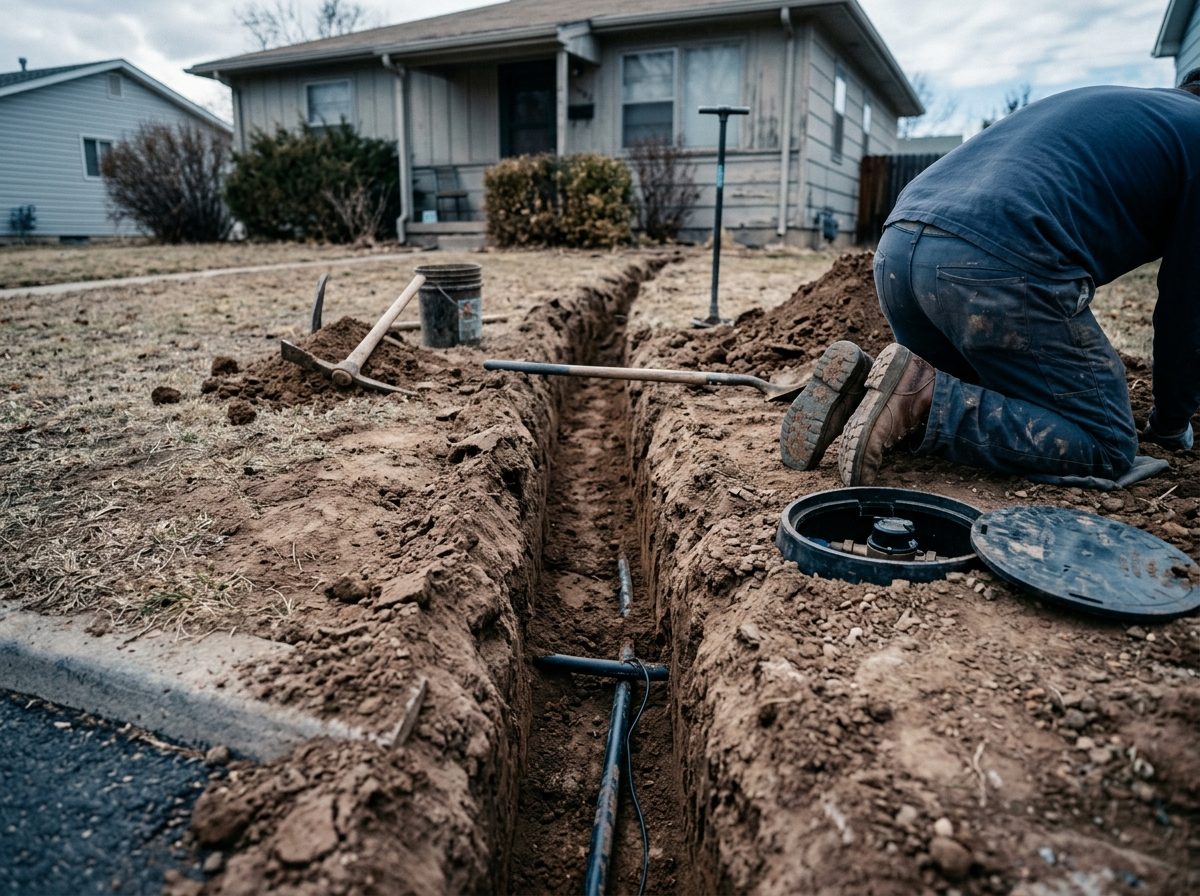
Often not. Trenchless methods either pull a new pipe through the path of the old one or line the existing pipe in place, which means access pits at each end instead of an open trench across the garden. Whether it is suitable depends on the pipe condition, the depth, the bends and what the camera shows, so the inspection comes first. On a street of mature trees and established front gardens, it is usually worth asking about.
Galvanised steel supply pipe corrodes internally and the bore narrows over decades until flow suffers. The classic tell is decent pressure at one tap and poor pressure when two run together, plus discoloured water after the house has sat empty. Testing pressure at the hose bib separates a house problem from a supply problem. The fix is replacing runs with copper or PEX, and it can be staged rather than done all at once.
Denver supply is moderate rather than severe by Front Range standards, so most households do fine without treatment. What matters more is maintenance: flush the water heater annually to clear sediment, and clean aerators when flow drops at a single tap. If you have specific concerns, a water test gives you real numbers to decide with rather than a sales pitch.
It is worth a look. Ice expanding inside a pipe can split it or crack a fitting without releasing water while the blockage is still frozen — the leak starts when it thaws, sometimes hours later and often inside a wall. Check for damp, listen for running water with everything off, and if the line is in an unheated space, get the cause addressed before the next cold night.
Yes, and that situation is common in Denver. What helps is being clear on the phone about who is on site, who can grant access, and who is authorising the work, because a plumber standing outside a locked house is an expensive kind of visit. For vacant properties, mention whether the water and heat are on.
Two things worth doing before it fails. Check that it sits in a drain pan with somewhere for water to go, because a tank failure in a finished space is a flooring and drywall problem rather than a plumbing one. And note its age — most tanks last around a decade, and replacing one on your schedule costs less and makes far less mess than replacing it on its own.
Denver, day or night
Every Denver ZIP code, answered around the clock including holidays.
(833) 621-2904 — answered 24/7, statewide.