Plumber in Westminster, CO — 24/7 by phone
Home / Areas / Denver Metro / Westminster
Westminster is largely a post-war and later city, which makes its plumbing story less about ancient materials and more about timing. Streets were built in batches, and plumbing installed in a batch tends to reach the end of its service life in a batch. Knowing roughly when your part of the city went up predicts most of what is likely to happen next.
Built in cohorts, failing in cohorts
The oldest neighbourhoods, closer to the Denver line, have sewer laterals and drain lines old enough to be the main event, and enough mature planting to give roots somewhere to work. Further north and west, the housing is younger and the recurring items are water heaters, pressure regulators and the fittings that connect them.
The cohort effect is worth taking seriously because it makes planning possible. If two neighbours on a street built in the same year have replaced heaters or regulators recently, yours is a candidate for inspection rather than a coin toss. Replacing a water heater on your own schedule costs less and makes far less mess than replacing it on its schedule, particularly in a finished basement.
Heater over a decade old? Replacing it on your schedule beats replacing it on its own.
Ask about a heater check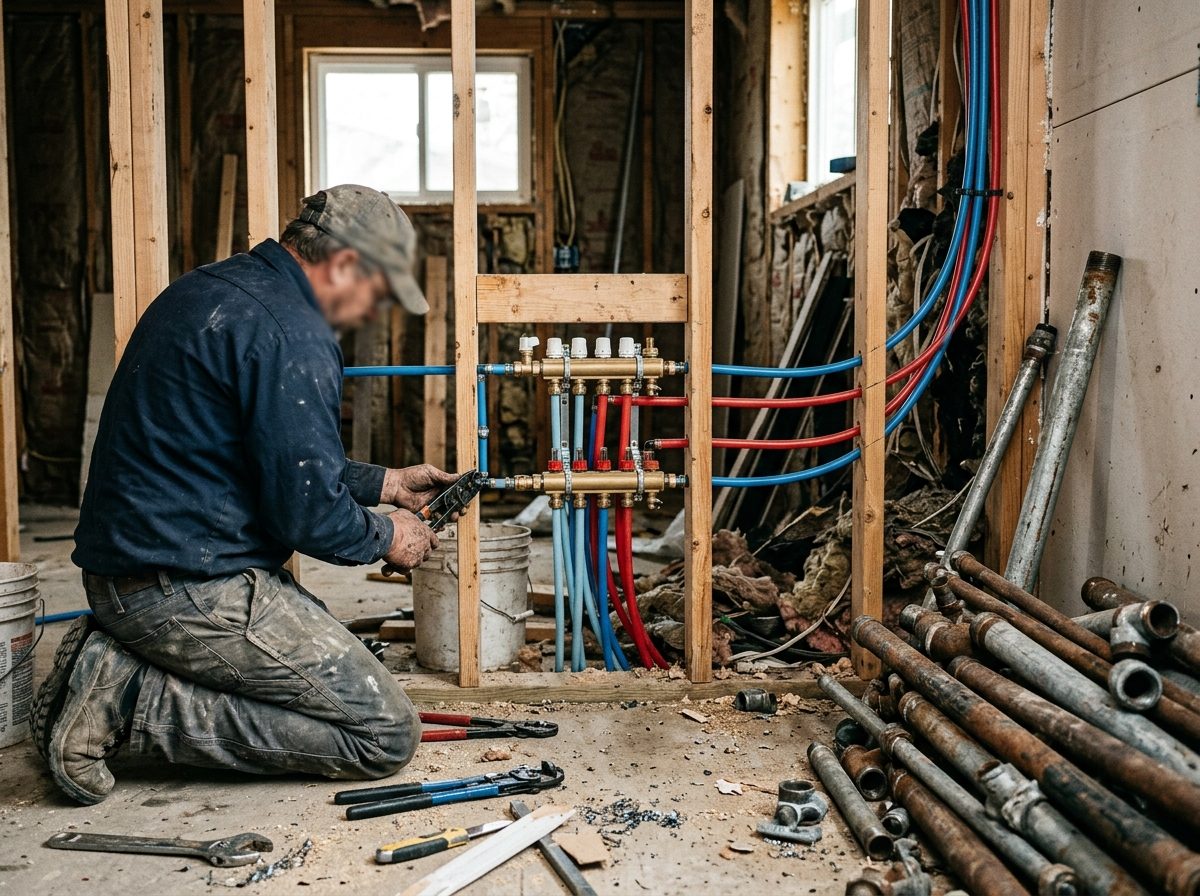
Basement water and sump pumps
Full basements are standard and many are finished, which raises the stakes on anything that lets water in. The sump pump is the appliance least likely to have been tested and most likely to be needed suddenly — during a fast spring melt or a summer storm that drops an inch in twenty minutes.
Test it by pouring a couple of buckets into the pit: the float should lift, the pump should start, clear the water and shut off cleanly. If nothing happens, or it hums without moving water, deal with it before the season rather than during it. For a finished basement, a battery backup or second pump is cheap against the cost of replacing flooring.
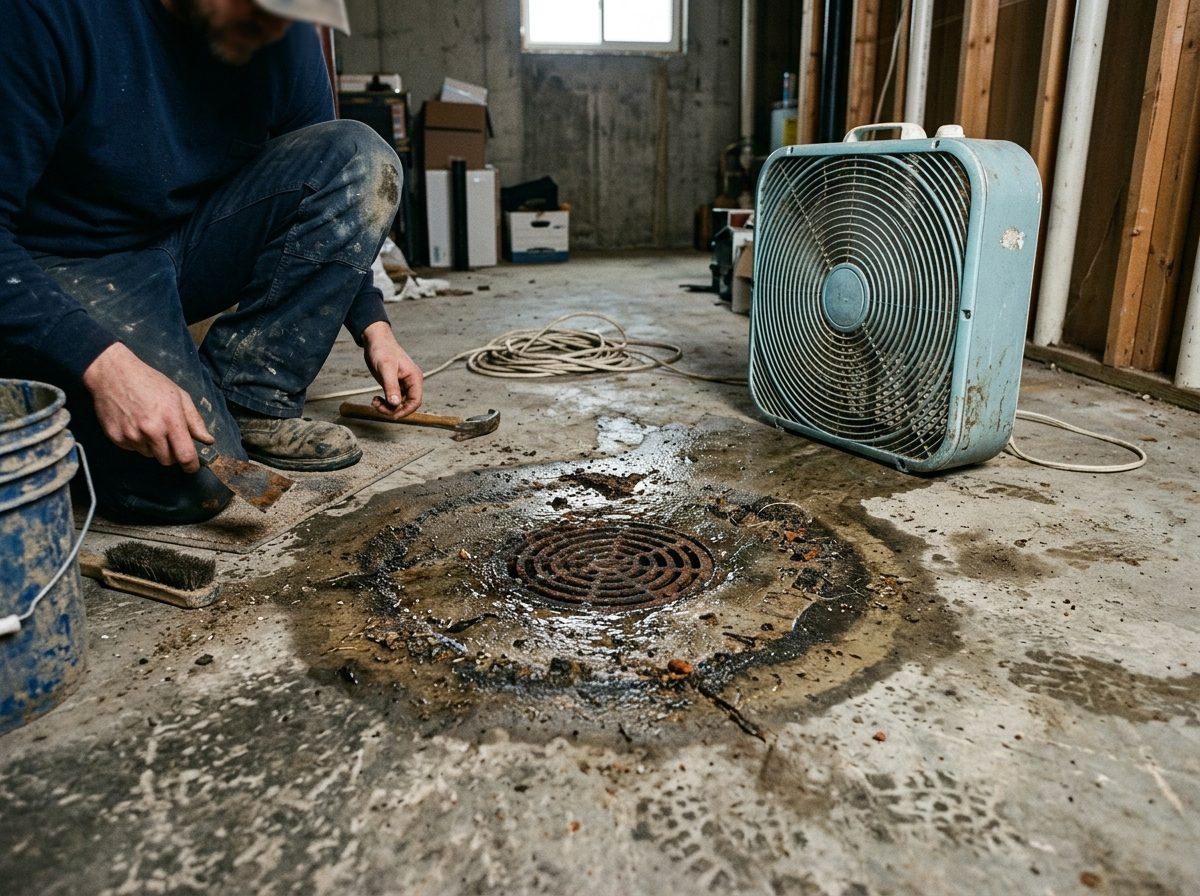
The other basement risk is the sewer side. If a floor drain or a low toilet backs up while the upstairs fixtures behave normally, that is the main lateral talking, not a branch line. Stop running water into the house and get the line cleared and then camera inspected.
The leak you cannot see
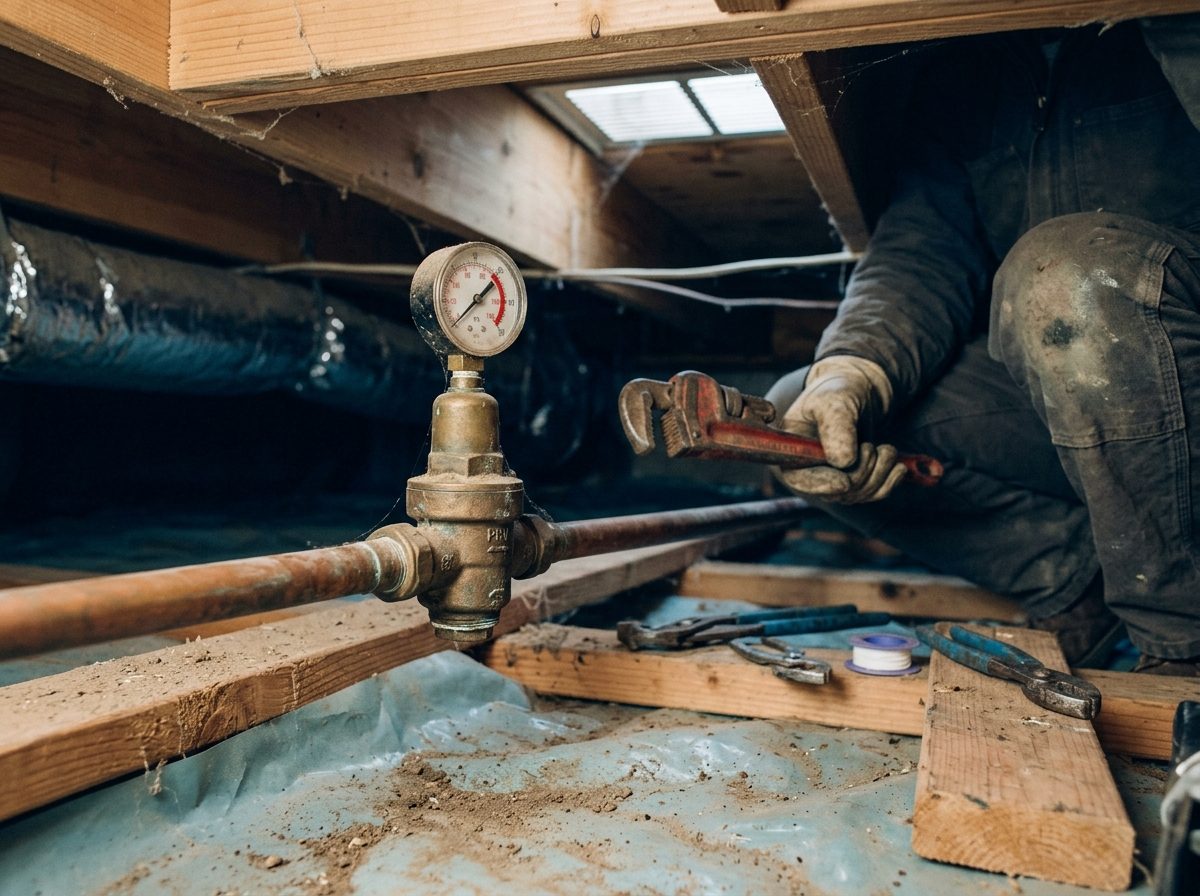
Hidden leaks are common in houses of this age, usually at fittings behind finished surfaces or in supply lines run under concrete. The symptoms are indirect: a bill that climbed without a change in habits, the sound of water with everything off, a warm patch on a concrete floor, or a musty smell in a closed space.
Before anyone arrives you can narrow it considerably. Rule out toilets first — a failed flapper passes water silently, and food colouring in the tank will show it within twenty minutes. Then run the meter test: shut every fixture, note the meter and the low-flow indicator, and read it again an hour later. Movement means water is leaving the system, and closing the main shutoff and repeating tells you whether the loss is inside the house or in the buried service line.
Bill up, nothing visible? Run the meter test first, then call with the result.
Ask about finding a leakCold snap forecast? Hoses off and cabinet doors open prevent most of it.
Ask about freeze protectionCold snaps and unheated spaces
Freezes here are sharp and often windy, and they find the same places every year: an exterior hose bib with a hose attached, a garage wall, a crawlspace vent left open since summer, a kitchen line in an outside wall on a north or west face.
Disconnect hoses in October and open cabinet doors under sinks on exterior walls during the coldest nights, so household heat reaches the pipe. And remember that a frozen line often does not show its damage until the thaw — if a fixture stopped flowing on a cold night, get the exposure fixed even after flow returns, because the same pipe will freeze again.
Fixture shutoffs and planned replacement
The small valve behind each fixture — the angle stop — is the component that decides whether a failure is a localised nuisance or a whole-house event, and in housing of this age they are frequently the original parts. A stop that will not close means shutting the main off to change a tap washer, and a stop that weeps when it is finally moved after twenty years is a common and irritating way to turn a ten-minute job into an afternoon.
Because these components fail on a schedule rather than at random, they suit planned work. Renewing the stops and the flexible supply lines in one room at a time, at the point some other work is happening there, costs very little and removes the most common cause of sudden indoor water damage — a supply line to a toilet or a basin that lets go while nobody is home. It is the least interesting maintenance in a house and among the most effective.
Worth five minutes today
Find the main shutoff, confirm the handle turns, and pour a bucket into the sump pit to check the pump starts. Two free checks that between them prevent a large share of emergency calls.
Nearby communities
Westminster sits between Denver, Boulder County and the northern metro, with neighbours on every side.
Westminster, Colorado
Westminster plumbing questions answered
Run the meter test. Shut off every water-using thing in the house, note the meter reading and the position of the low-flow indicator, then read it again an hour later with nothing touched. Movement means water is leaving the system. Close the main shutoff and repeat: if it still moves, the loss is in the buried service line rather than inside the building.
Toilets. A failed flapper passes water continuously into the bowl and makes no sound at all — put a few drops of food colouring in the tank, wait twenty minutes without flushing, and if colour appears in the bowl you have found it for the price of a part. After that, check irrigation valves, the heater relief pipe and outdoor spigots.
Pour two or three buckets of water into the pit. The float should lift, the pump should start, move the water out and shut off cleanly without cycling. If it hums without pumping, runs on, or does nothing, deal with it now rather than during a melt. Test in early spring and again before the summer storm season.
That is the main sewer lateral rather than a branch, because the floor drain is the lowest opening in the system and shows a backed-up main first. Stop putting water into the house, then get the line cleared and camera inspected. The camera is what distinguishes roots at a joint from a section that has dropped out of alignment.
Same-day is normal and a couple of hours is common for urgent problems, given how many plumbers work the north metro. During a metro-wide cold snap everyone is on frozen lines at once, so the realistic answer some days is a next-morning window plus clear instructions on what to shut off in the meantime.
Because they were all installed at the same time. A subdivision built in one or two years gets the same appliances fitted by the same crews, so they age and fail together. Treat a neighbour’s replacement as a prompt to check yours — a planned replacement is cheaper and far less messy than an emergency one in a finished basement.
It is real, and it is easy to measure with an inexpensive gauge on an outdoor spigot. Pressure above the normal working range shortens the life of valves, hoses, fixtures and appliances, and the early signs are running toilets, dripping taps and a heater relief valve that discharges. If it reads high, the regulator is the part to address.
Separate two possibilities: water arriving from outside, or a supply line failing under the concrete. The meter test settles it — movement with everything off means water is leaving your system, which points at a line rather than groundwater. Leak detection can then locate the point without opening the whole floor, and rerouting overhead is sometimes better value than breaking concrete.
Westminster, any hour
Every Westminster ZIP code, plus Arvada, Broomfield, Thornton and the north metro.
(833) 621-2904 — answered 24/7, statewide.