Plumber in Lafayette, CO — one call, any hour
Home / Areas / Boulder County / Lafayette
Lafayette pairs a small mining-era centre with a much larger ring of modern subdivisions, and the plumbing calls split neatly between them. Near the middle, the materials in the walls and the ground are the story. Out on the edges, the pipe is fine and the components are what fail.
Mining-era centre, modern edges
The older streets carry the familiar list: galvanised steel supply lines narrowed by internal corrosion, cast-iron drain sections, and clay sewer laterals with a joint every few feet. Flow that collapses when two fixtures run, discoloured water after a few days away, and drains that slow and clear on a cycle of months are the usual tells.
The newer neighbourhoods behave as cohorts. Streets built in one or two years received the same heaters, regulators, expansion tanks and supply lines, and they age together. A neighbour's failure is therefore genuinely useful information about your own house rather than a coincidence.
Not sure which era you are in? The build year narrows the likely causes fast.
Ask what to check first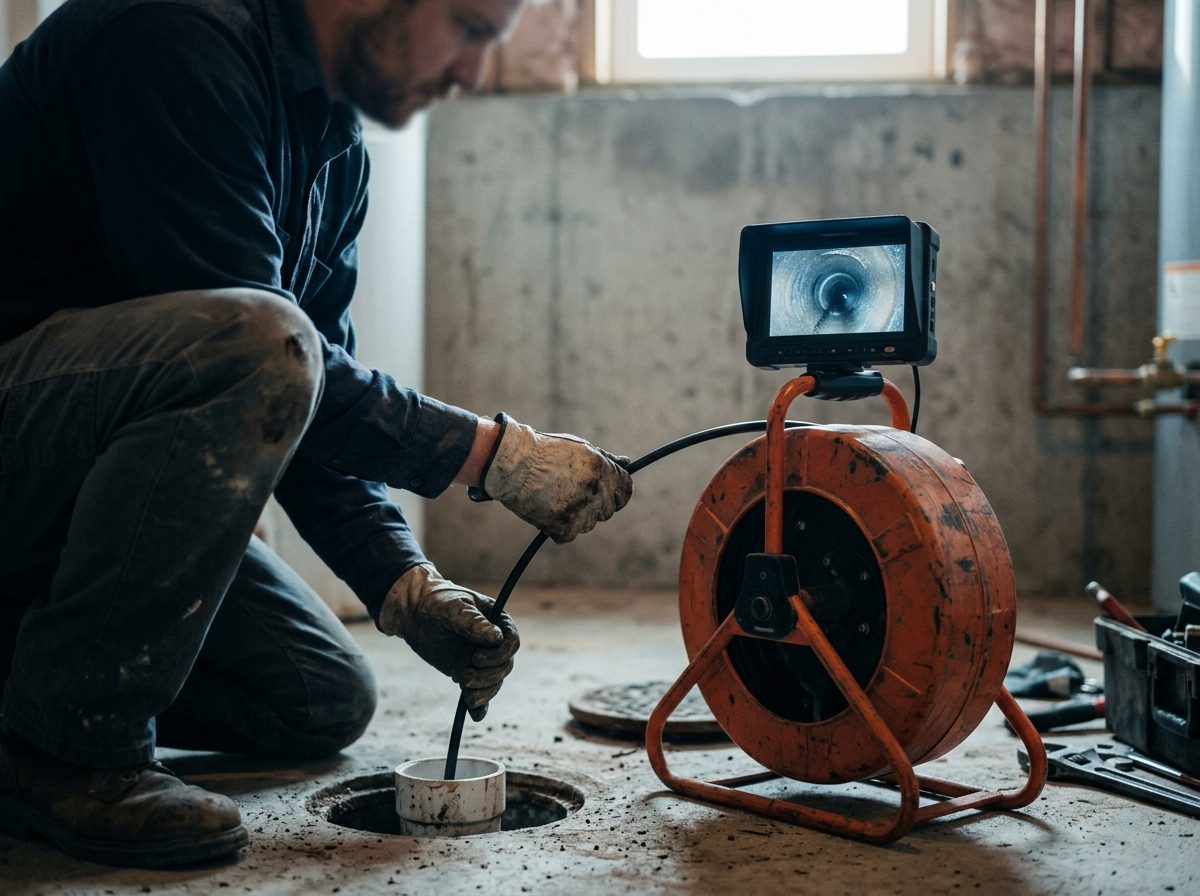
Laterals, roots and camera work
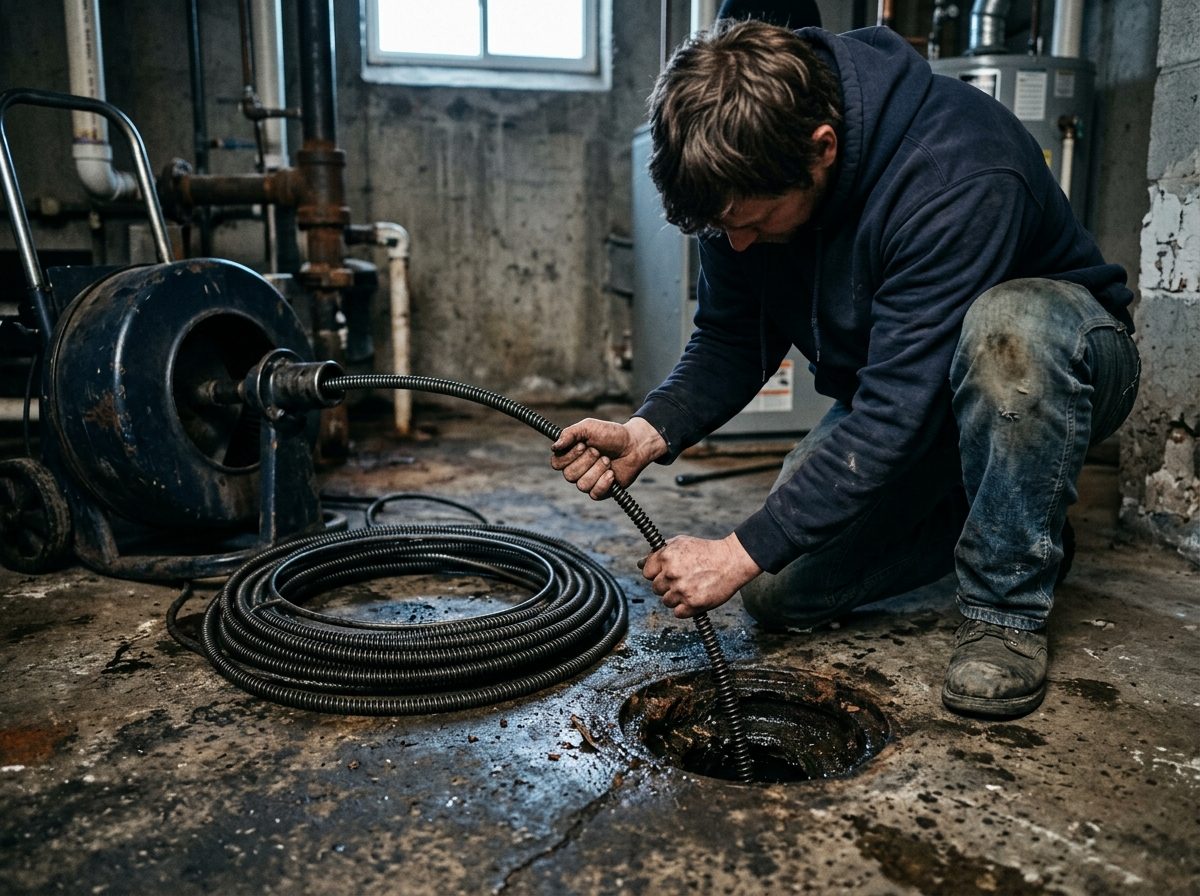
Where there are clay laterals and mature trees, root intrusion is the default explanation for a backup. A blocked main shows itself at the lowest opening in the house — a basement floor drain or the lowest toilet — rather than at the fixture you were using.
Stop water use in the house, get the line cleared, then have it camera inspected. Clearing restores flow; the camera explains why it stopped, and that difference decides between a maintenance clean, a spot repair, a trenchless liner and a replacement. Repeated blockages at the same distance point at alignment rather than at what went down the drain.
The parts that fail on schedule
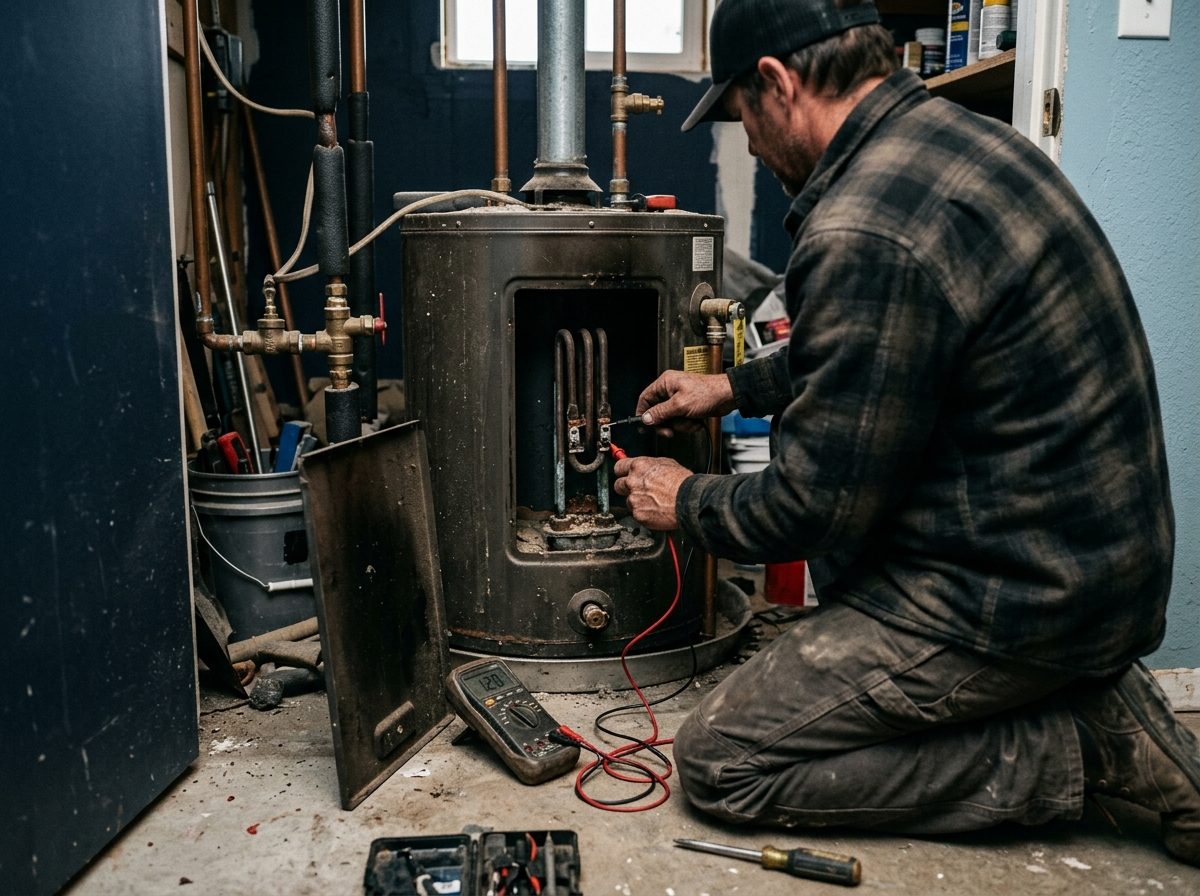
In modern housing the recurring items are the components chosen quickly during construction: pressure regulators, expansion tanks, angle stops, fixture supply lines and the water heater itself. All have service lives shorter than the house, and none give much warning.
Two checks cover most of the risk. Measure static pressure with a gauge on an outdoor spigot, because pressure above the working range quietly destroys valves and seals throughout the building. And note the water heater's age, because replacing one on your own schedule is dramatically cheaper and cleaner than replacing it after the tank opens up in a finished basement.
Heater over a decade old? Planned replacement costs a fraction of an emergency one.
Ask about a heater checkDownslope wind and cold nights
This part of the county catches strong winds off the foothills, and wind removes heat from exposed pipe far faster than still air at the same temperature. The vulnerable places are consistent: hose bibs with hoses attached, garage walls, crawlspaces vented in summer and never closed, and pipe run through additions built to a lower insulation standard.
Disconnect hoses before the first freeze, get irrigation blown out with compressed air rather than merely drained, and open cabinet doors under sinks on exterior walls on the coldest nights. If a fixture stops flowing during a freeze, get the exposure dealt with even after flow returns, because ice can crack a pipe without releasing water until the thaw.
Sprinklers still charged? Blowout season starts before the first hard freeze.
Ask about winterisingFinished basements and below-grade fixtures
A large share of houses here have finished basements, and a good many of those finishes were added years after the house was built. That sequence matters, because a bathroom, laundry or bar sink installed below the level of the sewer line needs a way to lift waste up to it, and the equipment that does so is the part most often treated as an afterthought.
An ejector pump sits in a sealed pit and pumps waste up to the main line. It needs a vent, a check valve, and a lid that actually seals, and it fails in ways that are easy to misread: a fixture that drains slowly, a smell in a finished room, or a pump that runs and runs without the level dropping. None of those are the fixture is blocked, and treating them as a blockage wastes a visit. Knowing whether a basement fixture drains by gravity or by pump is therefore the single most useful thing an owner can tell whoever attends.
The other consideration below grade is what happens when the street main surcharges. The lowest opening in the house is where that water arrives, and in a finished basement that is an expensive place for it to arrive. A backwater valve on the lateral is the standard protection, and it is far cheaper to fit deliberately than to retrofit after a backup has already ruined a floor. If the basement was finished without one, it is worth asking where the lateral runs and whether a valve can be added.
Worth five minutes
Find the main shutoff and confirm the handle turns. A valve that will not close is the difference between a repair and a flood, and replacing one is a small scheduled job rather than an emergency.
Nearby communities
Lafayette sits between Louisville, Erie and Boulder, with Broomfield and Longmont a short drive either side.
Lafayette, Colorado
Lafayette plumbing questions answered
That points at the main sewer lateral rather than a branch line, because the floor drain is the lowest opening in the system. Stop running water into the house and get the line cleared, then camera inspected. Near the older centre, roots at a clay pipe joint are the most common cause by a wide margin.
It depends on what the camera shows. A line with roots at a single joint may run reliably on an annual clean; a line with a belly or an offset joint will keep blocking whatever you do. The inspection exists to tell you which situation you are in, so the choice between maintenance and repair is made on evidence.
Because they were installed at once and share a service life, and because high static pressure stresses every seal in the building continuously. Toilets running, taps dripping, a washer hose failing and a relief valve discharging in the same season is a pressure pattern. Measure it with a gauge on an outdoor spigot before replacing parts one at a time.
Same-day is normal and a couple of hours is common for urgent problems, since this corridor is densely served. During a regional cold snap every plumber is on frozen lines simultaneously, so you may get a next-morning window along with instructions on what to shut off in the meantime.
Hardness is moderate, so most households manage without treatment. Flushing the water heater annually and cleaning aerators when flow drops at one tap covers most of the practical impact. If you want a decision based on evidence rather than impression, a water test is inexpensive.
A camera down the sewer lateral, a static pressure reading, and the age and condition of the water heater. Those three cover most of the real financial risk. A standard home inspection does not look inside the sewer, and in this housing stock that is exactly where the expensive surprises hide.
Deal with the exposure rather than the pipe. Insulate the run, seal the air leaks that let cold air reach it, and disconnect hoses from bibs on that wall. Where rerouting into heated space is impractical, heat tape correctly installed and actually plugged in is the fallback — many frozen lines are tape that was unplugged during a remodel.
Close the main shutoff, then switch off power to the affected area at the breaker if light fittings or sockets are involved. Put containers under it, move anything valuable, and photograph the damage before cleanup in case of an insurance claim. Then call and describe where the water is appearing and what is above it.
Not necessarily — if it sits below the sewer line, it is being pumped rather than draining by gravity, and a struggling ejector pump looks exactly like a blockage from the fixture end. Check whether the pump can be heard running, and whether more than one basement fixture is affected. Mentioning that the fixture is below grade changes what whoever attends brings with them.
The 287 corridor, any hour
Lafayette, Louisville, Erie, Broomfield and Boulder, answered around the clock.
(833) 621-2904 — answered 24/7, statewide.