Plumber in Niwot, CO — one call, any hour
Home / Areas / Boulder County / Niwot
Niwot is a small old settlement surrounded by acreage and newer housing, and the plumbing calls reflect that layout more than any single housing era. Some properties are on town services with modest gardens; others are on wells and septic with several acres, outbuildings and irrigation to manage.
Old town, acreage, and subdivisions between
Around the old commercial centre the buildings are the oldest in the area, and their plumbing has been altered many times. Elsewhere the picture is a mix of custom houses from the 1970s onward and larger properties on land, where the plumbing extends well beyond the walls of the house.
The first useful piece of information on a call here is therefore not the age of the building but its footprint: how many structures have water, whether anything is on a well, and how far the furthest fixture is from the house. Those three answers shape the visit.
Water reaching more than one building? Say how many structures are involved when you call.
Ask about a property visit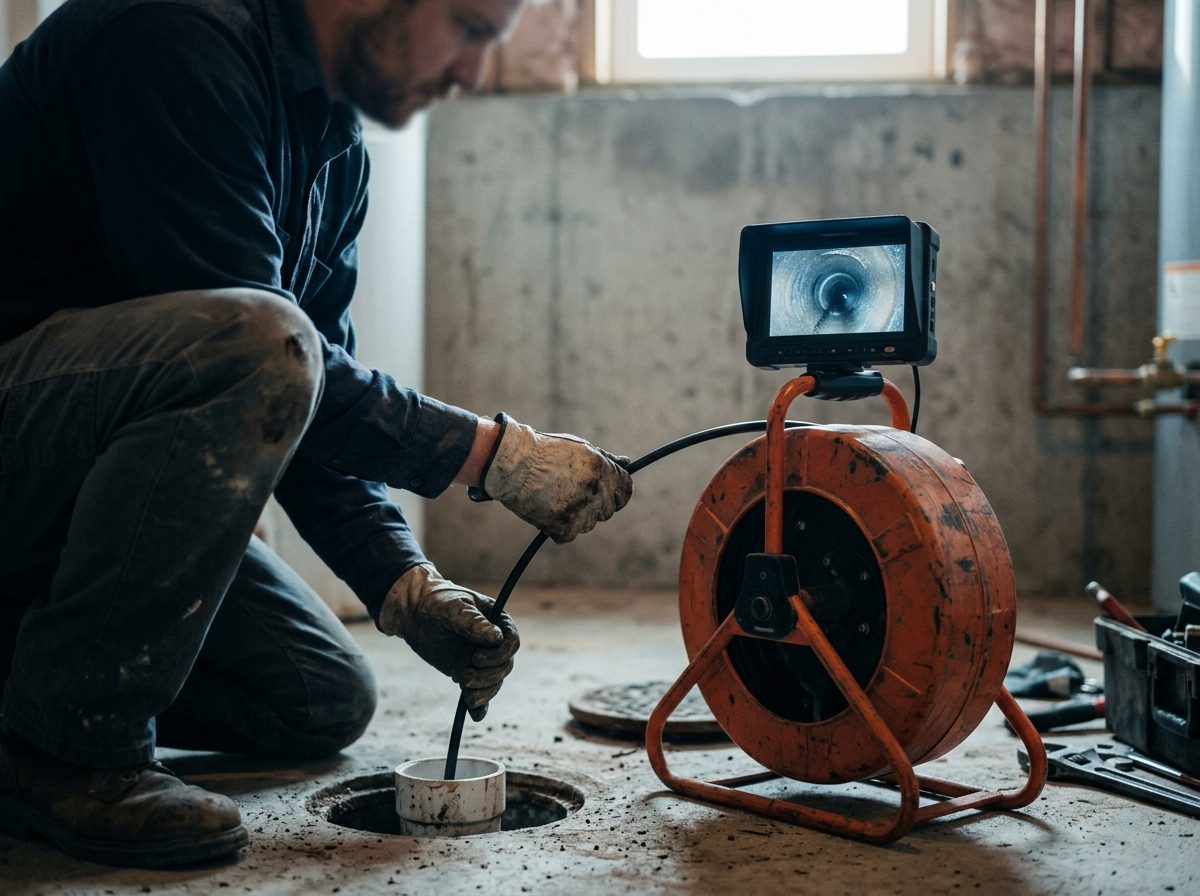
Irrigation, ditches and outdoor water
Outdoor water is a bigger part of plumbing here than in a compact suburb. Large gardens, paddocks and orchard plantings mean extensive irrigation, and older properties may have historic ditch infrastructure alongside their domestic supply.
Two practical points follow. First, anything connecting irrigation to domestic water needs proper backflow protection, and that is a safety matter rather than a formality — the risk is contaminated water being drawn back into the house supply. Second, ditch and irrigation rules in Colorado are genuinely complicated and vary locally, so it is worth confirming what applies to a specific property rather than assuming, particularly before altering or reconnecting anything.
On the mechanical side, autumn is the pressure point. Long buried runs, multiple valves and a backflow device all hold water that gravity alone will not clear, and compressed air is the reliable way to empty them before a hard freeze.
Where the water comes from
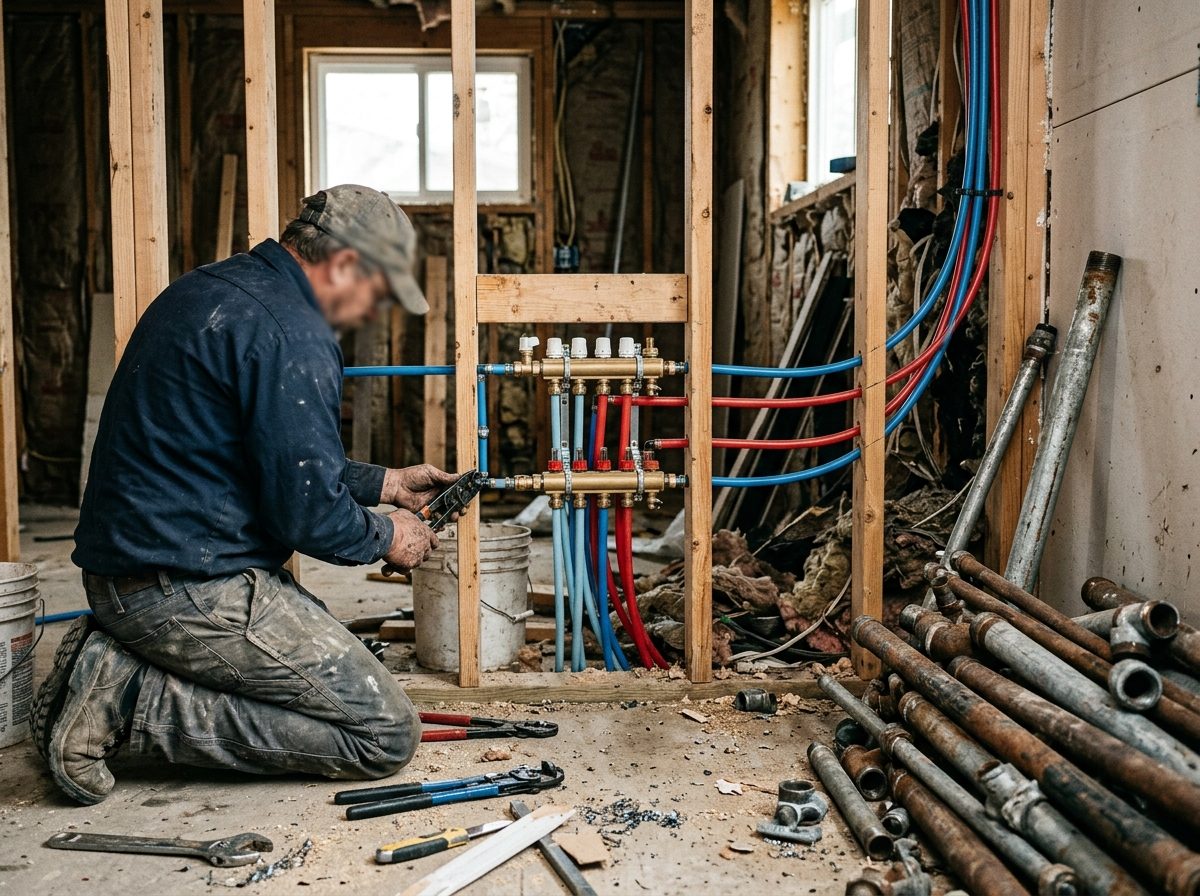
Properties on private wells own the whole supply chain, and the failures cluster in three places: a pressure tank that has lost its air charge and sets the pump cycling every few seconds, a pressure switch that has stopped making contact, and a pump that has reached the end of its working life. All three present as poor pressure or nothing at the tap.
The information that saves a visit is simple. What does the pressure gauge read? Does the pump run at all? Has the breaker tripped? Answering those three on the phone frequently determines both the likely fault and which trade should attend, because the pump and the casing wiring are well-system work while everything downstream of the tank is ordinary plumbing.
Nothing at the tap? Check the pump breaker and the gauge before you call.
Ask about a well systemExposure on open ground
There is little shelter out here, and wind takes heat out of anything exposed far faster than the air temperature suggests. Pump houses, outbuildings, crawlspaces and hose bibs on the windward side of a building are the places that give trouble first.
Where a building is not in use through winter, the cleanest answer is to isolate its branch and drain it rather than trying to keep it warm. Where a line must stay in service, insulation and air sealing come before heat tape, and tape that is already installed deserves a test before the first hard freeze — it fails quietly, and a line that never froze before is often protected by tape that stopped working two winters ago.
Outbuilding water not needed this winter? Isolating and draining it is cheaper than heating it.
Ask about winterising outbuildingsTreating water on a mixed supply
Because some properties here draw from a district main and others from a private well, treatment advice that suits one neighbour can be wrong for the next. The common mistake is buying equipment based on a symptom — spotting on glassware, scale in a kettle, a stain in a basin — when the symptom does not identify the cause. Hardness, iron and sediment all produce visible nuisances and all need different equipment.
So the sequence that saves money is to test before buying. A test turns hardness into a number, says whether iron is present and in what form, and shows whether sediment is a factor. That determines whether the answer is a softener, a filter, both in a particular order, or nothing at all. It also sizes the equipment to the household, which matters more than the brand on the front of it.
Two installation details decide whether treatment actually works once fitted. The equipment needs somewhere sensible to live, with clearance to service it and a drain for regeneration; and outdoor taps and irrigation are normally best left upstream of a softener, since there is no reason to soften water going onto a lawn or to pay for salt to do it. On a well, one more point applies: treatment does nothing for a supply problem, so if pressure is poor as well as hard, the pump and pressure tank come first.
Autumn walk-round
Irrigation valves, every hose bib, the pump house and any line to a barn or shop. Anything that drips or sticks now becomes a repair in frozen ground later, and all of it fits into one visit.
Nearby communities
Niwot sits between Longmont, Boulder and the county farmland, with Hygiene, Lyons and Erie nearby.
Niwot, Colorado
Niwot plumbing questions answered
Where irrigation ties into domestic water, backflow prevention is standard practice and generally required, because the risk it addresses is contaminated water being pulled back into the drinking supply. The specific device depends on the system and your water provider. Ask before a system is installed or reworked rather than afterwards.
Rules around ditch and irrigation water in Colorado are complex and vary by location and by the rights attached to a specific property, so it is not something to assume either way. What is safe to say is that any connection between such a system and household plumbing needs proper isolation, and that confirming the position locally before making changes is the sensible route.
Usually a pressure tank that has lost its air charge. The tank is meant to hold a cushion of air behind a bladder so the pump runs once every few minutes; when that fails the pump switches on and off every few seconds. That wears a pump out quickly, so it is worth attending to sooner rather than later.
Before the first hard freeze, and earlier than a small suburban system if the layout is extensive. Long runs, multiple zones and a backflow device hold water in places gravity cannot reach. Booking early in the season also means the work is done at a sensible pace rather than in the busiest fortnight.
For urgent problems, usually same-day, since Longmont and Boulder are both close. Larger properties sometimes take longer on site rather than to reach, because tracing water across several structures takes time. Mentioning the property layout when you call helps whoever comes arrive prepared.
Every three to five years suits most households, sooner where the tank is small or the property is busy. The signal that matters is every drain in the house slowing at once, rather than one fixture, along with unusually green growth over the field or a backup after a weekend with visitors.
Frequently, but test first — a well may carry iron or sulphur as well as hardness, and each needs different treatment. Sizing to the household matters more than the brand, and there needs to be somewhere sensible to fit the equipment along with a drain for the regeneration cycle.
Wind removes heat from pipe much faster than still air at the same temperature, so the windward side of a building freezes first. Disconnecting hoses matters most there, and an insulated cover helps. If it has happened more than once, that bib is worth replacing with a properly draining frost-resistant type.
Yes, and it is the cheapest part of the job. A test distinguishes hardness from iron from sediment, which look similar at the fixture but need different equipment — and it sizes the unit to your household. Buying first and testing later is how people end up with a softener that does not address the thing that prompted the purchase.
Boulder County acreage, any hour
Niwot, Longmont, Hygiene, Lyons and the surrounding county.
(833) 621-2904 — answered 24/7, statewide.