Plumber in Allenspark, CO — 24/7 by phone
Home / Areas / Boulder County / Allenspark
Allenspark sits at around eight and a half thousand feet just south of the park boundary. Winters are long, a large share of buildings stand empty for weeks at a time, and altitude changes how gas appliances have to be specified. Those three facts account for nearly every call from here.
Eight and a half thousand feet
At this elevation the freeze season runs most of the year rather than a few months. Any pipe outside heated space needs either protection or to be out of service, and heat tape carries much of that load — a load it frequently fails at silently, through age, rodent damage or having been unplugged during other work.
Knowing where your tape runs and testing it before the first hard freeze is one of the highest-value ten minutes available to a property owner here. So is knowing where the main shutoff is and confirming it turns.
Heat tape never tested? It fails silently — check it before the first freeze.
Ask about freeze protection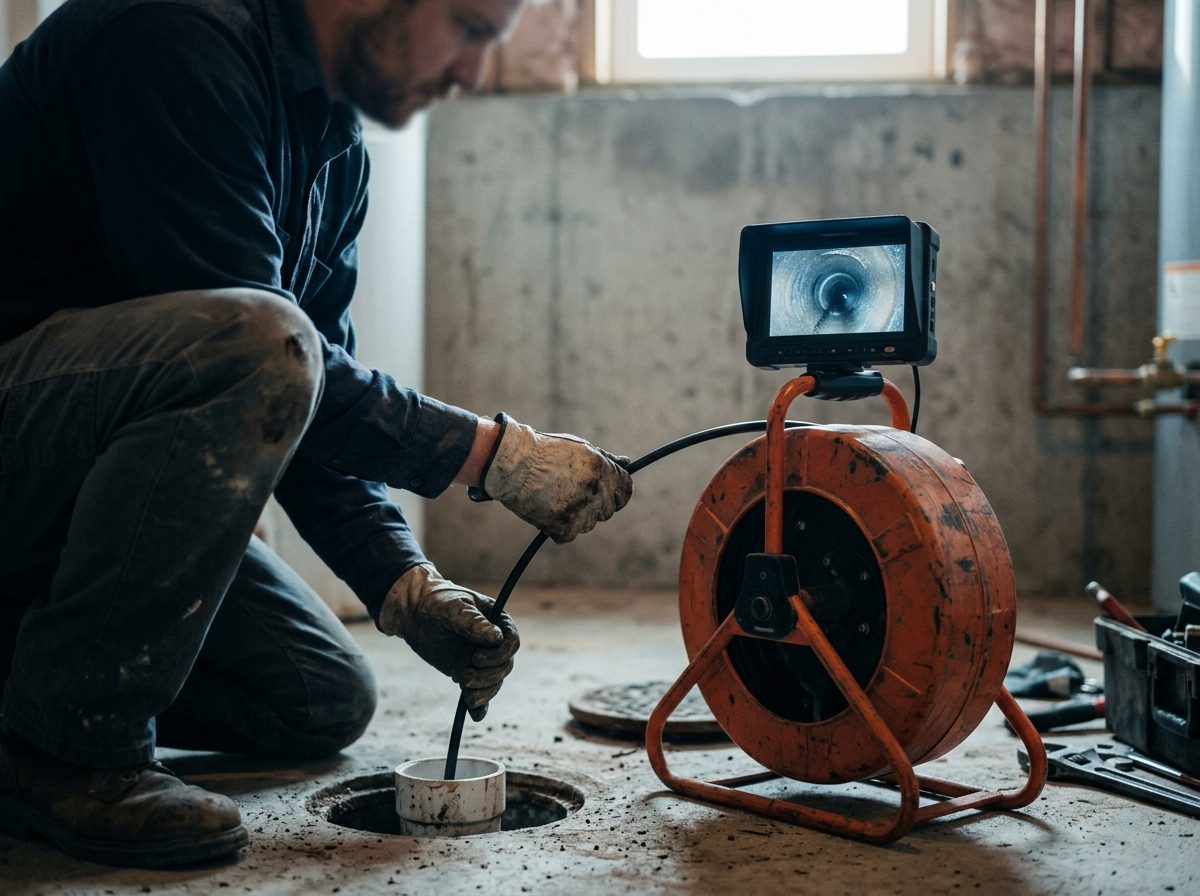
Vacancy is the defining risk
An occupied building is monitored by its occupants. An empty one is not, so a tripped furnace, a power cut, an empty propane tank or a dead heat tape becomes a burst pipe with days of unattended water behind it. That is the pattern behind almost every expensive call at this elevation.
For a building standing empty through winter, draining is the only genuinely dependable strategy: water off at the source, the system drained from its lowest point, taps opened so air can replace water, the heater and appliances dealt with, and antifreeze rated for plumbing in traps. Done thoroughly the building can sit at any temperature; done partially it holds water in exactly the low points that split.
Appliances at altitude
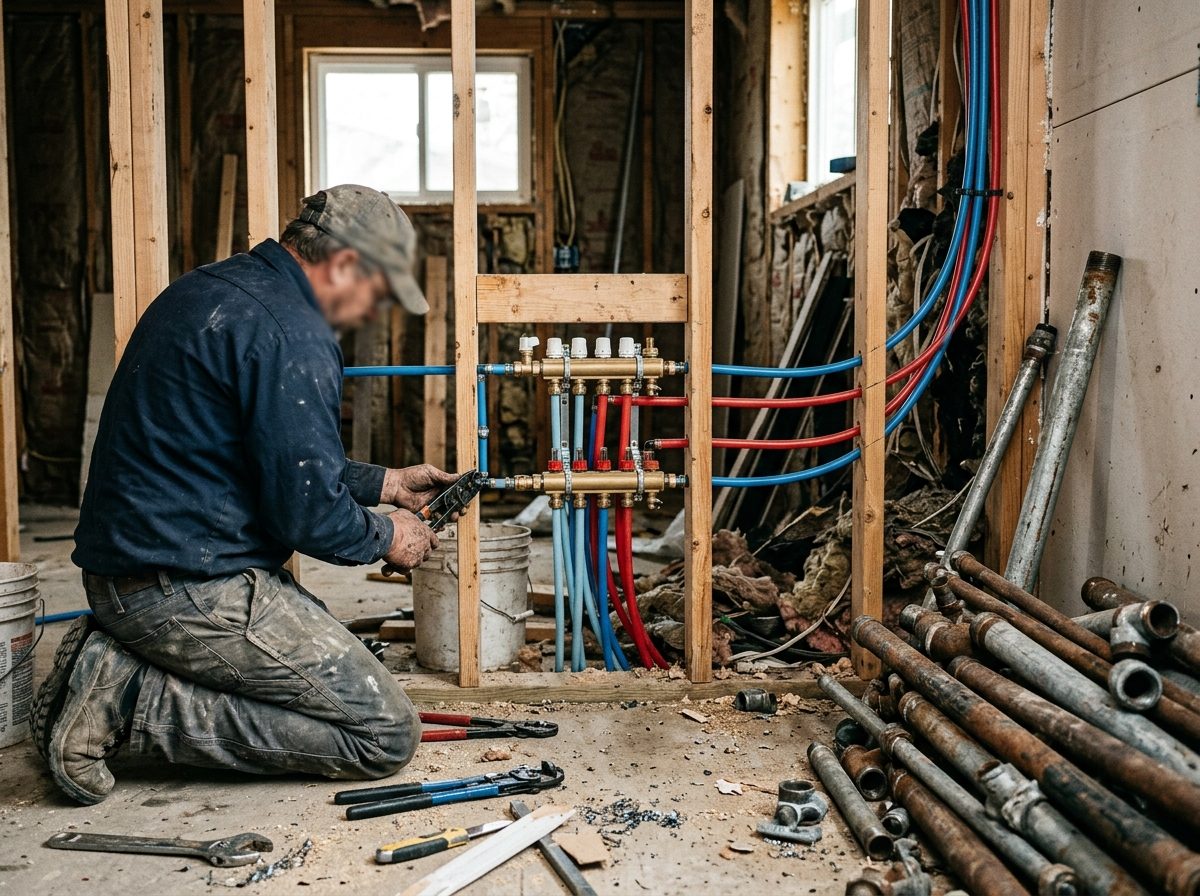
Combustion appliances produce less than their labels suggest up here, because there is less oxygen available. That affects water heaters and boilers alike, and it interacts badly with the other local reality — incoming water in midwinter is close to freezing, so the appliance is asked for more heat precisely when it can deliver least.
Specify for a January morning rather than an average day, and treat venting and combustion air as part of the specification rather than installation details. Hydronic heat is common here too, and its failure modes are unfamiliar to anyone used to forced air: no heat at all, one zone cold, or a relief valve discharging near the floor because system pressure is climbing.
Boiler discharging or a zone cold? Note what the gauge reads before you call.
Ask about a boiler problemWeather runs the schedule
Access rather than distance decides response here. Snow, ice, unplowed private drives and steep last stretches all determine whether a vehicle reaches the property, and in a storm the honest answer may be several days.
Describe the access properly when you call — road conditions, whether the drive is plowed, how far the last stretch runs. And if something has already let go, shut the water off at the main and drain from the lowest fixture first; that sequence determines the size of the problem far more than the arrival time.
Snowed in with a burst line? Shut the water off and drain the lowest tap while you wait.
Ask what to do right nowArriving at a cold building
Close the main shutoff before applying heat anywhere. A line that has already split starts leaking the moment it thaws, and with the water off you keep control of what follows.
Opening a building up again in spring
Recommissioning is where the damage from a bad winter is usually found, and how it is done decides whether that discovery is a repair or a flood. The temptation on arrival is to turn the water on and see what happens. The better sequence is to look before charging anything: walk the visible pipe with a torch, check ceilings and the crawlspace for staining, and confirm that fixtures are closed and the water heater drain valve is shut.
Then bring the system up slowly rather than opening the main fully. Part-open the supply, listen, and watch the meter or the pressure gauge settle. A split line makes itself obvious at low pressure with far less water on the floor than it would at full pressure. Fill the water heater completely before restoring power or gas to it, because an element or burner fired into an empty tank is destroyed in minutes, and open a hot tap until it runs steadily to confirm the tank really is full.
The rest is a checklist worth leaving with the property: every fixture run until clear, traps refilled where they were drained or treated, toilets flushed and watched through a cycle, the well pump restarted and its pressure observed for a few minutes, the heat tape tested rather than assumed, and outdoor lines left off until the last frost has passed. An hour spent this way is routinely the difference between a working building and an insurance claim.
Nearby communities
Allenspark sits high on the south side of the park boundary, with Lyons, Estes Park, Ward and Jamestown around it.
Allenspark, Colorado
High-altitude property questions answered
Water off at the source, the system drained from its lowest point, taps opened so air can replace water, the heater and any appliance holding water dealt with, and antifreeze rated for plumbing in traps and toilet bowls. Never automotive antifreeze. Done thoroughly the building can sit unheated safely.
Two effects stack. Incoming water is far colder in January, so the same shower demands much more heat, and at this elevation a gas appliance produces less than its rated output because there is less oxygen for combustion. A unit sized on average conditions falls short in the coldest weeks.
Usually, with gentle even heat applied from the open end of the line toward the blockage so meltwater can escape. Never a torch or rapid heat — that is how pipes split and buildings catch fire. Shut the water off first, because if the pipe has cracked, thawing starts the leak.
Tape can look intact and be dead. Age, rodent damage and being unplugged during unrelated work are the usual causes, none of them visible at a glance. Test it before the freeze season and check the whole length of the run, since tape often covers less pipe than assumed.
That is the pressure relief valve doing its job, which means system pressure is climbing too high — commonly a failed expansion tank, a fill valve that is not closing, or overheating. Do not cap it. Note whether the gauge climbs as the system heats, because that detail speeds the diagnosis.
Access and weather decide it rather than distance. In clear conditions, same-day is realistic. In a storm it can be several days, and you will be told that plainly along with what to shut off and drain in the meantime, which is what actually limits the damage.
Three to five years for a full-time household, sooner where the tank is small or the building is used in bursts. Every drain slowing at once rather than one fixture is the classic signal, along with unusually green growth over the field or a backup after a busy weekend.
Someone local who can physically check it, and a remote temperature alarm you actually receive. At this elevation early warning matters more than any repair arrangement, because the difference between a small problem and a catastrophic one is how many days water runs unnoticed.
Look first, then charge slowly. Inspect visible pipe and ceilings, confirm fixtures are closed, open the main only partway and let pressure build while you listen. Fill the water heater before energising it. Then work through the fixtures one at a time. Opening the main fully as the first act is how a small winter split becomes a large spring repair.
It can, and plenty are, but it depends on a heat source, a fuel supply and mains power all holding for months in a place that is hard to reach. Any one of them failing while the building is empty produces exactly the outcome the heating was meant to prevent. Draining removes the dependency altogether, which is why it stays the more reliable choice at this elevation.
South of the park boundary
Allenspark, Lyons, Estes Park, Ward and Jamestown.
(833) 621-2904 — answered 24/7, statewide.