Plumber in Nederland, CO — one call, any hour
Home / Areas / Boulder County / Nederland
Nederland sits high enough that plumbing decisions which are marginal on the Front Range become consequential here. Appliances need specifying for the altitude, the freeze season runs most of the year, and a large share of buildings began as something smaller and were extended by whoever owned them at the time.
Eight and a half thousand feet
Combustion appliances produce less at this elevation than their labels suggest, because there is simply less oxygen available. That affects sizing for water heaters and boilers alike, and it interacts badly with the other local reality — incoming water in midwinter is close to freezing, so the appliance is asked for more heat exactly when it can deliver least.
The practical rule is to specify for a January morning rather than an average day, and to treat venting and combustion air as part of the specification rather than as installation details. A unit that is technically adequate on paper and marginal in practice will announce itself in the first hard week.
Appliance struggling in midwinter? Altitude and inlet temperature both belong in the sizing.
Ask about altitude sizing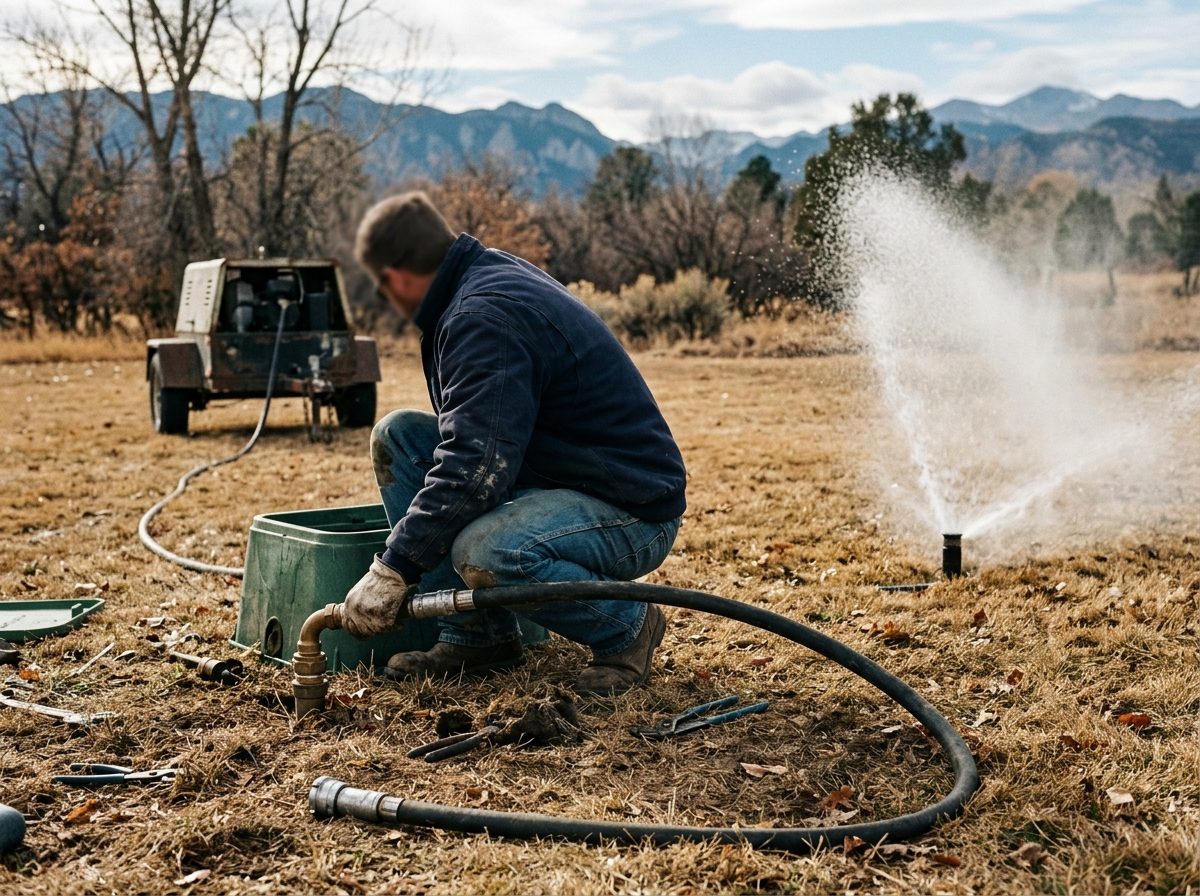
Cabins, additions and improvised plumbing
A great deal of housing up here grew organically: a small original building, then a bathroom, then a bedroom wing, then a rebuilt kitchen, each done in a different decade by different hands with different materials. Plumbing that evolved this way tends to have long runs in odd places, fittings inside walls nobody records, and sections whose diameter changes for no reason anyone remembers.
The consequence is that diagnosis is a real part of the job. A leak that appears in one room may originate several metres away, and the shortest route to it is not always through the wall where the damp shows. It also means the most useful thing an owner can offer is history: what was added when, and what has been worked on before.
Wells, septic and hydronic heat
Most properties handle their own water and waste. Wells fail in three familiar places — the pressure tank losing its charge and cycling the pump, the pressure switch, and the pump itself — and all three present as nothing at the tap. Septic systems slow every drain in the building at once when they need attention, and pumping every few years is maintenance rather than repair.
Hydronic heat is common because it suits cold buildings, and its failure modes are unfamiliar to anyone used to forced air: no heat at all, a single zone cold, or a relief valve discharging near the floor because system pressure is climbing. What the boiler gauge reads when the system is hot is the single most useful thing to report on the phone.
Boiler discharging or a zone cold? Note the gauge reading before you call.
Ask about a boiler problemA nine-month freeze season
Freezing here is not a winter event, it is most of the calendar. Any pipe outside heated space needs either protection or to be out of service, and heat tape carries much of that load. Tape fails silently — through age, rodent damage, or being unplugged during other work — so a line that has never frozen is often relying on tape that stopped working two winters ago.
For buildings that stand empty, draining is the only genuinely reliable answer. Water off at the source, the system drained from its lowest point, taps opened to break the vacuum, appliances dealt with, and plumbing-rated antifreeze in traps. Done properly the building can sit at any temperature; done partially it is a gamble with an expensive downside.
Building empty for weeks at a time? Draining it properly removes the risk rather than managing it.
Ask about draining a buildingArriving at a cold building
Close the main shutoff before applying heat anywhere. If a line has already split, thawing it simply starts the leak — and with the water off, what follows is a repair rather than a flood.
When the power goes out
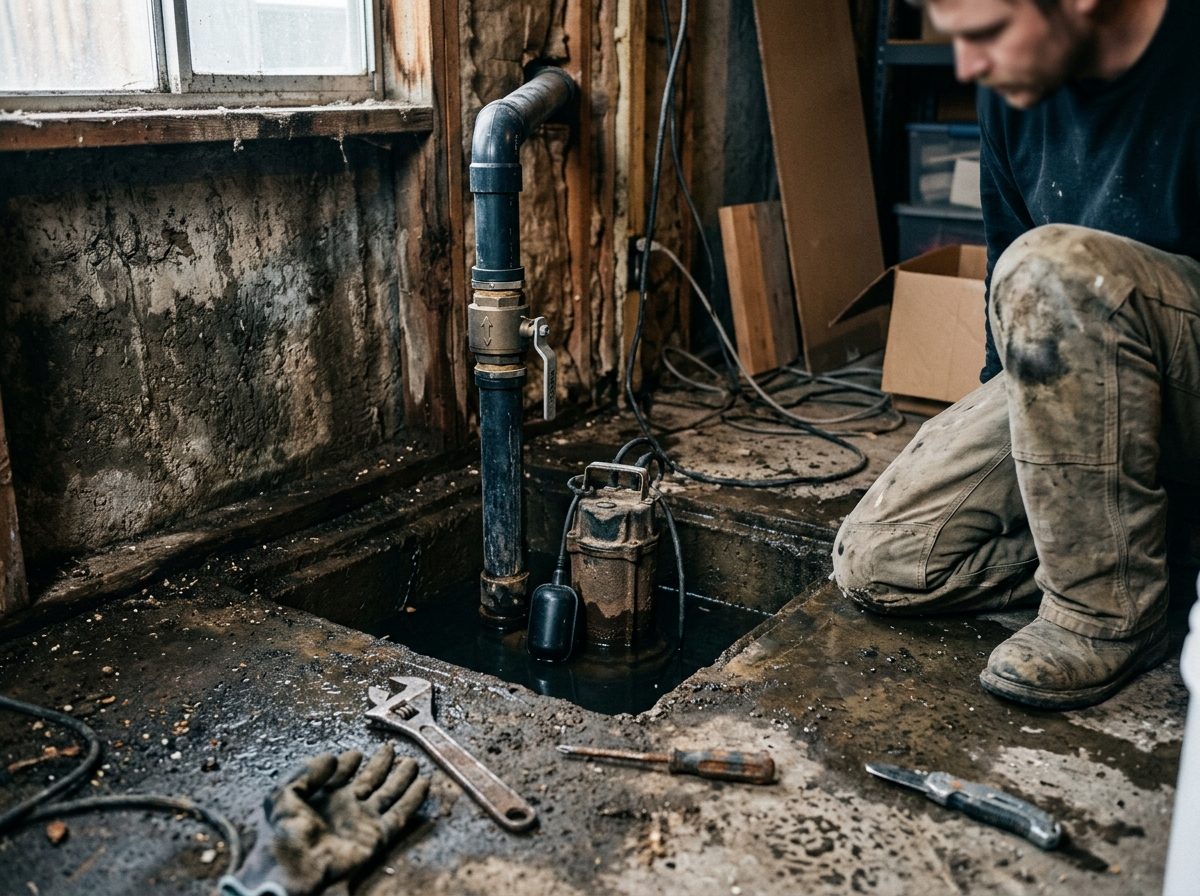
Storms take the power out up here often enough that it belongs in a plumbing conversation rather than an electrical one. A well pump needs power, so an outage means no water at all rather than reduced pressure. A boiler needs power for its pump and controls even when it burns gas or propane, so heat stops too. A sump pump stops in the weather most likely to need it. The three failures arrive together, and the order of concern is heat first, because that is the one that leads to burst pipe.
In a short outage the useful actions are small. Do not keep switching the well pump on and off at the breaker. Draw what water you need from what is already in the pressure tank and treat that as the supply. Keep interior doors open so heat from any remaining source moves through the building, and open cabinet doors under sinks on exterior walls so room air can reach the pipe behind them.
For a longer outage, or for a building that will be left, the decision is between backup power and draining. A generator sized to the well pump and the boiler controls keeps the building functioning, which is worth planning before the season rather than during a storm. Draining is the alternative that needs nothing to keep working. What does not work is leaving a building unheated with a full system and hoping the outage is brief.
Nearby communities
Nederland sits above Boulder Canyon, with Ward, Jamestown, Rollinsville and Pinecliffe spread around it.
Nederland, Colorado
Nederland plumbing questions answered
Two effects stack up. Incoming water is far colder in January than in summer, so the same shower demands much more heat, and at this elevation a gas appliance produces less than its rated output because there is less oxygen for combustion. A unit sized on average conditions therefore falls short in the coldest weeks while being perfectly healthy.
Water off at the source, the system drained from its lowest point, taps opened so air can replace water, the heater and any appliance holding water dealt with, and antifreeze rated for plumbing in traps and toilet bowls. Never automotive antifreeze. Done thoroughly, the building can then sit unheated without freeze risk.
Tape can look intact and be dead. Age, rodent damage and being unplugged during unrelated work are the three usual causes, and none of them are visible from a glance. Test it before the freeze season and know the full length of the run it is protecting, because tape often covers less pipe than people assume.
Usually, with gentle even heat applied from the open end toward the blockage so meltwater can escape as it forms. Torches and rapid heat split pipe and start fires. If the pipe has already cracked, thawing reveals the crack, which is why the water should be shut off before anyone starts.
Access and weather decide it rather than distance. In clear conditions, same-day is realistic for urgent work. In a storm, canyon roads and unplowed drives can make it the following day, and you will be told that plainly along with what to shut off and drain in the meantime.
Because most buildings up here were extended in stages. Each addition took the easiest available route at the time, so runs go around obstacles that no longer exist and diameters change at old junctions. It is worth having the layout traced once, and keeping a note of it, since the next repair will be quicker for knowing it.
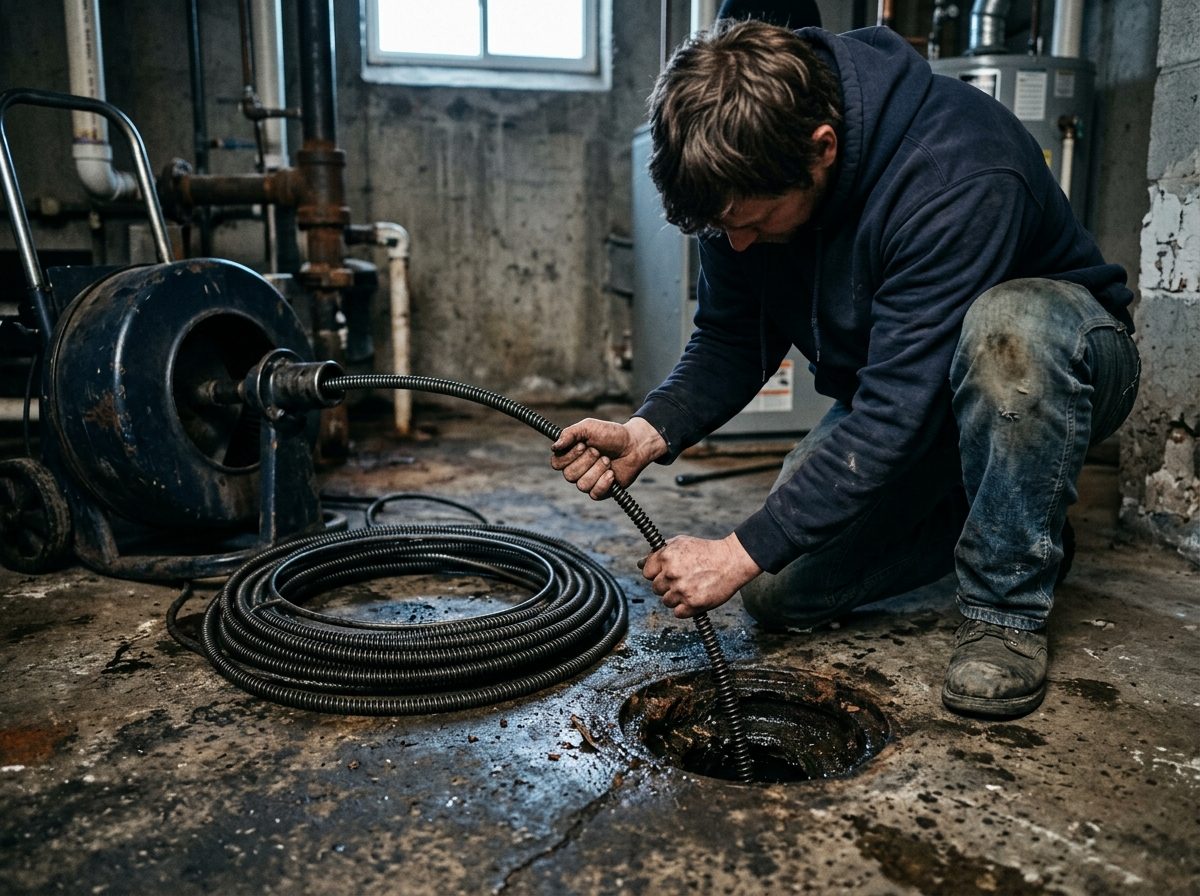
Three to five years for a full-time household, and sooner where the tank is small or the building is used in bursts. Every drain slowing at once rather than one fixture is the classic signal, along with unusually green growth over the field or a backup after a weekend with a full house.
Sometimes, and it depends on what the existing runs are. Where a building has mixed materials, undersized sections and fittings buried in walls, replacing the plumbing along a sensible route can cost less over time than repeated repairs to a layout nobody understands. An assessment first, then a staged plan, is the usual route.
Usually not — on a well, no power means no pump and therefore no supply, which looks identical to a failed pump from the tap. Whatever is in the pressure tank is what you have until power returns. Avoid cycling the breaker repeatedly, and if the outage looks long, turn attention to keeping the building warm rather than to the pump.
Above Boulder Canyon
Nederland, Ward, Jamestown, Rollinsville and Pinecliffe.
(833) 621-2904 — answered 24/7, statewide.