Plumber in Central City, CO — one call, any hour
Home / Areas / Mountain Communities / Central City
Central City is a Victorian mining town built into a steep hillside above Black Hawk. Its buildings are old and much altered, its streets were laid out for a different century, and it sits high enough that altitude changes how appliances have to be specified.
Victorian buildings on a steep hillside
Much of the building stock dates from the mining era. Almost nothing original survives untouched, but what replaced it was installed piecemeal across a century, so what is actually in the walls frequently differs from what anyone assumes.
That makes diagnosis a real part of the work rather than a preliminary. A first visit may reasonably end with a plan and an order of work rather than a completed repair, and the most useful thing an owner can offer is whatever history they know about the building.
Old building, several issues? Ask for an order of work rather than one big number.
Ask for a plan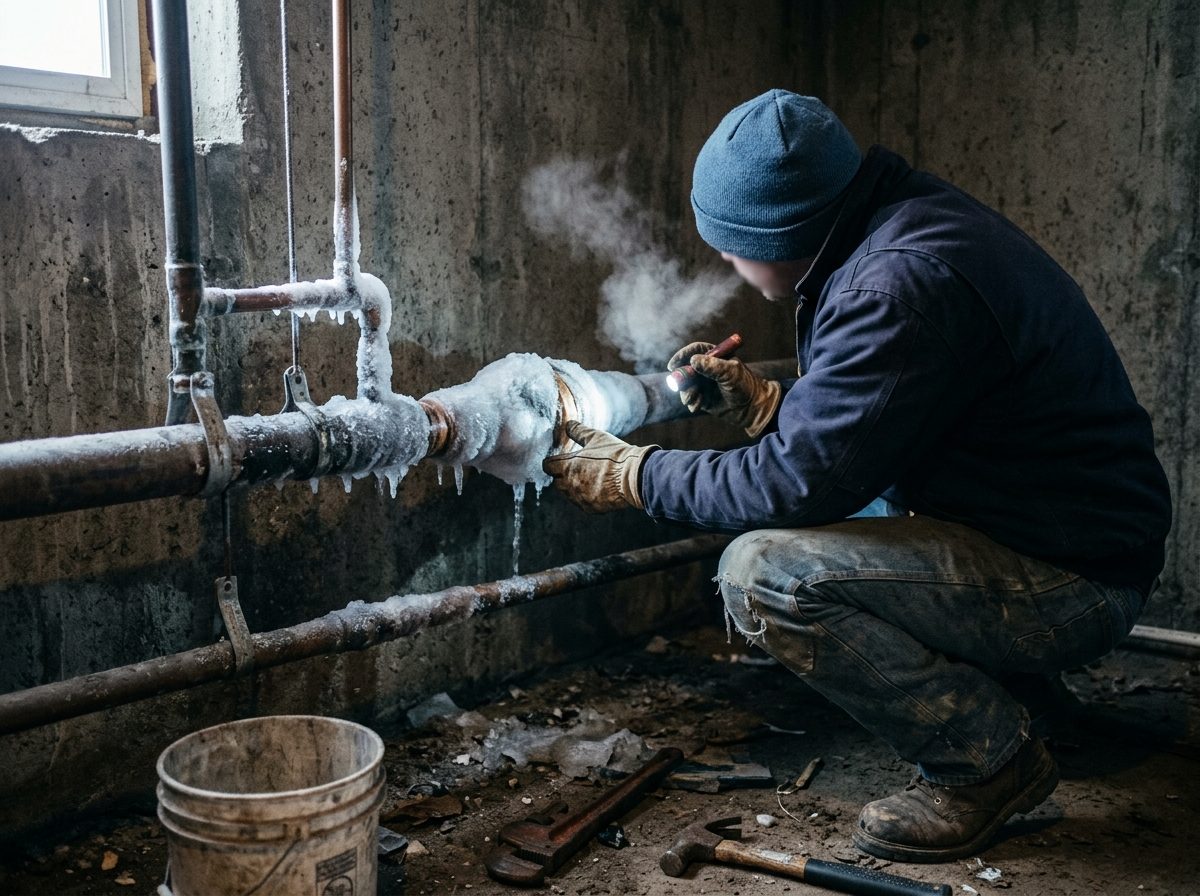
Streets built for a different century
Buildings sit close together on steep narrow streets with limited parking. Crawlspaces are often entered from outside, paths are frequently steps, and equipment sometimes has to be carried rather than wheeled.
Say what the access looks like when you call — how many steps, whether a van can stop near the door, whether the crawlspace hatch is inside or out. It determines who takes the job and whether the right tools arrive on the first visit rather than the second.
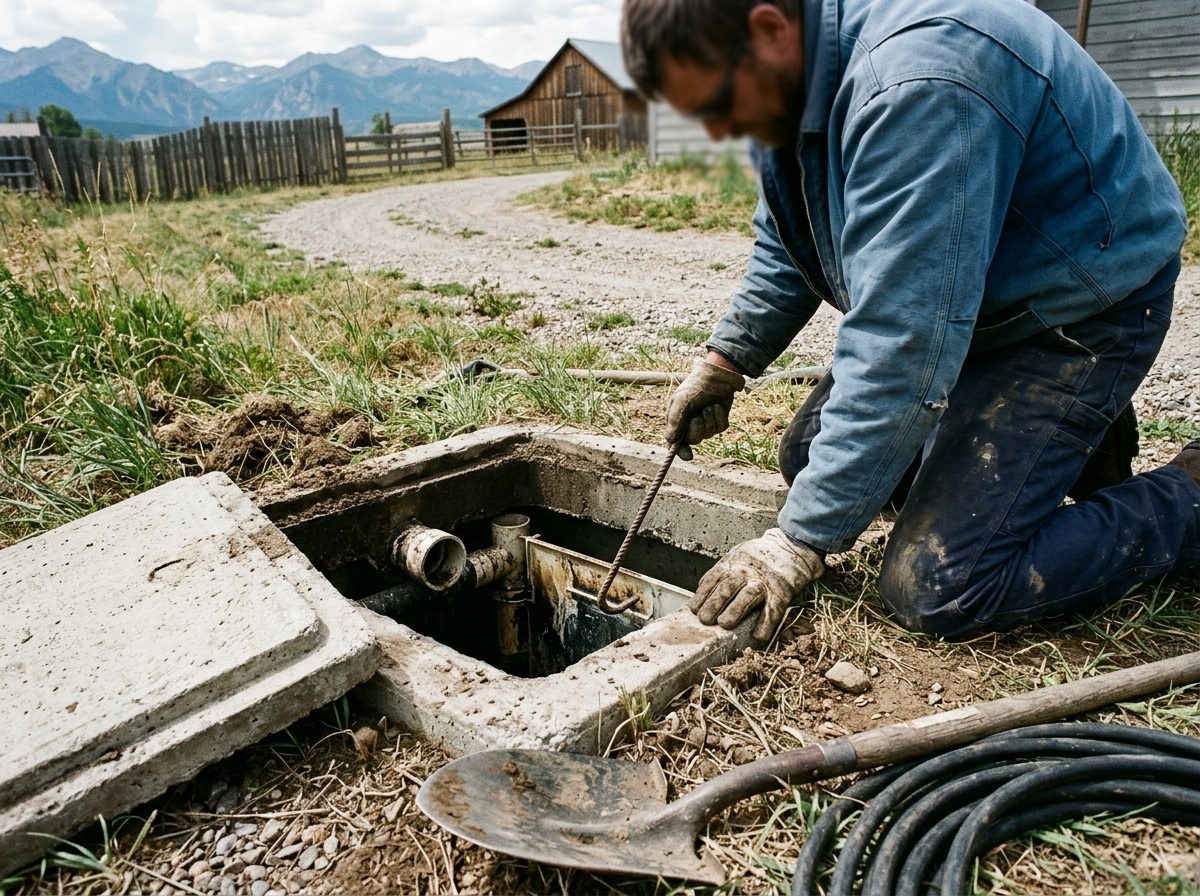
Buried service lines deserve a mention too. In a town of this age the line from the meter to the building may be original, and its route may not match any record. The signs it is failing are indirect — pressure that has slowly dropped, ground that stays damp or unusually green, or a meter that creeps with every fixture shut. Confirming that before excavation saves a great deal of digging in hard hillside ground.
Pipe that is a patchwork
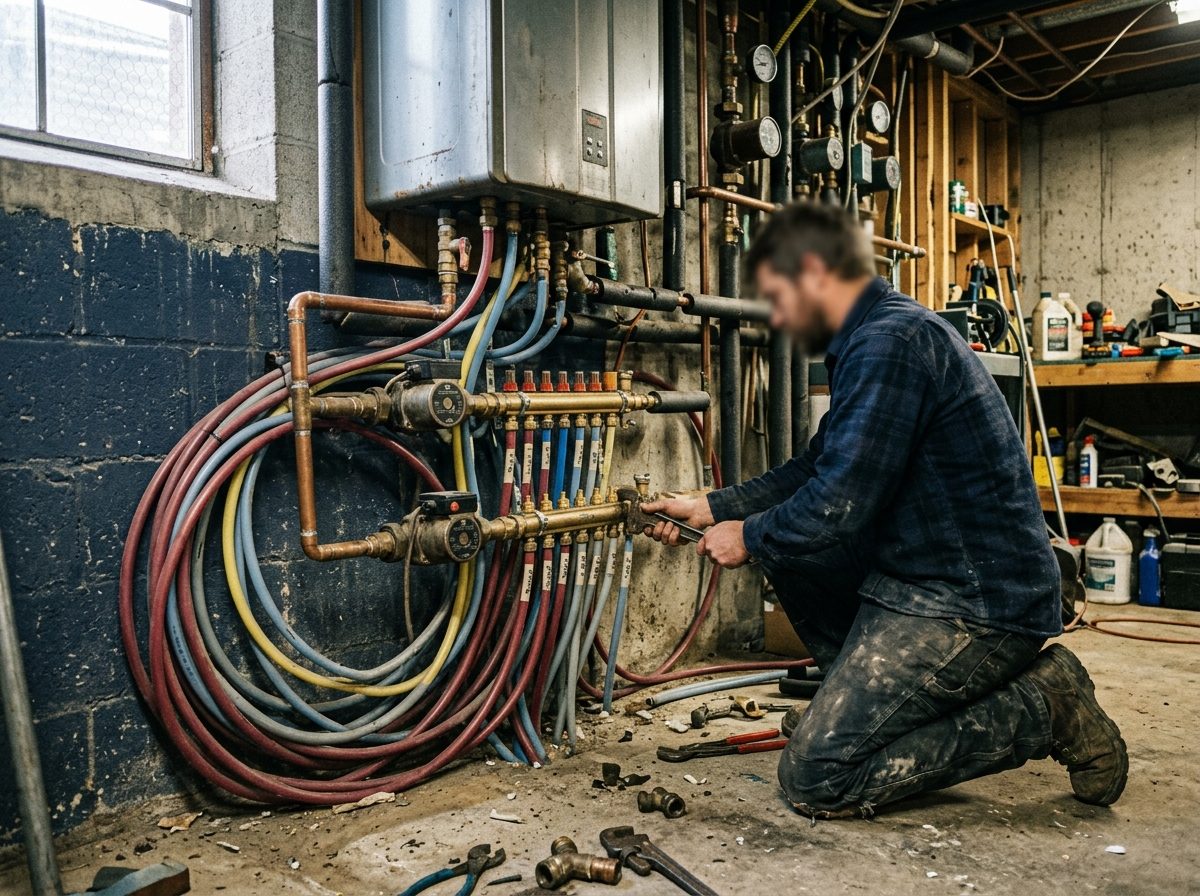
A single run here may start in galvanised steel, change to copper at a union somebody added decades ago, and finish in plastic fitted more recently. Those transitions are where trouble concentrates.
Dissimilar metals joined without the correct fitting corrode at the junction. Undersized replacement sections throttle flow through an otherwise sound line. Fittings buried inside walls during a remodel stay invisible until they weep. Small clues therefore carry weight — discoloured water at one tap and not another points at a specific junction rather than the building in general.
Flow poor at some fixtures? Which ones are affected narrows it considerably.
Ask about tracing a leakAltitude and a long freeze season
Combustion appliances produce less than their labels suggest at this elevation, and midwinter inlet water is close to freezing — so a heater specified on average conditions will fall short exactly when demand peaks. Derating, venting and combustion air belong in the specification.
Freezing is close to an ambient condition for much of the year. Any pipe outside heated space needs active protection or to be out of service, and heat tape — which carries much of that load — fails silently through age, rodent damage or having been unplugged during other work.
Heat tape never tested? It fails silently — check it before the first freeze.
Ask about freeze protectionArriving at a cold building
Close the main shutoff before applying heat anywhere, then check the lowest ceiling and the crawlspace for damp. A split line starts leaking the moment it thaws.
Venting in a building that grew upward
Drainage needs air behind it, and in buildings that gained bathrooms a century after they were built the air path is often the part nobody thought about. A drain that gurgles, or a trap that empties itself and lets a smell through, is usually a venting fault rather than a blockage.
Old stacks here were frequently pressed into service for fixtures they were never sized for, and later work sometimes solved the problem with a mechanical air admittance valve tucked inside a cupboard. Those have their place, but they are moving parts, they fail closed, and they are not a substitute for a stack where a stack is what the building needs. Anything that leaves you smelling the drain in a room you are standing in is worth treating as urgent rather than unpleasant.
Shared walls and shared lines
A good deal of the older building stock here shares walls, and a surprising amount of it shares plumbing. One service line splitting to feed two premises, a drain from an upper building crossing beneath a lower one, a shutoff in next door's basement: none of it is unusual and none of it is recorded.
It is worth establishing which arrangements apply to your building on an ordinary weekday. The question that decides a night's outcome is a simple one — can this building's water be turned off without turning off the neighbour's, and is that valve on your side of the wall? Where the answer is no, fitting a shutoff that serves your premises alone is a modest job that stops a small fault becoming a shared emergency.
Nearby communities
Central City sits above Black Hawk in Gilpin County, with Idaho Springs, Rollinsville and Nederland nearby.
Central City
Gilpin County questions answered
It depends how the joins were made. Dissimilar metals connected without the correct fitting corrode where they meet, and undersized replacement sections throttle flow through the rest of the run. Mixed material is normal in mining-era housing; badly made transitions are what leak.
Because the town is built into a steep hillside on narrow streets. Limited parking, steps, and outside-entry crawlspaces determine what equipment can reach the work. A drain machine or camera reel that cannot get to the cleanout is no use, so describing the approach saves a wasted visit.
That usually means the problem is a specific section of pipe rather than the whole system, most often an old galvanised run feeding that fixture or a corroding junction where two metals meet. Tracing which run serves that tap is the diagnosis, and replacing that section alone is often enough.
For gas units, yes. Thinner air means less oxygen for combustion, so manufacturers derate output and may specify different models. Combined with very cold winter inlet water, that is why a heater which coped in summer falls short in January. Size for winter conditions.
Usually, with gentle even heat applied from the open end of the line toward the blockage so meltwater can escape. Never a torch or rapid heat — that is how pipes split and buildings catch fire. Shut the water off first, because a cracked pipe starts leaking as it thaws.
Tape can look intact and be dead. Age, rodent damage and being unplugged during unrelated work are the usual causes, none visible at a glance. Test it before the freeze season and check the whole length of the run, since tape often covers less pipe than assumed.
Often, where the existing layout is a patchwork of eras and materials. Replacing the plumbing along a sensible route can cost less over a decade than repeated repairs to runs nobody fully understands. Start with an assessment and a staged plan rather than committing to everything at once.
Usually same-day for urgent problems in clear conditions, since the corridor is well travelled. Snow, ice and the steep local streets are the variables rather than distance. You will get an honest window plus instructions on what to shut off while you wait.
Gilpin County, any hour
Central City, Black Hawk, Idaho Springs and Rollinsville.
(833) 621-2904 — answered 24/7, statewide.