Plumber in Black Hawk, CO — one call, any hour
Home / Areas / Mountain Communities / Black Hawk
Black Hawk is an unusual plumbing market: a small old mining town in a narrow canyon that also carries a concentration of commercial premises. The two sit side by side, and they need genuinely different trades.
Old town and commercial premises
The residential building stock is old and much altered — mixed materials in a single run, sections replaced at different times, fittings inside walls no drawing records. Alongside it are commercial buildings with plumbing of a different order: larger waste lines, grease-bearing kitchen drains, floor drains and equipment connections that no house has.
Saying which kind of building you are calling about is the single most useful thing you can do. A domestic plumber and someone equipped for a commercial kitchen drain are different callouts, and getting it right first time avoids a wasted visit and a second bill.
House or business premises? Say which — the trades are not interchangeable.
Ask what applies to you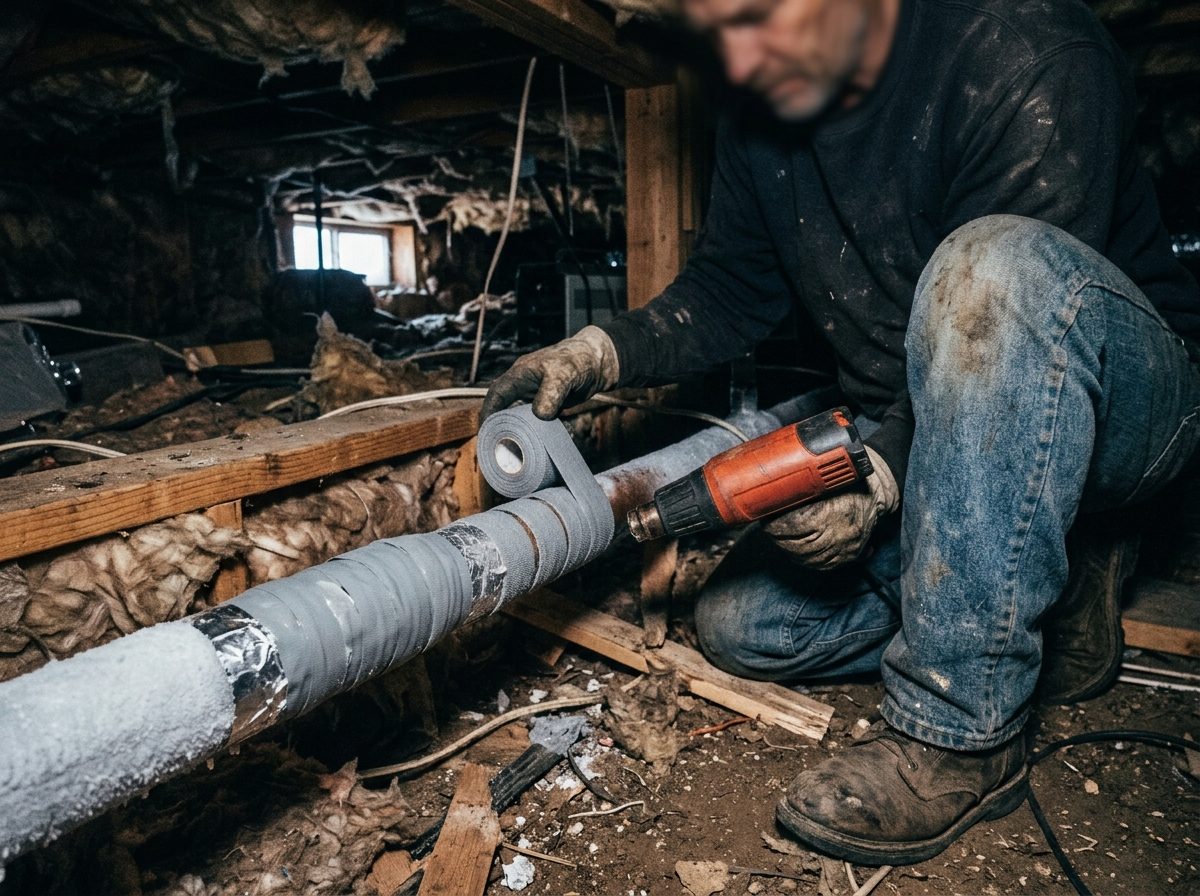
Commercial work is a different trade
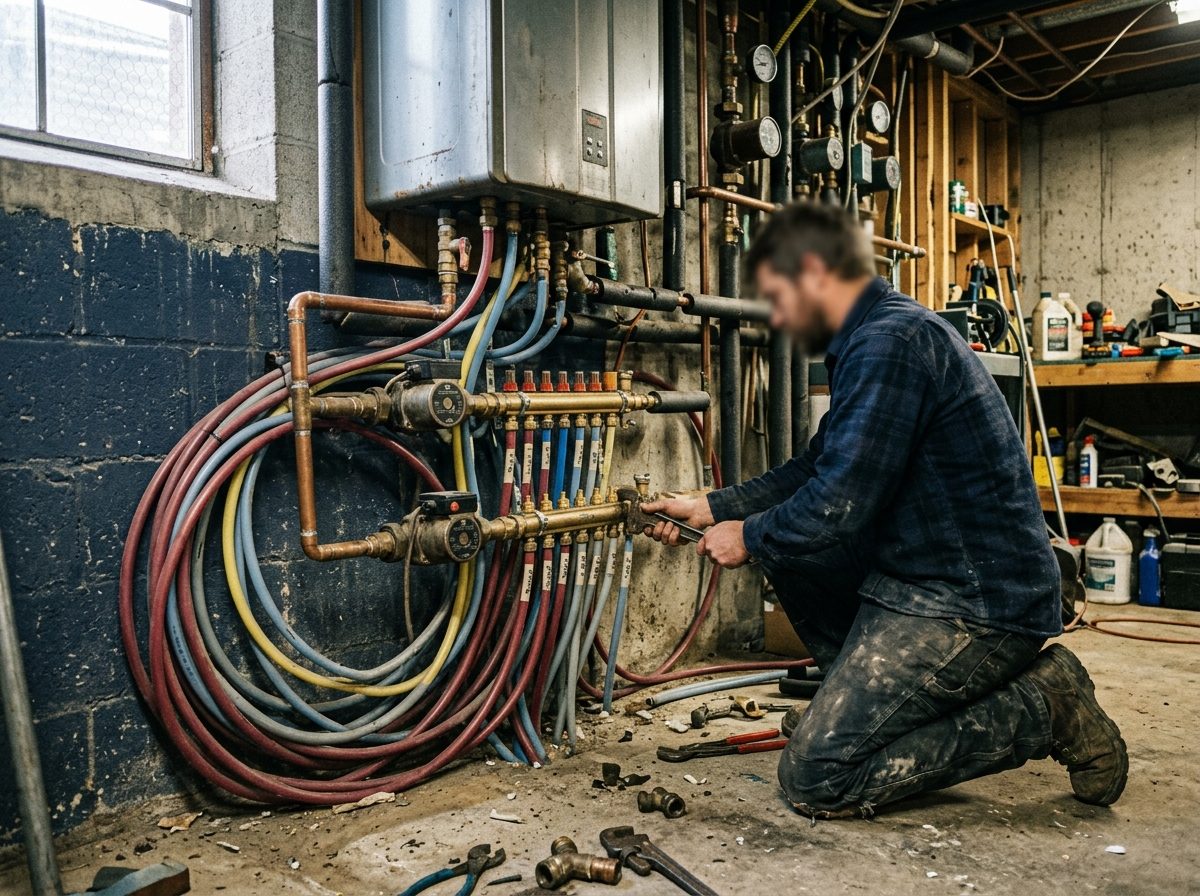
Commercial plumbing here brings recurring problems that domestic work does not. Grease is the main one: kitchen lines close up as grease builds on the pipe wall, and cabling only makes a temporary channel through it. Jetting cleans the wall properly, and a grease interceptor that is actually serviced on schedule is what stops the cycle recurring.
Scheduling matters too. Businesses generally cannot stop trading for a repair, so out-of-hours work is often the cheaper option once lost trade is counted. It is worth asking about when you book rather than assuming daytime is standard.
Backflow protection is worth a specific mention where residential and commercial uses sit close together. Any equipment plumbed into the water supply — a pressure washer, a mixing tank, a beverage machine — needs to be isolated properly rather than connected in the most convenient way, and a hose bib without a vacuum breaker becomes a cross-connection the moment the end of the hose is submerged.
Canyon cold and steep ground
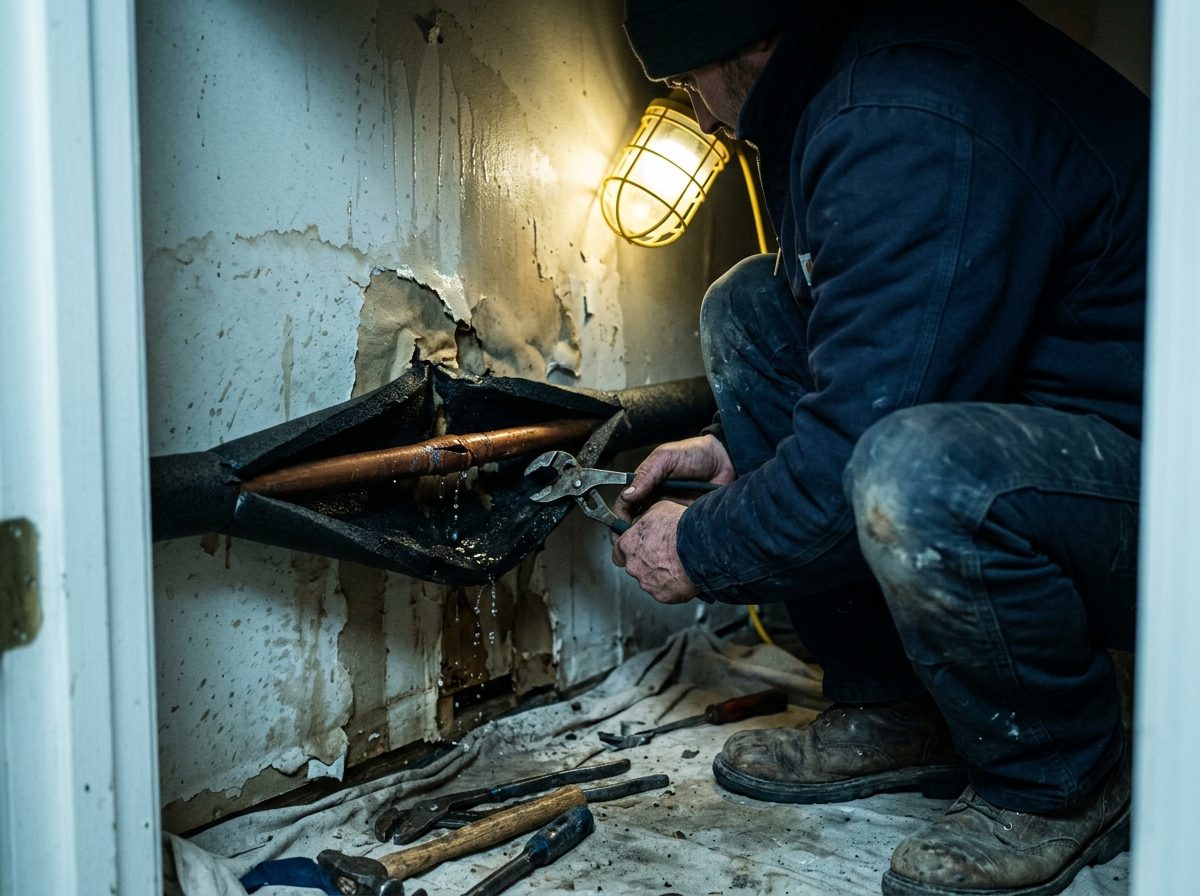
The town sits in a narrow canyon on steep ground. Cold air drains downhill and pools on the canyon floor overnight, and steep sides keep parts of the town in shade through much of a winter day — so pipe stays cold far longer than the daily high suggests.
Access is the other consequence. Limited parking, steps rather than paths, and crawlspaces entered from outside all affect what equipment reaches the work. Describing the approach when you call determines who takes the job and what they bring.
Steep or stepped access? Say what the approach looks like when you call.
Ask about accessAppliances at this elevation
Combustion appliances produce less than their labels suggest up here, and midwinter inlet water is close to freezing — so a water heater specified on average conditions falls short exactly when demand peaks. Derating, venting and combustion air belong in the specification rather than the installation.
In a commercial setting sizing deserves a second look, because commercial demand patterns are far less forgiving than a household's, and a unit that keeps up in a quiet week will not in a busy one.
Heater short of hot water? Altitude and inlet temperature both belong in the sizing.
Ask about heater sizingIf sewage is coming up a floor drain
Stop all water use in the building, keep people away from the affected floor, and call. Chemical drain products do not clear a blocked main and make the eventual work hazardous.
Grease, and the drains behind a kitchen
A small town with large commercial kitchens produces a drainage problem you will not find in a residential street. Fats leave a fryer or a pot-wash as liquid and travel a few yards before the pipe wall cools them, and from then on they build inward as a hard, greasy collar that narrows the line month by month.
That is why a cable machine is usually the wrong tool here. An auger bores a hole through the deposit and the drain runs again for a fortnight; water jetting scours the pipe wall back to its actual diameter. The other half of the answer is the interceptor, which only works if it is emptied on a schedule set by how much the kitchen actually produces rather than by the calendar. Floor sinks and the traps under them are worth a look at the same time, because they are where a service-hours backup starts.
Where a building meets the public main
Any premises where water could be drawn back toward the street needs a device preventing it, and on commercial buildings those devices are both mandatory and routinely forgotten. They contain moving parts sitting in water, so they fail — and most are required to be tested every year by somebody qualified to do it.
Two things are worth understanding as an owner. A failed device does not usually leak quietly; it commonly shuts the building's water off, which means a plumbing fault becomes a closed business within the hour. And on a hillside this steep the pressure a device sees varies a good deal from one end of town to the other, so a unit specified for one building is not automatically right for the next.
Nearby communities
Black Hawk sits below Central City in Gilpin County, with Idaho Springs, Rollinsville and Nederland nearby.
Black Hawk
Black Hawk plumbing questions answered
Often yes. Commercial work involves larger waste lines, grease-bearing kitchen drains, floor drains and equipment connections, and it needs equipment a domestic van may not carry. Saying up front whether the address is a house or a business means the right person and kit arrive first time.
Grease is almost always the cause, and cabling only makes a temporary channel through it. Jetting cleans the pipe wall properly, and a grease interceptor that is actually serviced on schedule is what stops the cycle recurring. Repeated emergency clearing costs more over a year than maintenance does.
Usually, and it is worth asking about when you book. For a business that cannot stop trading, out-of-hours work often works out cheaper once lost trade is counted. Say what your trading pattern is and the schedule can be built around it rather than against it.
Cold air sinks and pools on a canyon floor, so overnight temperatures here sit below the regional figure, and steep sides keep parts of the town in shade through the day. Add elevation and the freeze season is considerably longer than in the valley.
That is normal in mining-era housing altered over a century. What matters is how the joins were made — dissimilar metals without the correct fitting corrode at the junction — and whether capped sections still hold water that can freeze. Tracing the system once is worth the cost.
For gas units, yes. Thinner air means less oxygen for combustion, so manufacturers derate output and may specify different models. In a commercial setting it matters more, because demand patterns are less forgiving and a unit that copes in a quiet week will not in a busy one.
No. Chemical cleaners do not clear a grease mass or a collapsed section, and they leave caustic liquid standing in the line that makes the work hazardous for whoever opens it. Mechanical clearing followed by a camera is the right sequence.
Usually same-day for urgent problems in clear conditions, since the corridor is well travelled. Snow, ice and the steep local access are the variables rather than distance. Business addresses can sometimes get a scheduled out-of-hours slot instead, which often works out better.
Gilpin County, any hour
Black Hawk, Central City, Idaho Springs and Rollinsville.
(833) 621-2904 — answered 24/7, statewide.