Plumber in Pinecliffe, CO — one call, any hour
Home / Areas / Mountain Communities / Pinecliffe
Pinecliffe is a scattered canyon community between Rollinsville and Nederland, strung along the creek and up the sides. Cabins are old and much altered, cold air pools on the canyon floor, and the road in decides what is possible in February.
In the canyon along the creek
Properties sit close to the creek and up the slopes on small lots, most on private wells and septic. Canyon ground is sand, cobble and rock in unpredictable layers, which affects both how buried pipe behaves and how much work it is to reach — so anything avoiding an open trench is worth asking about early.
What shapes a visit here is rarely the fault itself. It is which side of the creek the property sits on, whether the drive climbs, how many separate structures draw water, and whether anybody has been inside the building since the last hard freeze.
Facing a dig for a buried line? Ask whether it can be replaced without an open trench.
Ask about trenchless options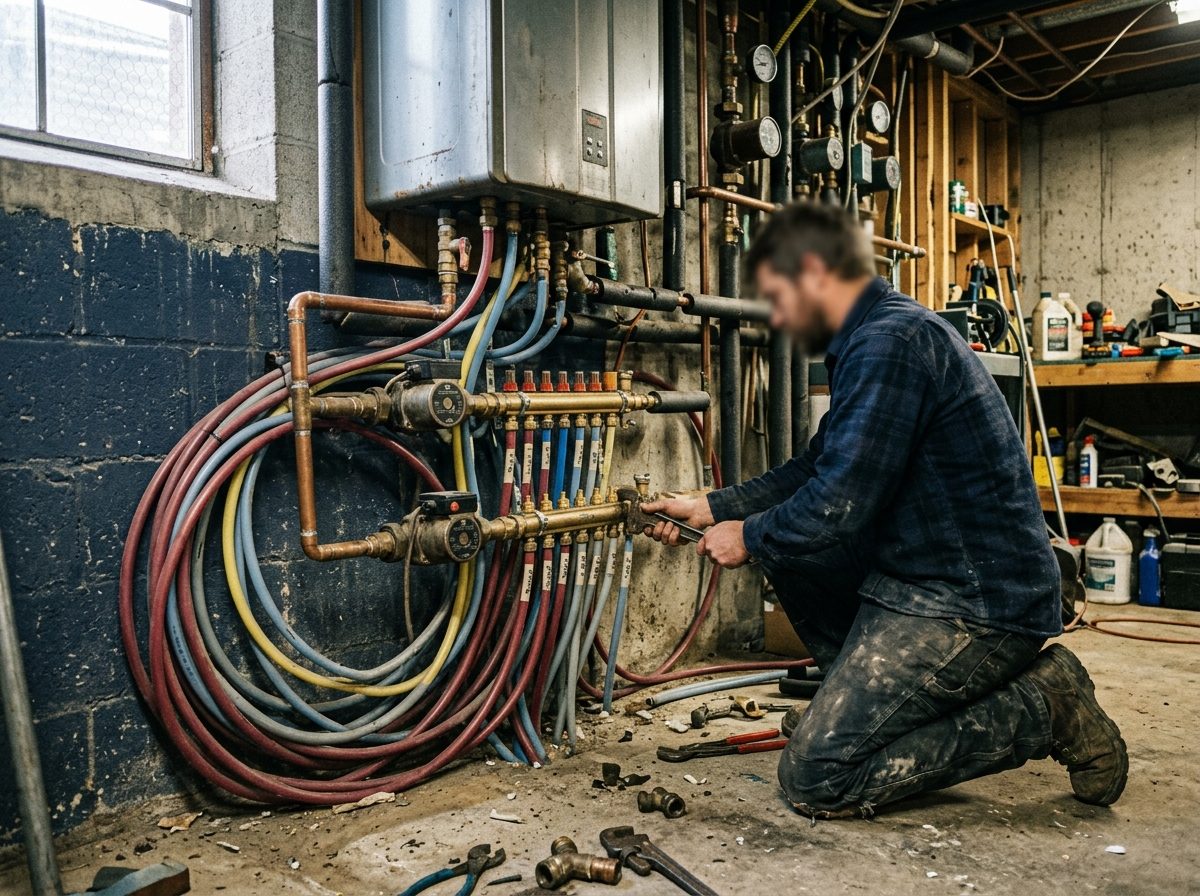
Old cabins, layered plumbing
Much of the housing began as something smaller and grew by addition across different decades. Plumbing that developed that way tends to have long runs in awkward places, fittings inside walls nobody recorded, and diameters that change at old junctions for reasons nobody remembers.
That makes diagnosis a genuine part of the job. Small clues carry weight — which fixtures are affected and which are not, whether flow changed after previous work — and the most useful thing an owner can offer is the building's history.
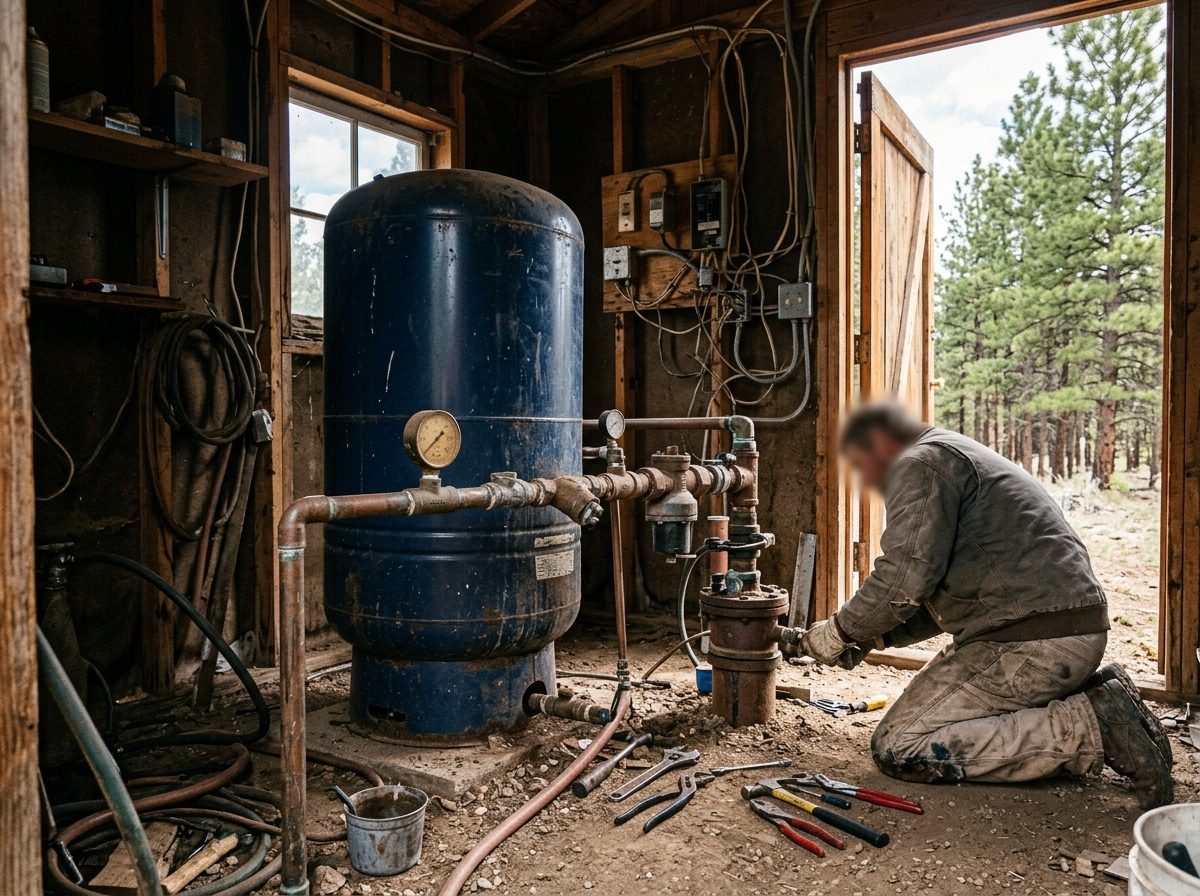
Wells and septic are the other constant. Almost every well call out here turns out to be one of a small handful of things, and not one of them announces itself clearly: a tank that no longer holds its air cushion, a switch whose contacts have stopped closing, or a pump that has simply reached the end of a working life. From the kitchen they all look identical — nothing at the tap. Two observations separate them faster than anything a plumber can do on arrival: what the pressure gauge reads, and whether the pump can be heard trying. Those two also decide whether this is a plumbing call or a well-system call, which matters a great deal when the canyon road means nobody is making a second trip today.
Septic here goes wherever the lot offers flat ground, which on a canyon floor is usually the ground nearest the creek. Tanks want emptying every three to five years, and rather more often where a cabin fills up for a fortnight and then stands empty for two months. The tell is never one slow fixture — it is every drain in the building going sluggish together.
Vacancy and cold air
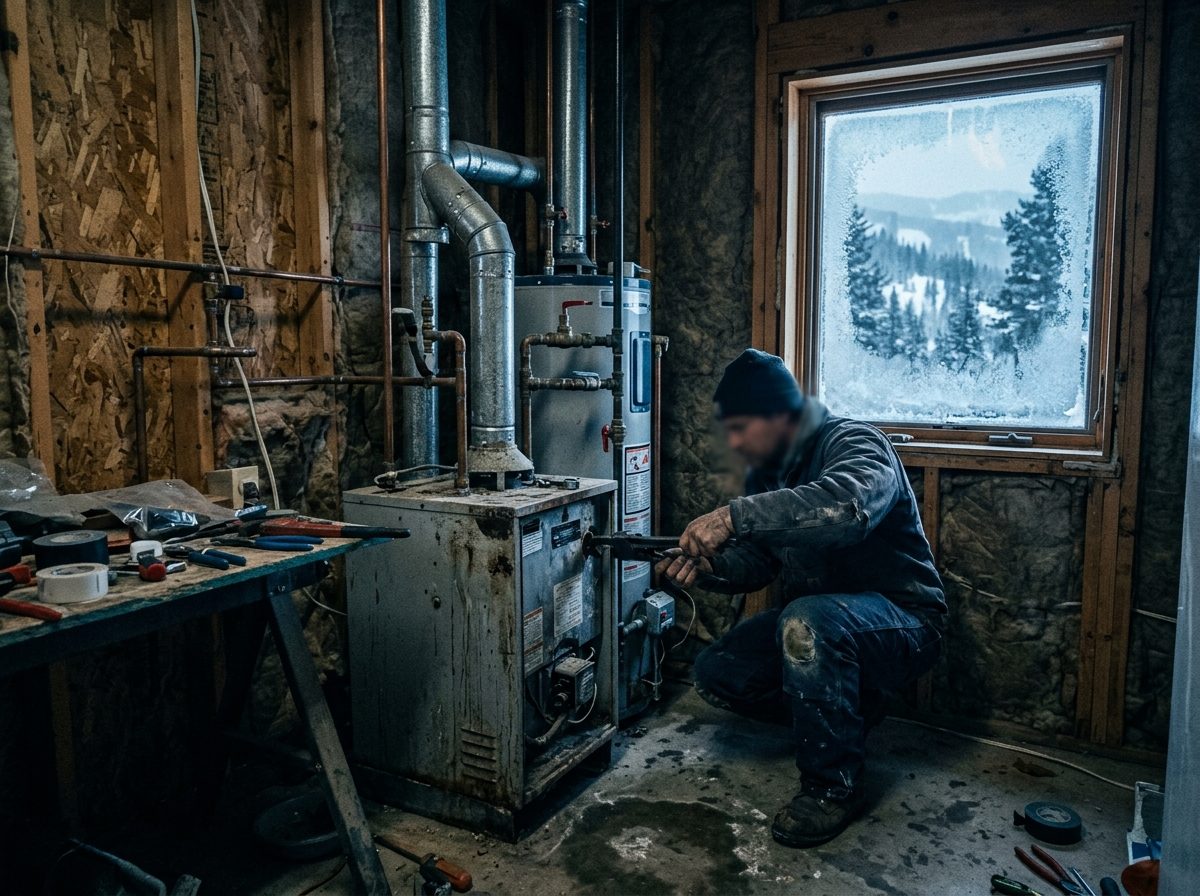
Cold air drains downhill and pools on the canyon floor, so overnight temperatures here sit below what a regional forecast suggests, and shaded slopes keep structures cold through the day.
Combine that with part-time occupancy and you have the pattern behind most expensive calls here: a tripped furnace, a power cut or a dead heat tape in a building nobody is in, and days of unattended water. For a place that will sit empty from October, the reliable measure is to take the water out of it rather than to trust a thermostat and a length of heat tape to hold for five months unwatched.
Closing up for the season? Have it drained properly once rather than approximated annually.
Ask about winterisingA canyon road in winter
Distance here means very little and access means almost everything. Ice on the shaded stretches, single-lane sections where nothing can pass, and drives too steep to climb loaded all decide whether a van reaches you at all — and in the middle of a storm the truthful answer is sometimes tomorrow, or later than that.
Which is why the phone advice comes first. If something has let go, close the main shutoff, open the lowest tap to drain the system, move what matters out of the water path, and photograph before cleanup. That sequence determines the size of the problem.
Snowed in with water running? Shut it off at the main and drain the lowest tap.
Ask what to do right nowWhat the creek does in May
Winter is the season people here worry about, and spring is the one that fills crawlspaces. As the snowpack above the canyon lets go, the water table on the flat ground near the creek comes up with it, and a crawlspace that was bone dry in February takes an inch of standing water in the first warm week of May.
Sump pumps in this canyon therefore matter for roughly six weeks a year, which is precisely why they are the piece of equipment most likely to have quietly died since last spring. Run yours in April with a bucket of water, while a failure is still an inconvenience rather than a flooded floor. A drainfield sitting on saturated ground has the same seasonal problem in reverse: it cannot accept what it normally accepts, and the house tends to notice that before the tank does.
Rock, and how deep pipe really sits
Canyon ground gives way to rock sooner than anyone digging would like, and buried lines here were frequently laid at whatever depth the ground allowed rather than the depth the frost line asks for. That is worth knowing before you conclude you have a leak.
A service line sitting eighteen inches down in cobble will freeze during a hard, dry, snowless cold snap while a neighbour's, properly buried, does not — and from indoors a frozen line and a broken one present identically. Where depth simply cannot be gained, insulation and a monitored heat tape are the compensation, and both want checking each autumn rather than each January. If you have any idea how deep your line actually sits, say so on the phone: it changes the first hour of the visit.
Arriving at a cold cabin
Find the main shutoff and close it before you put heat anywhere near a frozen line. Then look at the lowest ceiling in the building, and into the crawlspace, for damp. Ice is holding the split closed — the leak starts when it thaws.
Nearby communities
Pinecliffe sits in the canyon between Rollinsville and Nederland, on the road down toward the plains.
Pinecliffe
Canyon property questions answered
Water off at the source, the system drained from its lowest point, taps opened so air can replace water, the heater and any appliance holding water dealt with, and antifreeze rated for plumbing in traps and toilet bowls. Never automotive antifreeze. Done thoroughly it can sit unheated safely.
Cold air sinks and pools on a canyon floor, so overnight temperatures here sit below the regional figure, and shaded slopes keep structures cold through the day. Add elevation and the freeze season is considerably longer than down the hill.
Often, yes. Trenchless methods pull a new line along the path of the old one from access pits at each end, which matters where the ground is cobble and rock. Whether it suits depends on the route, depth and condition, so an assessment comes first.
Because most buildings here were extended in stages. Each addition took the easiest route available at the time, so runs go around obstacles that no longer exist and diameters change at old junctions. Having the layout traced once makes every subsequent repair quicker.
Usually, with gentle even heat applied from the open end of the line toward the blockage so meltwater can escape. Never a torch or rapid heat — that is how pipes split and buildings catch fire. Shut the water off first, because a cracked pipe starts leaking as it thaws.
Tape can look intact and be dead. Age, rodent damage and being unplugged during unrelated work are the usual causes, none visible at a glance. Test it before the freeze season and check the whole length of the run, since tape often covers less pipe than assumed.
Sometimes, and access rather than distance decides it. Ice, snow and single-lane sections all matter, and some contractors will not attempt certain drives in winter. Describing the last stretch honestly means whoever takes the call arrives equipped rather than turning back.
Someone local who can physically check it, plus a remote temperature alarm you actually receive. Early warning matters more than any repair arrangement, because the difference between a small problem and a catastrophic one is how many days water runs before anyone notices.
The canyon, any hour
Pinecliffe, Rollinsville, Nederland and Ward.
(833) 621-2904 — answered 24/7, statewide.