Plumber in Idaho Springs, CO — 24/7 by phone
Home / Areas / Mountain Communities / Idaho Springs
Idaho Springs is one of the oldest towns in the state, built into a narrow canyon on steep ground. Its plumbing is correspondingly old, frequently altered, and often difficult to reach — and any honest description of a service call here has to start with access rather than with pipe.
Mining-era housing in a narrow canyon
Much of the housing dates from the nineteenth and early twentieth centuries, and while almost nothing original survives untouched, what replaced it was installed piecemeal over a century. Expect mixed materials in a single run, undersized sections, fittings inside walls that no drawing shows, and drain lines that were rerouted to suit an extension.
That history makes small clues valuable. Which fixtures are affected and which are not, whether a problem changed after previous work, and where damp appears relative to where water is used all narrow the search considerably before anyone opens anything up.
Damp appearing with no obvious source? Note which fixtures are affected and which are not.
Ask about tracing a leak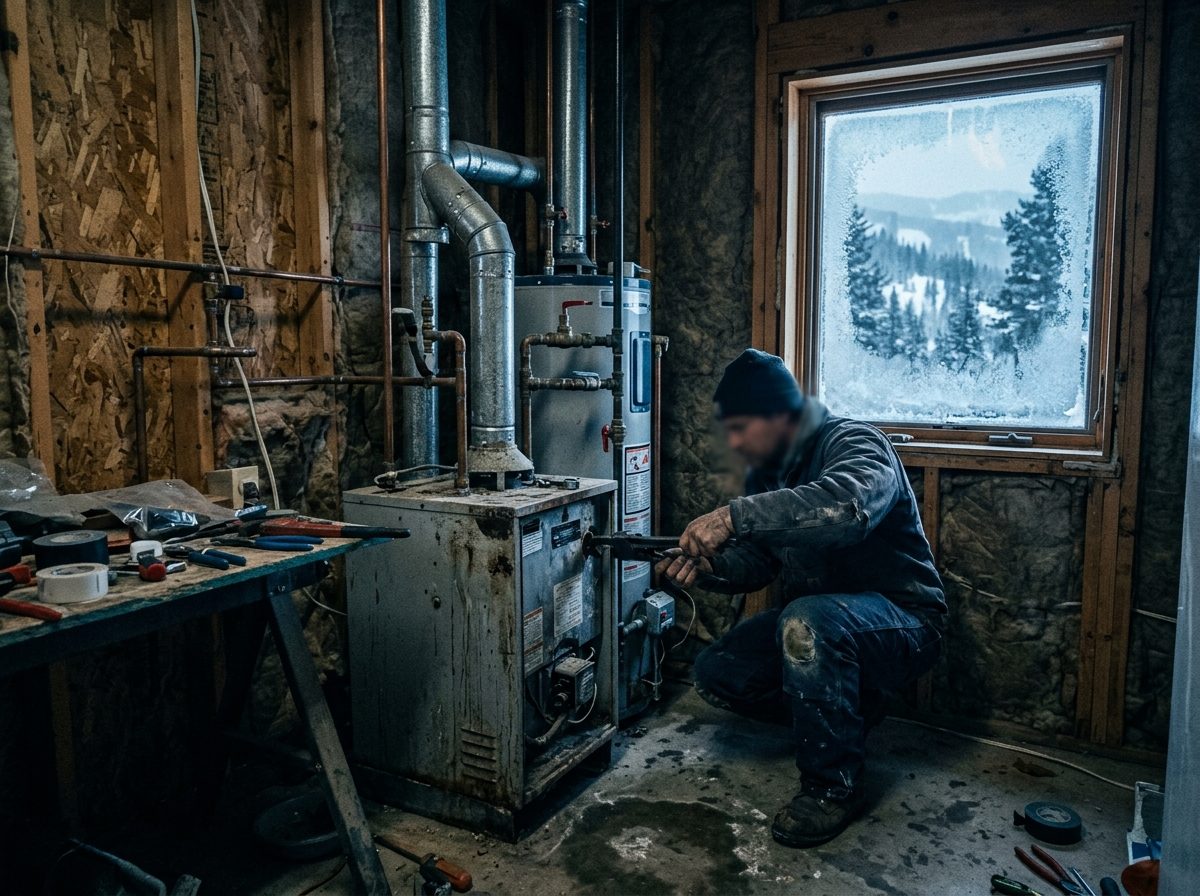
Narrow streets, steep lots
Buildings here sit on slopes, close together, on streets that were laid out for a different century. Practically, that means limited parking for a service vehicle, crawlspaces entered from outside, stairs instead of paths, and equipment that sometimes has to be carried rather than wheeled.
Say all of that when you call. How many steps, whether a van can stop near the door, whether the crawlspace hatch is inside or out. It determines who takes the job, what they bring, and whether the work happens on the first visit rather than the second.
Old drain lines and what they do
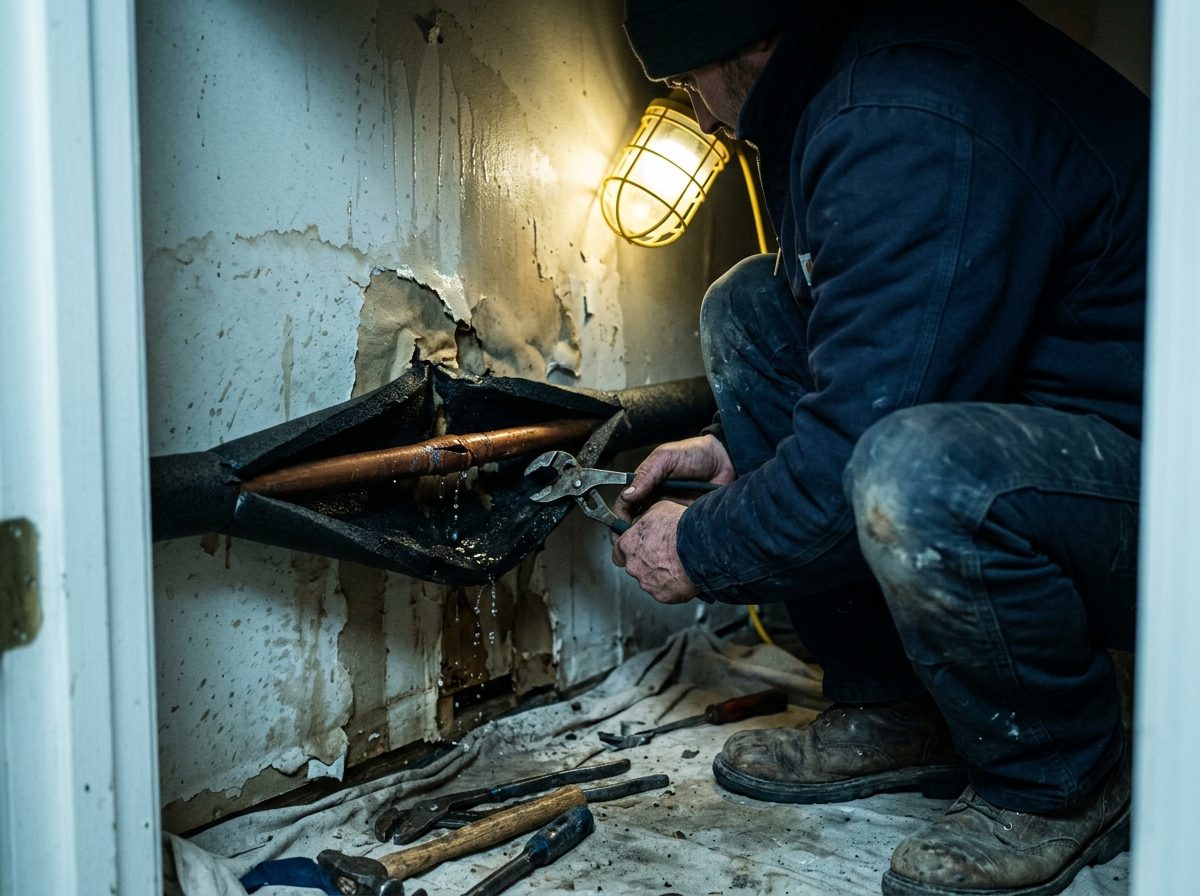
Drainage is the most common source of calls in old housing of this kind. Cast iron roughens internally and catches waste; long shallow runs added during a remodel drain sluggishly by design; and the connection out to the main is frequently the oldest part of the whole system.
Two symptoms are worth distinguishing on the phone. A single slow fixture is usually local — a trap, a branch, or a vent problem, and gurgling in particular points at venting rather than a blockage. Several fixtures slowing together, or the lowest drain in the building backing up, points at the main line and calls for a different response: stop using water, then clear and inspect rather than clear alone.
Several drains slow at once? Stop running water and call — that is a main line symptom.
Ask about a main lineWorth adding: in buildings this old the cleanout is not always where a plumber would expect it, and sometimes there is not one at all. If you know where yours is, say so when you call, because finding it is occasionally the longest part of the visit.
Shade, cold air and short days
A narrow canyon running east to west leaves parts of town in shade for much of a winter day, and cold air settles on the valley floor overnight. The result is that pipe in crawlspaces, under decks and against north walls stays cold for far longer than the daily high suggests.
Where a run has frozen once it will freeze again unless the exposure changes, so insulation and air sealing come before heat tape, and tape needs testing before the season rather than after a failure. For buildings let to visitors or occupied seasonally, draining is the dependable choice, because nobody is present to notice a heating fault.
Building let to visitors or empty? Draining it properly beats hoping the heat holds.
Ask about winterisingArriving at a cold building
Close the main shutoff before applying heat anywhere. A pipe that has already split starts leaking the moment it thaws, and with the water off you keep control of what happens next.
Mineral content, and what it costs fixtures
This is a town known for what is dissolved in its water, and the same geology that made the springs famous turns up in ordinary household plumbing. Hard, mineral-rich water leaves scale, and scale accumulates in every warm, narrow or moving part of a system.
The order in which things fail is fairly predictable. Aerators and shower heads block first and are trivial to clear. Mixer cartridges stiffen next, which owners tend to read as a broken tap rather than a limed one. Then the water heater, where scale settles on the tank floor and insulates the burner from the water it is meant to be heating, so run times lengthen and the unit ages faster than its years. Staining on porcelain is cosmetic and tells you about iron and manganese rather than hardness.
The sequence that actually saves money is to test first, then treat for what the test found, then size the equipment to the household. Softeners and filters bought before a test are frequently the wrong ones, and an oversized unit on a small household causes its own problems.

Nearby communities
Idaho Springs sits in Clear Creek canyon, with Black Hawk, Central City, Rollinsville and Evergreen within reach.
Idaho Springs
Idaho Springs plumbing questions answered
Because steep lots, narrow streets, stairs and outside-entry crawlspaces determine what equipment can physically reach the work. A drain machine or camera reel that cannot get to the cleanout is no use at all. Describing the approach when you call means the right person and the right kit turn up first time.
Gurgling usually indicates a venting problem rather than a simple blockage. A drain that cannot draw air pulls it through the trap instead, which makes the noise and slows the flow. Causes include a blocked vent, a partly obstructed branch, or a fixture added during a remodel without adequate venting.
That points at the main line rather than at any one fixture. Stop putting water into the building — no laundry, no showers — because everything you run has to go somewhere. Clearing the line restores flow, but an inspection afterwards is what tells you whether the cause was a blockage or the pipe itself.
It depends entirely on how the joins were made. Dissimilar metals connected without the correct fitting corrode where they meet, and undersized replacement sections throttle flow through the rest of the run. Mixed material by itself is common in old housing; badly made transitions are what leak.
Usually the same day in clear conditions, since the corridor is well travelled. Storms and ice change the answer, and steep local access can change it further. You will get a realistic window plus instructions on shutting the water off and draining the lowest fixture, which is what limits damage while you wait.
Change the exposure rather than just thawing it. That means insulating the run, closing the gaps that let cold air circulate around it, and where possible rerouting it into heated space. Heat tape is the fallback where rerouting is impractical, and it needs to be tested each autumn rather than assumed.
Between bookings, run water through every fixture including the unused ones so traps do not dry out and admit smells, check the toilet internals and shower valves that heavy short-term use punishes, and confirm any freeze protection is working. For gaps of several weeks in winter, draining the system is the safer choice.
Frequently it is, particularly where the existing layout is a patchwork of eras and materials. Replacing the plumbing along a sensible route can cost less over a decade than repeated repairs to runs nobody fully understands. Start with an assessment and a staged plan rather than committing to everything at once.
Clear Creek canyon, any hour
Idaho Springs, Black Hawk, Central City and the canyon communities.
(833) 621-2904 — answered 24/7, statewide.