Plumber in Evergreen, CO — 24/7 by phone
Home / Areas / Denver Metro / Evergreen
Evergreen is metro-adjacent but plumbed like the mountains. Many properties are on private wells and septic systems, hydronic heat is common, winter is longer than on the valley floor, and the driveway is frequently the deciding factor in how quickly anyone can help.
Wells, septic and hydronic heat
Three systems generate most calls here. Wells, where the usual failures are a pressure tank that has lost its air charge, a failed pressure switch, or a pump at the end of its life — and where the symptom for all of them is simply no water. Septic systems, which need pumping every few years and announce trouble as slow drains everywhere at once, a green stripe over the field, or backups after a heavy-use weekend. And boilers with radiant floors or cast-iron radiators, which fail in ways forced-air homeowners find unfamiliar: no heat, one cold zone, or a relief valve that keeps discharging.
The trade boundary is worth knowing before you call. From the pressure tank into the house is ordinary plumbing. The pump, the drop pipe and the wiring down the casing are well-system work. Saying what the pressure gauge reads and whether the pump runs at all usually decides which one you need.
No water at all? Check the pump breaker and the pressure gauge before you call — it narrows it fast.
Ask about a well problem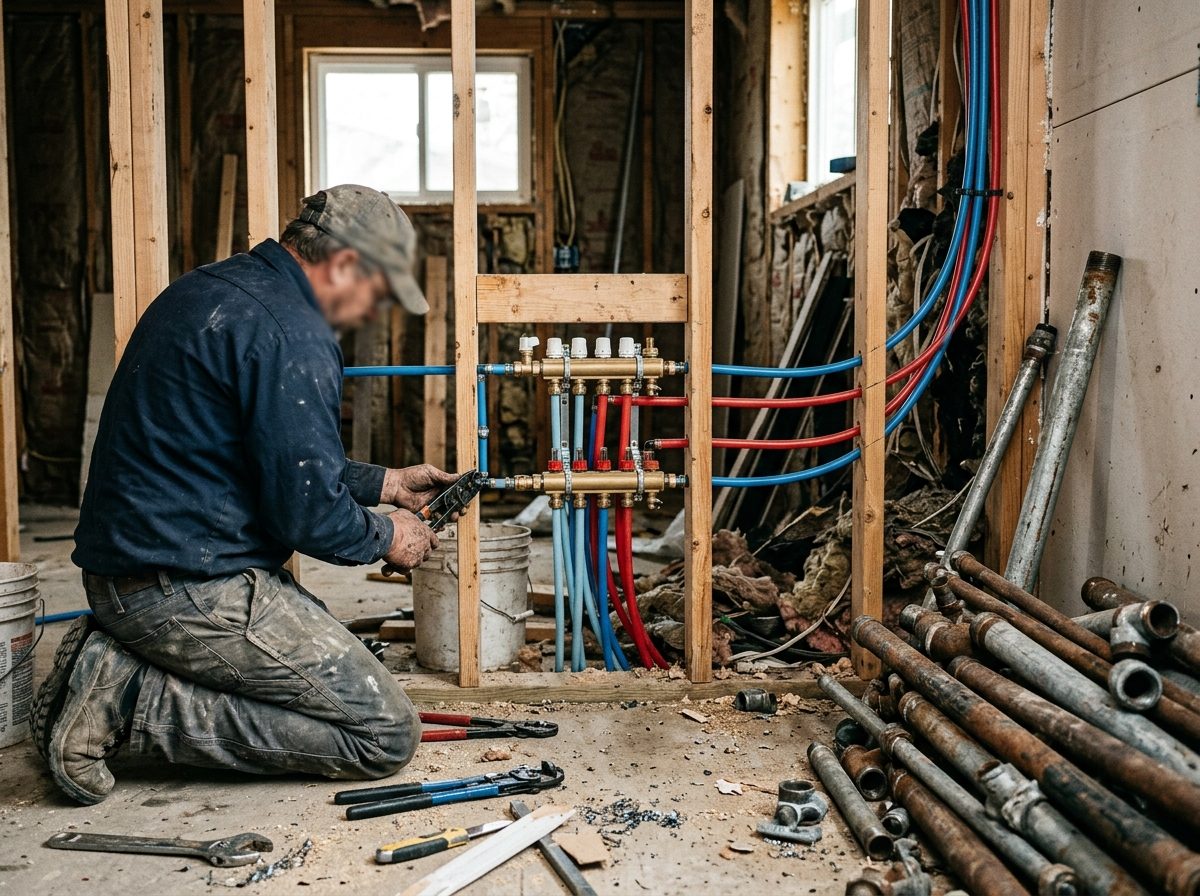
Freezing is the default risk
Up here freezing is not an unusual event, it is the condition the plumbing lives in for months. Crawlspaces, well houses, garages and exposed runs all need either heat or protection, and heat tape is the usual answer. Heat tape also fails silently — age, rodent damage, or simply being unplugged during other work and never reconnected.
Knowing where your tape runs and testing it before the first hard freeze is one of the highest-value ten minutes available. The other is knowing where the main shutoff is and confirming it turns, because that valve is what decides whether a split pipe is a repair or a flood.
Access decides who can help
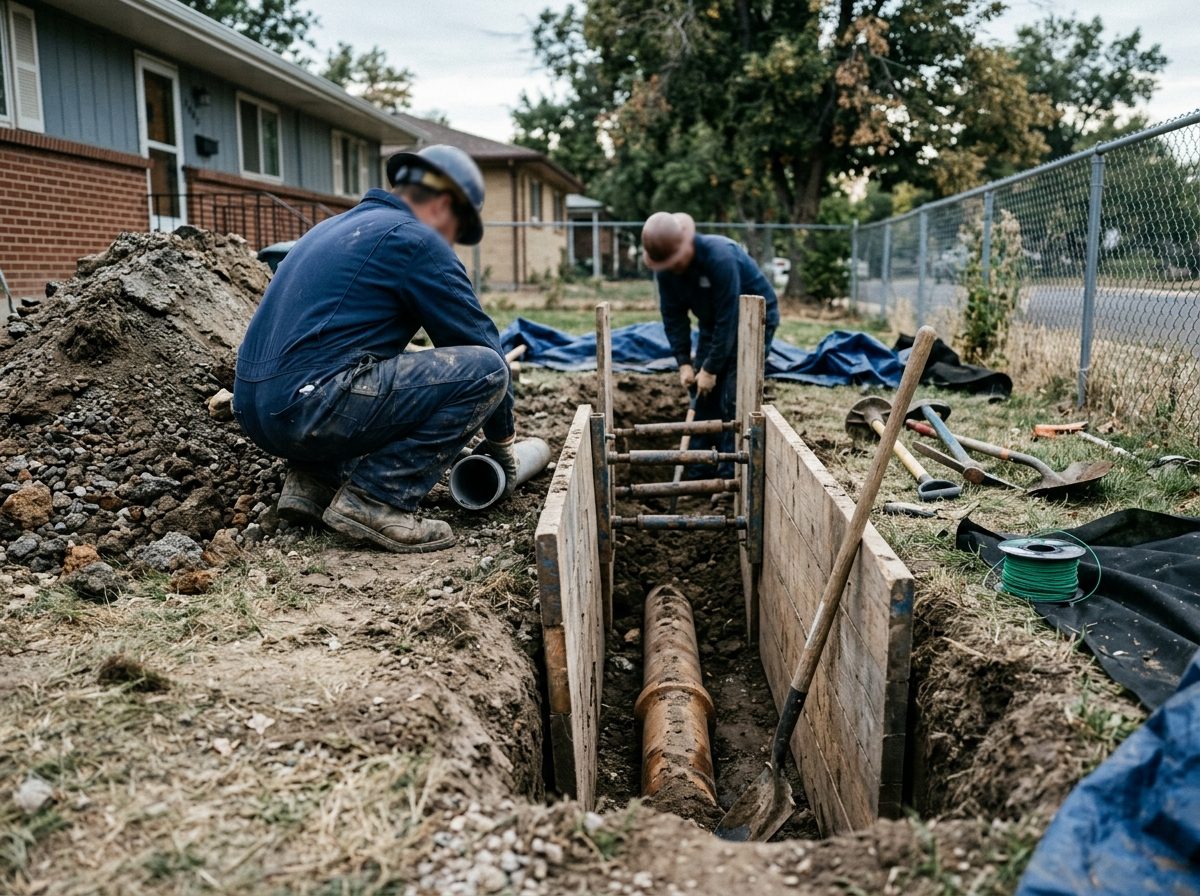
Steep unplowed driveways, private roads, gates and long last stretches all affect whether a service truck can reach a house at all. Some contractors will ask you to meet them at the bottom, and in a storm the honest answer is sometimes tomorrow.
Say what the access looks like when you call — plowed or not, how steep, whether a van can turn round. It is not a formality: it determines who takes the job, what they bring, and how long the window is. It also avoids the worst outcome, which is a plumber driving up and turning back.
Property empty this winter? Winterising properly beats leaving the heat low and hoping.
Ask about winterisingAltitude and appliance sizing
Gas appliances lose rated output as air thins, and these elevations are high enough for it to matter. A water heater specified without accounting for it can run short in midwinter, when incoming water is coldest — and tankless units are the most sensitive of all, since their output is a temperature rise across a flow rate.
Derating, venting and combustion air belong in the conversation before a unit is purchased. Hard water is worth mentioning at the same time: on a well with mineral content, a descaling routine is part of owning a tankless heater rather than an optional extra.
Replacing a water heater? Ask about altitude sizing before you buy the unit.
Ask about heater sizingIf you arrive to a frozen house
Close the main shutoff before thawing anything. A line that has already split releases water the moment it thaws — with the water off you get a controlled repair instead of a flood.
What the drains can take on a septic system
A house on a septic system has a different relationship with its drains than a house connected to a sewer, and the difference is not fussiness — it is that everything which goes down stays on the property. A tank separates solids and lets clarified water pass to the drainfield. Anything that interferes with that separation, or that reaches the field when it should have stayed in the tank, shortens the life of a component that is expensive and disruptive to replace.
In practice a short list covers most of the damage. Fats and cooking oils congeal and float, reducing the tank’s working volume. Wipes and hygiene products do not break down at all, regardless of what the packaging claims. Coffee grounds and eggshells sink and accumulate. Large volumes of bleach or drain cleaner suppress the bacterial action the tank depends on. And a garbage disposal used heavily roughly doubles the rate at which solids build up, which means either a shorter pumping interval or a tank working beyond its design.
Water volume matters as much as content. A day of laundry sends more through the tank than the tank can settle, so solids carry over into the field. Spreading loads across the week is genuinely effective, and costs nothing. None of this requires living carefully — it requires knowing which of the household habits are actually expensive, and the list is shorter than most people expect.
Nearby communities
Evergreen sits in the Jefferson County foothills, with Conifer, Kittredge, Indian Hills, Idledale and Morrison spread around it.
Evergreen, Colorado
Evergreen plumbing questions answered
Sometimes, and it depends on the truck and the grade. Many contractors will ask you to meet them at the bottom, and a few will not attempt a steep unplowed drive at all. Say honestly what the last stretch looks like when you call — it decides who takes the job and prevents a wasted trip for both sides.
It depends where the fault is. From the pressure tank into the house is ordinary plumbing work. The pump, drop pipe and casing wiring are well-system work requiring specific equipment. Describing what the pressure gauge reads and whether the pump runs at all usually settles which trade should be sent.
Roughly every three to five years for a full-time household, sooner with heavy use or a smaller tank. Slow drains everywhere at once rather than at a single fixture is the classic sign that the tank or field rather than the plumbing needs attention, along with a lush green stripe over the field.
That is the pressure relief valve doing its job, which means system pressure is going too high — commonly a failed expansion tank, a fill valve that is not closing, or overheating. It is not something to cap or ignore. Note whether the boiler gauge climbs as the system heats, because that speeds up the diagnosis.
Age, rodent damage, and being unplugged during other work are the three usual reasons, and it fails silently. A line that never froze before and froze this year is very often tape that has quietly died. Check it before the first hard freeze, and know where it actually runs.
For gas units, yes. Thinner air means less oxygen for combustion, so manufacturers derate output above certain elevations and sometimes specify different models. Combined with cold winter inlet water, that is why a heater which coped in summer can fall short in January. Size for winter and include venting and combustion air.
Either winterise it — water off, system drained, traps and appliances dealt with — or keep the heat genuinely reliable with a remote temperature alarm and someone local who can reach it. Leaving a thermostat low and hoping is how burst pipes happen, because a furnace fault has hours to work unobserved.
Weather and access decide it more than distance. In clear conditions, same-day is realistic for urgent problems. During a storm you may get an honest tomorrow along with instructions on shutting the water off and draining the lowest fixture, which is what actually limits the damage while you wait.
You can, but it roughly doubles the rate solids accumulate, which means pumping more often rather than never. If one is already fitted, use it sparingly and shorten the pumping interval accordingly. Scraping plates into the bin instead is the cheapest change available to a household on septic, and it shows up directly in how often the tank needs attention.
The Jefferson County foothills
Evergreen, Conifer, Kittredge, Indian Hills, Idledale and Morrison.
(833) 621-2904 — answered 24/7, statewide.