Plumber in Conifer, CO — one call, any hour
Home / Areas / Denver Metro / Conifer
Conifer plumbing is mountain plumbing on a metro phone number. Most properties here run their own water and waste systems, sit at elevations where winter lasts months, and are reached by drives that determine what is possible in February. None of that makes the work exotic — it makes preparation matter far more than it does in town.
Property systems, not house systems
On a typical property here you own the whole water cycle: a well, a pressure tank, the plumbing inside, and a septic tank and field taking it away. That changes both the failures and the diagnosis.
Well failures cluster around three things — a pressure tank that has lost its air charge and sends the pump short-cycling, a failed pressure switch, and a pump at the end of its life. All three present as poor pressure or no water. Septic problems show up as slow drains everywhere at once rather than at a single fixture, a lush green stripe over the field, or backups after a weekend with a full house. Knowing which of those you are describing saves a wasted visit.
No water at all? Check the pump breaker and the pressure gauge first — it narrows it fast.
Ask about a well problem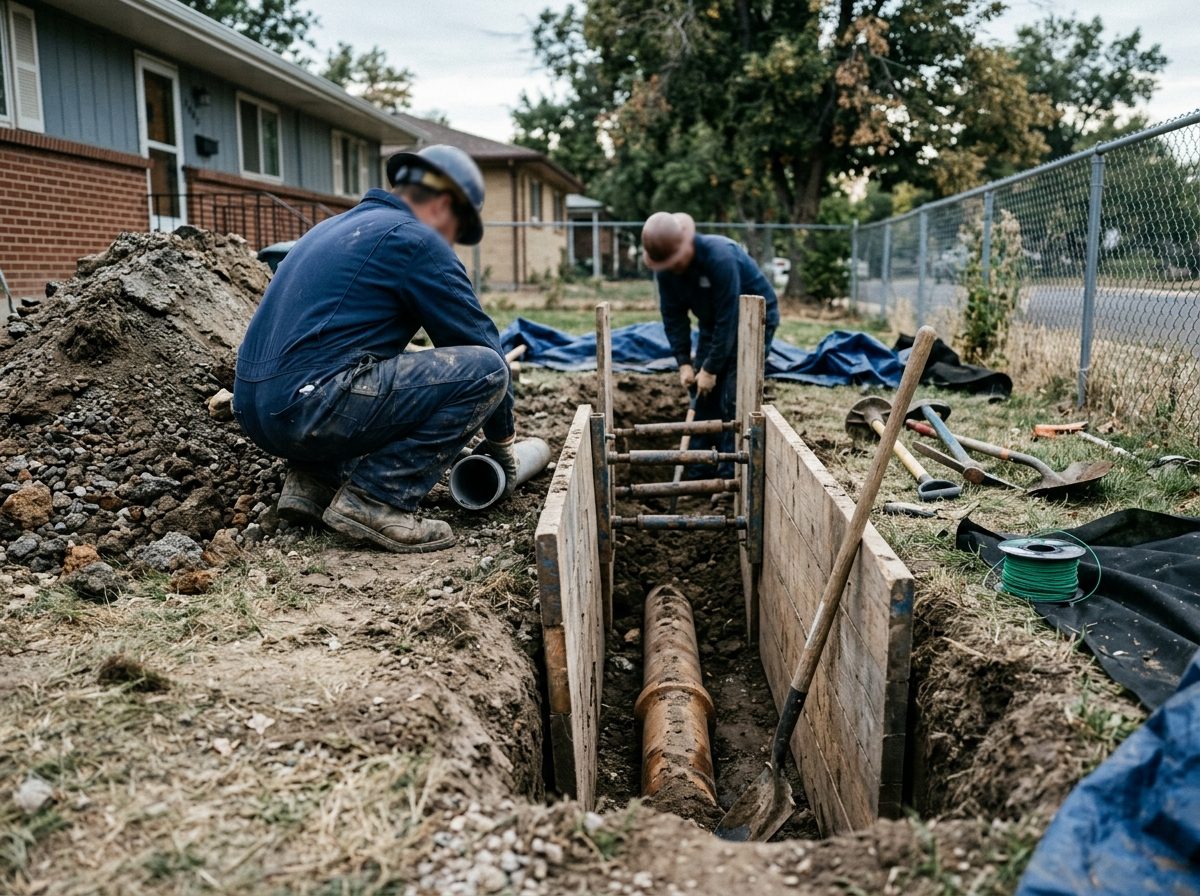
Months of freezing conditions
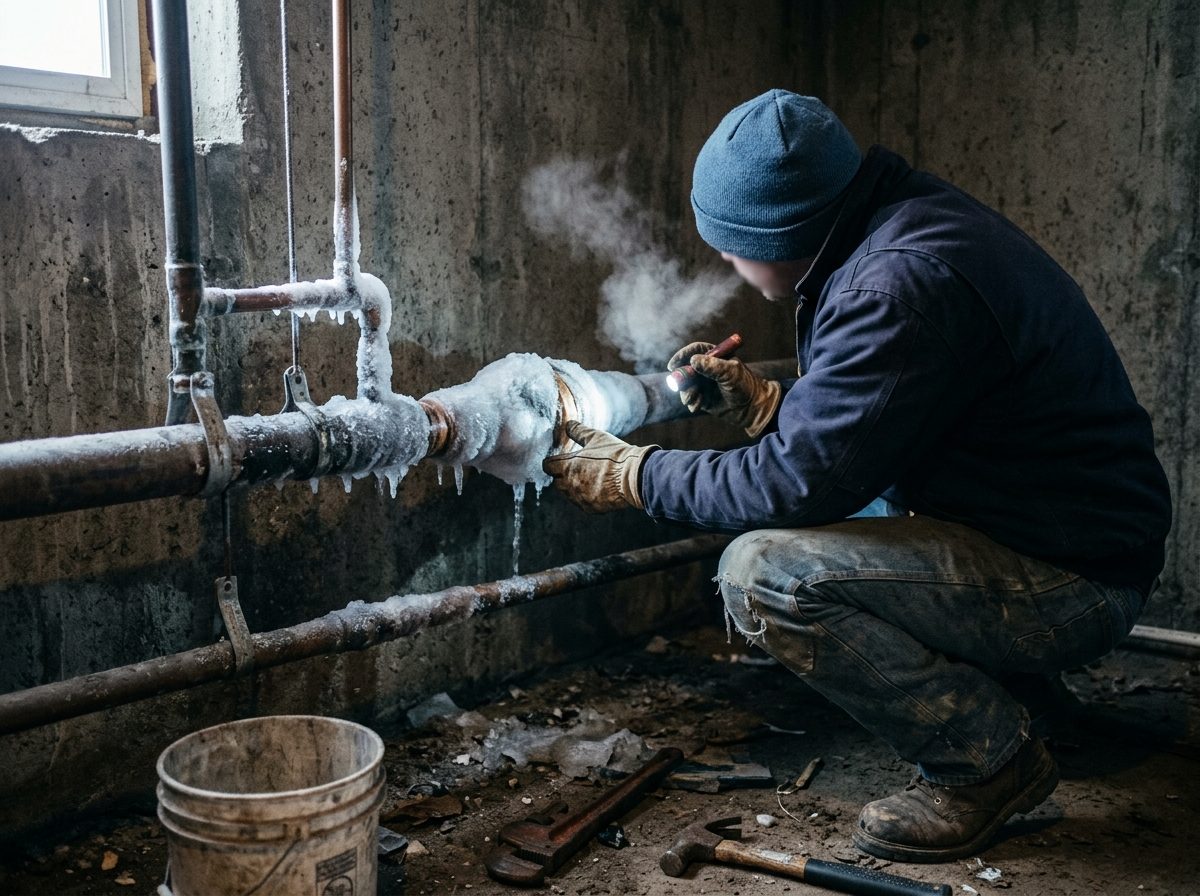
Freezing is not an event up here, it is the season. Crawlspaces, well houses, garages, exposed runs and anything in an outbuilding need either heat or protection, and heat tape is the usual answer. Tape fails silently — through age, rodent damage, or being unplugged during other work — so the line that never froze before is very often protected by tape that quietly stopped working.
Testing it before the first hard freeze takes minutes. So does confirming that the main shutoff turns, and that valve is what decides whether a split pipe becomes a repair or a flood.
Second homes and empty weeks
A meaningful share of property here is not occupied full time, and vacancy is what turns a cold snap into a burst pipe: no running taps, nobody to notice a tripped furnace or an empty propane tank, and hours of unattended water once a line lets go.
If you own something you do not live in, there are two defensible strategies. Winterise properly — water off, system drained, traps and appliances dealt with. Or keep it heated with real redundancy: a reliable heat source, a remote temperature alarm you actually receive, and someone local who can physically reach the house when it alerts. Half measures are how ceilings end up on floors.
Own a place you are not living in? The pre-winter conversation prevents the expensive one.
Ask about winterisingRoads, drives and honest windows
Access rather than distance decides response here. Snow and ice on the 285 corridor, long private drives, gates and steep last stretches all affect whether a truck reaches the house, and some contractors will ask you to meet them lower down.
Describe the access honestly when you call — plowed or not, how steep, how far. It changes who takes the job and how long the window is. During a storm the honest answer is sometimes tomorrow, with instructions for limiting damage tonight, and that is a better answer than a promise nobody can keep.
Snowed in and something has burst? Shut the water off and drain the lowest tap while you wait.
Ask what to do right nowIf you arrive to a frozen house
Close the main shutoff before thawing anything, then check the lowest ceiling and the crawlspace for damp. A line that has already split releases water the moment it thaws.
What is actually in the water
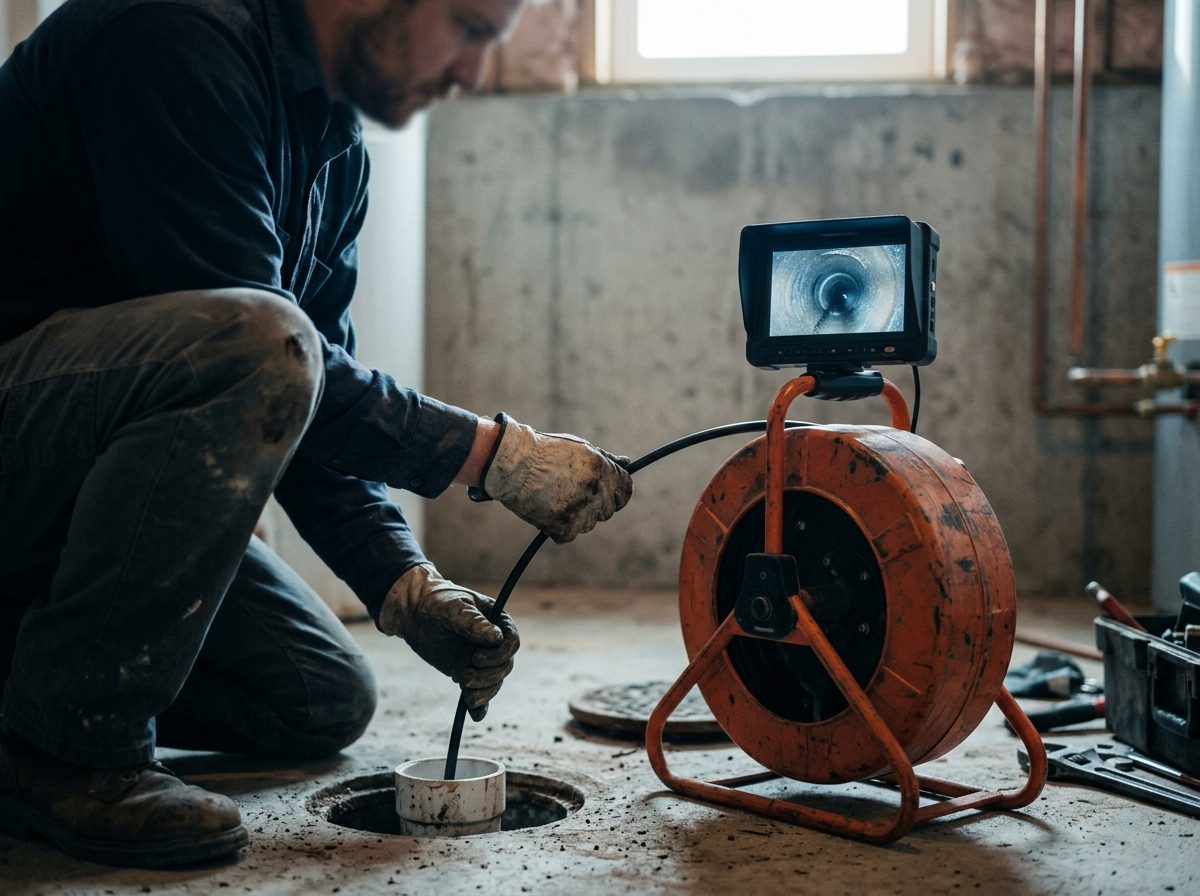
A well drilled into fractured rock produces water whose character depends on the rock it passes through, which is why two properties a quarter of a mile apart here can have completely different water. Sediment, iron, manganese and hardness are the common findings, and each of them announces itself in a way that is easy to misread. Orange staining in a basin is iron rather than dirt. Black specks are often manganese. Grit in an aerator is sediment, and it is doing far more damage out of sight than it appears to be doing at the tap.
The reason to identify rather than guess is that the equipment differs completely. A softener exchanges hardness minerals and does very little for sediment. A sediment filter protects everything downstream of it and does nothing for hardness. Iron may need oxidation before it can be filtered at all, and in the wrong order the equipment fouls quickly. Buying on a symptom usually means buying the wrong thing, or the right thing installed in a sequence that shortens its life.
A test is therefore the cheapest part of any treatment decision, and it is worth repeating every few years rather than treating as a one-off from when the property was bought — water from a rock well can change, particularly after work on the well itself or a significant change in yield. The other practical constraint up here is where the equipment lives: it needs service access, a drain for regeneration, and a location that will not freeze, which at this elevation rules out a good number of otherwise convenient spots.
Nearby communities
Conifer sits along the 285 corridor, with Evergreen, Pine, Bailey and Buffalo Creek all within reach.
Conifer, Colorado
Conifer plumbing questions answered
Shut the water off at the source, drain the system from the lowest point, open taps to break the vacuum, deal with the water heater and anything else holding water, and use antifreeze rated for plumbing in traps and toilets — never automotive antifreeze. Done properly, the house can then sit at any temperature without freeze risk.
Usually, with patience and the right method — gentle even heat from the open end of the line toward the blockage, so meltwater has somewhere to go. Torches and rapid heat are how pipes split and how buildings catch fire. If the pipe has already cracked, thawing reveals it, so shut the water off first.
The breaker for the pump, then the pressure switch, then what the gauge reads. A tripped breaker and a failed switch are both inexpensive and both look exactly like a dead pump from inside the house. If the pump runs but pressure cycles every few seconds, that is usually a waterlogged pressure tank.
Roughly every three to five years for a full-time household, sooner with heavy use or a smaller tank. Properties used at weekends often need it sooner than owners expect because occupancy arrives in bursts. Slow drains throughout the house rather than at one fixture is the sign that the tank rather than the plumbing is the problem.
Sometimes, and it depends on the vehicle and the grade. Many contractors will ask you to meet them at the bottom, and some will not attempt a steep unplowed drive. Saying honestly what the last stretch looks like decides who takes the call and prevents a wasted trip.
Age, rodent damage, or being unplugged during other work and never reconnected — and it fails silently. A line that never froze before and froze this year is very often tape that has quietly died. Check it before the first hard freeze rather than after, and know where it runs.
For gas units, yes. Thinner air reduces combustion output, so manufacturers derate above certain elevations and may specify different models. Combined with very cold winter inlet water, that is why a heater which coped in summer falls short in January. Size for winter conditions, and include venting and combustion air.
Close the main shutoff and drain from the lowest fixture, then switch off power to affected areas at the breaker if fittings or sockets are involved. Photograph everything before cleanup for any insurance claim, and note how long the property was empty. Then call and describe what you can see.
Usually it is iron in the water rather than corrosion in the plumbing, particularly on a rock well. The distinction matters because the fix is different: iron needs treatment at the point the water enters the building, not a repipe. A test will say how much is present and in what form, which determines whether a filter alone will handle it.
The 285 corridor, any hour
Conifer, Evergreen, Pine, Bailey and Buffalo Creek.
(833) 621-2904 — answered 24/7, statewide.