Plumber in Buffalo Creek, CO — one call, any hour
Home / Areas / Mountain Communities / Buffalo Creek
On a forest property, a surprising share of plumbing faults are not really plumbing faults — they are animal damage. Rodents, in particular, cause failures that get diagnosed as freeze problems, mystery leaks or dead heat tape, and they keep causing them until the access rather than the symptom is dealt with.
The faults animals cause
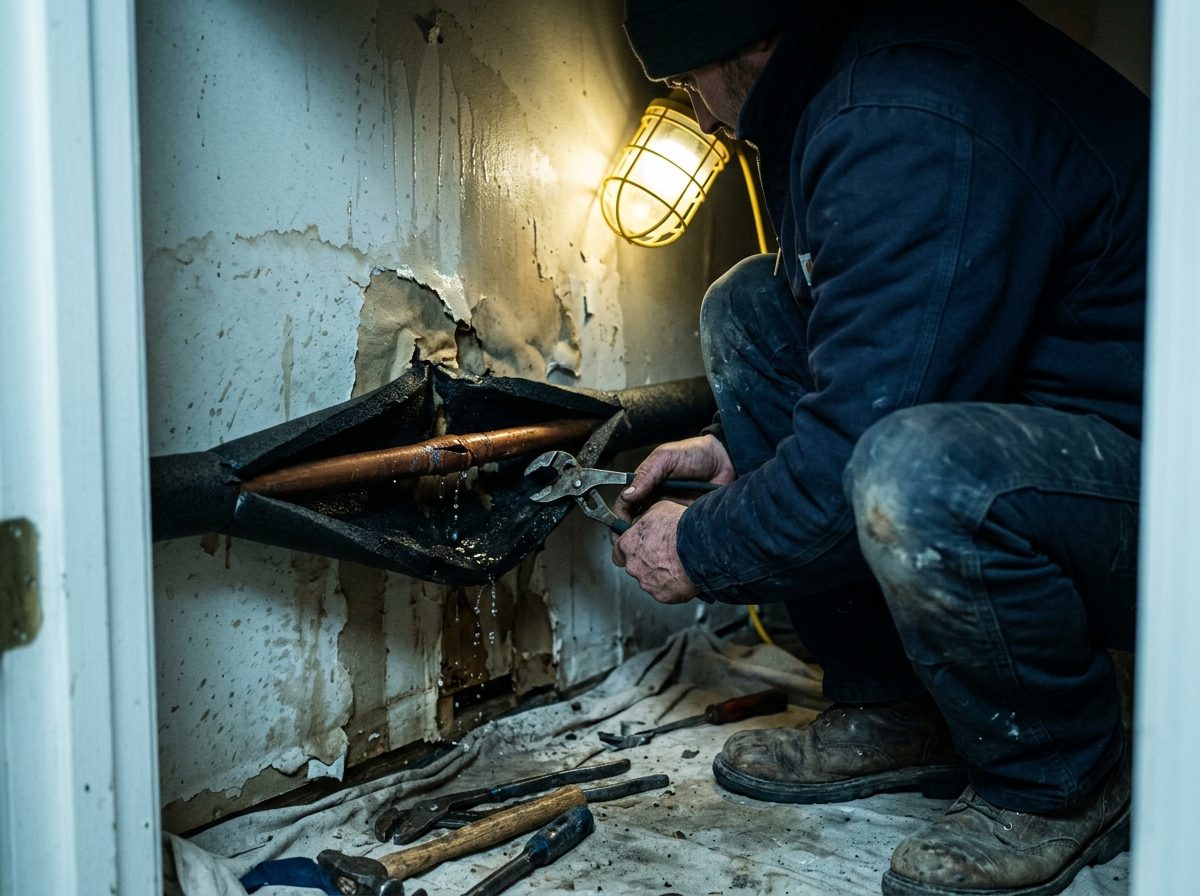
Mice, voles and packrats do three things that matter to plumbing. They chew pipe insulation, which removes freeze protection silently. They chew the outer sheath and sometimes the element of heat tape, which disables it while leaving it looking intact. And they nest in insulation and crawlspace voids, compacting it and pulling it away from the runs it was installed to protect.
Squirrels and larger animals add physical damage: displaced insulation, torn vapour barrier, and occasionally damage to exposed plastic pipe. Birds and wasps block vents. And on a well system, anything nesting in a well house creates both a contamination question and a freeze one.
What unites them is that the damage is out of sight and the symptom appears much later, usually in January when something freezes. That gap is why the cause so often gets missed.
Line froze that never froze before? Chewed insulation or tape is a common explanation.
Ask about a first-time freeze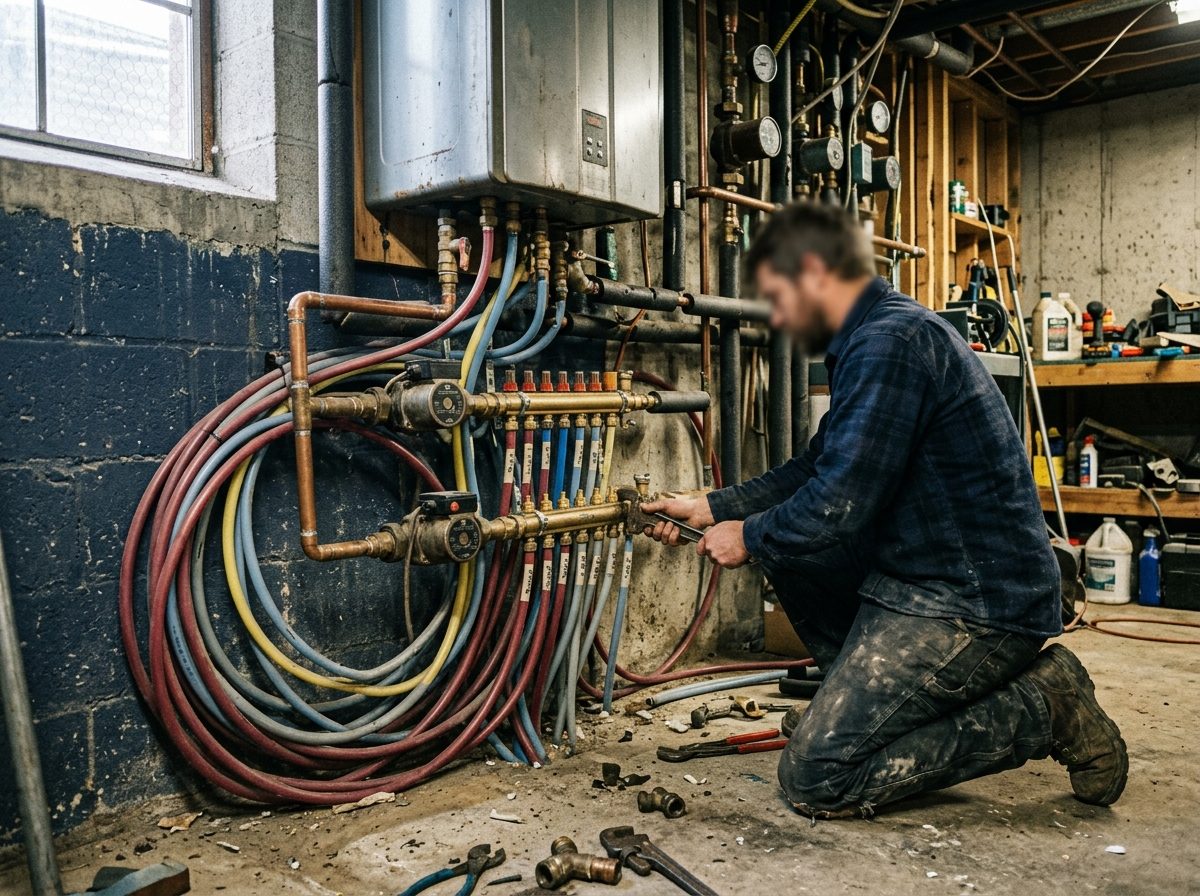
Crawlspaces are where it happens
Crawlspaces and underfloor voids are ideal rodent habitat — sheltered, undisturbed, and warmed by the building above. They also contain most of a house's vulnerable plumbing, which is an unfortunate combination.
An annual look is worth more than any single repair. What to look for: insulation that has been pulled apart or is sagging away from pipe, droppings and nesting material near runs, chew marks on pipe insulation or heat tape sheathing, and gaps at the perimeter where anything can get in. On a well system, add the well house to the same inspection.
It is worth doing in autumn specifically, because that is when the damage matters and when there is still time to act. A crawlspace inspected in February tells you what already went wrong.
Heat tape and why it fails unseen
Heat tape deserves particular attention because it is the single most common silent failure on a forest property, and because so much depends on it.
It fails in four ways, none visible from a glance. It ages and its element degrades. It is chewed, which may leave the outer appearance intact. It gets unplugged during unrelated work and never reconnected — a genuinely frequent cause. And it is sometimes installed covering less of a run than the owner believes, so a section has never been protected at all.
The consequence is that a line which has never frozen may be relying on tape that stopped working two winters ago, and nobody will know until the weather does the testing. Which is why testing it in autumn — and checking the full length of the run, not just that the plug is in — is among the highest-value ten minutes available to an owner here.
Heat tape never actually tested? It fails four ways, none of them visible.
Ask about freeze protectionExclusion beats repetition
The trap on a property like this is treating animal damage as a recurring repair. Insulation gets replaced, tape gets renewed, and two years later the same thing happens — because the access was never closed.
Exclusion is the durable answer: sealing the gaps at the crawlspace perimeter, screening vents so they still ventilate but do not admit anything, protecting the openings where pipe passes through structure, and keeping stored material out of crawlspaces so there is less reason to nest there. None of it is plumbing work exactly, and all of it determines how often plumbing work is needed.
Where a run has been damaged repeatedly, it is also worth asking whether it can be rerouted into protected space entirely. Moving a vulnerable run is a one-off cost that removes a recurring one, and on a property where a February failure means a wait for access, that calculation favours the permanent fix.
Same damage happening repeatedly? Closing the access beats repairing the symptom.
Ask about a permanent fixThe autumn ten minutes
Look in the crawlspace for chewed insulation, nesting material and gaps at the perimeter — then test the heat tape along its whole length. That inspection prevents more January calls than anything else available.
Stored water, and the fire-season case for it
Plenty of properties out here keep a storage tank, and in this country the reason is often as much about fire as about supply. A tank that can be drafted from is worth having, and it changes what the plumbing around it has to do.
Two things keep stored water usable. It needs to move — water left standing for a season goes stale and stratifies, and a tank that is only ever topped up is not the same as a tank that turns over. And the connection has to be reachable and standard, because a fitting nobody can couple to at three in the morning is decoration. Freeze protection belongs on the inlet, the outlet and the vent rather than on the tank itself, which holds enough volume to look after itself.
Nearby communities
Buffalo Creek sits in the forest south-west of Conifer, with Pine, Bailey and Conifer the nearest neighbours.
Buffalo Creek
Forest property questions answered
On a forest property the commonest explanation is that its protection stopped working — chewed pipe insulation, damaged heat tape, or insulation pulled apart and nested in. The exposure did not change; what was protecting it did, and rodent damage is silent until the weather tests it.
Four ways, none visible from a glance. The element ages and degrades. It gets chewed while the outer sheath still looks intact. It is unplugged during unrelated work and never reconnected. Or it was installed covering less of the run than the owner believes, so a section was never protected.
Not just by confirming the plug is in. Check the whole length of the run — that the tape is present where you think it is, that the sheath is unbroken, and that it warms when energised. A tape covering two-thirds of a vulnerable run gives a third of a problem.
A surprising share of them on forest properties. They chew pipe insulation, which removes freeze protection silently; they chew heat tape; and they nest in insulation, compacting it and pulling it away from the runs it was installed to protect. The symptom appears months later as a freeze.
Insulation pulled apart or sagging away from pipe, droppings and nesting material near runs, chew marks on insulation or heat tape sheathing, and gaps at the perimeter. Do it in autumn, while there is still time to act — a February inspection only tells you what already failed.
Then the access was never closed. Exclusion is the durable answer: sealing perimeter gaps, screening vents so they ventilate without admitting anything, protecting where pipe passes through structure, and keeping stored material out of the crawlspace so there is less reason to nest.
It is worth asking about. Moving a vulnerable run into protected space is a one-off cost that removes a recurring one — and on a property where a winter failure means waiting for access, that calculation favours the permanent fix more than it would in town.
Yes, on two counts. It raises a contamination question about the wellhead, and nesting material displaces or compacts whatever insulation is protecting the pipework in there. A well house freeze takes out water to the whole property at once, so it is worth including in the autumn inspection.
Forest country, any hour
Buffalo Creek, Pine, Bailey and Conifer.
(833) 621-2904 — answered 24/7, statewide.