Plumber in Pine, CO — one call, any hour
Home / Areas / Mountain Communities / Pine
Pine sits in the Platte canyon country, a scattered community of cabins and houses on wooded lots. Properties run their own water and waste, a large share stand empty for stretches, and steep drives decide what is possible in February.
In the Platte canyon country
Properties are spread along canyon roads and up side draws on generous wooded lots. Cold air drains downhill and pools on the canyon floor overnight, so temperatures here can sit well below what a regional forecast suggests.
The information that shapes a visit is the property: the water source, how many structures take water, whether anyone is living there through winter, and what the last stretch of drive looks like.
Property with outbuildings? Say how many take water when you call.
Ask about a property visit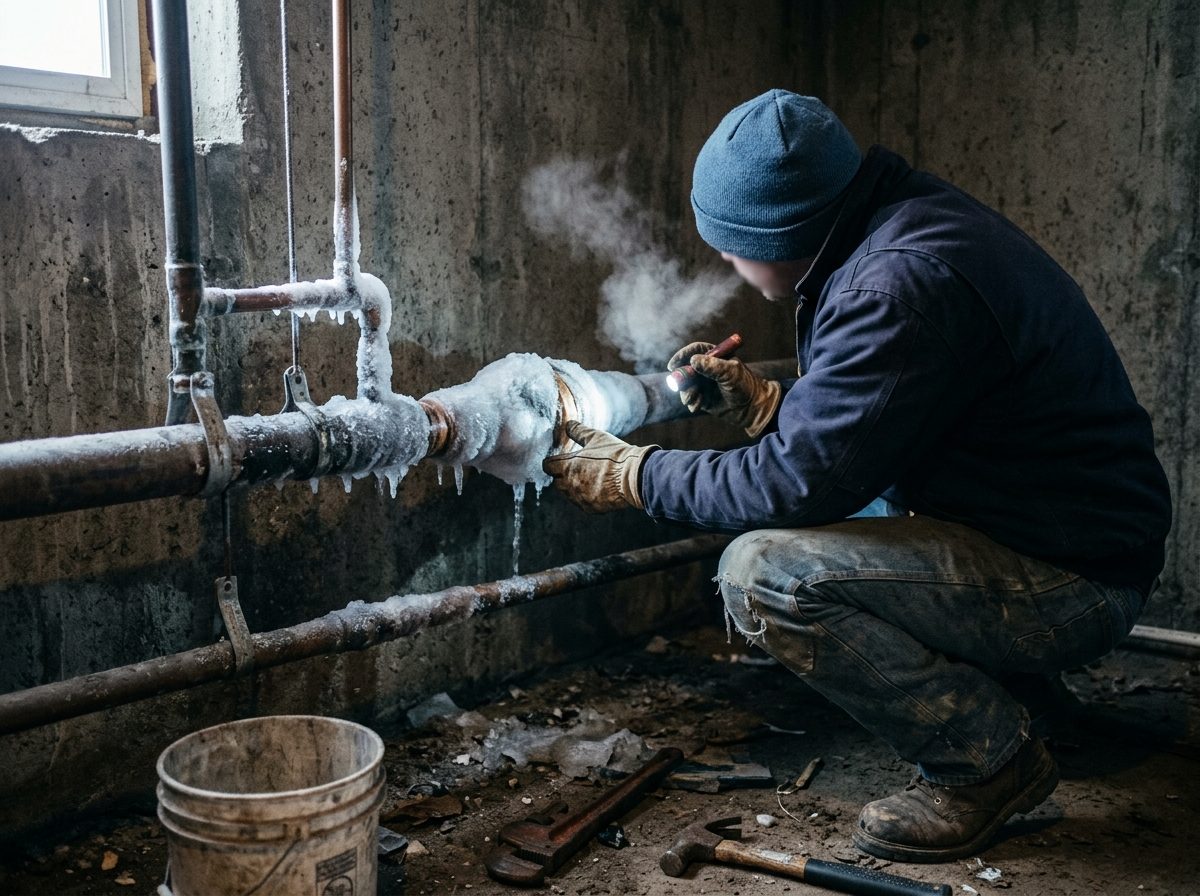
Cabins extended over decades
Much of the housing began as something smaller and grew by addition. Plumbing that developed that way tends to have long runs in awkward places, fittings inside walls nobody recorded, and diameters that change at old junctions for reasons nobody remembers.
That makes diagnosis a genuine part of the job. Small clues carry weight — which fixtures are affected and which are not, whether flow changed after previous work — and the most useful thing an owner can offer is the building's history.
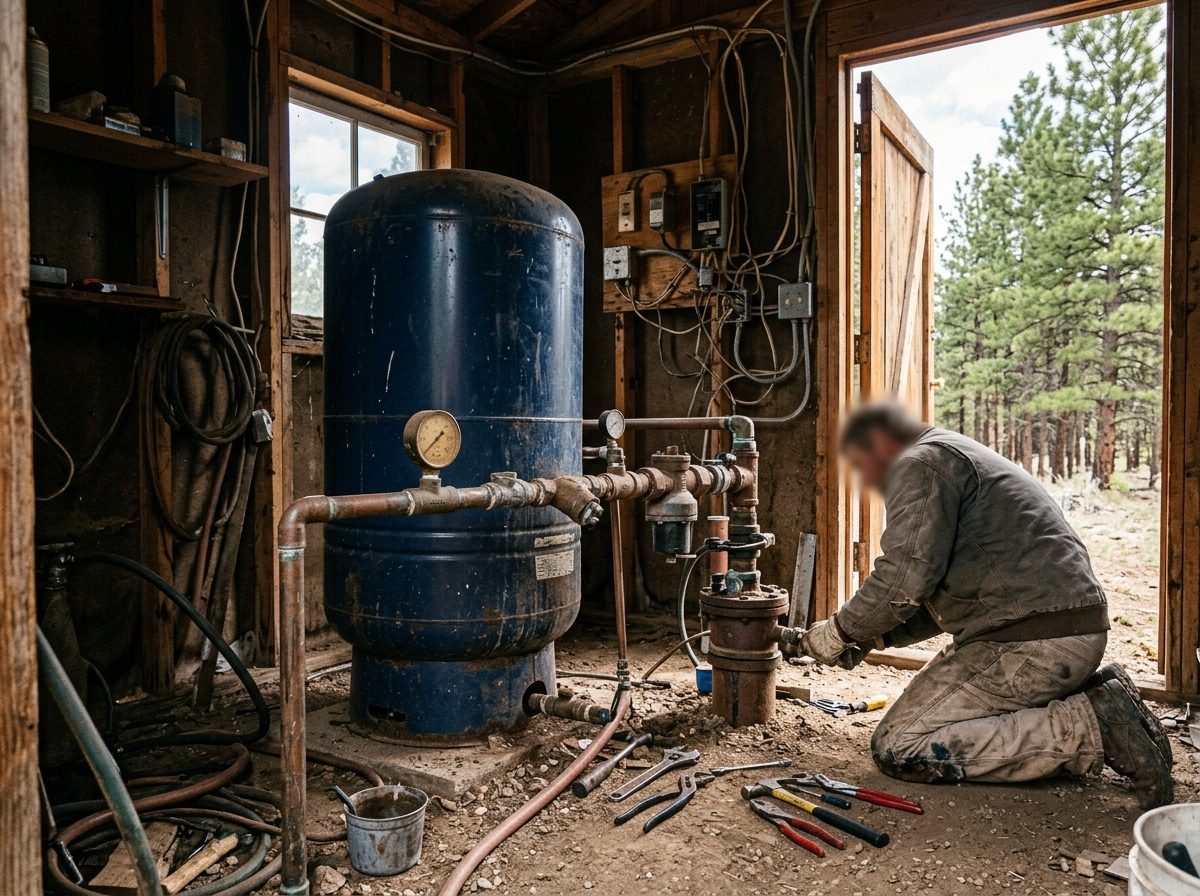
Wells and septic are the other constant. Three faults account for most well calls — a pressure tank that has lost its air charge and is cycling the pump, a pressure switch that has stopped making contact, or a pump at the end of its working life — and all three present as nothing at the tap. What the gauge reads and whether the pump can be heard running are the two most useful things to report on the phone, and they also decide which trade should attend.
Septic systems need pumping every three to five years for most households, sooner where a property is used in bursts, and they signal trouble by slowing every drain in the building at once rather than at a single fixture.
Buildings that stand empty
An occupied building is a monitored building. An empty one is not, so a tripped furnace, a power cut, an empty propane tank or a dead heat tape becomes a burst pipe with days of unattended water behind it.
For a building standing empty through winter, draining is the dependable answer: water off at the source, drained from the lowest point, taps opened so air can replace water, appliances dealt with, and plumbing-rated antifreeze in traps. Done partially it holds water in exactly the low points that split — and gives false reassurance.
Closing up for the season? Have it drained properly once rather than approximated annually.
Ask about winterisingSteep drives and winter
Access rather than distance decides response. Ice, snow, unplowed private drives and steep last stretches all determine whether a vehicle reaches a property, and some contractors will ask you to meet them lower down.
Describe the access honestly when you call. And if something has already let go, shut the water off at the main and drain from the lowest fixture first; that sequence determines the size of the problem far more than the arrival time does.
Drive unplowed or steep? Say so when you call — it decides who can come.
Ask about winter accessArriving at a cold cabin
Close the main shutoff before applying heat anywhere, then check the lowest ceiling and the crawlspace for damp. A split line starts leaking the moment it thaws.
Burn scars and what runoff carries
The ground above this stretch of the Platte has burned within living memory, and burned ground does not absorb water the way unburned ground does. Rain that would once have soaked in runs off the surface instead, arriving fast and carrying everything loose with it.
For plumbing that shows up as sediment. Wells and storage tanks on affected drainages pick up silt after a hard summer storm, filters that used to last a season clog in a fortnight, and grit works its way into pump seals, cartridge housings and fixture aerators. If your water goes cloudy hours after a downpour rather than during it, that is the pattern, and the answer is filtration ahead of the equipment you are trying to protect rather than at the tap. The other effect is mechanical: scouring moves soil off buried lines, so a service pipe that was at a sensible depth ten years ago may not be now.
Finding the shutoff before you need it
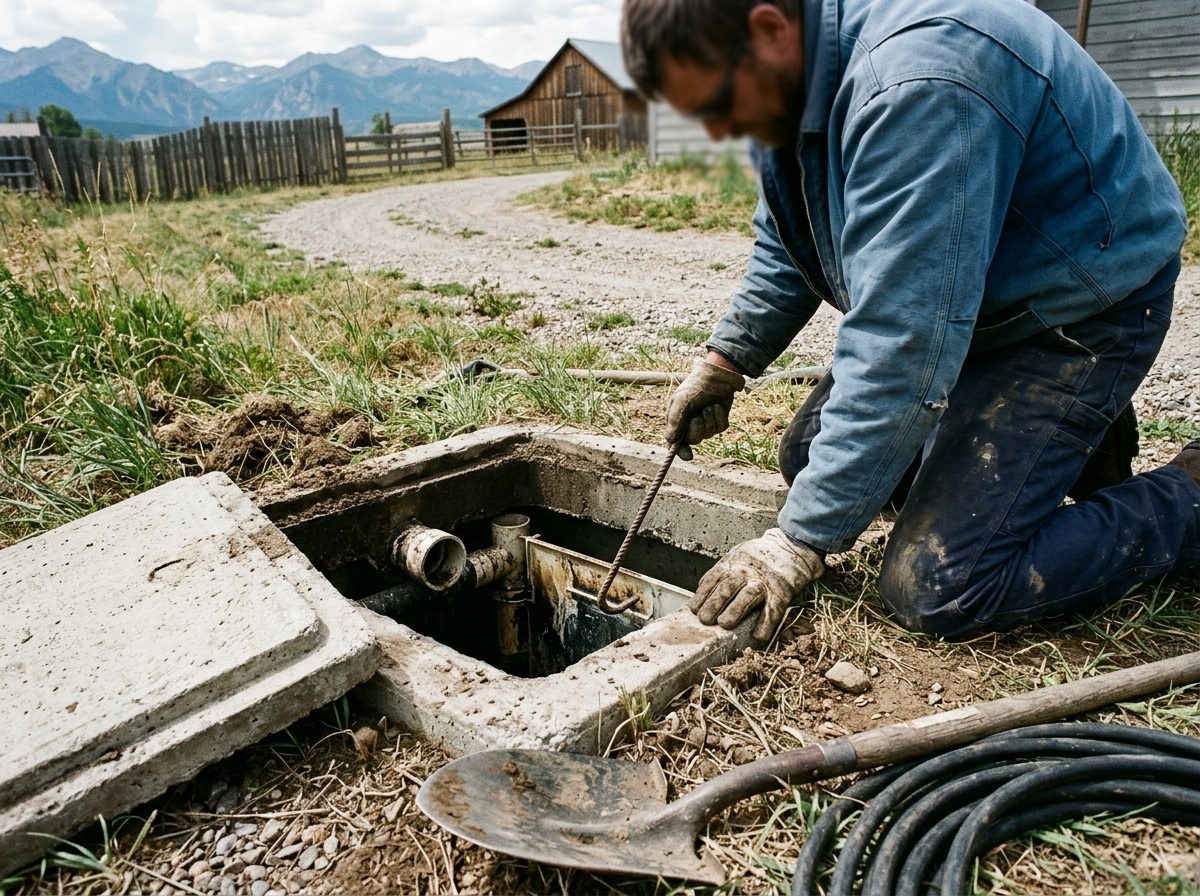
On a canyon property the main shutoff is frequently not where a townhouse owner would expect it. It may be in an outside pit, in a well house forty yards off, or under a hatch that a previous owner covered with decking.
Knowing where it is, in the dark, under snow, is the difference between a wet floor and a wrecked one. Two things are worth doing while nothing is wrong: clear and mark the access so it can be found in February, and turn the valve. An old gate valve that has not moved in fifteen years will often refuse to close when it finally matters, or close and then refuse to seal. Replacing one with a quarter-turn lever valve is a short job at a time of your choosing, and it is the single cheapest piece of insurance on a remote building.
Nearby communities
Pine sits in the Platte canyon country of Jefferson and Park counties, with Buffalo Creek, Bailey and Conifer nearby.
Pine, Colorado
Platte canyon questions answered
Water off at the source, the system drained from its lowest point, taps opened so air can replace water, the heater and any appliance holding water dealt with, and antifreeze rated for plumbing in traps and toilet bowls. Never automotive antifreeze. Done thoroughly it can sit unheated safely.
Not much, and it can be worse, because water left in low points is exactly what splits when it freezes — and partial draining gives false reassurance. If the building will be empty through winter, have the job done properly once rather than approximated each year.
Because most buildings here were extended in stages. Each addition took the easiest route available at the time, so runs go around obstacles that no longer exist and diameters change at old junctions. Having the layout traced once makes every subsequent repair quicker.
Usually, with gentle even heat applied from the open end of the line toward the blockage so meltwater can escape. Never a torch or rapid heat — that is how pipes split and buildings catch fire. Shut the water off first, because a cracked pipe starts leaking as it thaws.
Sometimes, and it depends on the vehicle and the grade. Many contractors will ask you to meet them at the bottom, and some will not attempt a steep unplowed drive. Describing the last stretch honestly prevents a wasted trip for both sides.
The breaker for the pump, then the pressure switch, then what the gauge reads. A tripped breaker and a failed switch are both inexpensive and both look exactly like a dead pump from inside the house. If the pump runs but pressure cycles rapidly, suspect the pressure tank.
Three to five years for a full-time household, sooner where the tank is small or the property is used in bursts. Every drain slowing at once rather than one fixture is the classic signal, along with unusually green growth over the field.
Someone local who can physically check it, plus a remote temperature alarm you actually receive. Early warning matters more than any repair arrangement, because the difference between a small problem and a catastrophic one is how many days water runs before anyone notices.
Platte canyon country
Pine, Buffalo Creek, Bailey and Conifer.
(833) 621-2904 — answered 24/7, statewide.