Plumber in Idledale, CO — one call, any hour
Home / Areas / Denver Metro / Idledale
Idledale is unusual for a mountain community in one specific way: the lots are small. Houses sit close together on a narrow canyon floor, which means plumbing here has more in common with a dense old village than with the acreage properties a few miles up the road — including the fact that what happens on one property frequently involves another.
Small lots in a narrow canyon
Where a canyon floor is only so wide, everything is compressed. Houses sit near each other and near the road. Service runs take whatever route was available when they were laid, which is not always the route a surveyor would choose today. And there is often very little space between a building and the boundary for anyone to work in.
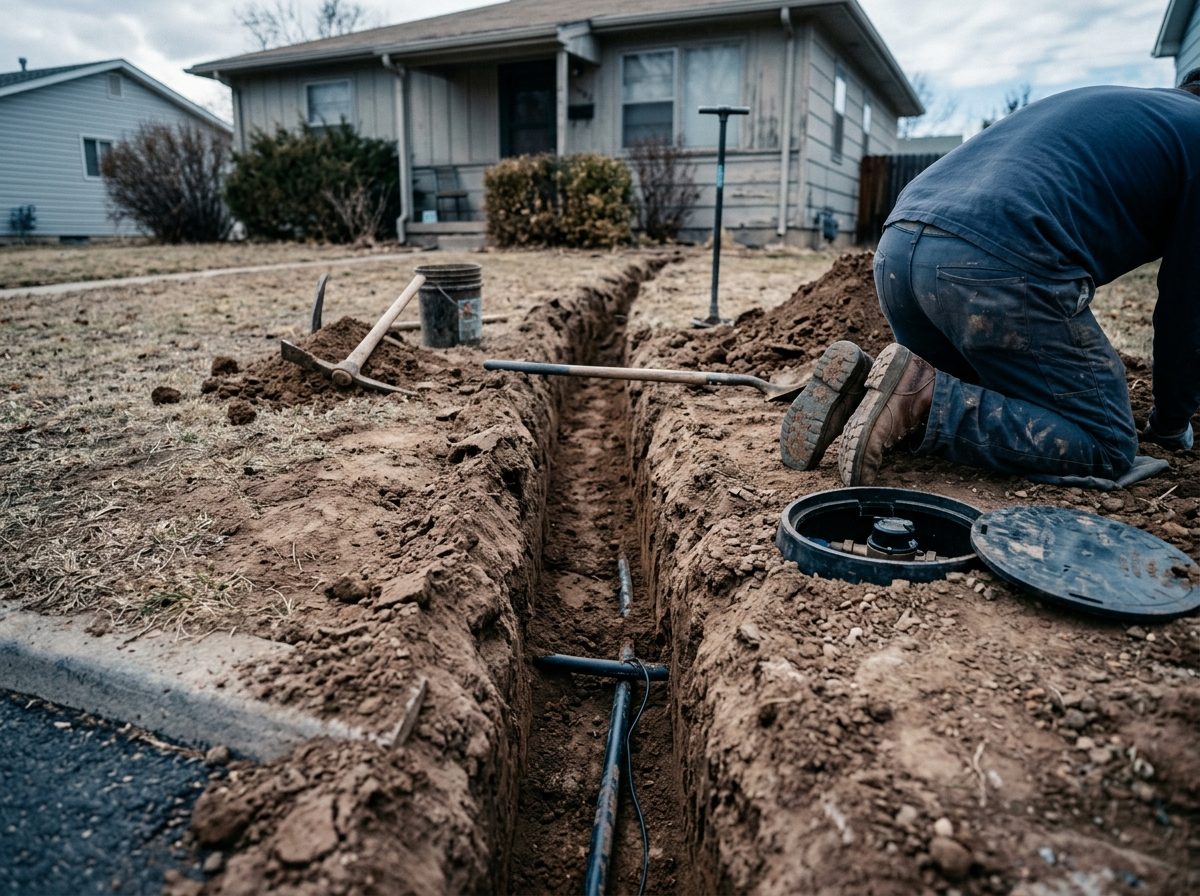
That produces a specific set of practical problems. Excavating a service line may mean working within feet of a neighbouring structure. Access to a crawlspace may run along a boundary. And where a run's actual route is unknown — which is common — establishing it before digging matters more than it would on an open lot, because there is no margin for exploratory trenching.
Facing work on a buried line? Establishing the route first matters where there is no room.
Ask about locating a line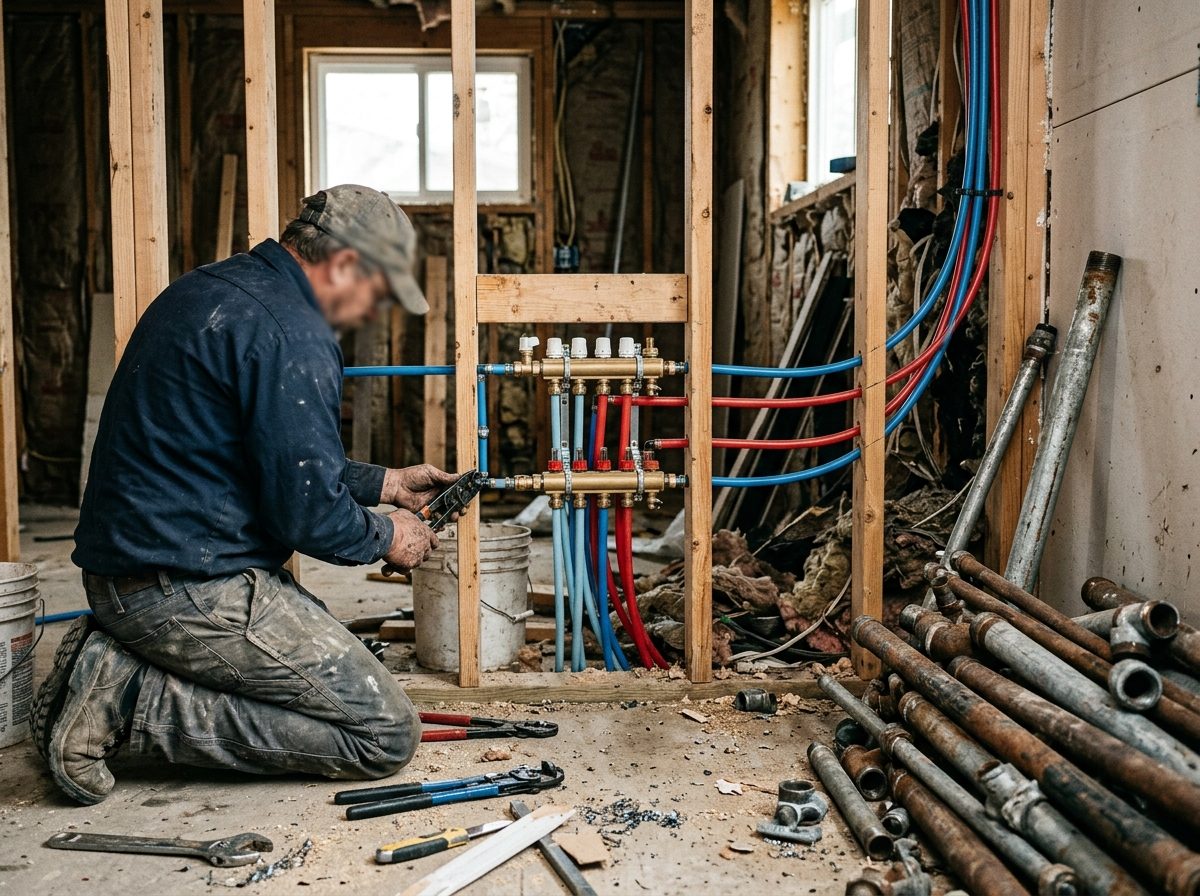
Shared and neighbouring systems
On tight canyon lots, shared arrangements are more common than people expect: a well serving more than one house, a service line crossing a neighbour's ground, a septic system positioned on adjoining land, or an easement nobody has looked at in decades.
Those arrangements matter enormously when something fails, because the question of who is responsible for what is not answered by where the fault happens to be. A shared well needs agreement on repair costs and on how much each household may draw. A line crossing someone else's ground needs access to repair. And a septic system serving two properties needs both households to agree on maintenance intervals, because one household's habits affect the other's system.
The useful advice is unglamorous: find out what your arrangement actually is, in writing, before you need to rely on it. A shared system with no documented agreement is a dispute waiting for a failure.
Shared well or crossing service line? Find the agreement before you need it.
Ask about a shared system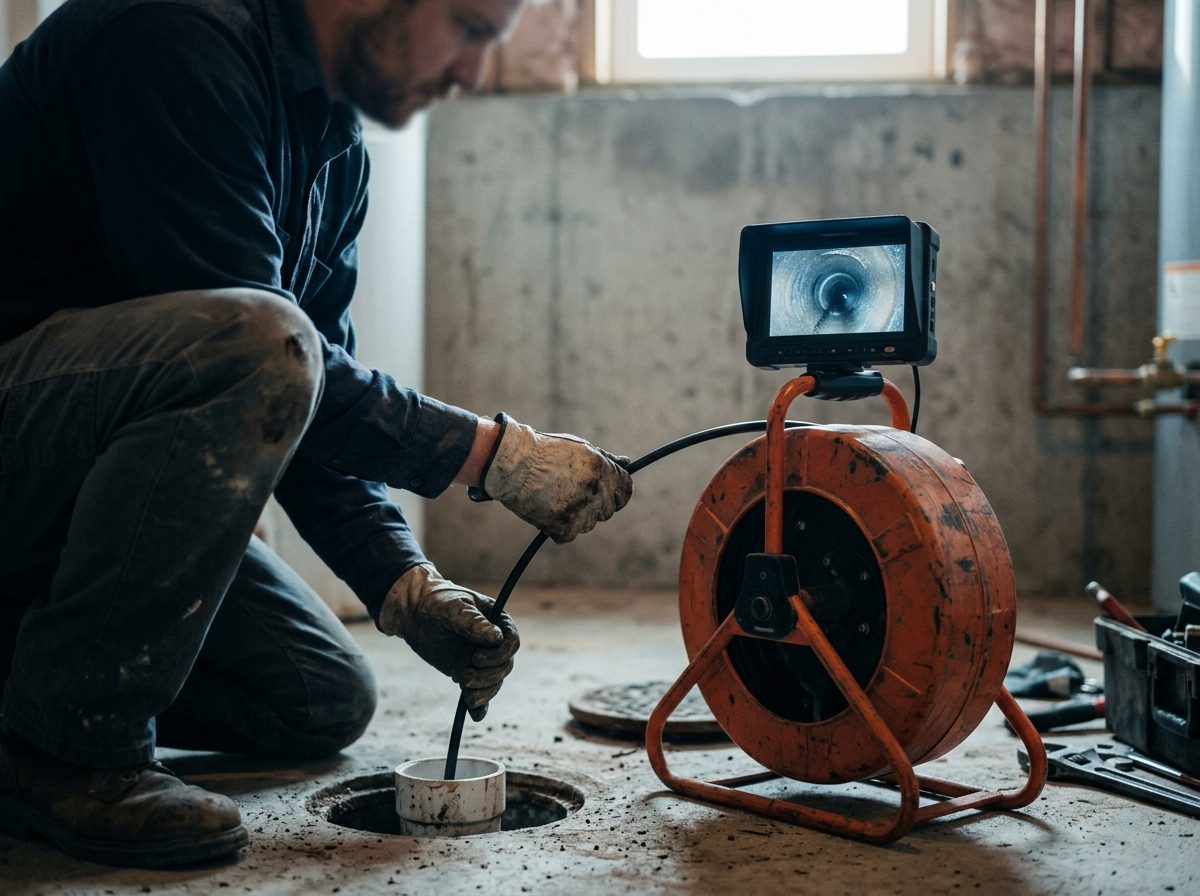
What tight access actually costs
Access is not a footnote on a job like this — it is frequently the largest variable in what the work costs and how long it takes. A crawlspace entered from outside through a small hatch, a parking spot fifty yards away, steps rather than a path, and no room to swing a length of pipe all add real time.
It also determines what equipment can be used at all. A drain machine or camera reel that cannot physically reach the cleanout is no use, and larger equipment sometimes cannot get to the work regardless of who is holding it. That is why describing the approach honestly when you call is worth doing properly: how many steps, whether a van can stop near the door, where the crawlspace hatch is, and whether anything has to be carried.
Done well, that conversation means the right person arrives with the right kit. Done badly, it means a wasted visit and a second callout.
When your water affects next door
On lots this close, water does not respect boundaries. A leak on one property can appear in a neighbour's crawlspace. Runoff redirected by one household's drainage lands on the property below. And on a canyon floor where everything slopes, the house downhill inherits whatever the house uphill does not manage.
Two practical consequences. First, when water appears somewhere unexpected, its source may not be on your property at all — and the meter test is what establishes that quickly. Shut every fixture, watch the meter for an hour, and a still meter with water still arriving means the water is not from your plumbing.
Second, it is worth talking to neighbours early rather than late. A shared problem identified cooperatively is considerably cheaper for everyone than two households each investigating half of it.
Water appearing with no source? The meter test shows whether it is even yours.
Ask about finding a leakCabins that became year-round homes
A good number of buildings here started as seasonal cabins and are now occupied full time, and the plumbing frequently has not caught up with that change. A supply line sized for a kitchen tap and one bathroom used at weekends behaves differently when a household showers every morning, runs a washing machine, and uses a dishwasher. The pipe did not get worse; the demand got larger.
The symptoms are consistent. Pressure that collapses when a second fixture is opened. A water heater that was adequate for occasional use and now runs out mid-shower. Drains that were never vented properly, which announces itself as a gurgle and a slow empty rather than as a blockage. And heating systems sized for keeping a building from freezing rather than for living in comfortably through February.
None of that requires rebuilding the house, but it does reward doing things in the right order. Measure static pressure first, because if it is normal at an outdoor tap the restriction is inside and probably in the supply pipe. Deal with venting when a bathroom is next opened up rather than as a separate exercise. And size a replacement water heater for the household as it now is, allowing for the fact that incoming water here is cold in midwinter, rather than matching whatever capacity happened to be fitted.
Worth finding on a calm day
Any easement or shared-system agreement affecting your property, and where your service line actually runs. On lots this tight, both become urgent questions at the worst possible moment.
Nearby communities
Idledale sits in Bear Creek canyon between Morrison and Kittredge, with Evergreen and Indian Hills nearby.
Idledale, Colorado
Canyon lot questions answered
Whatever the agreement says — which is why finding out what your agreement actually is, in writing, matters before you need to rely on it. A shared system with no documented arrangement is a dispute waiting for a failure, and the failure is a poor moment to start negotiating.
Not in itself, but it means repair requires access, and access requires either an easement or cooperation. Establishing which you have before a failure is far easier than establishing it while water is running. It is worth checking the deeds rather than assuming.
Then the water is not coming from your plumbing. On lots this close and on sloping canyon ground, it may be groundwater, surface runoff, or a leak on a neighbouring property. That is worth establishing before paying anyone to look for a leak on your side.
Because it is frequently the largest variable in the job. A crawlspace entered through a small outside hatch, parking fifty yards away, steps rather than a path, and no room to handle pipe all add real time — and some equipment simply cannot reach the work regardless of who is holding it.
How many steps, whether a van can stop near the door, where the crawlspace hatch is and whether it is inside or out, and whether anything has to be carried. That conversation is what determines whether the right person arrives with the right kit or whether you get a second visit.
Maintenance intervals above all, because one household’s use and habits affect the other’s system. Agreeing who arranges pumping, how the cost is split, and what does not go down the drain avoids the situation where one household is diligent and the other is not.
Where water is appearing between properties, often yes. A shared problem identified cooperatively costs considerably less than two households each investigating half of it — and on lots this tight, the source frequently is not where the symptom appears.
Because there is no room for exploratory digging. On an open lot a trench in the wrong place is an inconvenience; on a small canyon lot it may mean working within feet of a neighbouring structure. Locating the line before excavating is what keeps the job proportionate.
Bear Creek canyon
Idledale, Morrison, Kittredge, Indian Hills and Evergreen.
(833) 621-2904 — answered 24/7, statewide.