Plumber in Indian Hills, CO — one call, any hour
Home / Areas / Denver Metro / Indian Hills
Indian Hills sits on the ridges above Bear Creek, a scattered community of houses on wooded lots reached by steep winding roads. Properties run their own water and waste, and the drive is frequently what decides how quickly anyone can help.
On the ridges above Bear Creek
Properties are spread out and well separated, most with outbuildings taking their own supply. Elevation and exposure mean winter runs longer than in the valley below, and the roads up are the deciding factor in February rather than the distance.
The information that shapes a visit is the property: the water source, how many structures take water, whether anyone is living there through winter, and what the last stretch of drive looks like.
Drive unplowed or steep? Say so when you call — it decides who can come.
Ask about winter access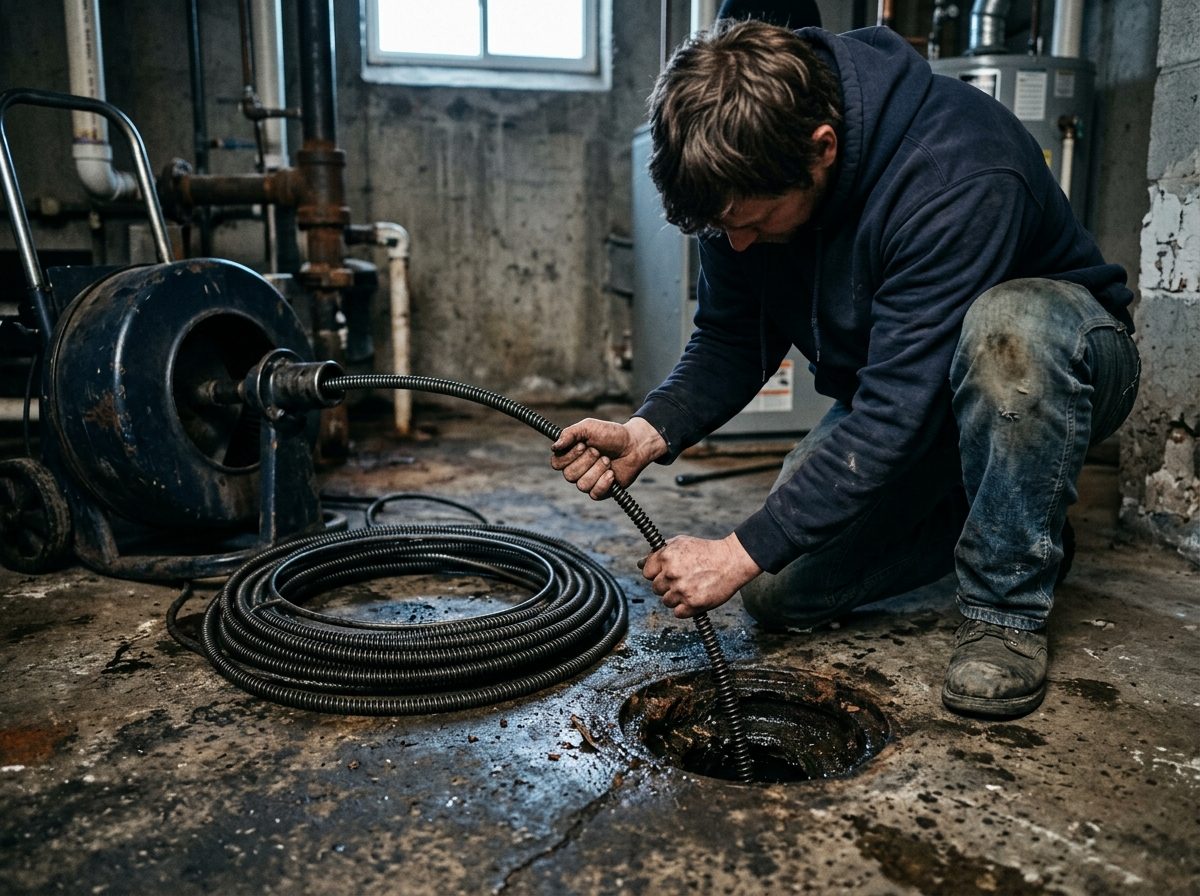
Wells and the whole water cycle
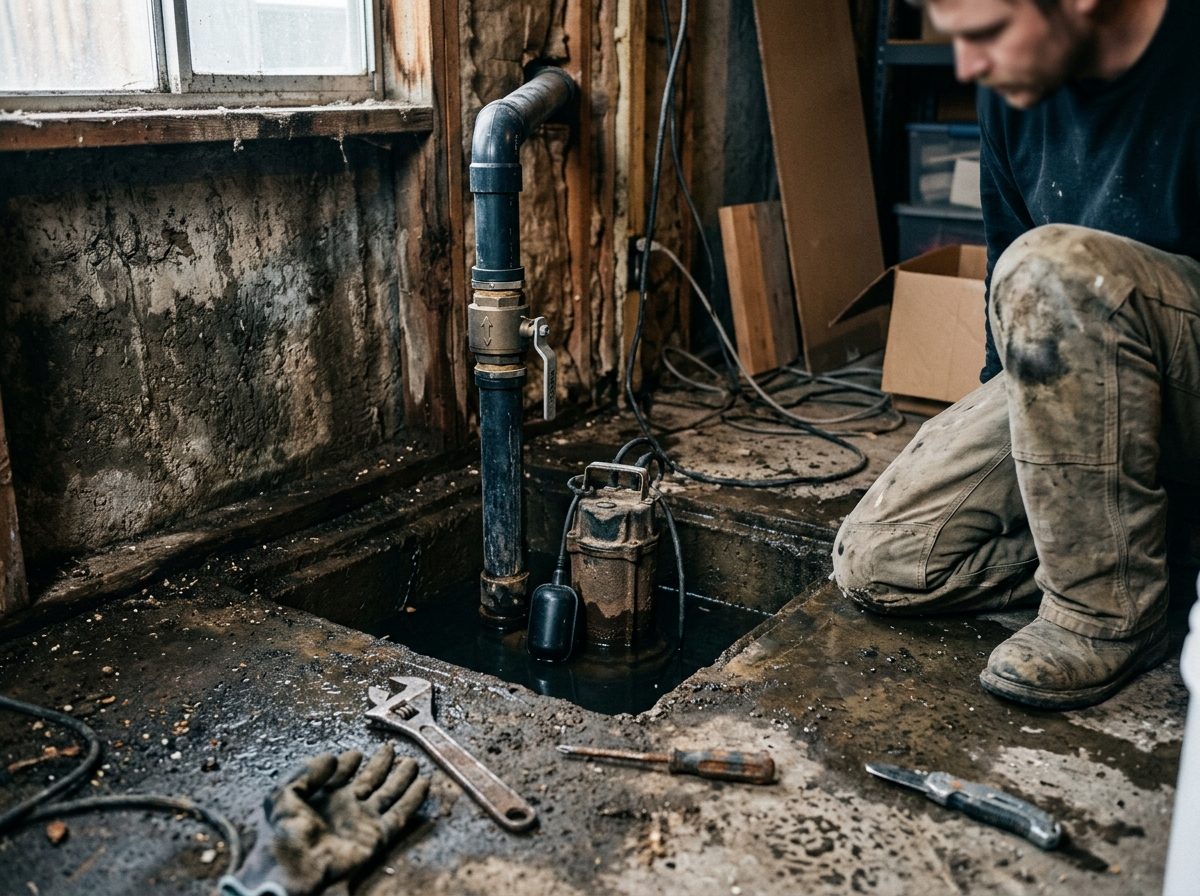
On a well you own the supply from the ground up, and three faults account for most calls: a pressure tank that has lost its air charge and is cycling the pump every few seconds, a pressure switch that has stopped making contact, and a pump at the end of its working life.
All three present as poor pressure or nothing at the tap, so three answers narrow it before anyone drives out: what the gauge reads, whether the pump can be heard running, and whether the breaker has tripped. Septic systems, meanwhile, need pumping every three to five years and signal trouble by slowing every drain at once.
Nothing at the tap? Gauge reading, pump noise, breaker — those three narrow it fast.
Ask about a well systemMuch of the housing here has also been extended over the years, so plumbing tends to have long runs in awkward places and fittings inside walls nobody recorded. That makes diagnosis a genuine part of the job, and small clues carry weight — which fixtures are affected and which are not, or whether flow changed after previous work.
A longer winter than the valley
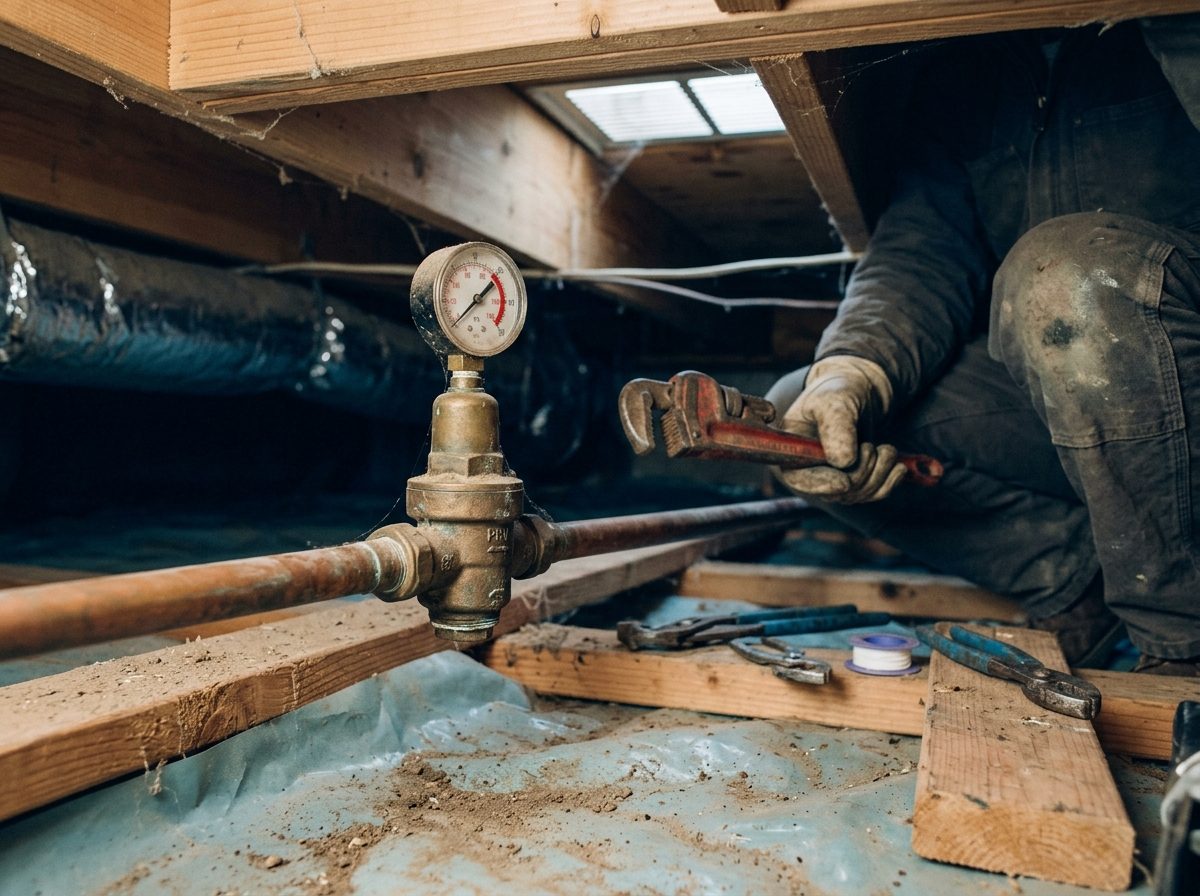
At this elevation, freezing is closer to a season than an event. Crawlspaces, well houses, garages and exposed runs need either heat or protection, and heat tape carries much of that load while failing silently through age, rodent damage or having been unplugged during other work.
Testing it before the first hard freeze takes minutes, and so does confirming the main shutoff turns. For a building standing empty through winter, draining is the dependable answer rather than trusting a thermostat in a place nobody visits.
Steep drives and winter access
Access rather than distance decides response. Steep unplowed drives, private roads, gates and long last stretches all affect whether a truck reaches the house, and some contractors will ask you to meet them lower down.
Describe the access honestly when you call — plowed or not, how steep, how far. It changes who takes the job and how long the window is, and during a storm the honest answer is sometimes tomorrow with instructions for limiting damage tonight.
Building empty this winter? Draining it properly beats hoping the heat holds.
Ask about winterisingArriving at a cold house
Close the main shutoff before applying heat anywhere, then check the lowest ceiling and the crawlspace for damp. A split line starts leaking the moment it thaws.
Hydronic heat and its failure modes
A great many houses on these ridges are heated by hot water rather than by air, either through radiators or through pipe in a floor, and it is a good system for a cold building at this elevation. It also fails in ways that are unfamiliar to anyone who has only lived with a furnace, which means the symptoms are often misread and the call is often made later than it should be.
Three patterns cover most of it. No heat at all usually points at the boiler, its controls, or the circulating pump rather than at the pipework. One zone cold while the others are warm is more often air trapped at the high point of that loop, or a zone valve that has stopped opening, and it is a much smaller job than it feels like. And water discharging from a pipe near the floor is the pressure relief valve doing exactly what it is designed to do, which means system pressure is climbing — commonly a failed expansion vessel or a fill valve passing water.
That last one is worth acting on rather than watching. A relief valve that discharges repeatedly is a symptom, not a fault, and capping it is genuinely dangerous. If your boiler gauge climbs as the system heats, say so on the phone; it is the single most useful detail you can give, and it often means the visit arrives with the right part already on the van.
Nearby communities
Indian Hills sits on the ridges above Bear Creek, with Kittredge, Idledale, Morrison and Evergreen nearby.
Indian Hills
Foothills questions answered
Sometimes, and it depends on the truck and the grade. Many contractors will ask you to meet them at the bottom, and a few will not attempt a steep unplowed drive at all. Say honestly what the last stretch looks like — it decides who takes the job and prevents a wasted trip.
It depends where the fault is. From the pressure tank into the house is ordinary plumbing. The pump, drop pipe and casing wiring are well-system work requiring specific equipment. Saying what the gauge reads and whether the pump runs settles which trade should be sent.
That is short-cycling, usually caused by a pressure tank that has lost its air charge. The tank holds a cushion so the pump runs once every few minutes rather than constantly. Left alone it wears the pump out quickly, so it is worth fixing promptly.
Three to five years for a full-time household, sooner with heavy use or a smaller tank. Every drain slowing at once rather than one fixture is the classic sign that the tank or field rather than the plumbing needs attention, along with unusually green growth over the field.
Tape can look intact and be dead. Age, rodent damage and being unplugged during unrelated work are the usual causes, none visible at a glance. Test it before the freeze season and check the whole length of the run, since tape often covers less pipe than assumed.
Either drain it properly — water off, system drained, traps and appliances dealt with — or keep the heat genuinely reliable with a remote temperature alarm and someone local who can reach it. Leaving a thermostat low and hoping is how burst pipes happen at this elevation.
That is the pressure relief valve doing its job, which means system pressure is climbing too high — commonly a failed expansion tank, a fill valve not closing, or overheating. Do not cap it. Note whether the gauge climbs as the system heats, because that speeds the diagnosis.
Weather and access decide it more than distance. In clear conditions same-day is realistic for urgent problems. During a storm you may get an honest tomorrow along with instructions on shutting the water off and draining the lowest fixture, which is what limits the damage.
Unlikely. A single cold zone points at air trapped at the high point of that loop, or at a zone valve or actuator that is no longer opening. Both are ordinary repairs. A failing boiler usually takes the whole system with it rather than one room, so the pattern itself tells you roughly where to look.
No — that is the pressure relief valve, and it is discharging because system pressure is too high. Blocking or capping it removes the safety device rather than the problem. Note the reading on the boiler gauge when the system is hot and mention it when you call; a rising pressure usually means the expansion vessel or the fill valve, both of which are routine to put right.
Above Bear Creek
Indian Hills, Kittredge, Idledale, Morrison and Evergreen.
(833) 621-2904 — answered 24/7, statewide.