Plumber in Jamestown, CO — 24/7 by phone
Home / Areas / Boulder County / Jamestown
Jamestown sits up Lefthand Canyon above Boulder — a small, old mountain community on a single road. Properties run their own water and waste, the freeze season is long, and the canyon has a flood history that still matters when anyone puts a shovel in the ground.
Up Lefthand Canyon
Housing here is old and much altered, mostly cabins and small houses extended over the years by successive owners. Plumbing that grew that way tends to have long runs in odd places, fittings inside walls nobody recorded, and diameters that change at old junctions.
Diagnosis is therefore a real part of the job, and the most useful thing an owner can offer is history: what was added when, and what has been worked on before. A first visit may reasonably end with a plan and an order of work rather than a completed repair.
Several things at the end of their life? Ask for an order of work rather than one big number.
Ask for a plan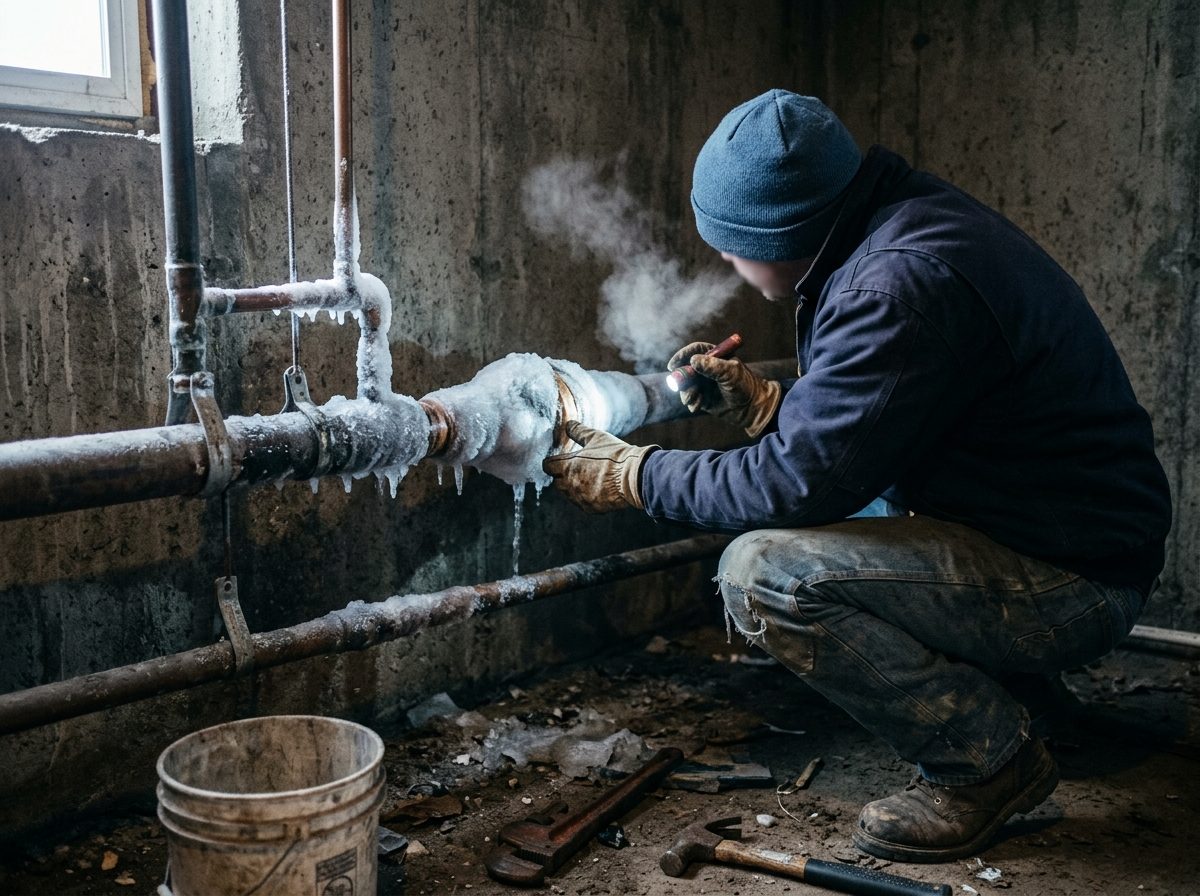
Ground that is hard to dig
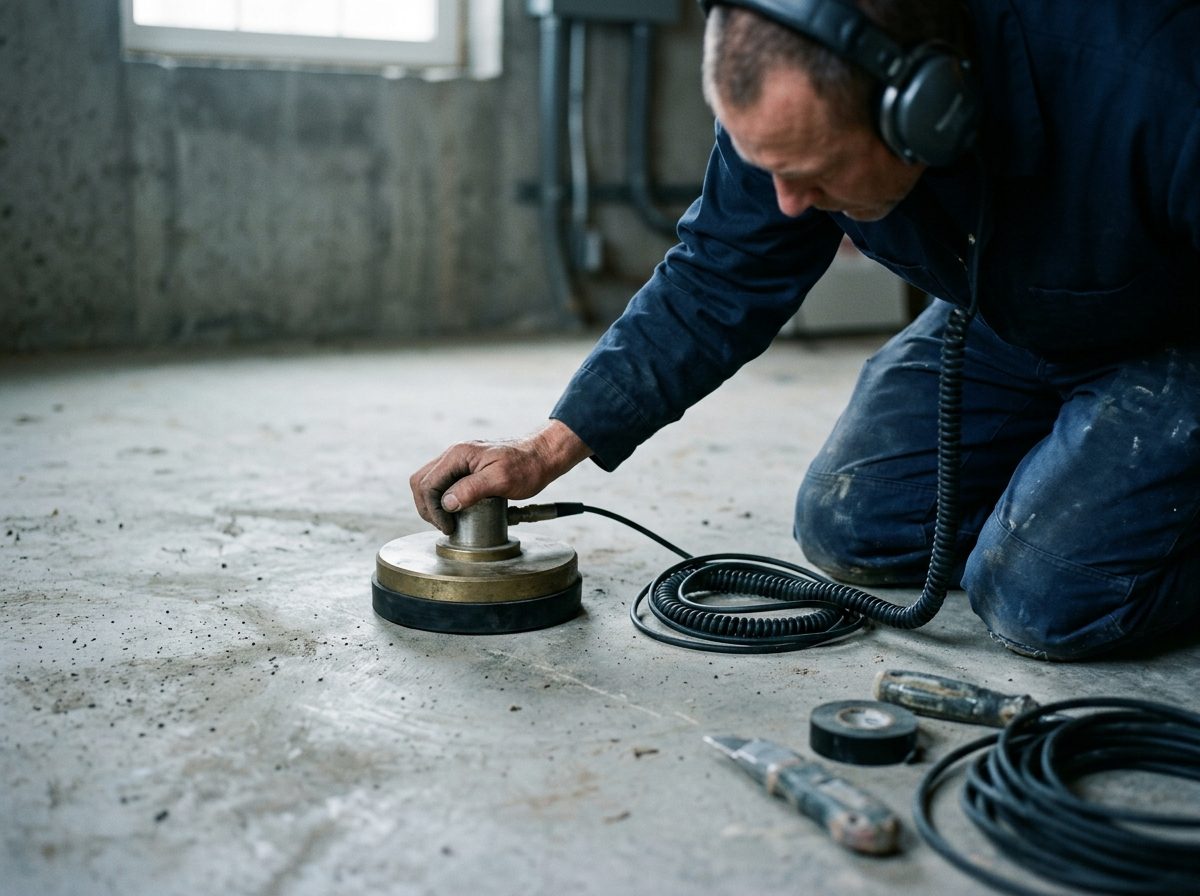
Canyon ground is sand, cobble and rock in unpredictable layers, which affects both how buried pipe behaves and how much work it is to reach. Excavation carries more uncertainty here than on the plains, and that makes anything avoiding an open trench worth asking about early.
The flood history matters too. Repair and relocation work done under emergency conditions was sometimes intended as temporary, and records did not always catch up. What is in the ground now may not match what any drawing shows, so a locate before excavation is a practical necessity rather than a formality.
One more practical point: on a property this remote, isolation valves are worth their cost several times over. Being able to shut off a single buried run rather than the whole supply turns a search into a targeted repair, and it lets you keep water at the house while a line to an outbuilding waits for spring.
A long freeze season
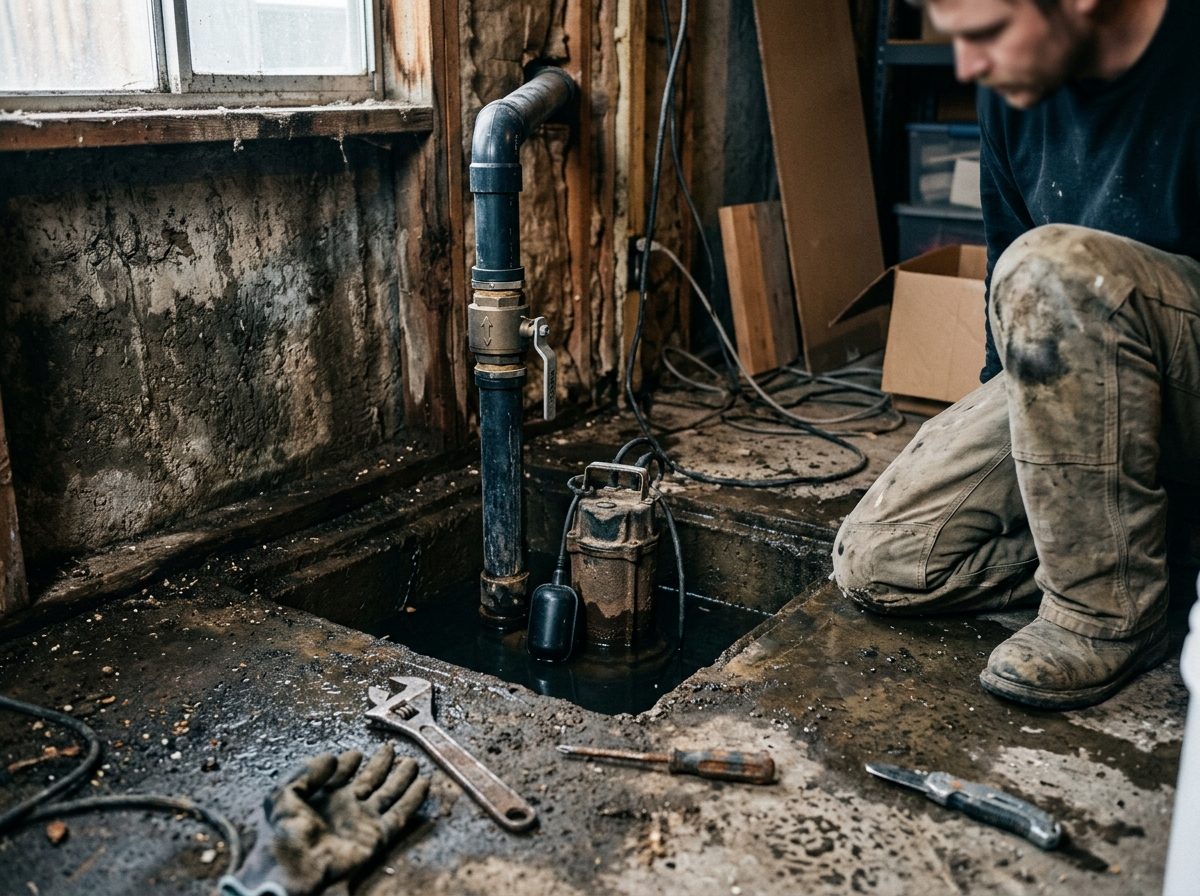
At this elevation, in a shaded canyon, freezing is the condition the plumbing lives in for months rather than an occasional event. Crawlspaces, exposed runs, well houses and additions built to a lower insulation standard are where trouble starts.
Heat tape carries much of the protection, and it fails silently — through age, rodent damage, or having been unplugged during other work. A line that has never frozen may be relying on tape that stopped working two winters ago, so testing it before the first hard freeze is among the highest-value ten minutes available.
Heat tape never tested? It fails silently — check it before the first freeze.
Ask about freeze protectionOne road, and weather
There is essentially one way in, and access rather than distance decides response. Ice, snow, single-lane sections and steep private drives all determine whether a vehicle reaches a property, and in a storm the honest answer may be tomorrow or later.
Which is why the phone advice comes first. If something has let go, close the main shutoff, open the lowest tap to drain the system, move what matters out of the water path, and photograph the damage before cleanup. That sequence determines the size of the problem more than arrival time does.
Snowed in with water running? Shut it off at the main and drain the lowest tap.
Ask what to do right nowBefore any excavation
Have utilities located, and mention any flood-era repair work you know about. What is in the ground here frequently differs from what the original drawings show.
Septic and drains on a mountain lot
Waste disposal here is a property-by-property matter, and the constraint is soil depth. A drainfield needs ground that will accept water, and canyon lots offer shallow soil over rock in unpredictable patches, so fields are often smaller and sited further from the building than they would be on the plains. That makes them worth knowing about rather than ignoring, because a field that has been overloaded for years cannot simply be enlarged wherever is convenient.
The signal that a septic system is in trouble is systemic rather than local: every drain in the building slows at roughly the same time, rather than one fixture backing up. A single slow sink is a blockage in that branch. A whole house draining sluggishly, gurgling when a toilet is flushed, or smelling outside near the field points at the tank or the field instead. Pumping every three to five years prevents most of it, and a household that has never had the tank pumped is overdue regardless of how well things seem to be working.
Snowmelt complicates the picture seasonally. Ground saturated by runoff accepts less water, so a system that copes in September can back up in May with no change in household use at all. If timing like that is part of the story, say so on the phone — it separates an overloaded field from a blocked line before anyone drives up the canyon.
Nearby communities
Jamestown sits up Lefthand Canyon above Boulder, with Ward, Nederland and Lyons the nearest mountain neighbours.
Jamestown, Colorado
Lefthand Canyon questions answered
It is worth knowing about rather than worrying over. Work done under emergency conditions was sometimes intended as temporary, and lines were occasionally rerouted without records catching up. An inspection of the waste connection and a look at the water service tell you what is actually there now.
Often, yes. Trenchless methods pull a new line along the path of the old one from access pits at each end, which matters a great deal where the ground is cobble and rock. Whether it suits depends on the route, depth and condition, so an assessment comes first.
Usually, with gentle even heat applied from the open end of the line toward the blockage so meltwater can escape. Never a torch or rapid heat — that is how pipes split and buildings catch fire. Shut the water off first, because if the pipe has cracked, thawing starts the leak.
Tape can look fine and be dead. Age, rodent damage and being unplugged during unrelated work are the usual causes, none visible at a glance. Test it before the freeze season and check the whole length of the run, since tape often covers less pipe than people assume.
Sometimes, and access rather than distance decides it. Ice, snow and single-lane sections all matter, and some contractors will not attempt certain drives in winter. Describing the last stretch honestly means whoever takes the call arrives equipped rather than turning back.
It depends where the fault is. From the pressure tank into the house is ordinary plumbing. The pump, drop pipe and casing wiring are well-system work needing specific equipment. Saying what the gauge reads and whether the pump runs settles which trade should come.
Because most buildings here were extended in stages. Each addition took the easiest route available at the time, so runs go around obstacles that no longer exist and diameters change at old junctions. Having the layout traced once makes every subsequent repair quicker.
Close the main shutoff and drain from the lowest fixture, then switch off power to affected areas at the breaker if fittings or sockets are involved. Photograph everything before cleanup for any claim, and note how long the building stood empty, since that affects both repair and claim.
Three to five years suits most households, sooner where the tank is small, the household is large, or the field is old. The interval is about how fast solids accumulate rather than about anything you would notice day to day, which is why it is easy to let slip. A tank that has gone a decade without pumping should be scheduled rather than waited on.
That pattern points past the fixtures to the main line, the tank or the field. One slow drain is local; all of them slowing together is not. Stop putting water into the system, note whether it began after heavy melt or rain, and mention that when you call — seasonal timing is the detail that most often distinguishes a saturated field from a blocked line.
Lefthand Canyon, any hour
Jamestown, Ward, Nederland, Lyons and Boulder.
(833) 621-2904 — answered 24/7, statewide.