Plumber in Lyons, CO — 24/7 by phone
Home / Areas / Boulder County / Lyons
Lyons is a small town at the mouth of two canyons, and its plumbing profile follows the geography. There is older housing in the town itself, properties strung up the canyon roads on their own water and waste systems, and a history of flood-era repair work in the ground that is worth understanding before you dig.
A small town at two canyon mouths
In town the housing is largely old, and the plumbing questions are those of any long-settled place: supply pipe that has narrowed internally, drain lines that have roughened, and sewer connections of the same vintage as the street. What is different is the ground. Riverside and canyon-mouth soils are variable — sand, cobble and rock in unpredictable layers — and that affects both how buried pipe behaves and how much work it is to reach.
Practically, that means excavation estimates here carry more uncertainty than on the plains, and it makes anything that avoids digging worth asking about early.
Facing a dig for a buried line? Ask whether the line can be replaced without an open trench.
Ask about trenchless options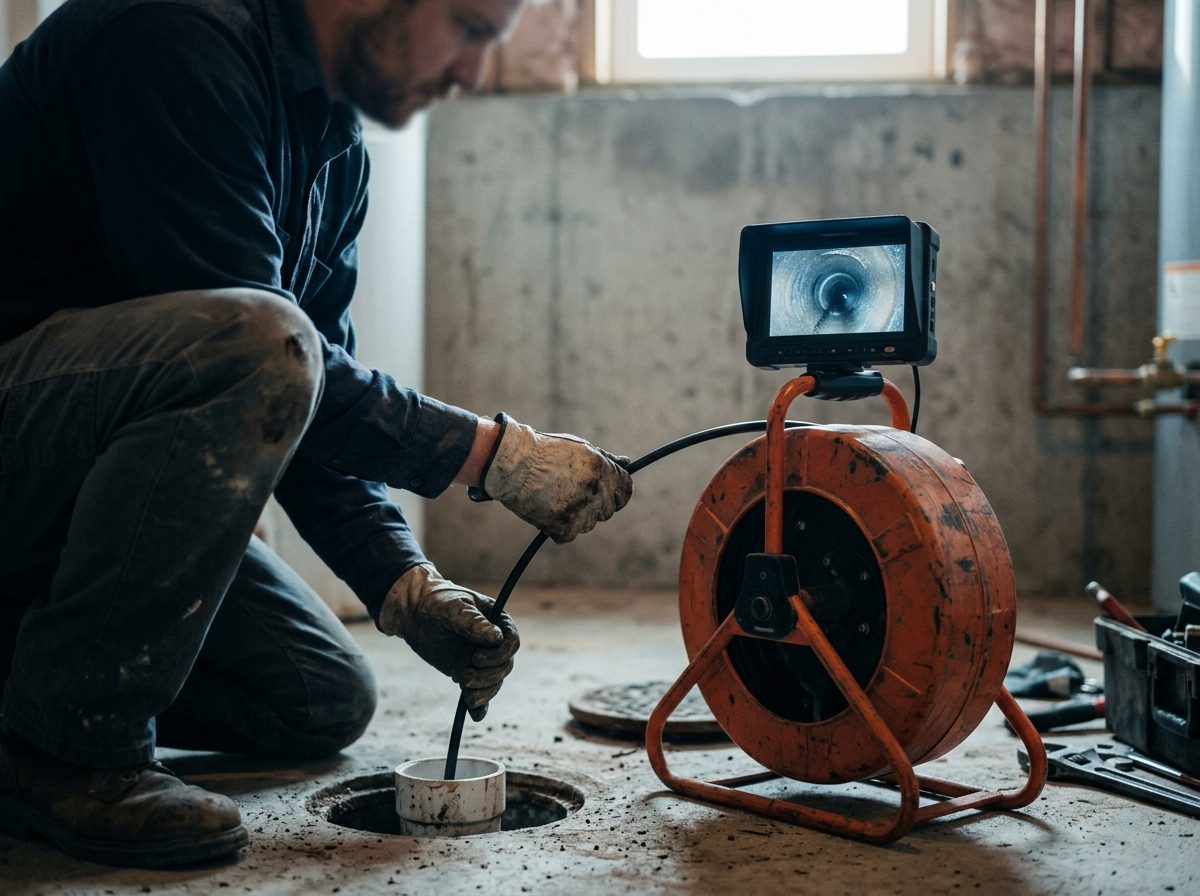
Buried service lines and what moves them
The line from the meter to the house is the piece of plumbing homeowners think about least and can least afford to ignore. Signs it is failing are indirect: pressure that has slowly dropped over years, a patch of ground that stays damp or unusually green, a water bill that climbed without a change in use, or the meter creeping with every fixture in the house shut.
The confirmation is straightforward. Shut every fixture, note the meter and the low-flow indicator, and read it again an hour later. If it has moved, water is leaving the system. Then close the shutoff at the house and repeat — continued movement points outside the building, at the buried service line rather than at anything indoors.
In an area where past flooding prompted a lot of rapid repair and relocation work, it is also worth knowing that what is in the ground may not match what anyone assumes. A locate before excavation is not bureaucracy here; it is what stops a repair becoming an incident.

Properties up the canyons
Up the North and South St Vrain, properties run their own systems: a well, a pressure tank, septic, and often heat tape protecting exposed runs. Failures are the familiar mountain set — a waterlogged pressure tank cycling the pump, a failed pressure switch, a pump at the end of its life, a septic tank overdue for pumping.
Access is the other constant. Ice, snow, private drives and single-lane sections all determine whether a truck reaches the property, and in a storm the honest answer may be tomorrow. Saying what the last stretch looks like when you call is what lets somebody arrive prepared rather than turn round.
Canyon property with no water? Say what the gauge reads and how the road is.
Ask about a canyon callCold air that sits in the valley
Cold air drains downhill and pools at canyon mouths, so overnight temperatures in the valley bottom can run well below what the wider forecast suggests. Crawlspaces, exposed runs under decks and pipe in additions are the places that suffer.
Where a line must stay in service, insulation and air sealing come first, with heat tape as the backup — and tape should be tested before the first hard freeze, because it fails silently. Where a building or a branch is not needed through winter, isolating and draining it removes the risk altogether rather than managing it.
Line stopped flowing overnight? Close the main shutoff before anything gets thawed.
Ask about a frozen pipeBefore any excavation
Have utilities located, and mention any past flood-era repair work you know about. What is actually in the ground here is frequently not what the original drawings show.
Buried work and records that no longer match
A good deal of what is buried in and around this town was repaired, re-routed or replaced under pressure after the 2013 flood, and work done in those conditions did not always get recorded the way routine work does. Some of it was intended as a temporary arrangement that has now been in service for over a decade. The result is that the documented route of a service line and its actual route are not always the same thing.
For a homeowner this matters in two ordinary situations. The first is any excavation — a fence post, a tree, a patio, a new line — where assuming the old route is a genuine risk. The second is a leak on the private side of the meter, where the time and cost of the repair depend almost entirely on how quickly the line can be located, not on the repair itself.
Locating a line before digging is therefore worth the small cost, and so is asking for a note of what was actually found once a line is open. A sketch with two measurements from fixed points on the building — not from a fence or a tree, both of which move — is enough to turn the next repair from exploratory work into a scheduled job. Where a property changed hands after the flood, it is also worth asking what the seller knew, because that knowledge is rarely written anywhere else.
Nearby communities
Lyons sits where the North and South St Vrain canyons meet, with Hygiene, Longmont, Allenspark and Estes Park beyond.
Lyons, Colorado
Lyons plumbing questions answered
Use the meter. With every fixture off, note the reading and the low-flow indicator, then check again an hour later — movement means water is leaving the system. Close the shutoff at the house and repeat: if the meter still moves, the loss is outside the building, in the line between meter and house.
Often, yes. Trenchless methods pull a new line along the path of the old one from access pits at each end, which matters a great deal where the ground is cobble and rock or where a drive or mature planting is in the way. Whether it suits depends on the route, depth and condition, so the assessment comes first.
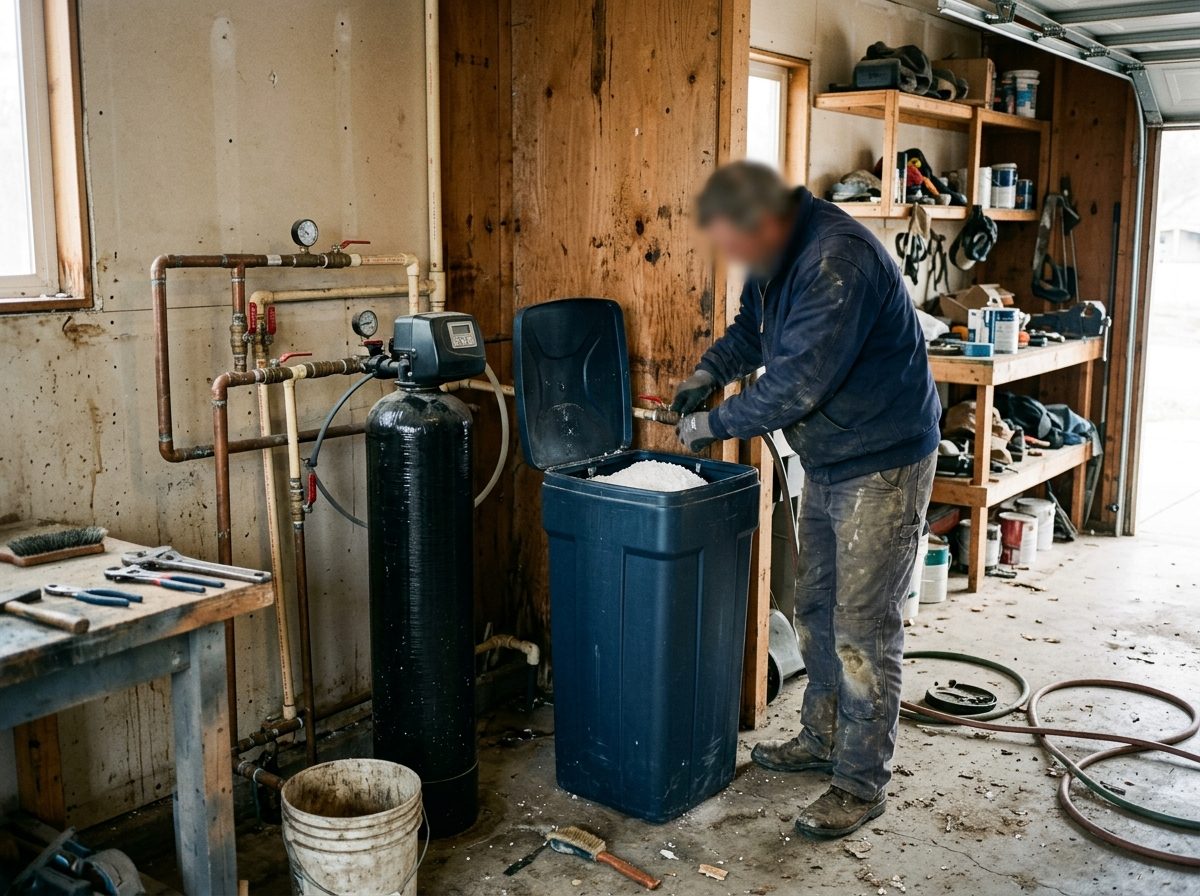
It is worth knowing about rather than worrying about. Work done under pressure in an emergency was sometimes intended as temporary, and lines were occasionally rerouted without records catching up. An inspection of the sewer and a look at the water service tell you whether what is in the ground now is what you want to keep.
The pump breaker first, then the pressure switch, then what the gauge reads. A tripped breaker and a failed switch are both inexpensive and both look identical to a dead pump from inside the house. If the pump runs but pressure cycles every few seconds, suspect the pressure tank rather than the pump.
Sometimes, and access rather than distance is what decides. Ice, snow and single-lane sections all matter, and some contractors will not attempt certain drives in winter. Describing the last stretch honestly means whoever takes the call arrives equipped, and during a storm you will get a realistic answer instead of a promise.
Because cold air sinks and pools at the bottom of a valley, so the temperature at a canyon mouth can be several degrees below the regional figure. It is why exposure matters more here than the forecast implies, and why insulation and air sealing on vulnerable runs pay off.
Three to five years suits most full-time households, sooner where the tank is small or the property is used in bursts. Slow drains everywhere at once rather than at a single fixture is the classic indicator, along with unusually lush growth over the field or a backup after a busy weekend.
It depends what is actually installed, which is often a mixture. Testing pressure at an outdoor tap separates what arrives at the property from what the interior pipe can deliver. If the incoming pressure is fine and flow indoors is not, replacing the worst runs is the fix, and it can be done in stages.
It can be traced electronically from the meter or from an accessible point inside, which is quick and non-destructive. Doing that before excavating anything is the cheap version of this problem. It is also worth asking whoever attends to note the route and depth from two fixed points on the building, so the information survives for the next job.
The St Vrain canyons, any hour
Lyons, Hygiene, Allenspark, Jamestown and the canyon communities above.
(833) 621-2904 — answered 24/7, statewide.