Plumber in Glen Haven, CO — 24/7 by phone
Home / Areas / Northern Colorado / Glen Haven
Glen Haven is a small village in a narrow valley between Estes Park and Drake, reached by canyon road from either direction. It is a largely seasonal community, and the defining plumbing event here is a freeze in a building with nobody in it.
A small village in a narrow valley
Housing is mostly cabins and second homes, many of them older and extended over the years by successive owners. Plumbing that has grown that way tends to have long runs in awkward places, fittings inside walls nobody recorded, and diameters that change at old junctions.
The practical consequence is that diagnosis is a genuine part of the job here, and the most useful thing an owner can offer is history: what was added when, and what has been worked on before. Small clues matter too — which fixtures are affected and which are not narrows the search considerably.
Damp with no obvious source? Note which fixtures are affected and which are not.
Ask about tracing a leak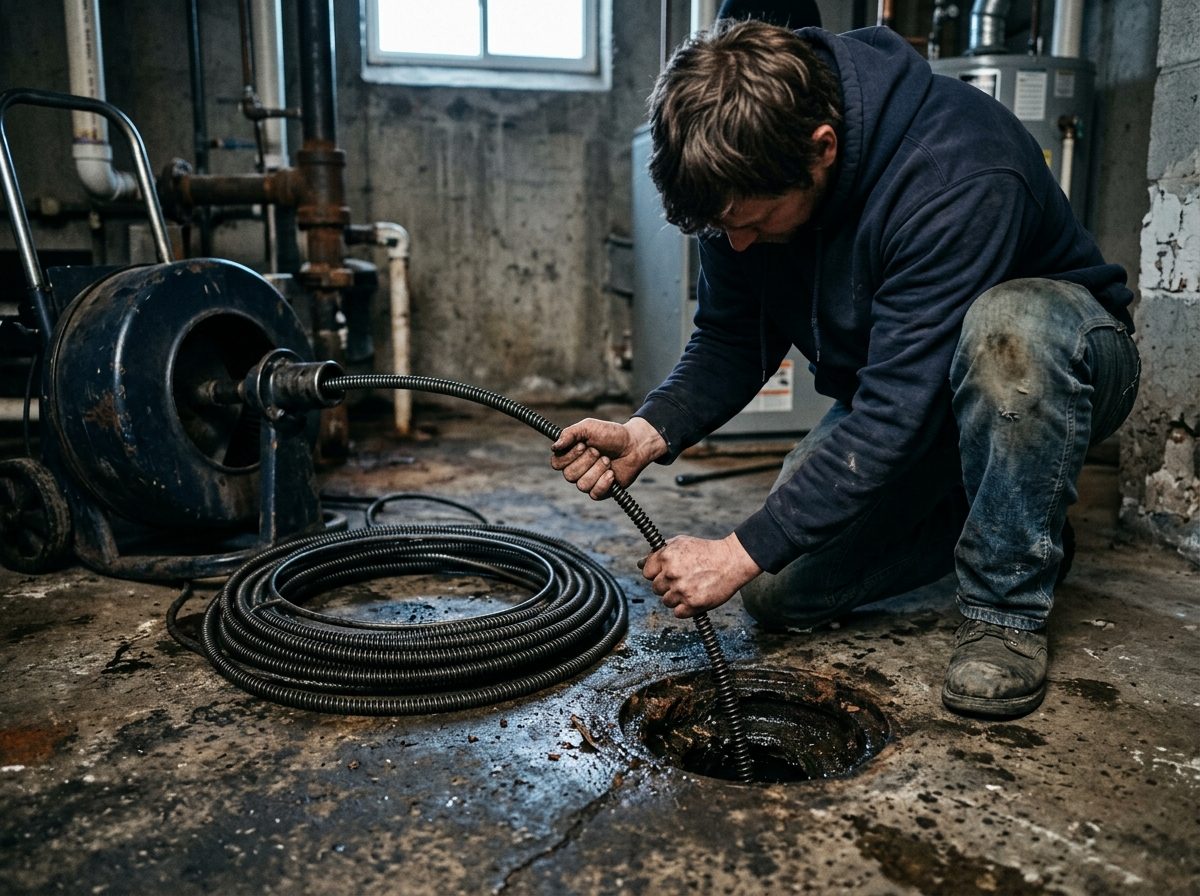
Empty buildings are the risk
An occupied building is a monitored building. Taps run, warm air moves, someone notices when the heat stops. An empty one has none of that, so a tripped furnace, a power cut, an empty propane tank or a dead heat tape becomes a burst pipe with days of unattended water behind it.
Given how long it can take to reach a property here in winter, early warning matters more than any repair arrangement. Someone local able to check the building, plus a remote temperature alarm you actually receive, is worth more than anything else you can put in place.
Draining properly, once a year
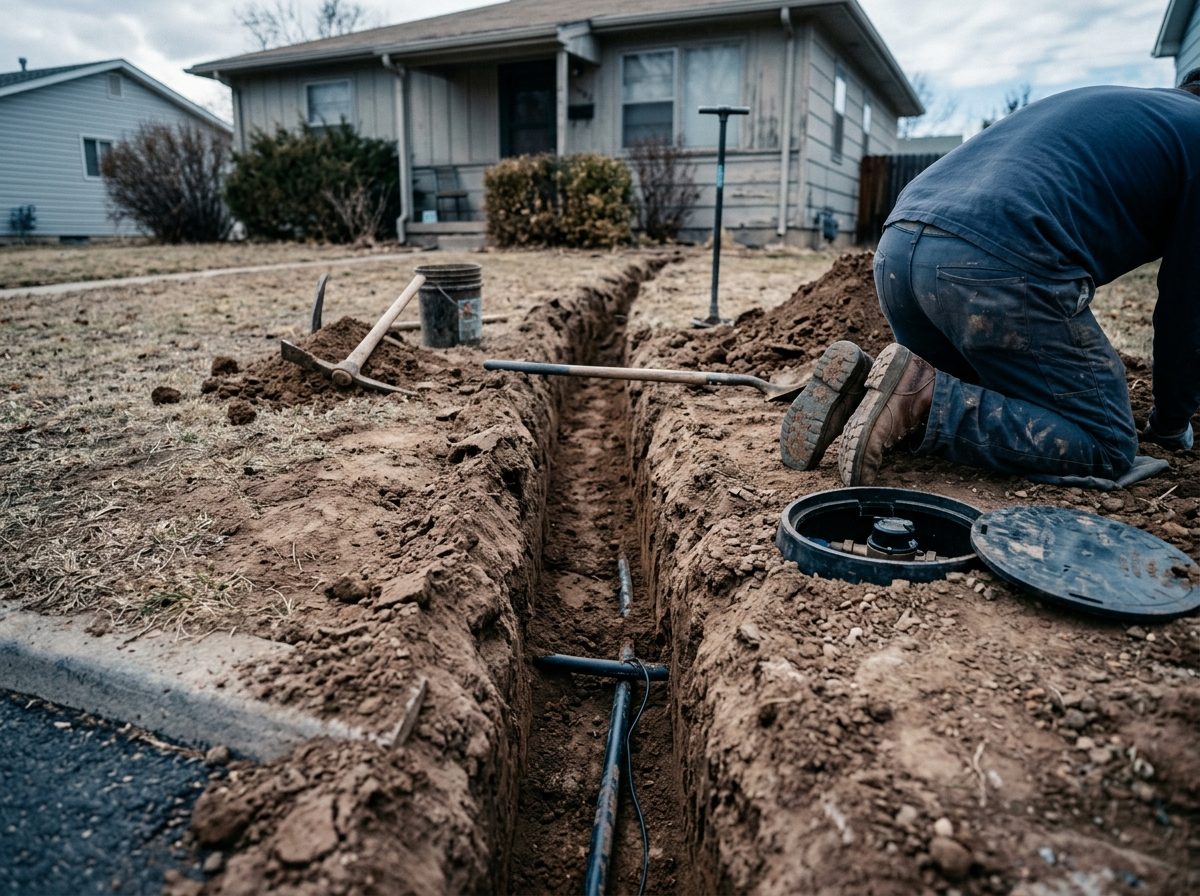
For a building standing empty through winter at this elevation, draining is the only dependable strategy. Water off at the source, the system drained from its lowest point, taps opened so air can replace water, the heater and anything else holding water dealt with, and antifreeze rated for plumbing in traps and toilet bowls — never automotive antifreeze.
Done thoroughly, the building can then sit at any temperature without freeze risk. Done partially it is worse than it looks, because water left in low points is exactly what splits, and a half-drained system offers false reassurance.
Closing up for the season? Have it drained properly once rather than approximated annually.
Ask about winterisingA single road in
Access here is the whole story. Canyon roads from both directions, ice, snow and steep private drives all determine whether anyone reaches a property, and in a storm the honest answer can be several days rather than tomorrow.
Which is why the phone advice comes first: shut the water off at the main, drain from the lowest fixture, move what matters out of the water path, and photograph the damage before cleanup. That sequence determines the size of the problem far more than the arrival time does.
Snowed in with water running? Shut it off at the main and drain the lowest tap.
Ask what to do right nowArriving at a cold cabin
Close the main shutoff before applying heat anywhere, then check the lowest ceiling and the crawlspace for damp. A line that has already split starts leaking the moment it thaws.
Heating systems in buildings left unattended
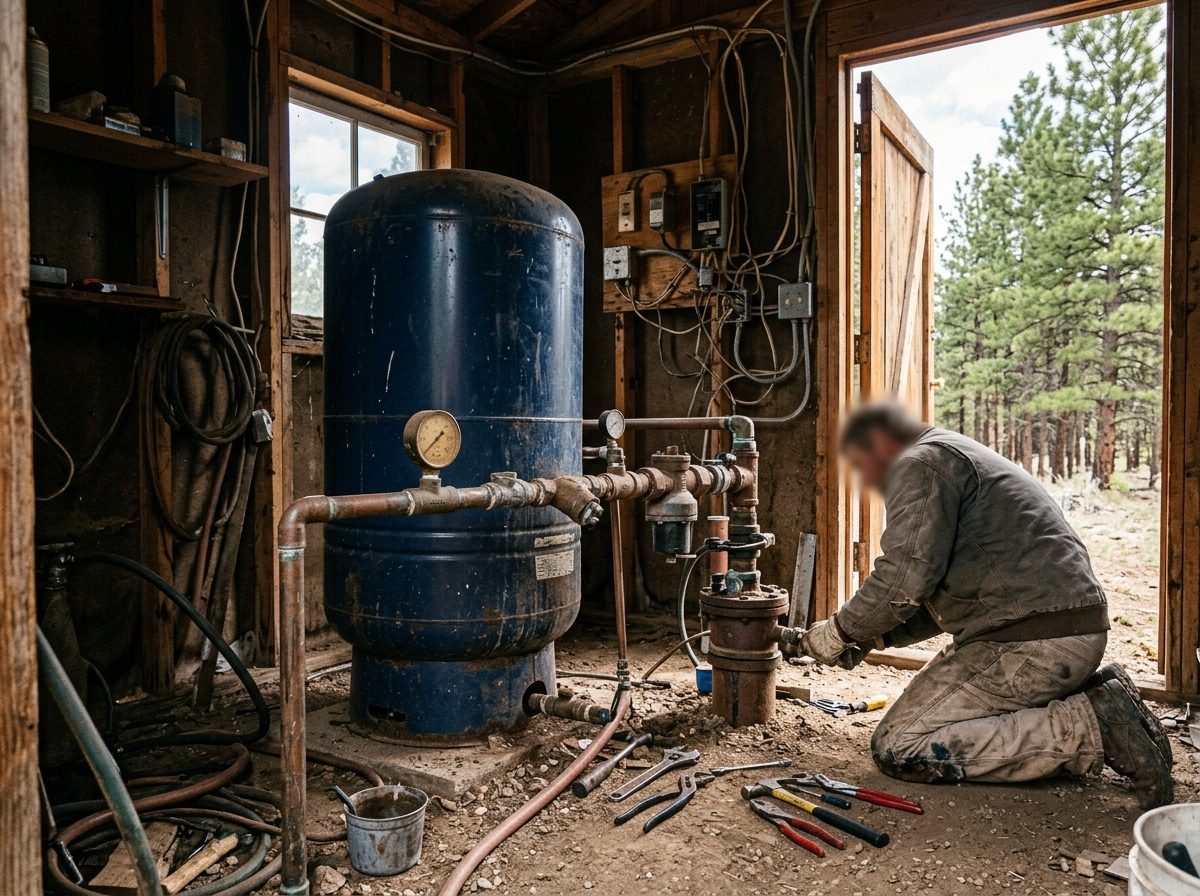
A hydronic heating system is full of water, which makes it one more thing to freeze in a building nobody is in. That is a real risk here, because the consequence of a boiler or a power supply failing in January is not simply a cold building — it is a heating system splitting from the inside while the heat it was providing is gone.
Two approaches exist and they suit different situations. Filling the system with a glycol mixture rated for heat transfer lets it sit through a hard freeze without damage, and it is the normal answer for a building that must stay heated but cannot be watched. It has obligations attached: the mixture degrades over time and becomes acidic, so it needs testing and eventual replacement, and topping the system up with plain water quietly dilutes the protection until it is not protection any more.
The alternative is draining the system down for the season, which suits a building that is genuinely closed rather than intermittently used. It is more disruptive to reverse and it needs doing properly — a hydronic system does not drain completely by gravity any more than irrigation does. What does not work in either case is leaving a water-filled system in an unoccupied building on the assumption the boiler will keep running, since the failure being guarded against is precisely the boiler stopping. A remote temperature alarm is the minimum worth having where a building is left at all.
Nearby communities
Glen Haven sits in a narrow valley between Estes Park and Drake, reached by canyon roads from either direction.
Glen Haven
Seasonal property questions answered
Water off at the source, the system drained from its lowest point, taps opened so air can replace water, the heater and any appliance holding water dealt with, and antifreeze rated for plumbing in traps and toilet bowls. Never automotive antifreeze. Done thoroughly the building can sit unheated safely.
Not much, and it can be worse, because water left in low points is exactly what splits when it freezes — and partial draining gives false reassurance. If the building will be empty through winter, it is worth having the job done properly once rather than approximated each year.
Usually, with patience and gentle even heat applied from the open end of the line toward the blockage so meltwater can escape. Torches and rapid heat split pipe and start fires. Shut the water off first, because if the pipe has already cracked, thawing simply reveals it.
Longer than most places in the region, and in a storm it can be several days. That is why the phone advice comes first — shutting the water off and draining the lowest fixture limits the damage. Describe the road and drive honestly so you get a realistic answer.
Someone local who can physically check it, plus a remote temperature alarm you actually receive. Early warning matters more than any repair arrangement here, because the difference between a small problem and a catastrophic one is how many days water runs before anyone notices.
Because most buildings here were extended in stages. Each addition took the easiest route available at the time, so runs go around obstacles that no longer exist and diameters change at old junctions. Having the layout traced once and noting it makes the next repair much quicker.
It depends on use rather than years, and seasonal properties are easy to misjudge — a cabin full of people for a few summer weekends can load a tank more than a quiet household does in a year. Pumping on a set interval is safer than guessing.
Close the main shutoff and drain from the lowest fixture, then switch off power to affected areas at the breaker if fittings or sockets are involved. Photograph everything before cleanup for any claim, and note how long the building stood empty, since that affects both repair and claim.
Where the building must stay heated but cannot be watched, usually yes — a glycol mixture rated for heat transfer lets the system survive a freeze if the boiler or the power fails. It needs testing periodically, since the mixture degrades, and topping up with plain water dilutes the protection. For a genuinely closed building, draining properly is the alternative.
For any building left unoccupied through winter, it is among the cheapest protection available. It tells you the heat has failed while there is still time to do something, which is the entire problem with an empty building — the failure itself is not the expensive part, the fortnight before anyone notices is. Pair it with a water alarm in the mechanical space.
Between Estes Park and Drake
Glen Haven, Drake, Estes Park and the Big Thompson canyon.
(833) 621-2904 — answered 24/7, statewide.