Plumber in Bellvue, CO — 24/7 by phone
Home / Areas / Northern Colorado / Bellvue
Bellvue sits right at the mouth of the Poudre canyon, and that location dominates its plumbing. Cold air drains out of the canyon and pools here on winter nights, most properties run their own water and waste, and access up the side roads can decide what is possible in February.
At the mouth of the Poudre
Properties here range from older houses on the valley floor to newer building up the side draws, and most are on private wells and septic. Lots are generous, outbuildings are common, and the plumbing extends well beyond the walls of the house.
The useful information on a call is the property rather than the fixture: what the water source is, how many structures take water, and what the last stretch of driveway looks like. Those three answers shape the visit more than a detailed description of the drip.
Property with outbuildings? Say how many take water when you call.
Ask about a property visit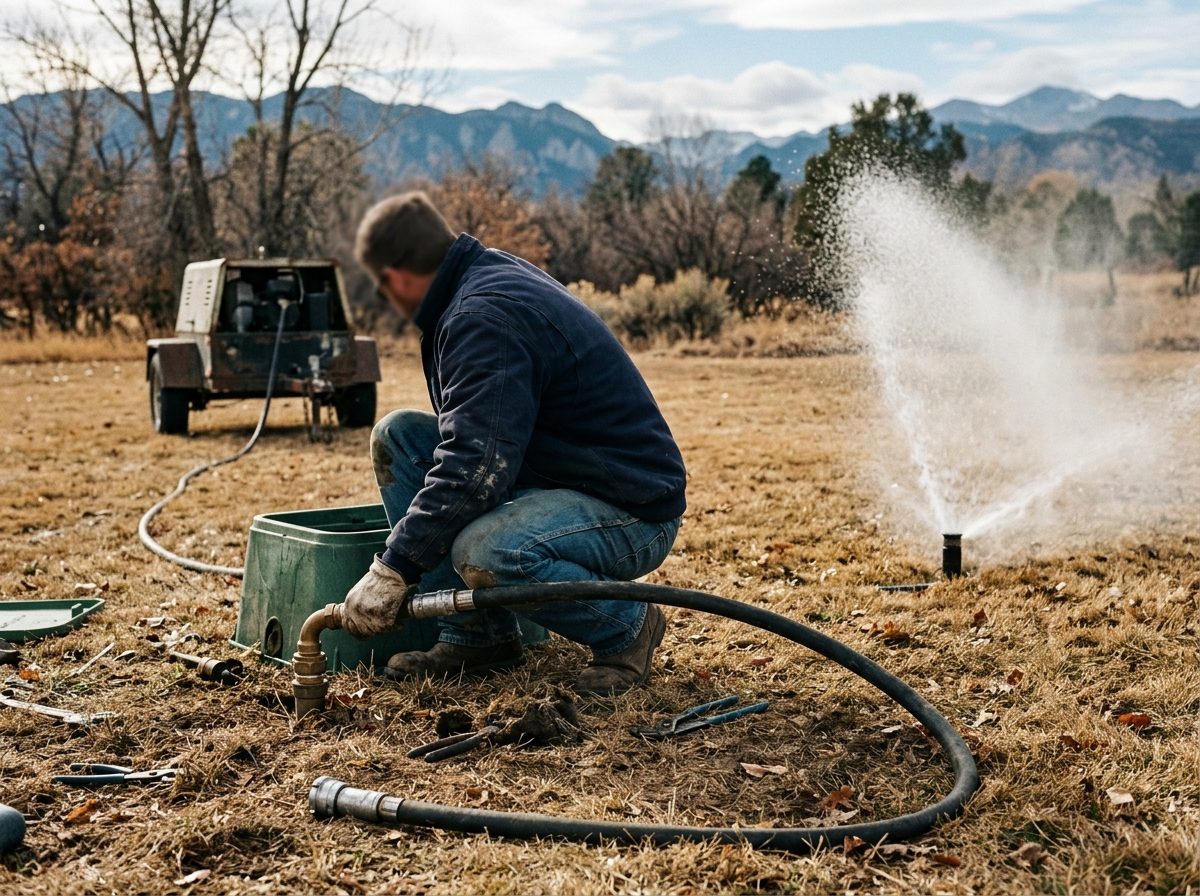
Cold air pools here
Cold air is heavier than warm air, so on still winter nights it flows downhill and settles at the bottom of the valley. The practical effect is that temperatures at a canyon mouth can sit several degrees below the regional forecast, and pipe that would be fine in Fort Collins is not fine here.
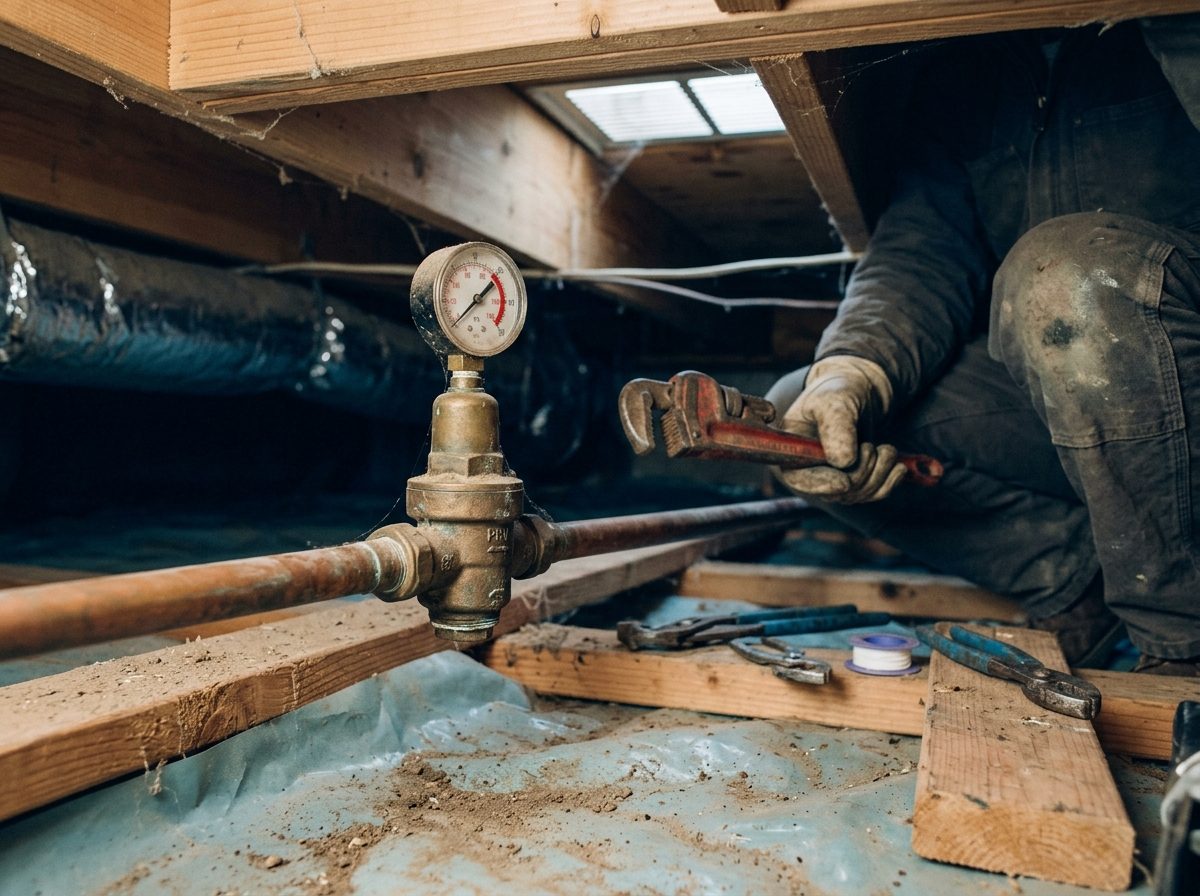
The vulnerable places are crawlspaces, exposed runs under decks, well houses, and pipe in additions built to a lower insulation standard than the original house. Where a run must stay live, insulation and air sealing come first and heat tape second — and tape needs testing each autumn, because it fails silently through age, rodent damage or having been unplugged during other work.
Wells, tanks and septic
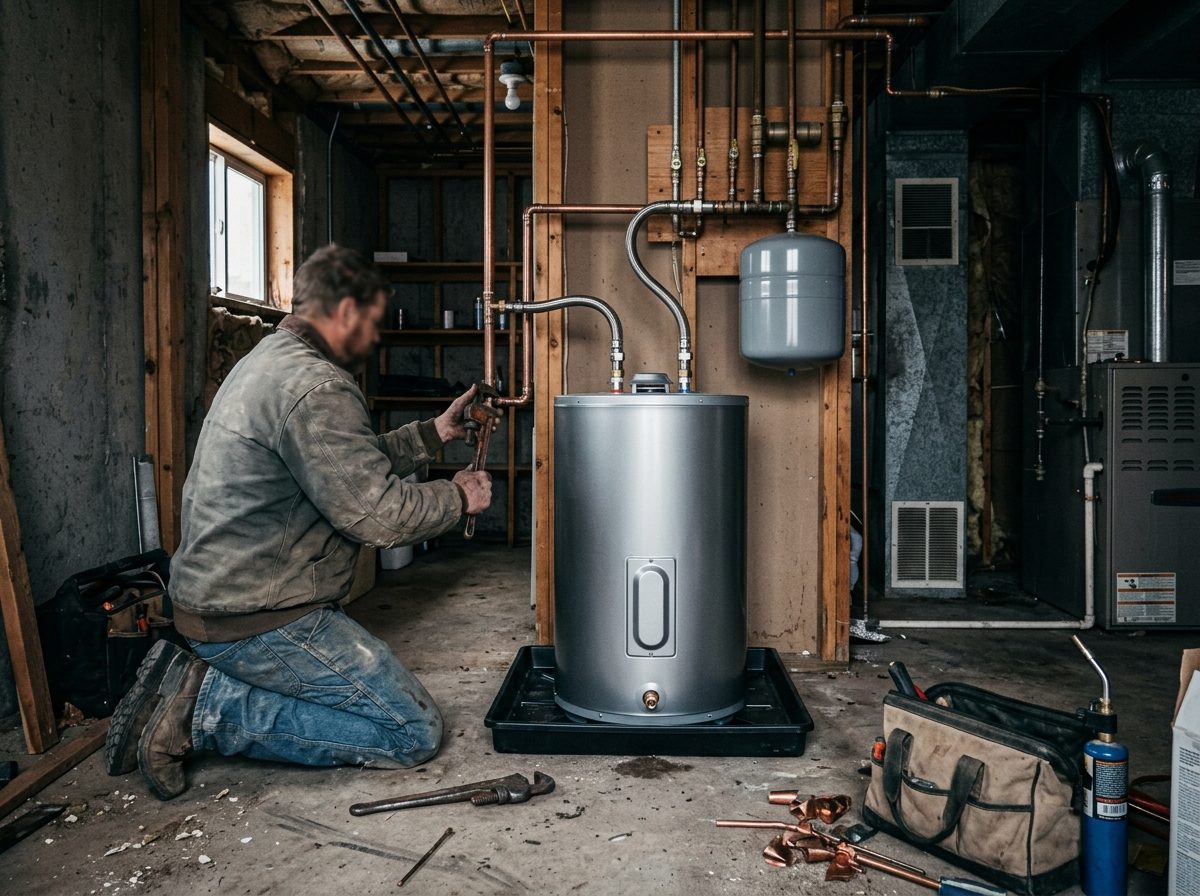
On a well, three faults account for most calls: a pressure tank that has lost its air charge and is cycling the pump every few seconds, a pressure switch that has stopped making contact, and a pump at the end of its working life. All three present as poor pressure or nothing at the tap.
Three answers narrow it before anyone drives out — what the gauge reads, whether the pump can be heard running, and whether the breaker has tripped. Septic systems, meanwhile, need pumping every three to five years for most households and signal trouble by slowing every drain in the building at once rather than one fixture.
Nothing at the tap? Gauge reading, pump noise, breaker — those three narrow it fast.
Ask about a well systemAccess in winter
Distance from Fort Collins is short, but access rather than distance is what decides response here. Ice on a steep side road, an unplowed private drive, or a gate at the bottom of a long approach all affect whether a service vehicle reaches the property.
Say honestly what the last stretch looks like when you call — plowed or not, how steep, how far. It changes who takes the job and what they bring, and it avoids the worst outcome, which is a plumber driving up and turning back.
Drive unplowed or steep? Say so when you call — it decides who can come.
Ask about winter accessArriving at a cold house
Close the main shutoff before applying heat anywhere. A line that has already split releases water the moment it thaws, and with the water off what follows is a repair rather than a flood.
After work on a well, or after water gets in
A well is a sealed system that happens to be underground, and the moments it stops being sealed are the moments worth paying attention to: when the cap is off for pump work, when the casing is disturbed, and when surface water rises high enough to reach the wellhead. Any of those can introduce bacteria that were never in the water before, and none of them change how the water looks or tastes.
That is the important part. Bacterial contamination is not a taste problem or a clarity problem — it is invisible, and the only way to know is a test. So the sequence after any well work is disinfection followed by testing, in that order, with the house not drinking from it in between. After high water reaching a wellhead, the same applies even if nothing was touched.
Shock disinfection is straightforward but it is not the whole job. The chlorine has to be drawn through every fixture so the plumbing itself is treated rather than just the well, it has to sit long enough to work, and then it has to be flushed out completely — including from the water heater, which otherwise holds treated water for days. A test afterwards is what closes it out. Where a well repeatedly fails a bacterial test, the answer is not repeated disinfection: it means something is getting in, and finding that entry point is the actual repair.
Nearby communities
Bellvue sits at the mouth of the Poudre canyon west of Fort Collins, with LaPorte, Livermore and Drake nearby.
Bellvue, Colorado
Poudre canyon mouth questions answered
Because cold air sinks and pools at the mouth of a canyon, so overnight temperatures here can sit several degrees below the regional figure. A pipe that would be fine a few miles east is not necessarily fine here, which is why insulation and air sealing on vulnerable runs matter more.
Usually, with gentle even heat applied from the open end of the line toward the blockage so meltwater can escape. Never a torch or rapid heat — that is how pipes split and buildings catch fire. And shut the water off first, because if the pipe has cracked, thawing simply starts the leak.
Tape can look fine and be dead. Age, rodent damage and being unplugged during unrelated work are the three usual causes, and none show from a glance. Test it before the freeze season and check the whole length of the run, since tape often covers less pipe than people assume.
It depends where the fault is. From the pressure tank into the house is ordinary plumbing. The pump, drop pipe and casing wiring are well-system work needing specific equipment. Saying what the gauge reads and whether the pump runs settles which trade should be sent.
Three to five years for most households, sooner where the tank is small or usage is heavy. Every drain in the building slowing at once rather than one fixture is the classic signal, along with unusually green growth over the field or a backup after a busy weekend.
Sometimes, and it depends on the vehicle and the grade. Some contractors will ask you to meet them lower down, and a few will not attempt a steep unplowed drive at all. Describing the last stretch honestly means whoever takes the call arrives equipped rather than turning back.
Either drain it properly — water off, system drained, traps and appliances dealt with — or keep the heat genuinely reliable with a remote temperature alarm and someone local who can reach it. Leaving a thermostat low and hoping is how burst pipes happen, because a fault has hours to work unobserved.
Usually same-day for urgent problems, since Fort Collins is close. Winter weather and access are the variables rather than distance. You will get an honest window along with instructions on shutting the water off and draining the lowest fixture, which is what limits damage while you wait.
Yes, and disinfect first. Having the cap off is enough to introduce bacteria that were not there before, and contamination is invisible — no change in taste, smell or clarity. Shock the well, draw the treatment through every fixture including the water heater, flush thoroughly, then test. A well that keeps failing afterwards has an entry point that needs finding.
Annually for bacteria as a baseline, and more broadly every few years for the things that change slowly — hardness, iron, nitrate. Also after any work on the well, after high water near the wellhead, and any time the taste, smell or clarity changes. Testing is inexpensive next to the equipment people buy on a guess without it.
The Poudre canyon mouth
Bellvue, LaPorte, Livermore and Drake.
(833) 621-2904 — answered 24/7, statewide.