Plumber in Wellington, CO — one call, any hour
Home / Areas / Northern Colorado / Wellington
Wellington has grown quickly from a small town into a commuter one, and it sits right where subdivisions give way to open country. That means two quite different kinds of plumbing call from the same phone number: newer houses in town with component failures, and acreage properties where wells, hydrants and outbuildings are the story.
A small town growing fast
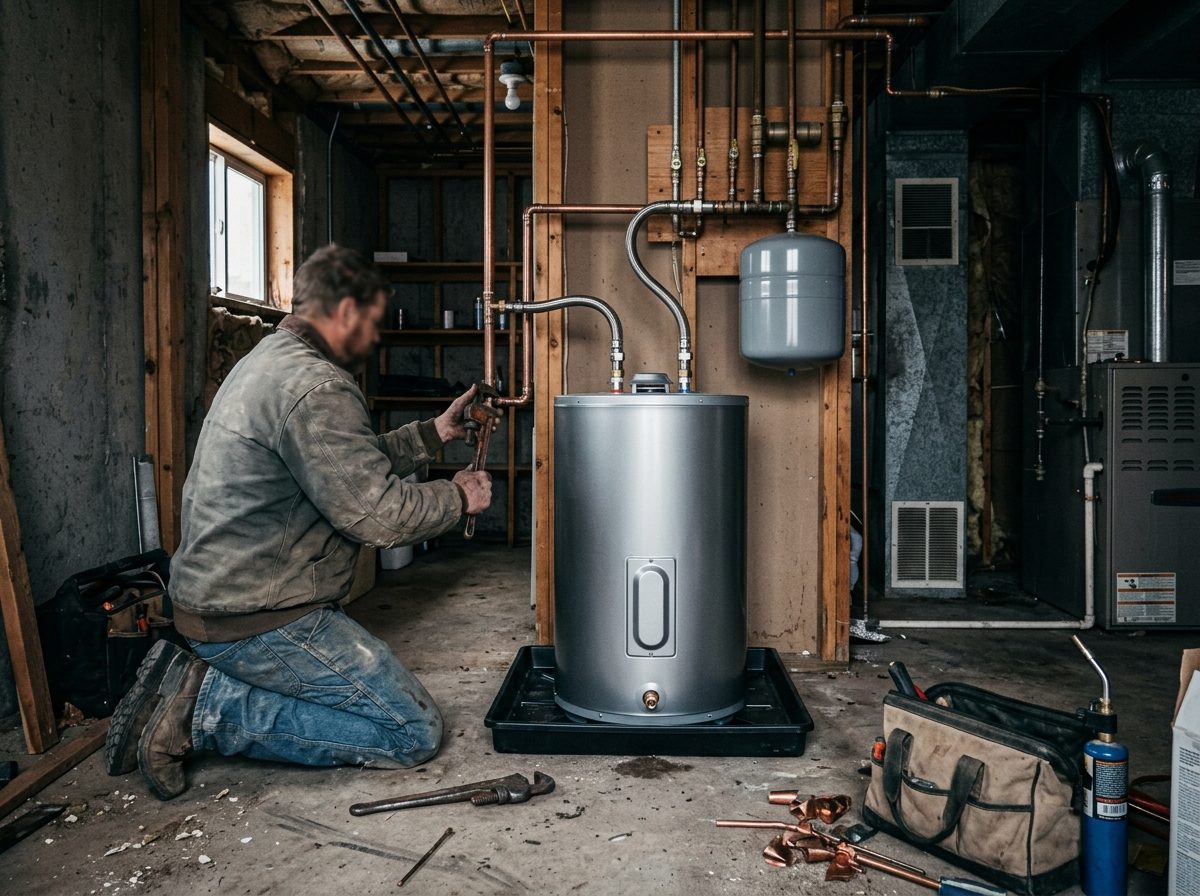
In the newer parts of town the pipe is fine and the components are what fail: pressure regulators, expansion tanks, angle stops, fixture supply lines and water heaters. Whole streets went in within a year or two of each other, so those parts reach the end of their service lives together rather than at random.
That makes planning possible. If neighbours are replacing heaters, yours is a candidate for inspection, and a planned replacement costs far less than an emergency one. Measuring static pressure with a gauge on an outdoor spigot is the other check worth making, because pressure above the working range quietly destroys valves and seals throughout the building.
Small failures adding up? Measure pressure before replacing fixtures one at a time.
Ask about high pressure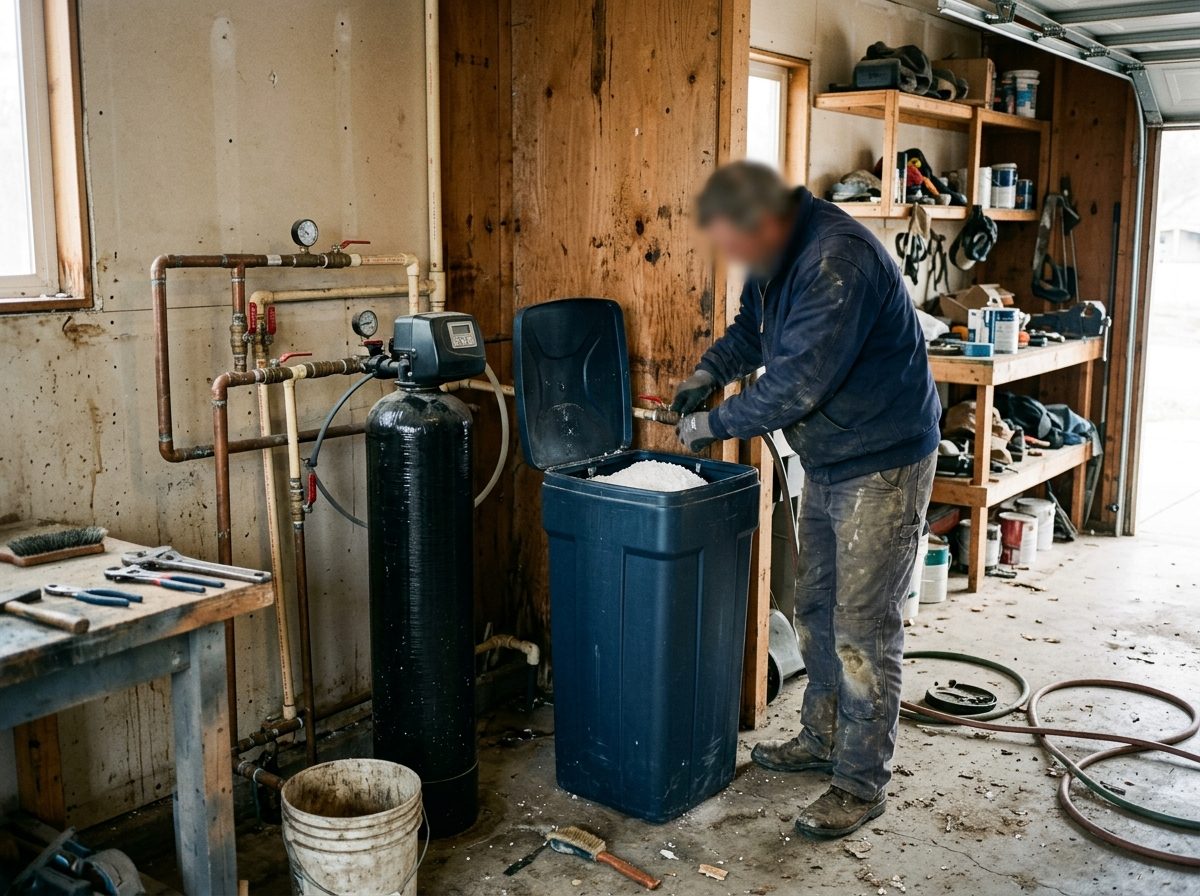
Hard water is the constant
Water in this part of Larimer County carries a heavy mineral load, and it works on every fixture in the house. Scale settles in the bottom of the water heater and insulates the burner from the water above it, so run times lengthen and the tank ages faster than the label promises; on electric units it coats the elements. Aerators clog, shower heads block, and fill valves stiffen and weep.
Flushing the heater annually is the cheapest life extension available. If you want treatment, test the water first so hardness is a number and you know whether iron is present — the right equipment for a well differs from the right equipment for town supply, and sizing matters more than brand.
Acreage and well systems
Outside town, plumbing stops being a house system and becomes a property system: long buried runs to barns and shops, stock water, frost-free yard hydrants, wells with pressure tanks, and septic systems that need pumping every few years.
The common well failures are a pressure tank that has lost its air charge and sends the pump short-cycling, a failed pressure switch, and a pump at the end of its life. All three present as poor pressure or no water. Telling whoever answers what the pressure gauge reads and whether the pump runs at all narrows it enormously before anyone drives out — and saves sending the wrong trade.
Several jobs on one property? List them before you call — one trip can cover all of it.
Ask about a single visitWind, frost and outbuildings
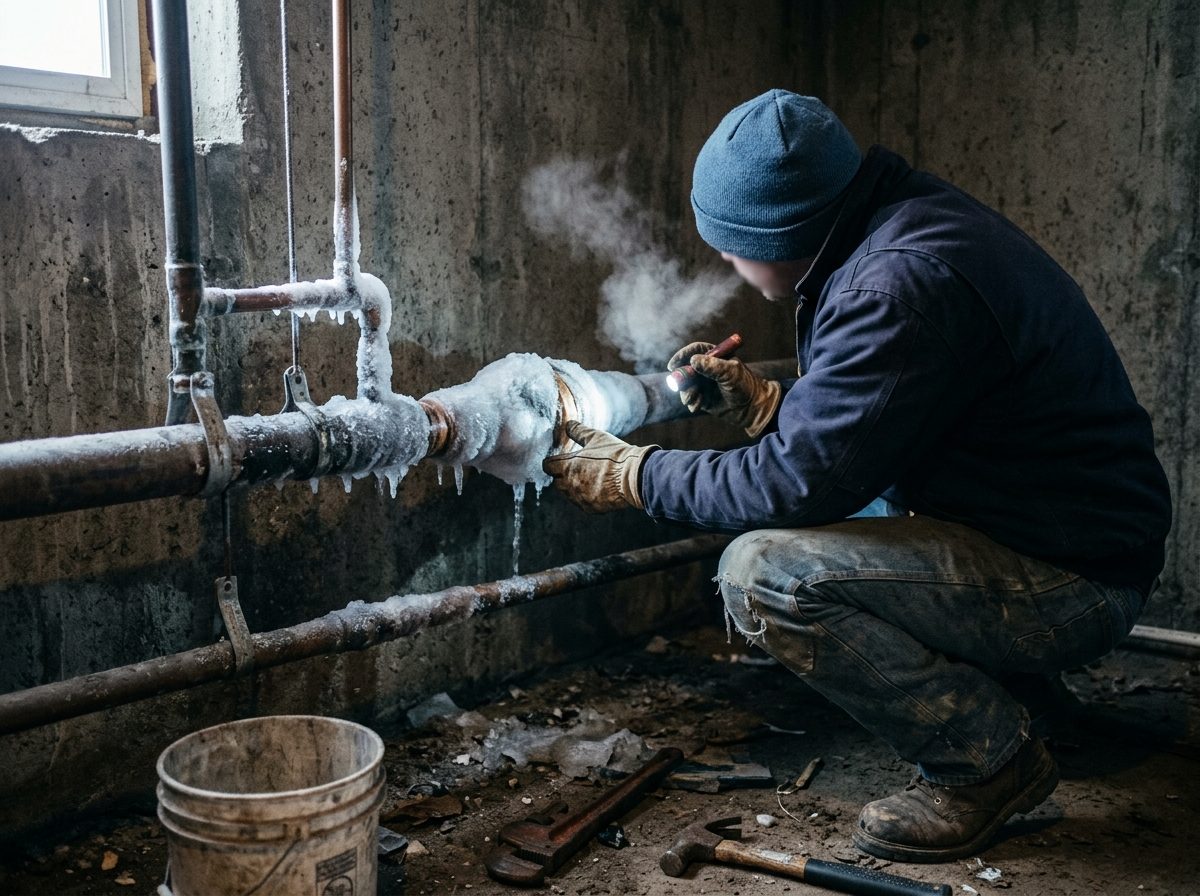
There is very little shelter north of Fort Collins. Constant wind strips heat from anything exposed, so a line in an unheated crawlspace or a pump house freezes at temperatures a sheltered town street shrugs off, and frost runs deeper here than in the city.
Outbuildings freeze first because they are heated least. Frost-free yard hydrants are the classic failure: when the drain at the bottom of the standpipe stops working, the pipe holds water and the first hard freeze splits it below ground where nobody can see it. Test hydrants in autumn, deal with any that weep or stick, and shut off and drain any branch feeding a building you are not using through winter.
Hydrant weeping or stuck? Deal with it before the freeze, not after it splits underground.
Ask about a yard hydrantThe tap on the outside wall
An outdoor tap is a hole in the building’s freeze protection, and how it was built decides whether that matters. An ordinary tap shuts off at the wall, which leaves water sitting in the section of pipe passing through it — and that water freezes. A frost-free sillcock is a long-bodied tap whose actual shutoff sits well back inside the heated wall, so the exposed barrel drains itself every time it is closed. From outside the two look nearly identical.
Which is why the most common freeze failure at an outdoor tap has nothing to do with the tap and everything to do with the hose. A frost-free sillcock only drains if water can run out of it, and a hose left connected holds that water in the barrel through the freeze. The split then happens back inside the wall, where it does not show — and it does not leak until spring, when the tap is opened and water appears inside the house rather than outside it.
So the autumn routine is short and genuinely effective. Every hose disconnected, every tap opened briefly to confirm it drains and then closed, and any tap that weeps continuously dealt with before the freeze rather than after — a weeping sillcock is not draining, which means it is holding water in the wall all winter. If there is an interior isolation valve for the outdoor taps, closing it and draining the branch is better still, and on an outbuilding line that is not needed in winter it is the right answer rather than an optional extra.
Autumn walk-round
Every hydrant, hose bib, stock tank and pump house, once, before the first hard freeze. Anything that drips or sticks now is a candidate to split in the first cold snap, and all of it fits into one scheduled visit.
Nearby communities
Wellington sits north of Fort Collins on the edge of open country, with Nunn, Carr, Ault and Laporte within reach.
Wellington, Colorado
Wellington plumbing questions answered
It depends where the fault is. Everything from the pressure tank into the house is ordinary plumbing work. The pump, drop pipe and wiring down the casing are well-system work needing specific equipment. Describing what the pressure gauge reads and whether the pump runs at all usually settles which trade should come out.
That is typically a waterlogged pressure tank. The tank holds an air charge behind a bladder, and when that fails the pump switches on and off constantly instead of once every few minutes. Short-cycling destroys pumps quickly, so it is worth fixing promptly rather than living with it.
It is a poor candidate for waiting. A frost-free hydrant drains its standpipe below the frost line every time it closes, and one that leaks often no longer drains. Water left in that pipe through a hard freeze splits it underground, turning a modest repair into excavation in frozen ground.
For most households the return shows up in heater and appliance life rather than at the tap. Test first, since a well with iron needs different equipment from hard town water, and size the softener to the household. Confirm there is a practical place for the loop and a drain for the regeneration cycle.
In town, same-day is normal for urgent problems. Out toward Nunn, Carr and the county roads, response depends on who is already working that direction, and a scheduled visit is often faster in practice than waiting for an emergency slot. You will get an honest window either way.
Typically every three to five years for a normal household, sooner with heavy use or a smaller tank. The symptom that matters is slow drains everywhere at once rather than at a single fixture, along with a lush green stripe over the field or backups after a heavy-use weekend.
Before the first hard freeze, which can arrive in October. Draining is not enough on most systems because low points and the backflow device hold water gravity cannot move — compressed air is what clears them. On exposed lots the wind makes an early blowout more important, not less.
Address the exposure rather than the pipe. Close crawlspace vents opened in summer, insulate the run properly, and seal the air leaks letting cold air reach it. Where rerouting into heated space is impractical, heat tape correctly installed and actually plugged in is the fallback.
Yes, and it is the most common cause of a frozen outdoor tap. A frost-free sillcock shuts off inside the heated wall and drains the exposed barrel when closed — but only if water can run out, and a connected hose holds it in. The split then happens inside the wall and does not show until spring.
More than in summer. A tap that weeps is not draining properly, which means it is holding water in the section inside the wall right through the freeze. That is the exact condition the frost-free design exists to avoid. It is a small repair in October and a wall opening in April, so it is worth dealing with before the cold.
North Larimer County, any hour
Wellington, Laporte, Nunn, Carr, Ault and the surrounding country.
(833) 621-2904 — answered 24/7, statewide.