Plumber in Livermore, CO — one call, any hour
Home / Areas / Northern Colorado / Livermore
Livermore is ranch country — large properties, long distances, private wells and septic, and a winter that runs longer than the city's. Plumbing here is a property matter, and the practical priorities are different from anything in a town.
Ranch country north-west of the city
A working property here may have a house, a shop, a barn, stock water at several points, and hydrants, all fed from one well through a great deal of buried line. The individual components are ordinary; the scale, the exposure and the distance to help are not.
Few contractors cover this area, so the honest position is that emergency response depends on who is already heading this way. Routine work is better booked and better bundled — a plumber driving out will want to justify the trip, and you will get better value presenting a list than a single item.
Several jobs waiting? List them and book one visit rather than four.
Ask about a single visit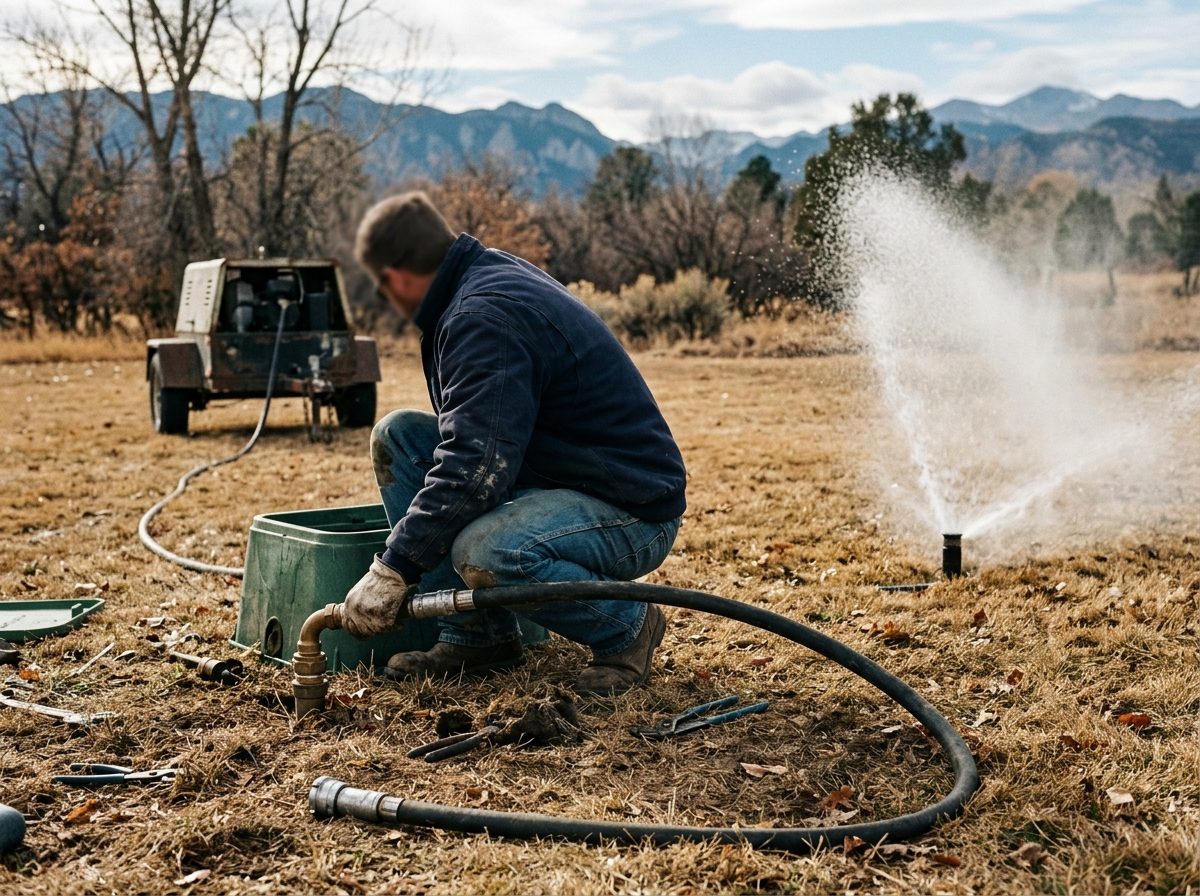
Distances inside a single property
The characteristic problem out here is a leak in buried line that nobody sees. There is no ceiling to stain, so the signs are indirect: pressure that has slowly fallen, ground that stays damp or unusually green, a pump running more often than it used to, or water use that climbed with no change in habits.
An owner can do a great deal before the visit. With everything shut off, movement at the pressure gauge over an hour proves water is leaving the system. Where there are isolation valves between structures, closing them one at a time narrows which run is at fault — and on a property measured in hundreds of acres, that step is the difference between a targeted repair and a search.
Wells in fractured rock
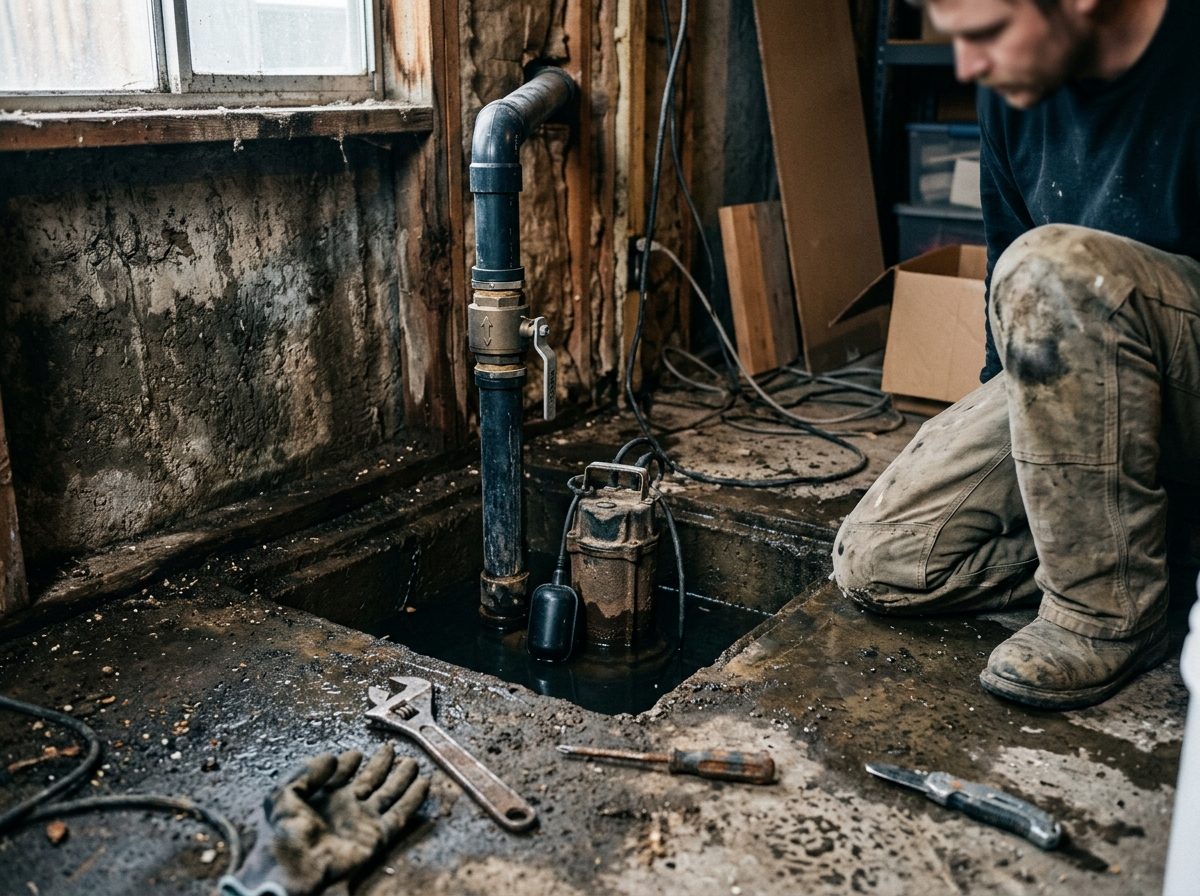
Wells here are drilled into fractured rock, and depth to water varies more from property to property than it does on the plains. The equipment and the failure list are the same, though: a pressure tank that has lost its air charge and is cycling the pump, a pressure switch that has stopped making contact, or a pump at the end of its working life.
What differs is the cost of failure. Pulling a pump needs equipment and access, and in winter both are constrained, so a failure in January can mean a long wait without water. That makes replacing an ageing pump on a scheduled autumn visit considerably more attractive here than it would be in town.
Pump old and short-cycling? Replacing it on a schedule beats losing water in January.
Ask about planned workLong winters, hard exposure
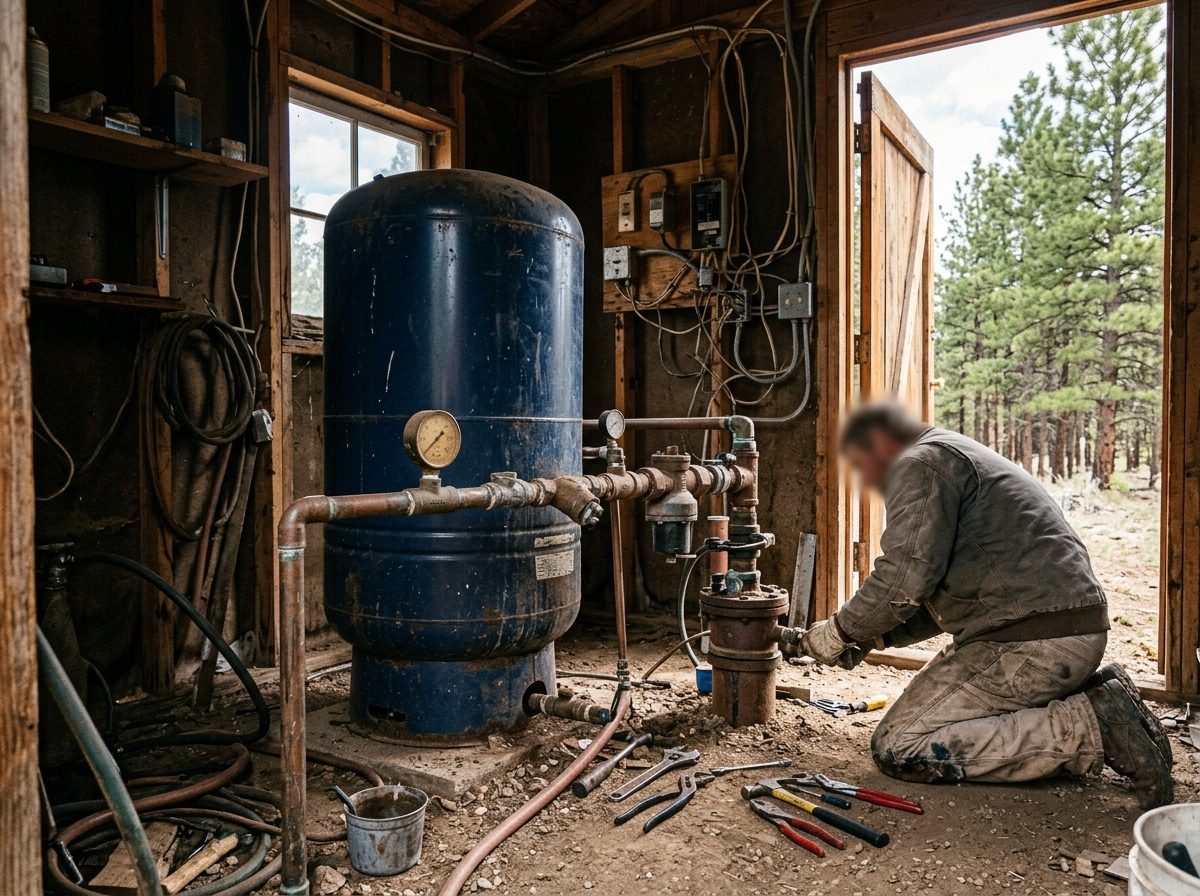
Winter is longer and harder here than in Fort Collins, and the wind is constant. The pump house is the critical vulnerability, because a freeze there takes out water to the entire property at once rather than to one fixture — insulation and air sealing matter more than simply adding heat.
Elsewhere the priorities are familiar. Hydrants tested every autumn, since one that weeps has usually stopped draining and will split underground in the first hard freeze. Outbuilding branches isolated and drained where they are not needed. And heat tape tested rather than assumed, because it fails silently.
Pump house exposed? That is the one freeze that takes out everything.
Ask about protecting a pump houseWhere the exhaust goes
Every fuel-burning appliance in a building has a flue, and on a remote property that flue is the component most likely to have been altered, extended or shared over the decades without much record of it. A water heater vented into a chimney that was never lined for it, or sharing a flue with a furnace in a way that was fine for one and is not fine for both, are findings that turn up regularly on older rural buildings.
The reason it matters is that venting is a safety system rather than an efficiency one. A flue has to be sized for the appliance, pitched so exhaust rises, and sealed so it does not spill into the building — and a chimney that has deteriorated internally can look entirely sound from outside while no longer doing any of those things. Rodents and birds nesting in a flue that has been unused for a season is a specific and common rural version of the same problem.
The practical points are few. When an appliance is replaced, the flue should be assessed rather than reconnected on the assumption that what was there is adequate — the new appliance may vent differently from the old one. A building that has been closed for a season deserves a look up the flue before anything is fired. And a sealed-combustion appliance, which takes air from outside and exhausts directly through a wall, sidesteps the whole chimney question and is often the better answer on a property where the existing flue is an unknown.
Autumn walk-round
Every hydrant, stock tank float, hose bib and the pump house, plus a heat tape test. One scheduled visit, and it removes most of what otherwise becomes a January emergency two hours from help.
Nearby communities
Livermore sits in ranch country north-west of Fort Collins, with Red Feather Lakes, Bellvue and Carr the nearest neighbours.
Livermore, Colorado
Ranch country questions answered
Confirm there is one first: with everything shut off, watch the pressure gauge for an hour, and movement means water is leaving the system. If there are isolation valves between structures, closing them one at a time narrows which run is losing water — essential on a property this size.
That suggests either a leak on the system or a pressure tank losing its air charge. Checking the tank is quick and inexpensive. If the tank is sound, the next step is isolating sections to find where water is going, because a buried leak can run for weeks with no visible sign.
Out here, yes, if it is old and has been short-cycling. Pulling a pump needs equipment and access, both restricted by snow, so a January failure can mean a long wait with no water at all. A planned autumn replacement is predictable in both cost and timing.
Insulation and air sealing first, because that reduces heat loss rather than just adding heat. Then a reliable heat source sized for the space, and heat tape on exposed pipe as backup. Test everything in autumn — a pump house freeze takes out water to the whole property at once.
It depends who is already working this direction, and you will be told plainly rather than optimistically. For emergencies the phone advice matters as much as arrival time. For routine work, a scheduled visit happens sooner in practice than waiting for a same-day opening.
That needs attention before winter. The hydrant drains its standpipe below the frost line each time it closes, and one that weeps has usually stopped draining. Water standing in that pipe through a hard freeze splits it underground, and out here that means excavation a long way from help.
That is how work here should be scheduled, and it is where the value is. Give a full list when you call — house, shop, barn, hydrants, tanks — so the right parts and equipment come on the truck. A second trip for one fitting is the expensive part.
Yes. In fractured rock, composition varies property to property more than it does on the plains, so a neighbour’s results tell you little. Hardness and iron affect appliances; other results affect the people and animals drinking it. Test before buying any treatment equipment.
Yes — it should be assessed rather than reconnected on the assumption it was fine, because a new appliance may vent differently from the one it replaces, and an old chimney can be unsound internally while looking fine outside. On a remote property, nesting in an unused flue is common enough to be worth checking before anything is fired.
One that draws its combustion air directly from outside and exhausts through a wall rather than relying on a chimney and the air in the room. That sidesteps both the combustion-air problem in a tightened building and the condition of an old flue, which is why it is often the sensible choice on a property where the existing venting is an unknown quantity.
North-west Larimer County
Livermore, Red Feather Lakes, Bellvue and Carr.
(833) 621-2904 — answered 24/7, statewide.