Plumber in Carr, CO — one call, any hour
Home / Areas / Northern Colorado / Carr
Carr sits high on the plains close to the Wyoming line, and it is among the coldest, windiest and most remote addresses in the region. Plumbing advice for a property here has to be practical rather than optimistic, because help is genuinely far away.
High, cold and a long way from anywhere
Frost depth here is a design consideration rather than a footnote, and the wind is relentless. Anything above ground loses heat continuously, anything buried shallow is at risk, and the freeze season is longer than on the Front Range proper.
Very few contractors cover this stretch, so response depends entirely on who is already heading north. You will be given an honest window. For routine work, booking a visit and bundling several jobs into it is not just cheaper — it is often the only realistic way to get non-urgent work done at all.
Several jobs waiting? List them and book one visit rather than four.
Ask about a single visit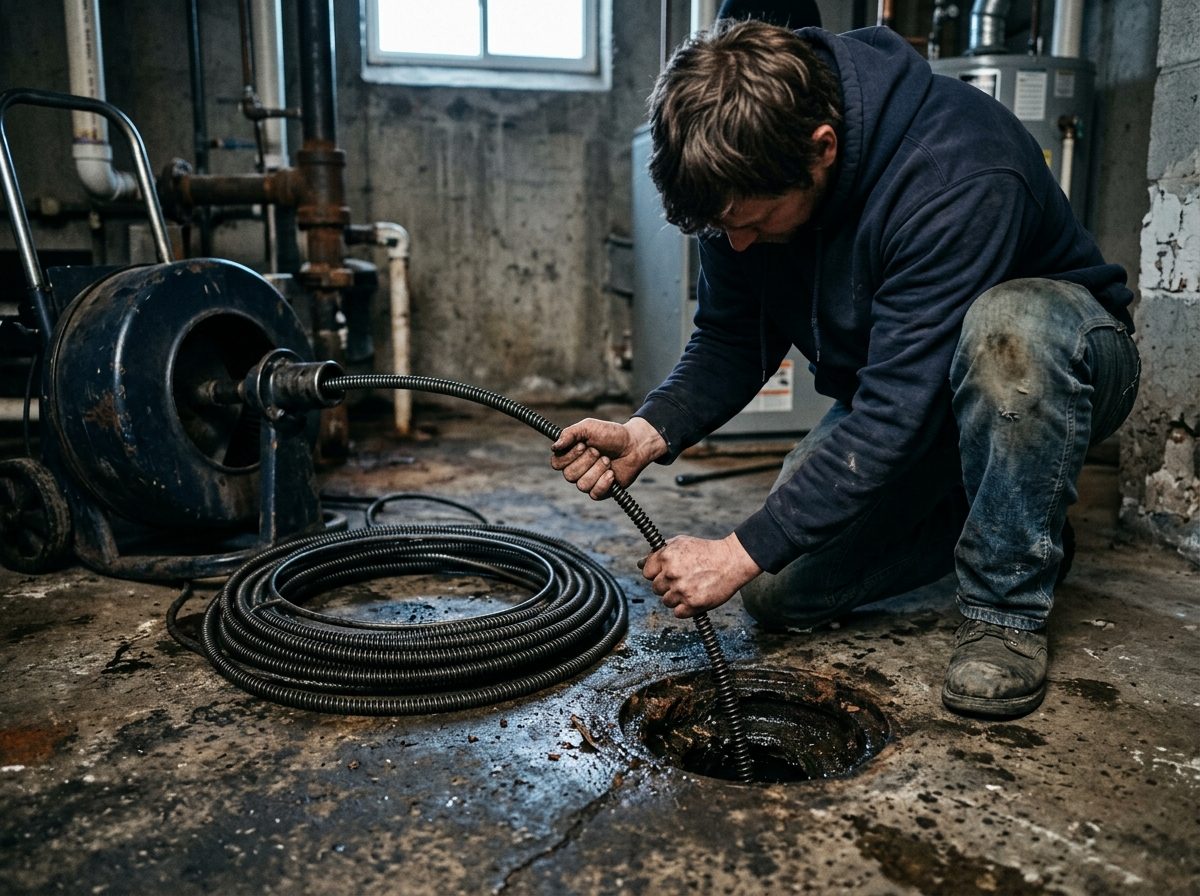
The pump house is the weak point
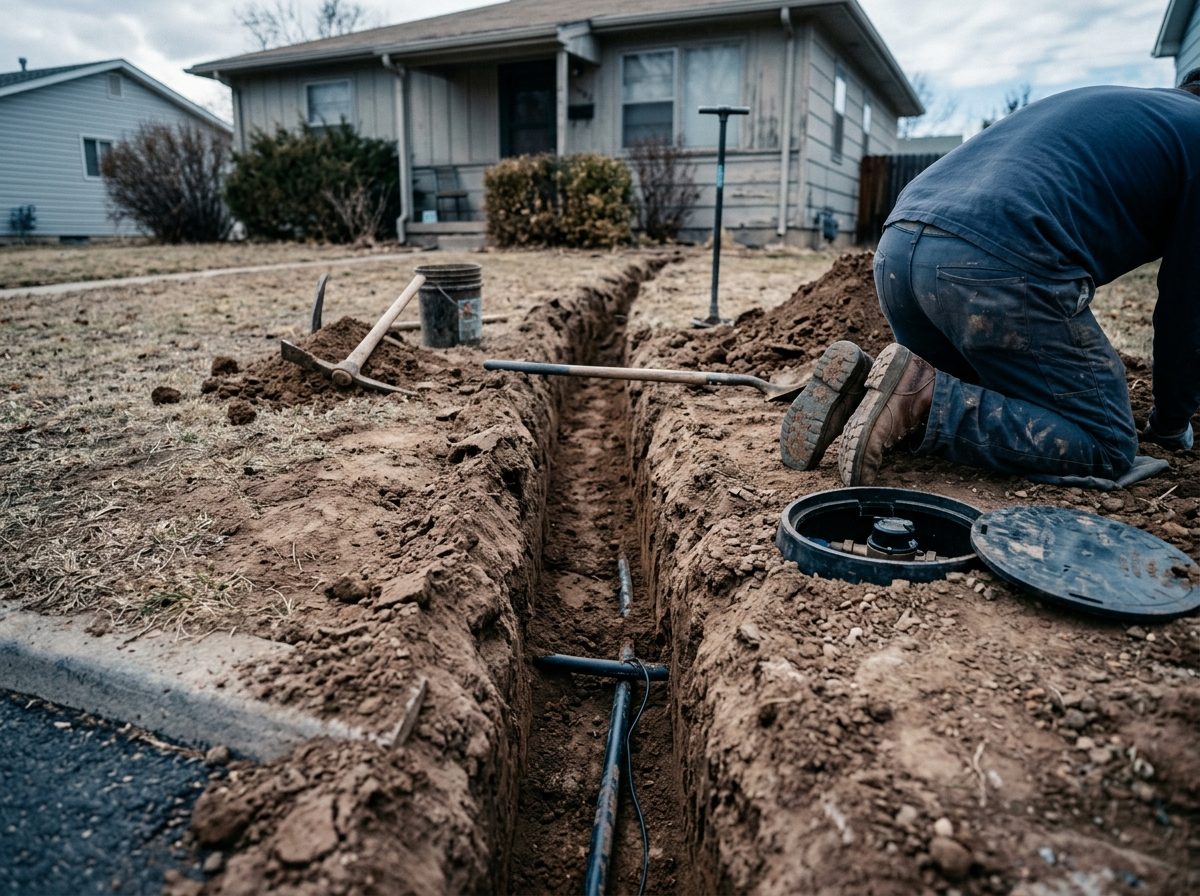
On a property out here the pump house deserves more attention than anything else, because a freeze there takes out water to the entire property at once rather than to a single fixture. It is also the failure most likely to happen while nobody is watching.
Insulation and air sealing matter more than simply adding heat, because they reduce the heat loss rather than fighting it. Beyond that, any heat source needs to be reliable rather than improvised, and heat tape on exposed pipe is backup rather than a primary strategy. Test all of it in autumn, every year.
Wells and planned replacement
Three faults account for most well calls: a pressure tank that has lost its air charge and is cycling the pump every few seconds, a pressure switch that has stopped making contact, and a pump at the end of its working life. What the gauge reads, whether the pump runs, and whether the breaker has tripped are the answers that narrow it.
The distinctive point here is the cost of failure. Pulling a pump needs equipment and access, and in winter both are constrained, so a failure in January can mean days without any water at all. That makes replacing an ageing pump on a scheduled autumn visit considerably more attractive than it would be closer to town — this is arithmetic rather than salesmanship.
Pump old and short-cycling? Replacing it on a schedule beats losing water for days.
Ask about planned workWhat you can do yourself
Given the distances, the things an owner knows and does matter more here than anywhere. Know where the main shutoff is and confirm it turns. Know where the well breaker sits. Know where any heat tape runs and whether it is plugged in.
And if a line splits, the sequence is always the same: close the main shutoff, open the lowest tap to drain the system and take pressure off the break, move what matters out of the water path, and photograph the damage before cleanup. That is what determines the size of the problem, not how fast anyone arrives.
Not sure your shutoff turns? Test it now — that is the valve everything depends on.
Ask about a shutoff valveIf a line has split
Main shutoff closed, lowest tap opened to drain the system, photographs before cleanup. Then call. That order limits the damage more than anything else available to you.
The valve out at the road
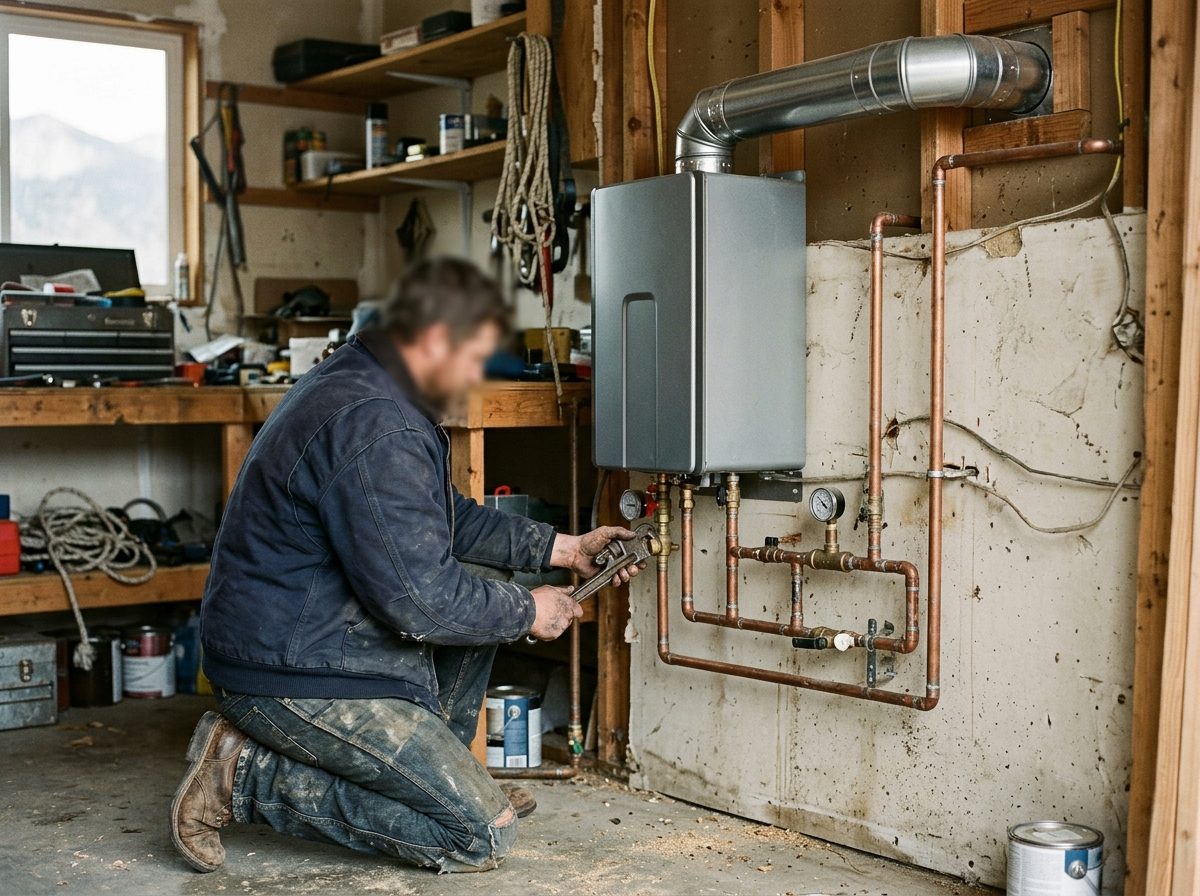
Where a property is on a metered supply, there is a valve between the main and the house that is not inside the building — a curb stop, usually in a small buried box near the property line, sometimes in a meter pit. It is the fallback when the interior shutoff will not close, and out here it is also the component most likely to be unreachable exactly when it is needed.
Three things make it unreachable. The lid freezes into the ground or is buried under snow that arrived in November and stays. The box fills with dirt and gravel over the years until the valve at the bottom cannot be reached with a key. And nobody knows where it is, because it has never been opened in the time the current owner has been there. All three are solvable in autumn and none are solvable during a burst pipe in February.
The practical preparation is short. Find the box and mark its position with something that will still be visible in deep snow and will not be mown off. Clear it out if it has silted up. Confirm the lid lifts. And understand that operating a curb stop is generally the water provider’s business rather than a homeowner’s, so the goal is not to turn it yourself but to be able to tell someone exactly where it is when it matters. A meter pit deserves the same attention, since a pit that has taken on water and frozen is its own problem.
Nearby communities
Carr sits high on the northern plains near the Wyoming line, with Nunn, Wellington and Livermore the nearest places of any size.
Carr, Colorado
High plains questions answered
Close the main shutoff, then open the lowest tap in the building to drain the system and take pressure off the break. Move what matters out of the water path and photograph everything before cleanup in case of a claim. That sequence limits the damage far more than waiting does.
Insulation and air sealing first, because that reduces heat loss rather than fighting it with heat. Then a reliable heat source sized for the space, with heat tape on exposed pipe as backup. Test everything in autumn — a pump house freeze takes out water to the whole property at once.
Out here the case is strong. Pulling a pump needs equipment and access, both restricted by snow, so a January failure can mean days without any water. If the pump is old and the system has been short-cycling, pricing a planned autumn replacement is sensible rather than cautious.
The breaker for the pump, then the pressure switch, then what the gauge reads. A tripped breaker and a failed switch are both inexpensive and both look exactly like a dead pump from inside the house. If the pump runs but pressure cycles rapidly, suspect the pressure tank.
It depends entirely on who is already heading north, and you will be told plainly rather than optimistically. For emergencies the phone advice matters as much as arrival time. For routine work, a scheduled visit is often the only realistic way to get it done.
Gently, and only with the water shut off first. Apply even heat from the open end of the line toward the blockage so meltwater can escape. Never a torch or rapid heat — that is how pipes split and buildings catch fire. If the pipe has cracked, thawing starts the leak.
Tape can look intact and be dead. Age, rodent damage and being unplugged during unrelated work are the usual causes, and none show from a glance. Test it before the freeze season and check the whole length of the run, since tape often covers less pipe than assumed.
That is how work out here should be scheduled, and often the only practical way. Give a full list when you call so the right parts come on the truck. Two jobs on one road is far easier to justify than one, so it is worth asking a neighbour.
Then the valve at the road is the fallback, which is why knowing where it is matters before you need it. Find the box, confirm the lid lifts, clear out any silt, and mark the position so it can be found under snow. Operating it is normally the provider’s job — your part is being able to point to it immediately.
Yes, and it is inexpensive work with a disproportionate payoff out here. A toilet, basin or washing machine that can be shut off on its own means one fixture out of service rather than the whole house waiting for a scheduled visit. Worth doing in a single pass rather than one room at a time.
The high plains, any hour
Carr, Nunn, Wellington, Pierce and the surrounding country.
(833) 621-2904 — answered 24/7, statewide.