Plumber in Nunn, CO — one call, any hour
Home / Areas / Northern Colorado / Nunn
Nunn is about as exposed as Colorado gets — high, flat, windswept plains with very few contractors covering them. Honest plumbing advice for a property here starts with what you can do yourself in the first few minutes, because that is what determines the size of the problem.
About as exposed as Colorado gets
There is no shelter, frost runs deep, and the wind is relentless. Those conditions put constant stress on anything above ground and on anything buried shallow, and they mean the failure modes here are more severe versions of what happens further south rather than different ones.
The other reality is distance. Response depends on who is already working in your direction, and you will be given an honest window rather than an optimistic one. For routine work, booking a visit is genuinely faster in practice than waiting for an emergency opening — and it lets several jobs be combined into one trip.
Several jobs waiting? List them and book one visit rather than four.
Ask about a single visit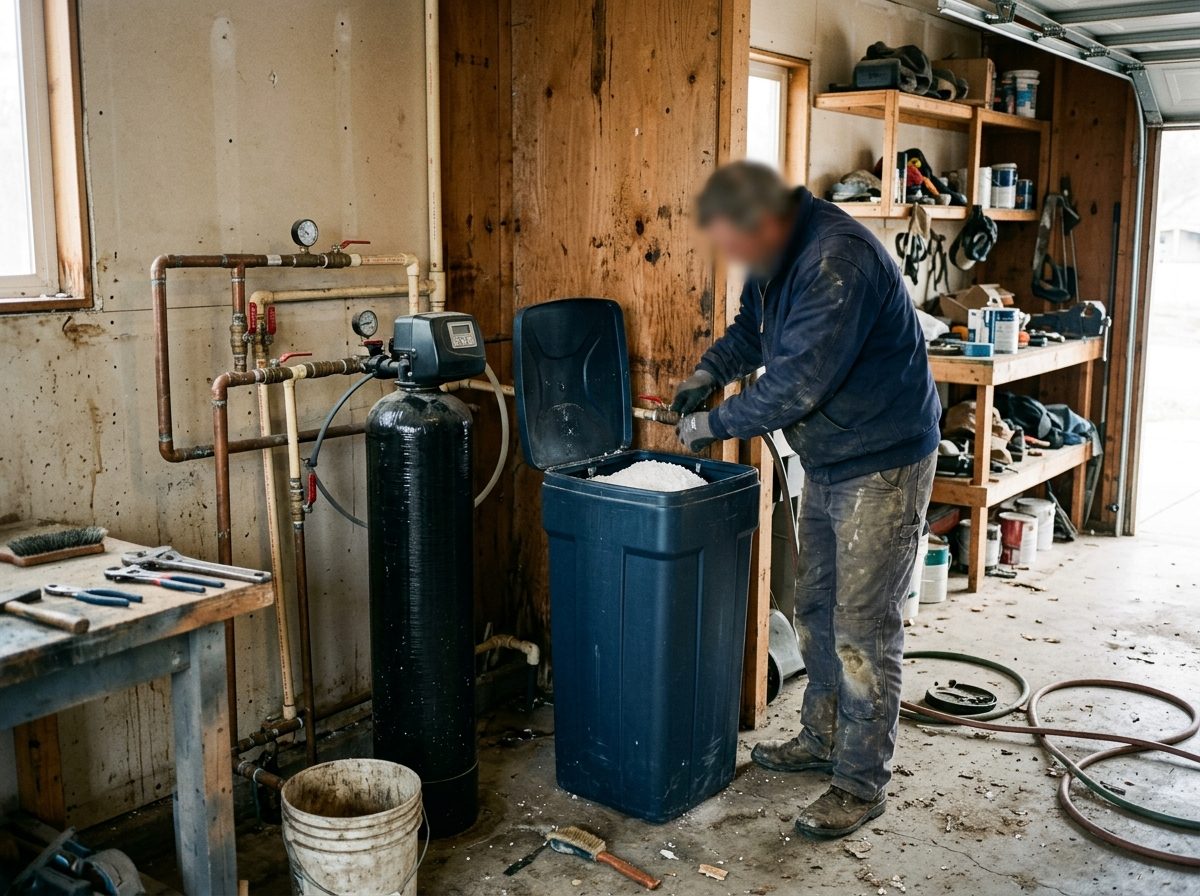
What to do in the first five minutes
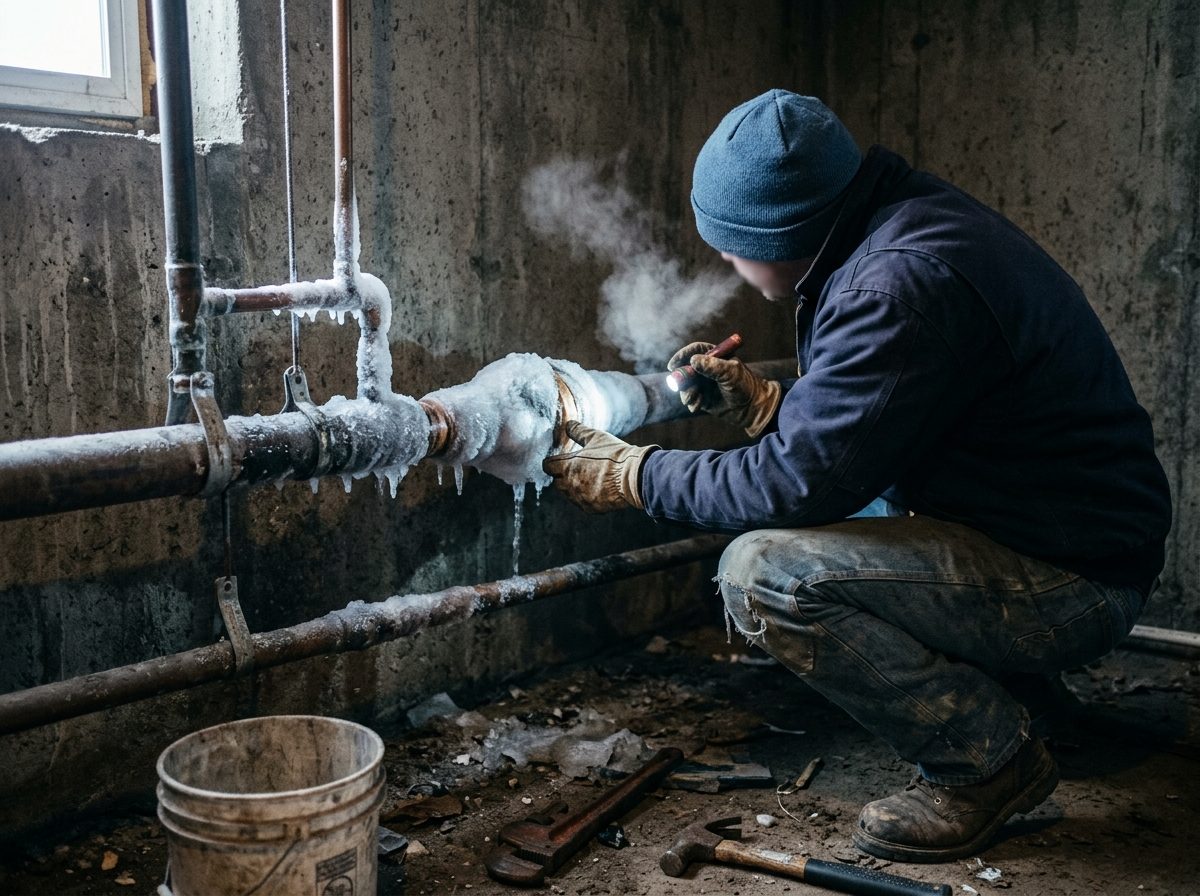
If a line has split, close the main shutoff and then open the lowest tap in the building to drain the system and take pressure off the break. That single sequence limits the damage more than anything a plumber can do on arrival two hours later.
If a line has frozen but not yet split, still shut the water off before applying any heat — a pipe that has already cracked will release water the moment it thaws, and with the water off you keep control. Then photograph everything before cleanup starts, in case a claim follows.
Knowing where the shutoff is, and that it actually turns, is therefore the highest-value five minutes available to a property owner here. So is knowing where the well breaker sits.
Well systems out here
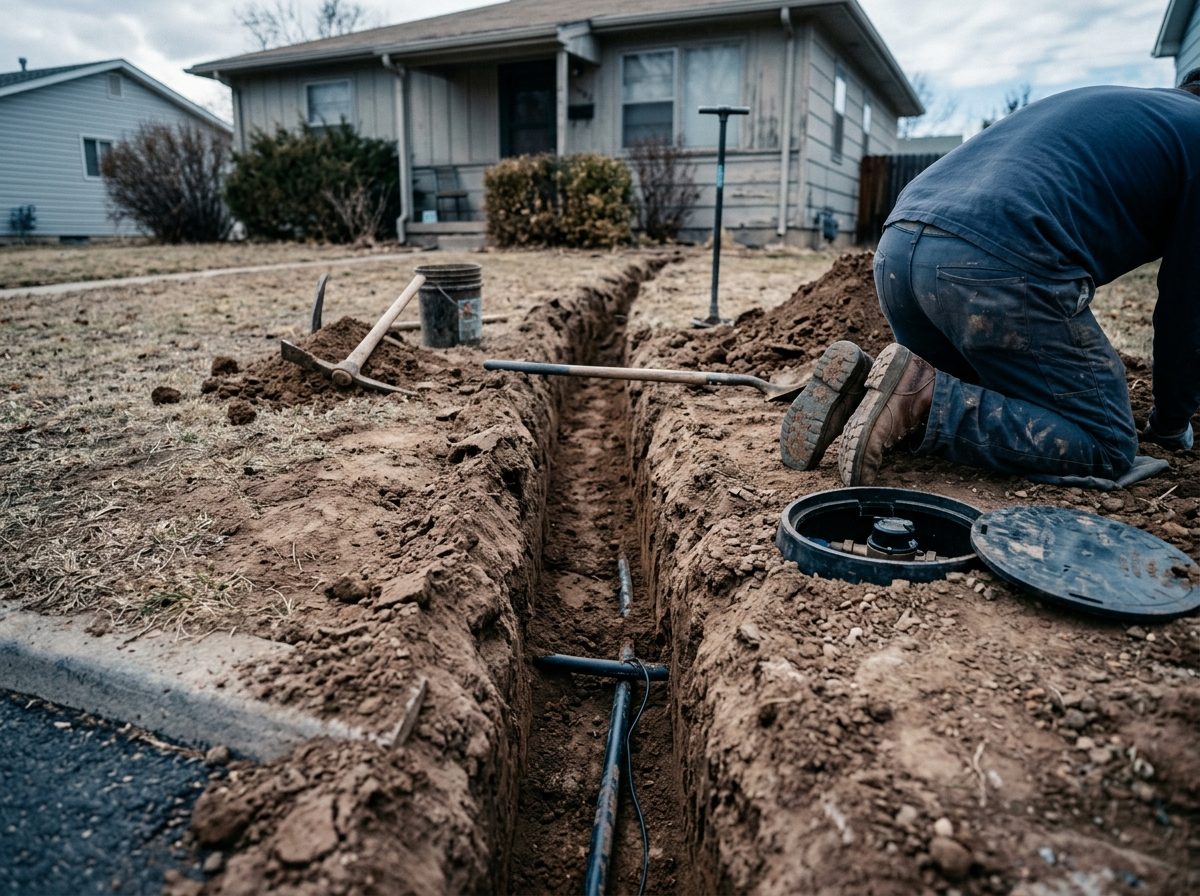
Three faults account for most well calls: a pressure tank that has lost its air charge and is cycling the pump every few seconds, a pressure switch that has stopped making contact, and a pump at the end of its working life. All three present as poor pressure or nothing at the tap.
Three answers narrow it before anyone drives out — what the gauge reads, whether the pump can be heard running, and whether the breaker has tripped. Given the distances involved, the case for replacing a pump that is clearly ageing rather than waiting for it to fail is stronger here than almost anywhere.
Pump showing its age? Replacing it on a schedule beats losing water for days.
Ask about planned workFrost, wind and the pump house
The pump house is the critical vulnerability, because a freeze there takes out water to the entire property at once rather than to one fixture. Insulation and air sealing matter more than adding heat, and any heat source needs to be reliable rather than improvised.
Elsewhere the priorities are familiar: hydrants tested in autumn, hoses disconnected, outbuilding branches isolated and drained where they are not needed through winter, and heat tape tested rather than assumed. Tape fails silently, so a line that has never frozen may be relying on tape that stopped working two winters ago.
Heat tape never tested? It fails silently — check it before the first freeze.
Ask about freeze protectionIf a line has split
Main shutoff closed, lowest tap opened to drain the system, photographs before cleanup. Then call. That order limits the damage more than anything else available to you.
Protecting a pump from itself
The most expensive failure available on a private well system is a pump that has run dry, and it is almost always a consequence rather than a cause. A well with limited yield gets drawn down faster than it recovers, the pump keeps running because nothing has told it to stop, and it overheats without water around it to cool it. The pump does not fail because it was poor; it fails because it was allowed to keep trying.
The controls that prevent this are inexpensive relative to what they protect. A low-pressure cutout stops the pump when pressure falls below a threshold rather than letting it run against nothing. A flow or level sensing control does the same job by watching what the well is actually delivering. And on a well known to be marginal, a timer arrangement that limits how long the pump can run before resting suits the well’s own recovery rate rather than fighting it.
The other half of the same problem is cycling. A pressure tank that has lost its air charge gives the pump no cushion, so it starts and stops every few seconds during any sustained draw. That is audible, and it wears the pump faster than continuous running does, because the starting current is where the load is. So rapid cycling and running dry are the two things worth acting on quickly rather than living with — both are cheap to address at the tank and the controls, and both destroy the most expensive component in the system if left.
Nearby communities
Nunn sits high on the northern plains, with Pierce, Ault, Carr and Wellington the nearest places of any size.
Nunn, Colorado
Northern plains questions answered
Close the main shutoff, then open the lowest tap in the building to drain the system and take pressure off the break. Move what matters out of the water path and photograph the damage before cleanup in case of a claim. That sequence limits the damage far more than waiting does.
Gently, and only with the water shut off first. Apply even heat from the open end of the line toward the blockage so meltwater can escape. Never use a torch or rapid heat — that is how pipes split and buildings catch fire. If the pipe has already cracked, thawing simply starts the leak.
It depends entirely on who is already working out this way, and you will be told plainly. For emergencies the phone advice matters as much as arrival time. For routine work, a scheduled visit happens sooner in practice than waiting for a same-day opening.
The breaker for the pump, then the pressure switch, then what the gauge reads. A tripped breaker and a failed switch are both inexpensive and both look exactly like a dead pump from inside the house. If the pump runs but pressure cycles rapidly, suspect the pressure tank.
Out here the case is strong. A planned replacement happens on a scheduled visit at a predictable price. A failure means no water at all, possibly for days, plus an urgent long-distance callout. If the pump is old and the system has been short-cycling, it is worth pricing the planned option.
Insulation and air sealing first, because that reduces heat loss rather than just adding heat. Then a reliable heat source sized for the space, and heat tape on exposed pipe as backup. Test everything in autumn — a pump house freeze takes out water to the whole property at once.
Tape can look fine and be dead. Age, rodent damage and being unplugged during unrelated work are the usual causes, and none are visible from a glance. Test it before the freeze season and check the full length of the run, because tape often covers less pipe than people assume.
That is how work out here should be scheduled, and it is where the value is. Give a full list when you call so the right parts come on the truck. Two jobs on one road is easier to justify than one, so it is worth asking a neighbour whether anything needs doing.
Two things more than any other: running dry, which overheats it, and rapid cycling from a pressure tank that has lost its air charge, which loads the motor on every start. Both are inexpensive to address at the tank and the controls, and both destroy the pump if left. Noticing the cycling rather than living with it is the useful habit.
Usually, yes. Controls that stop the pump before it runs dry, and storage that lets a slow well fill a tank over hours while the house draws from the tank at normal rates, suit a marginal well far better than trying to pull harder on it. That combination is what makes a low-yield bore workable for a household.
The high plains, any hour
Nunn, Pierce, Ault, Carr and the surrounding country.
(833) 621-2904 — answered 24/7, statewide.