Plumber in Eaton, CO — one call, any hour
Home / Areas / Northern Colorado / Eaton
Eaton grew on sugar beet money and built accordingly: substantial brick houses on a regular grid, most of them a century old and most still running on a good deal of their original plumbing. That makes the plumbing conversation here about sequencing — what to renew first, and what can safely wait another few years.
Brick, beet money and original pipe
Houses of this era were plumbed with galvanised steel supply lines, cast-iron drain stacks and clay sewer laterals. Solid brick construction has an odd side effect: because the shell is durable, the plumbing inside it has often been patched rather than replaced, so what is behind the plaster is a century of accumulated decisions.
Three symptoms recur. Flow that collapses when two fixtures run, which is internal corrosion narrowing the supply bore. Water that comes out discoloured after the house has stood empty, which is the same cause seen differently. And drains that clear briefly and slow again over months, which is the drain side rather than the supply side.
Not sure which system is failing? Supply and drain symptoms are different — describe what you see.
Ask what to check first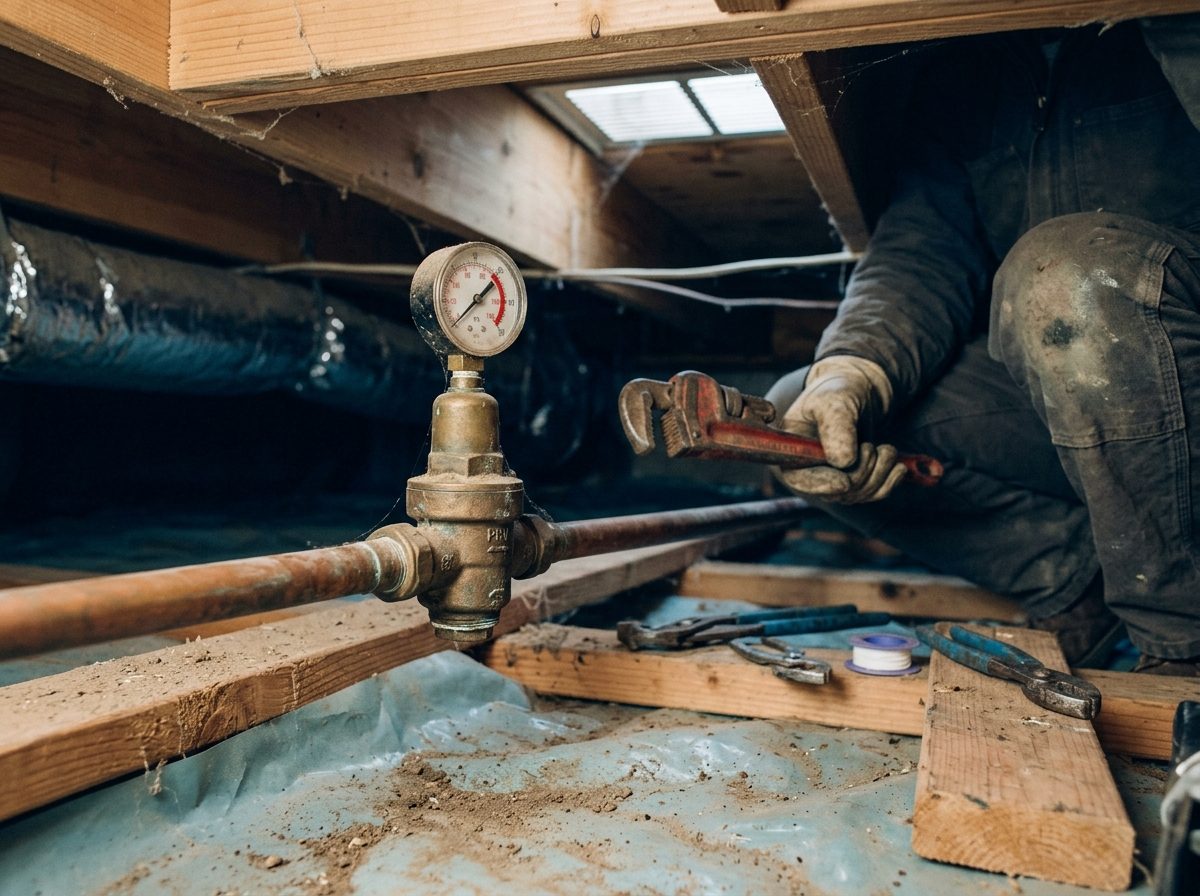
The drain stack is the expensive failure
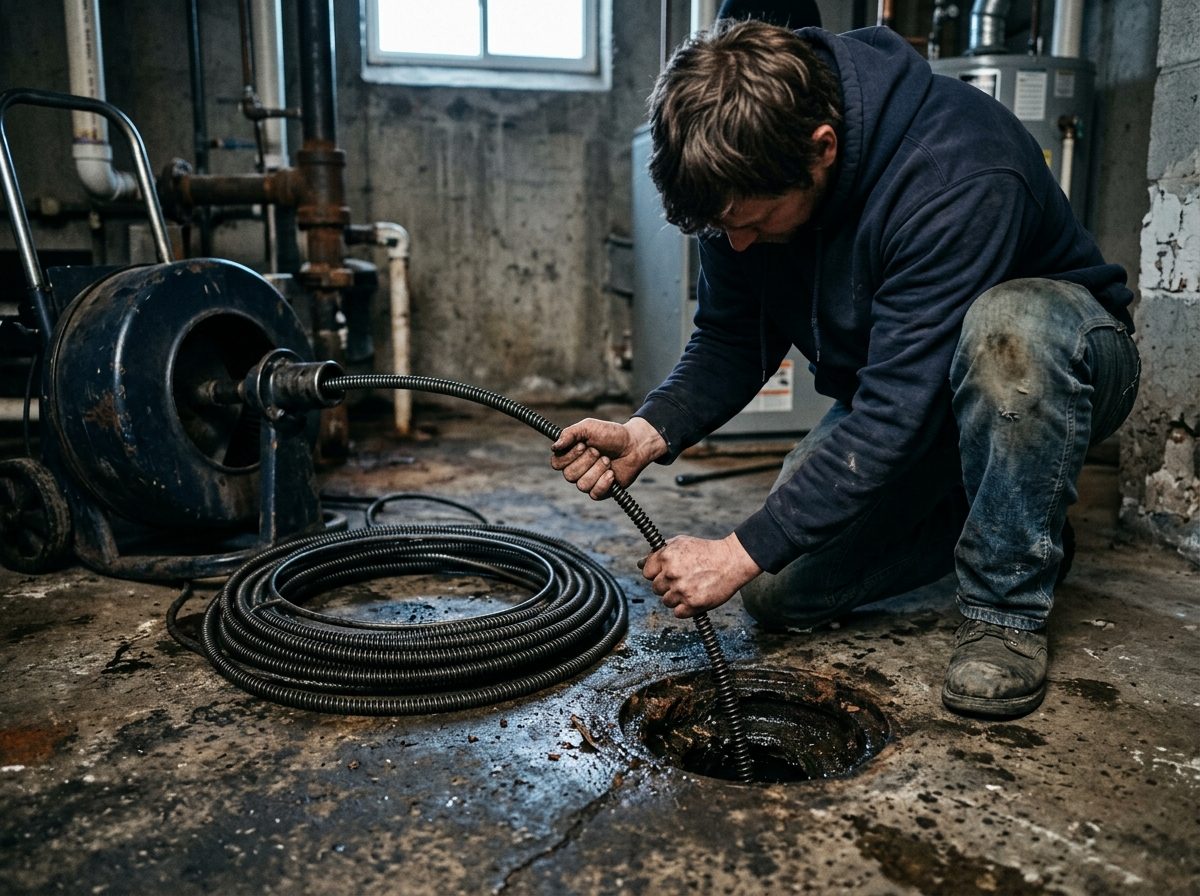
Of everything that can fail in a house like this, the vertical cast-iron drain stack is the one worth watching. It corrodes from the inside, roughens, holds waste at its low points, and eventually perforates along the bottom of the pipe — and because it usually runs inside a finished wall, the cost is mostly access and restoration rather than pipe.
The warning signs are worth memorising: slow drains upstairs that clear and return, a persistent smell near the stack, damp or staining on the wall around it, and flaking rust at its base in the basement. Catching it before it perforates is the difference between a planned wall opening and an emergency one with water in the ceiling below.
Repiping in stages, not all at once
Nobody needs to renew a century of plumbing in one go, and a contractor who says otherwise on a first visit is worth a second opinion. What works is an order of work with a rough cost against each step.
Practically, that usually means: the horizontal supply mains in the basement first, since they feed everything and are the easiest to reach; then the runs serving the fixtures you use most; then the branches to occasional fixtures. The drain stack sits outside that sequence and jumps the queue if the signs above are present. Staged over two or three years, it is a manageable series of jobs rather than one alarming number.
Old house, several tired systems? Ask for an order of work rather than one big number.
Ask for a staged planLaterals under the old grid
The regular street grid here is lined with mature trees, and clay laterals give roots a joint every few feet to find. The first symptom is normally the lowest opening in the building rather than the fixture you were using.
Where a lateral blocks repeatedly at the same distance from the house, the pipe rather than the blockage is the problem — a belly where waste collects, or an offset joint. Clearing buys months; a camera run tells you which situation you are in and whether a liner can be pulled through rather than the front garden opened up.
Same blockage every year? A camera run shows whether it is roots or alignment.
Ask about a repeat backupPinhole leaks in copper, and why they cluster
Copper pipe does not usually fail along its whole length at once. It develops pinholes — small perforations from the inside out, often in a similar part of the system and often within a few years of each other. The first one is easy to treat as bad luck. The second and third in the same house are information, because whatever caused the first is still present.
Several things cause it, and they call for different responses. Water chemistry that is aggressive to copper attacks it from the inside generally. Velocity does it locally, wearing the pipe thin where water moves fast through an undersized section or turns sharply — which is why pinholes cluster near elbows and on hot recirculation lines. Poor workmanship at installation, particularly excess flux left inside a joint, produces failures near fittings decades later. And a stray electrical current finding a path along the pipe will perforate it in a way that looks like nothing else.
The practical consequence is that repeat pinholes are worth investigating rather than simply patching. If the cause is velocity in one run, replacing that run solves it. If the cause is chemistry, spot repairs will continue indefinitely and a repipe is the honest answer. What is worth avoiding is the pattern of paying for a small repair every eight months for years without anyone asking why — three leaks in a house is the point at which the question has become cheaper than the next repair.
Worth checking today
The base of the drain stack in the basement. Flaking rust or damp there is the cheapest early warning you will get on the most expensive failure in an old brick house.
Nearby communities
Eaton sits north of Greeley in Weld County, with Ault, Pierce, Lucerne and Severance nearby.
Eaton, Colorado
Eaton plumbing questions answered
Slow drains upstairs that clear briefly and return, a persistent smell near the stack, damp or staining on the wall around it, and flaking rust at its base in the basement. Failure is gradual until it is not, and because the stack runs inside a finished wall, much of the repair cost is access and restoration rather than pipe.
No, and on a century-old house it usually should not be. A sensible order is the horizontal supply mains first, then the runs serving the fixtures you use most, then the occasional branches. Staged over two or three years it becomes a series of manageable jobs rather than one alarming number.
Almost always galvanised steel supply pipe that has narrowed from internal corrosion over decades. Testing pressure at an outdoor hose bib separates house from supply: if what arrives at the property is normal and interior flow is not, the pipe is the constraint rather than the town main.
That is the same corrosion seen a different way. Water sitting still in a corroding galvanised line picks up rust, which flushes out when you use the tap again. It is a reliable sign that the supply runs are near the end of their life, and it tends to appear before flow problems become obvious.
Because the pipe rather than the blockage is the problem — usually a belly where waste collects or an offset joint where sections no longer align, with roots at the crack. Clearing restores flow for months; a camera run tells you whether a liner can be pulled through or the line needs opening up.
Often, yes. Trenchless methods either pull a new pipe along the path of the old one or line the existing pipe in place, needing access pits rather than an open trench. Suitability depends on condition, depth and bends, which is exactly what the camera inspection establishes.
For most households the return shows up in heater and appliance life rather than at the tap. Test first so hardness is a real number and you know whether iron is present, then size the equipment to the household and confirm there is a drain available for the regeneration cycle.
In town, same-day is normal for urgent problems, with Greeley close by. On an older house it is often worth booking rather than calling urgently, because the right parts and the time to trace what is actually installed both make the visit more productive.
Not necessarily, but the repetition is worth diagnosing rather than patching again. Pinholes cluster for identifiable reasons — water chemistry, high velocity through an undersized or sharply turned run, flux left in a joint at installation, or stray current. If it is localised, replacing that section fixes it. If it is chemistry, spot repairs will simply continue.
North Weld County, any hour
Eaton, Ault, Pierce, Lucerne and Severance.
(833) 621-2904 — answered 24/7, statewide.