Plumber in Ault, CO — one call, any hour
Home / Areas / Northern Colorado / Ault
Ault sits on genuinely open plains north of Greeley, and the two things that define plumbing here are the water source and the weather. Most properties run their own well, there is no shelter from the wind, and frost goes deeper than almost anywhere on the Front Range.
A small town on open plains
The town itself is small and the housing modest, with plumbing that varies street by street according to when each house went up. What is consistent is the surrounding country: acreage, outbuildings, stock water, and distances that make scheduling matter more than speed.
There are relatively few contractors covering this part of the county, so the honest position is that emergency response depends substantially on who is already working in your direction. Routine work is better booked than requested at short notice, because a plumber driving out will want to combine several jobs into the trip.
Something needs doing but is not urgent? Book it rather than waiting for an emergency slot.
Ask about a scheduled visit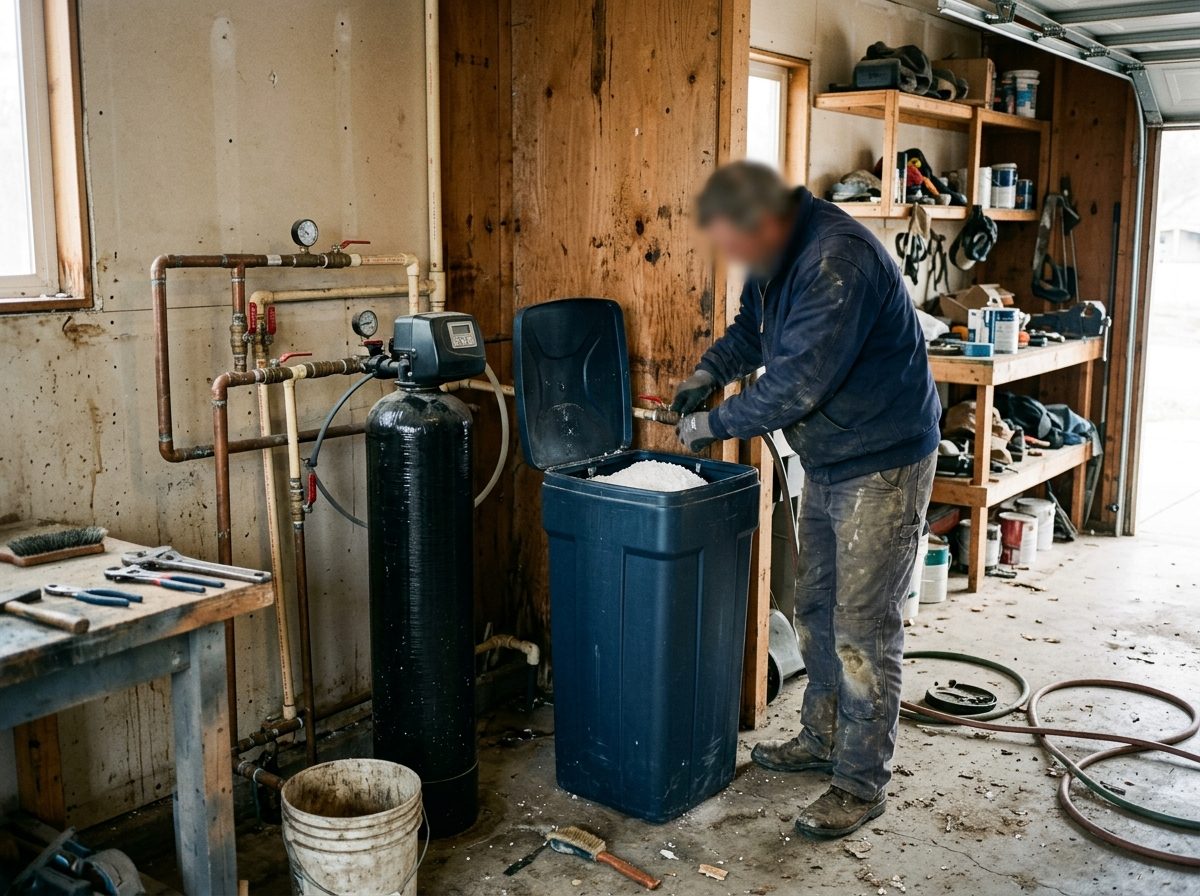
The well is the whole system
On a private well you own the supply from the ground up, and failures cluster in three places. The pressure tank loses its air charge, so the pump starts and stops every few seconds instead of running properly — and short-cycling destroys pumps quickly. The pressure switch stops making contact. Or the pump itself reaches the end of its working life.
Because all three look identical from inside the house, three answers narrow it before anyone drives out: what the gauge reads, whether the pump can be heard running, and whether the breaker has tripped. A tripped breaker and a failed switch are both inexpensive, and both present exactly like a dead pump.
Water quality deserves attention too. Composition varies property to property in a way municipal supply does not, so hardness, iron and other results differ from a neighbour's. Testing before buying treatment is what stops a household owning the wrong equipment.
Deep frost, constant wind
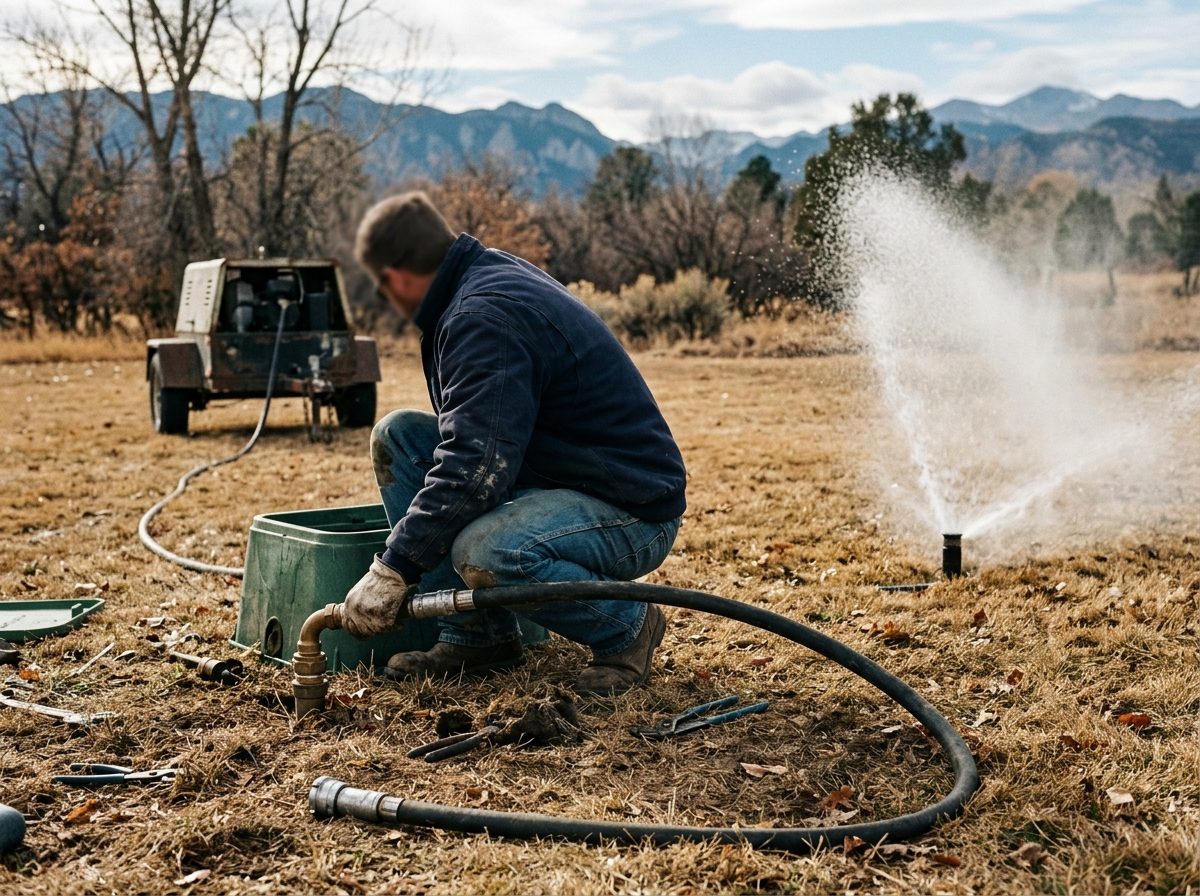
Frost depth here is a design consideration rather than a detail. Buried lines, hydrants and stock tank feeds all sit closer to the frost line than an equivalent installation further south, and constant wind strips heat from anything above ground.
Frost-free hydrants are the classic failure. They drain their standpipe below the frost line whenever they close, and one that weeps has usually stopped draining. Water standing in that pipe through a hard freeze splits it underground, which turns a modest repair into excavation in deeply frozen soil. Test them every autumn without exception.
Hydrant weeping or stiff? Deal with it before the freeze, not after it splits.
Ask about a yard hydrantWhy planned work wins out here
Distance changes the arithmetic on replacement. A water heater at the end of its life, a pump showing its age, a hydrant that has started to weep — all of those are cheap to handle on a scheduled visit and expensive to handle at short notice from an hour or more away.
That is not a sales argument, it is geography. Where the nearest help is far off, the gap between a planned replacement and an emergency one is much wider than it would be in a city, and it includes days without hot water or without any water at all.
Something clearly near the end of its life? Replacing it on a schedule costs far less out here.
Ask about planned workThe part inside the water heater nobody sees
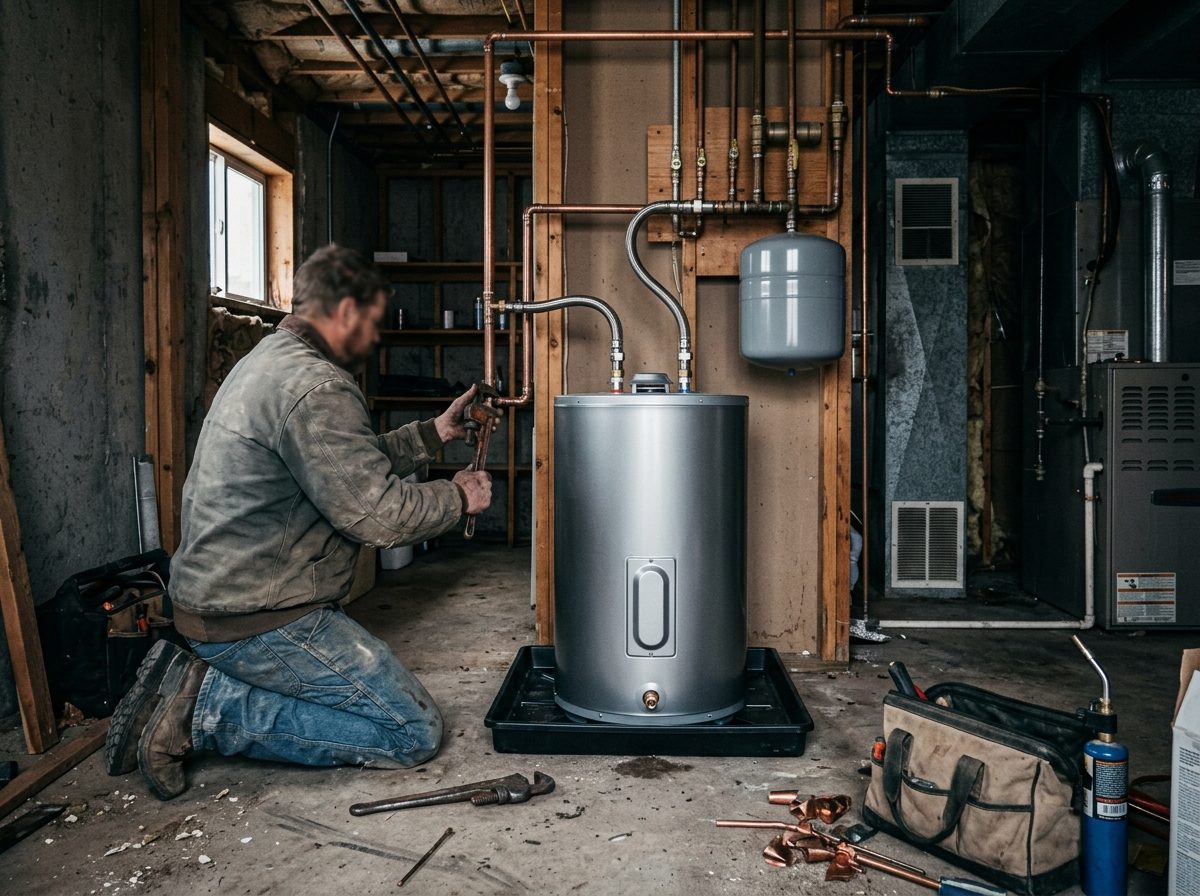
Every tank water heater contains a sacrificial anode — a rod of magnesium or aluminium whose entire purpose is to corrode so the steel tank does not. It is consumed steadily, faster in mineral-heavy water, and when it is gone the tank becomes the thing being attacked. That is the moment a heater stops being a serviceable appliance and starts being a countdown, and nothing about the outside of it shows the change.
Which is why the two pieces of maintenance that actually extend a heater’s life are both invisible from the outside. Draining a few gallons from the bottom periodically removes the sediment that insulates the burner from the water and makes the tank work harder than it should. Checking the anode every few years, and replacing it when it is largely gone, is the cheaper of the two by far and the one almost nobody does.
Both are worth asking for by name at the point a heater is already being looked at for something else, because the marginal cost then is small. It is also worth knowing the tank’s age: stamped in its serial number rather than written on the front, and the single most useful number when deciding whether a repair is sensible. Past a certain point the honest answer is that a repair buys months on a component that is being held up by nothing.
Worth knowing before you need it
Where the main shutoff is, whether it actually turns, and where the well breaker sits. Three things, no cost, and between them they decide how bad the worst day gets.
Nearby communities
Ault sits on the northern Weld County plains, with Pierce, Nunn, Eaton and Galeton nearby.
Ault, Colorado
North Weld County questions answered
Check the breaker for the pump first, then the pressure switch, then what the gauge reads. A tripped breaker and a failed switch are both inexpensive and both look exactly like a dead pump from inside the house. If the pump runs but pressure swings every few seconds, suspect the pressure tank.
That is short-cycling, and the usual cause is a pressure tank that has lost its air charge. The tank holds a cushion behind a bladder so the pump runs once every few minutes rather than continuously. Left alone it wears the pump out quickly, so it is worth fixing promptly.
Yes, and out here nobody else is doing it for you. Composition varies property to property, so hardness, iron and other results differ from a neighbour’s. Annual testing is a reasonable habit, and it is the only sound basis for deciding whether treatment equipment is worth buying.
It is a poor candidate for waiting. A frost-free hydrant drains its standpipe below the frost line whenever it closes, and one that leaks often no longer drains. Water left in that pipe through a hard freeze splits it underground, and here that means digging in deeply frozen ground.
It depends entirely on who is already working out this way, and you will be told plainly rather than optimistically. For emergencies, the phone advice matters as much as arrival time. For anything else, a scheduled visit gets done sooner in practice than waiting for a same-day opening.
That is how work out here should be scheduled. Give a full list when you call — house, shop, barn, hydrants, tanks — so the right parts come on the truck. Two jobs on one road is also easier to justify than one, so it is worth asking a neighbour.
Out here the case is stronger than in a city. A planned replacement happens on a scheduled trip at a predictable price; an emergency one may mean days without hot water and an urgent long-distance callout. Age, rust at the fittings and damp underneath are the things to judge on.
If it is not needed through winter, isolate its branch and drain it — that removes the risk instead of managing it. If it must stay in service, insulate the run and seal air leaks first, then use heat tape as backup. Test any existing tape each autumn, because it fails with no visible sign.
Two things, both routine and both usually skipped. Flushing sediment from the bottom periodically stops it insulating the burner and overworking the tank. Replacing the sacrificial anode before it is fully consumed keeps the corrosion off the steel. Neither is expensive, and the anode in particular is cheap next to what it protects — worth asking for by name.
From the serial number on the data plate rather than from anything printed on the front — most manufacturers encode the month and year in the first few characters. It is worth knowing, because age changes the answer on whether a repair is sensible. Past a certain point a repair buys months on a tank nothing is protecting any more.
North Weld County, any hour
Ault, Pierce, Nunn, Eaton and the surrounding plains.
(833) 621-2904 — answered 24/7, statewide.