Plumber in Lucerne, CO — 24/7 help by phone
Home / Areas / Northern Colorado / Lucerne
Lucerne is a hamlet north of Greeley surrounded by working farmland. It is close enough to the city that response times are reasonable, and rural enough that the plumbing is a property matter rather than a house one. Hard water is the constant across all of it.
A hamlet north of Greeley
There is very little town here, and most calls come from properties rather than from streets. A typical holding has a house, a shop or barn with its own supply, stock water, and a hydrant or two, fed either from a private well or from a rural service connection.
Proximity to Greeley helps: there are more contractors within reach than in the far corners of the county, so same-day response for urgent work is more realistic here than it is thirty miles further out. Bundling still pays, though — a plumber coming out will want to justify the trip.
Several jobs waiting? List them and book one visit rather than four.
Ask about a single visit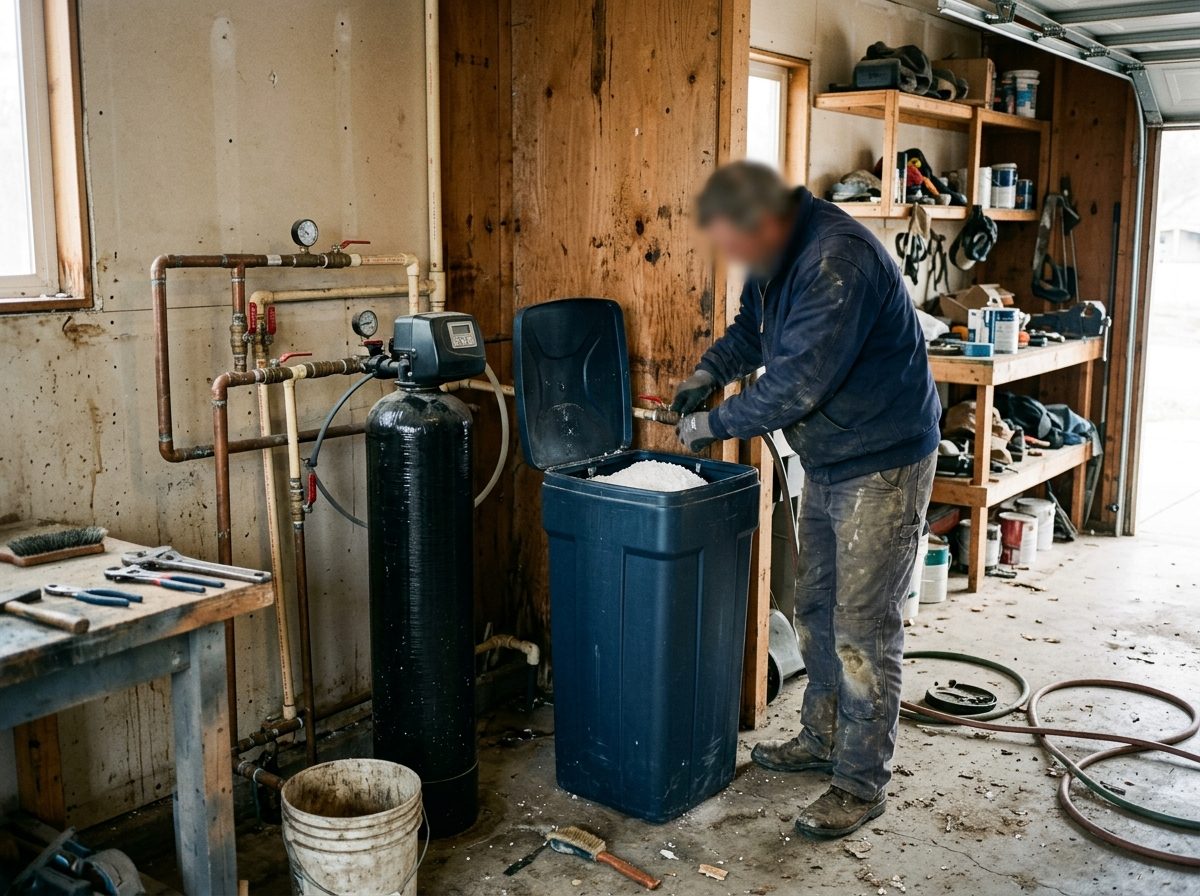
The appliance that suffers most
Water in this part of Weld County is decidedly hard, and the water heater takes the brunt of it. Sediment settles across the tank floor so the burner heats through a layer of scale rather than against clean steel, run times lengthen, and recovery slows until a household that never ran out of hot water starts running out. On electric units the elements scale directly and burn out early.
Two maintenance items matter more than most owners realise. Draining the sediment out annually is the obvious one. Less obvious is the sacrificial anode rod — a consumable designed to corrode instead of the tank lining, which in water like this can be used up years before the heater's warranty expires. Replacing a spent rod is cheap; replacing a tank that rusted through because nobody checked it is not.
Long runs and slow leaks
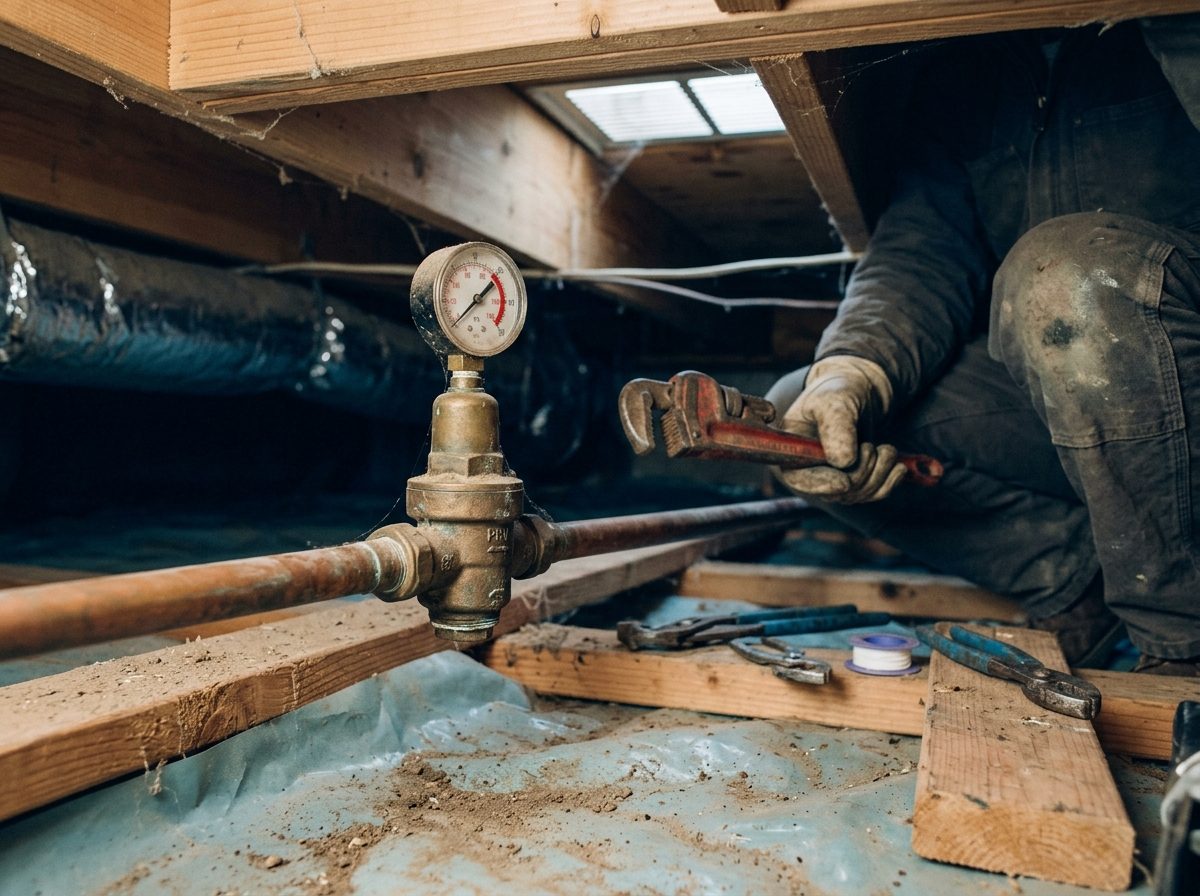
On a property with buried line running out to outbuildings and tanks, a leak can continue for weeks without anything visible changing. The signs are indirect: pressure that has slowly fallen, ground that stays damp or unusually green, a pump running more often than it used to, or water use that climbed with no change in habits.
Confirming it before the visit is worth doing. With everything shut off, movement at the gauge or the meter over an hour proves water is leaving the system, and where isolation valves exist between structures, closing them one at a time narrows which run is at fault before anyone starts digging.
Water use up with no explanation? A buried leak can run for weeks unnoticed.
Ask about finding a leakEverything happens in autumn
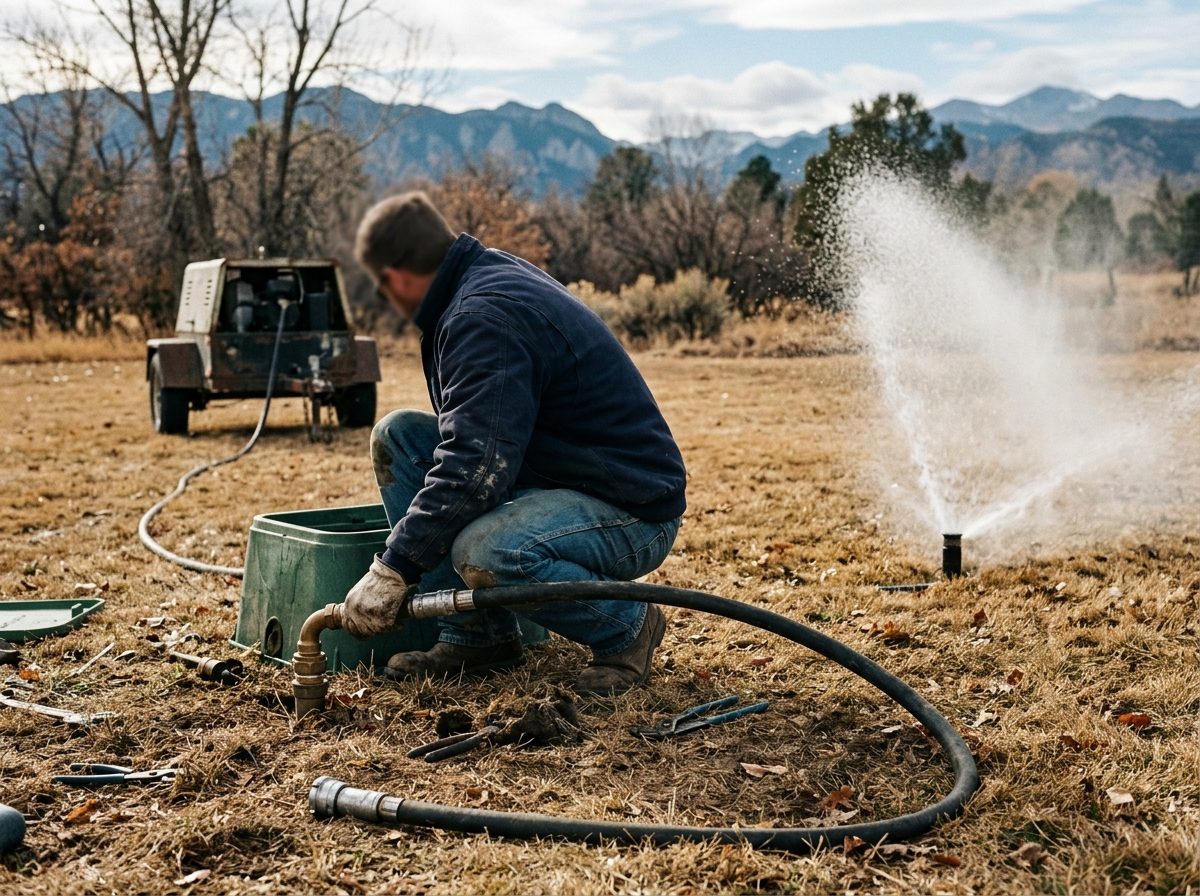
In irrigated farm country most of the water in use is outdoors, and autumn is when all of it needs attention. Irrigation not cleared with compressed air before the first hard freeze holds water at its low points and at the backflow device. Hoses left connected hold water against the bib and defeat its frost protection.
Hydrants are the priority. One that weeps has usually stopped draining, so the standpipe holds water and splits underground in the first hard freeze — a small repair becoming excavation. Testing every hydrant each autumn is the single most cost-effective habit available on a property like this.
Hydrant weeping or stiff? Deal with it before the freeze, not after it splits.
Ask about a yard hydrantAfter water damage, the paperwork matters
Once a leak has been stopped, the next thing that determines the cost of it is documentation — and that is entirely in the property owner’s hands in the first hour, before anyone arrives and before anything is tidied. It is the part people most often get wrong, because the instinct is to clean up.
What is worth doing first is photographing everything: the source if it is visible, the extent of the water, every affected room from more than one angle, and the belongings in it. Then keep what failed. A burst flexible hose, a split fitting or a failed valve is the evidence of what happened, and it is worth putting in a bag rather than in a skip. Note the time you found it and the time the water was shut off, because duration is a question that gets asked.
After that, drying matters more than repairing. Water that is removed within a day or two is usually a cleanable event; water left in a wall cavity or under a floor for a week becomes a different and much larger job. Getting air moving, lifting what can be lifted, and pulling up saturated material where it is safe to do so are all worth doing before anyone worries about how it will look afterwards. And it is worth being honest with yourself about scope: if water has got into a wall cavity or under a finished floor, saying so to the insurer at the start is better than discovering it during the repair.
Autumn walk-round
Irrigation cleared, hoses disconnected, every hydrant tested, stock tank floats checked, heater flushed. One visit, and most of the winter calls never happen.
Nearby communities
Lucerne sits just north of Greeley in Weld County, with Eaton, Galeton, Gill and Kersey nearby.
Lucerne, Colorado
North Weld County questions answered
Sediment. In hard water a layer builds across the tank floor, insulating the burner from the water and slowing recovery, so the same tank delivers less usable hot water. An annual drain restores much of it. If the tank is also rusting at the fittings or damp underneath, plan a replacement instead.
It is a sacrificial rod inside the heater that corrodes in place of the tank lining. In mineral-heavy water it can be consumed within a few years, and once gone the tank starts corroding. Checking and replacing it is inexpensive, and it is the most overlooked way to extend a heater’s life.
On a property with long buried runs, an underground leak is a real possibility and it can run for weeks with no visible sign. With everything shut off, movement at the gauge or meter over an hour confirms water is leaving the system, and isolation valves narrow which run is at fault.
That needs dealing with before winter. The hydrant drains its standpipe below the frost line each time it closes, and one that leaks often no longer drains. Water left in that pipe through a hard freeze splits it underground, turning a modest repair into digging in frozen ground.
For most households the return shows up as longer heater and appliance life rather than anything obvious at the tap. Test first so hardness is a real number and you know whether iron is present, then size the equipment to the household and confirm there is a drain for regeneration.
Better than in the far corners of the county, since Greeley is close and there are more contractors within reach. Same-day is realistic for urgent problems. For routine work a booked visit is still the sensible route, and it lets several jobs be combined into one trip.
Before the first hard freeze, which can arrive in October. Draining is not enough on most systems, because low points and the backflow device hold water gravity cannot move. On a property with long runs and several zones, booking early in the season is worth doing.
Three to five years for most households, sooner where the tank is small or the household large. Every drain slowing at once rather than one fixture is the classic signal, along with unusually lush growth over the field or a backup after a busy weekend.
Stop the water, then document before you tidy — photograph the source and every affected room from several angles, note when you found it and when it was shut off, and keep the component that failed rather than binning it. Then concentrate on drying rather than repairing, because water left in a cavity for a week becomes a much larger job.
Yes. A burst hose, split fitting or failed valve is the evidence of what happened and why, and it is frequently asked for. Bag it and set it aside. It also matters for the repair itself, since a component that failed early rather than from age suggests something about the conditions it was working in — usually pressure — that is worth addressing.
North Weld County, any hour
Lucerne, Eaton, Galeton, Gill and Greeley.
(833) 621-2904 — answered 24/7, statewide.