Plumber in Evans, CO — 24/7 help by phone
Home / Areas / Northern Colorado / Evans
Evans is a compact town pressed against the south side of Greeley, with modest housing, a good deal of it rented, and water carrying a heavy mineral load. Those three facts between them account for the large majority of plumbing calls here.
A compact town beside a bigger one
The housing stock is mixed but generally smaller and more modest than in the neighbouring city, with older single-storey houses, mobile and manufactured homes, and newer infill. That mix matters because the plumbing differs materially between them: a manufactured home has its own conventions for supply routing, skirting and freeze exposure that a stick-built house does not share.
Saying which kind of building you are calling about is genuinely useful. It changes what is likely to have failed, what parts are needed, and in some cases who is best placed to do the work.
Manufactured or stick-built? Say which when you call — the plumbing conventions differ.
Ask what applies to your home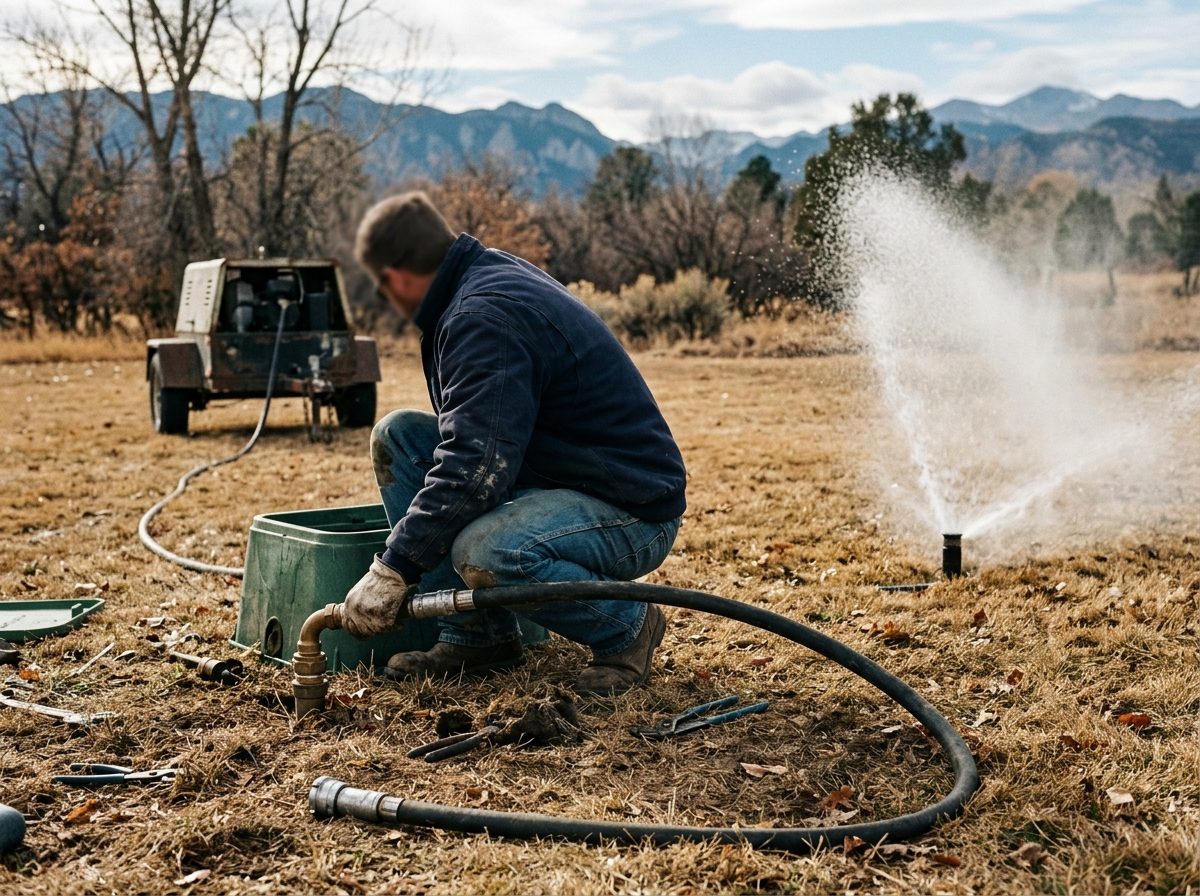
Rented housing and what it needs
Where a lot of housing is rented, plumbing wear runs ahead of building age. Drains get plunged rather than cleared, disposals are fed things they cannot handle, running toilets go unreported because the occupant does not see the water bill, and washer hoses stay in service well past the point where they should have been swapped.
The economics for owners are straightforward: scheduled work at changeover costs a fraction of emergency response mid-tenancy. Clearing the main drain, renewing toilet internals, replacing old washer hoses and checking the heater's condition covers most of what otherwise arrives as a call at an awkward hour. For tenants, the two useful things are knowing where the shutoff is and reporting a small leak early rather than after it has reached a wall.
Mineral-heavy water and appliances
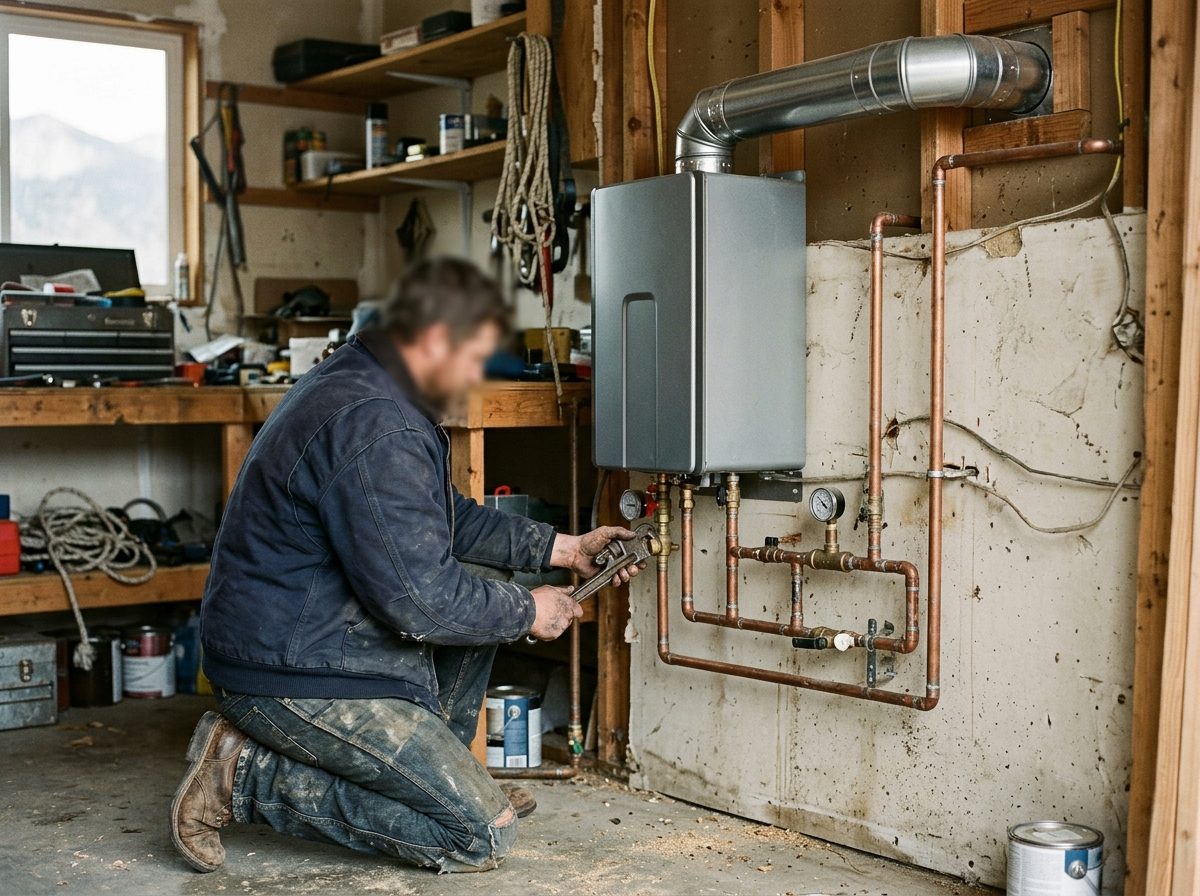
Water in this part of Weld County is decidedly hard, and the water heater absorbs most of the damage. Sediment settles across the tank floor so the burner heats through a layer of scale rather than steel; electric elements scale directly and burn out early; and recovery slows until a household that never ran out of hot water starts running out.
Draining the sediment out annually is the highest-value maintenance job available, and in a rental it is worth putting on a calendar. The sacrificial anode rod deserves a look at the same time — it is a consumable designed to corrode instead of the tank, and in water like this it can be spent long before anyone expects.
Heater slower than it used to be? Sediment and a spent anode rod are the usual pair.
Ask about heater maintenanceDrains, mains and the low fixture
Most drain calls resolve into two categories, and telling them apart on the phone saves time. One fixture draining slowly is usually local: a trap, a branch, or a venting issue if there is gurgling with it. Several fixtures slowing together, or the lowest drain in the house taking water back, means the main line is involved.
With a main-line symptom the first move is to stop using water entirely, because anything you run has to go somewhere and the somewhere is your floor. After clearing, an inspection tells you whether the cause was a passing blockage or the pipe itself — and where a house has fixtures below street level, it is worth asking whether a backwater valve is appropriate.
Lowest drain in the house backing up? Stop all water use, then call.
Ask about a main line backupFloor drains and the smell that keeps coming back
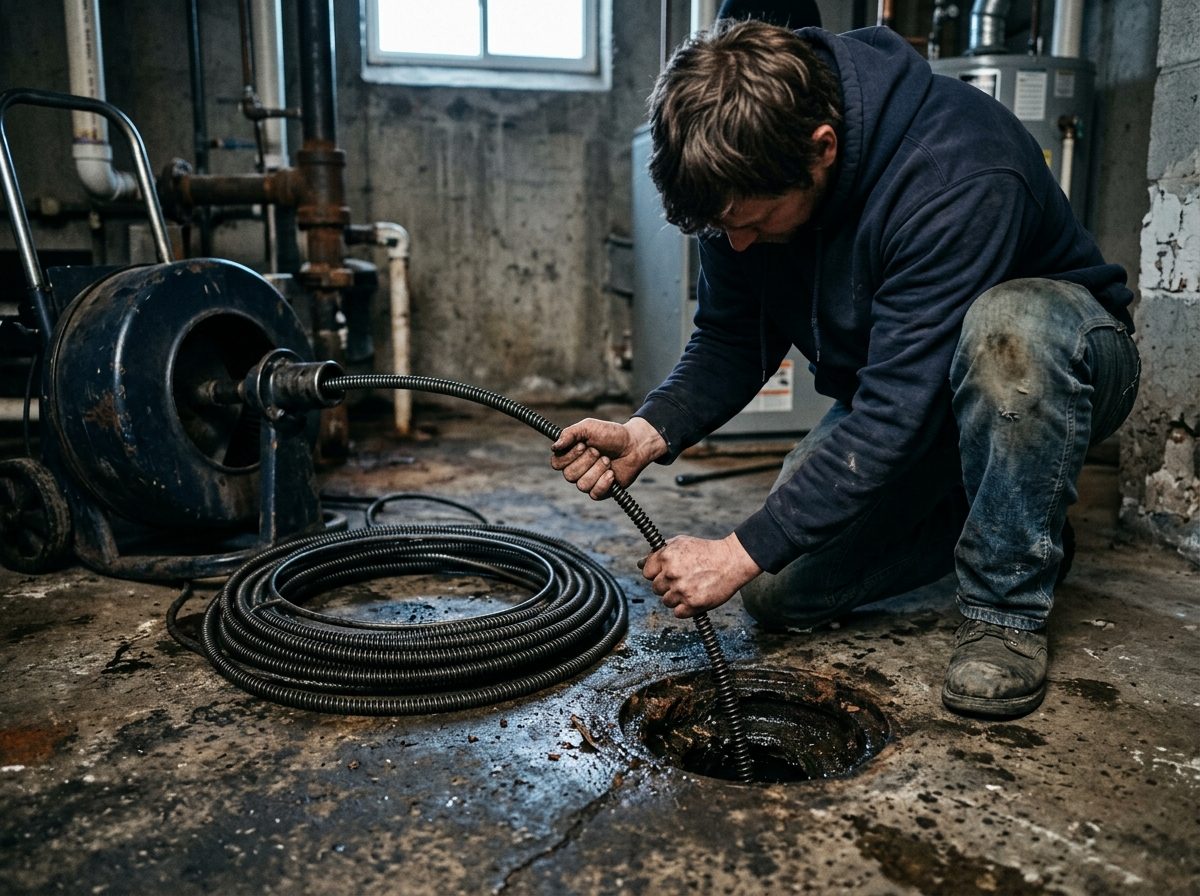
A floor drain works by holding a small amount of water in its trap, and that water is the only thing between the room and the sewer. Unlike a sink trap, nothing refills it in normal use, because nobody runs a floor drain on purpose. So it evaporates — faster in a heated basement in winter than anywhere else — and once it is empty the drain becomes an open vent into the room.
That is the explanation for most recurring basement and laundry-room smells, and it is why they come and go with the seasons rather than steadily. It is also why the smell returns a few weeks after someone cleans the drain: cleaning it does not address the fact that the trap is dry, and a clean dry trap smells exactly like a dirty one.
The remedies are simple and worth knowing in order. Pouring a bucket of water down the drain refills the trap and settles it immediately, which is the test as well as the cure — if the smell goes away for a fortnight and returns, evaporation is the cause and the answer is to do it regularly or fit a trap primer that keeps it topped up automatically. If pouring water down makes no difference at all, the problem is not the trap, and it is worth looking at venting or at the drain itself rather than continuing to treat the symptom.
Two things worth locating
The main shutoff, and the drain cleanout. Knowing where both are turns an emergency into a manageable job, and in a rental it is worth telling the tenant as well as knowing yourself.
Nearby communities
Evans sits immediately south of Greeley, with La Salle, Milliken, Kersey and Platteville close by.
Evans, Colorado
Evans plumbing questions answered
In several ways, yes. Supply lines are often routed under the floor within the chassis rather than through interior walls, which changes both freeze exposure and access, and skirting condition matters a great deal in winter. Fixtures and fittings can also be sized differently. It is worth saying up front so the right parts come with the visit.
Clear the main drain rather than waiting for a blockage, replace washer hoses older than a few years, renew worn toilet internals, and check the water heater’s age and condition. That short list removes most of the calls that otherwise arrive at midnight, and doing it in an empty property is cheaper and inconveniences nobody.
Sediment. In hard water a layer builds across the tank floor, insulating the burner from the water and slowing recovery, so the same tank delivers less usable hot water. An annual drain restores much of it. If the tank is also showing rust at the fittings or damp underneath, plan a replacement instead.
It is a sacrificial rod inside the heater that corrodes in place of the tank lining. In mineral-heavy water it can be consumed within a few years, and once it is gone the tank starts corroding instead. Checking and replacing it is inexpensive and it is the most overlooked way to extend a heater’s life here.
That is usually local — a trap, a branch line, or a venting issue if you also hear gurgling. It does not point at the main. Clearing the branch normally resolves it, and if it recurs quickly the question becomes whether the pipe wall has built up or whether the fixture is inadequately vented.
It is worth discussing if you have fixtures below street level and especially if your street has surcharged during heavy rain before. The valve is a one-way gate that prevents the public main pushing back into the building. It must remain accessible for inspection, and the line should be checked first so a fault is not sealed in behind it.
Same-day is normal for urgent problems, since Greeley is immediately north and well served. Out toward the smaller farm towns response depends more on who is already working that way. For non-urgent work a booked slot usually happens sooner in practice than waiting for an emergency gap.
Something is jamming the impeller rather than the motor being dead. Most units have a hex socket underneath so it can be freed by hand with the power off at the switch. If it trips its reset repeatedly afterwards, or leaks from the body rather than a connection, replacement is the sensible answer. Never reach into the chamber.
Almost certainly a dry floor drain trap. The small amount of water sealing it evaporates faster in a heated basement in winter, and once it is gone the drain is an open route into the room. Pour a bucket of water down it — if the smell clears, that was it. A trap primer, or doing it on a schedule, keeps it sealed.
Weld County, any hour
Evans, Greeley, La Salle, Milliken and the farm towns nearby.
(833) 621-2904 — answered 24/7, statewide.