Plumber in Platteville, CO — 24/7 by phone
Home / Areas / Northern Colorado / Platteville
Platteville is a small town in working farm country on the South Platte, and plumbing here is a property matter rather than a house matter. On a typical holding the distance between the furthest fixture and the pump is greater than the distance across the whole town.
Farm country with a small town in it
Inside town the housing is modest and the plumbing straightforward — drains, heaters, fixtures, and supply pipe whose age varies street by street. Outside it, a property may have a house, a shop, a barn, stock water and two or three hydrants, all fed through several hundred feet of buried line.
The information that shapes a visit is therefore scope rather than symptom: how many buildings take water, what the source is, and how far the furthest fixture sits from the pump. Those three answers decide what parts and equipment are needed.
Several buildings taking water? Say how many when you call.
Ask about a property visit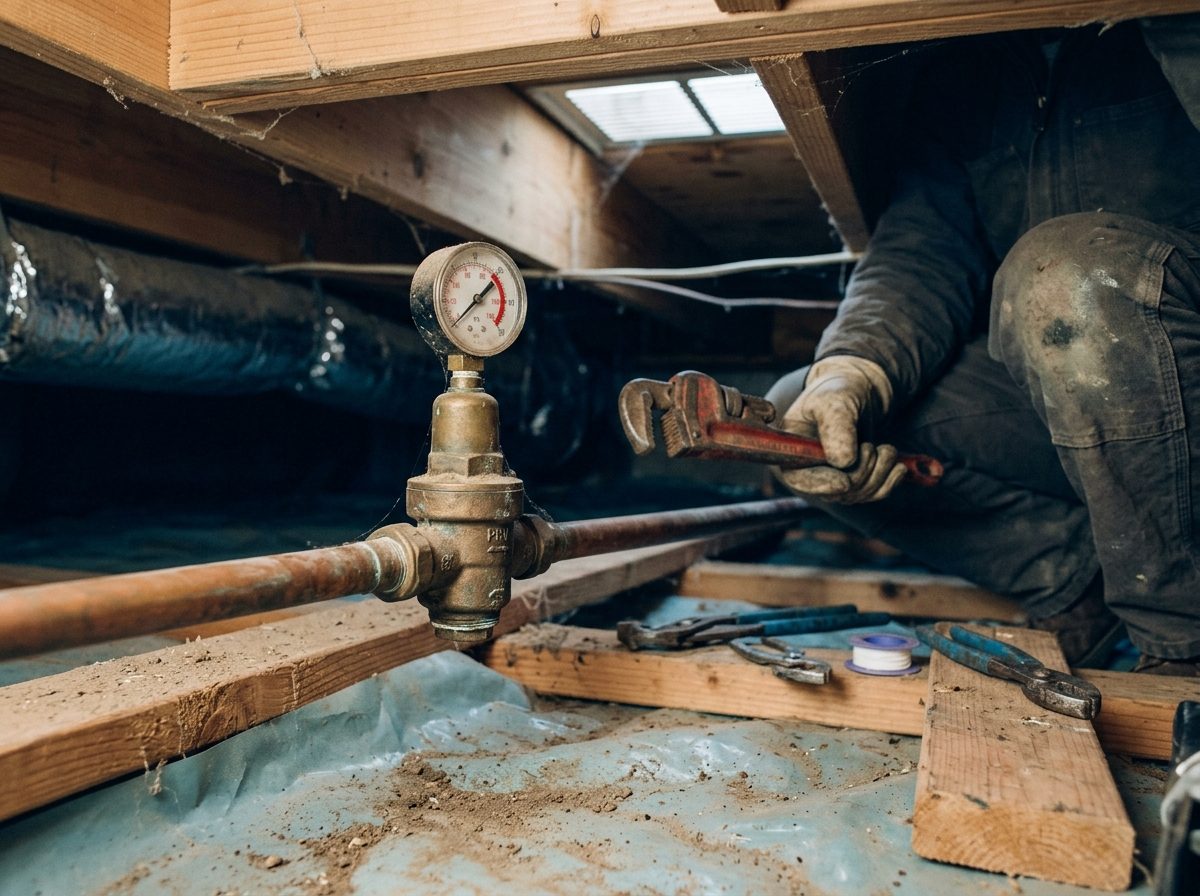
Buried runs and invisible leaks
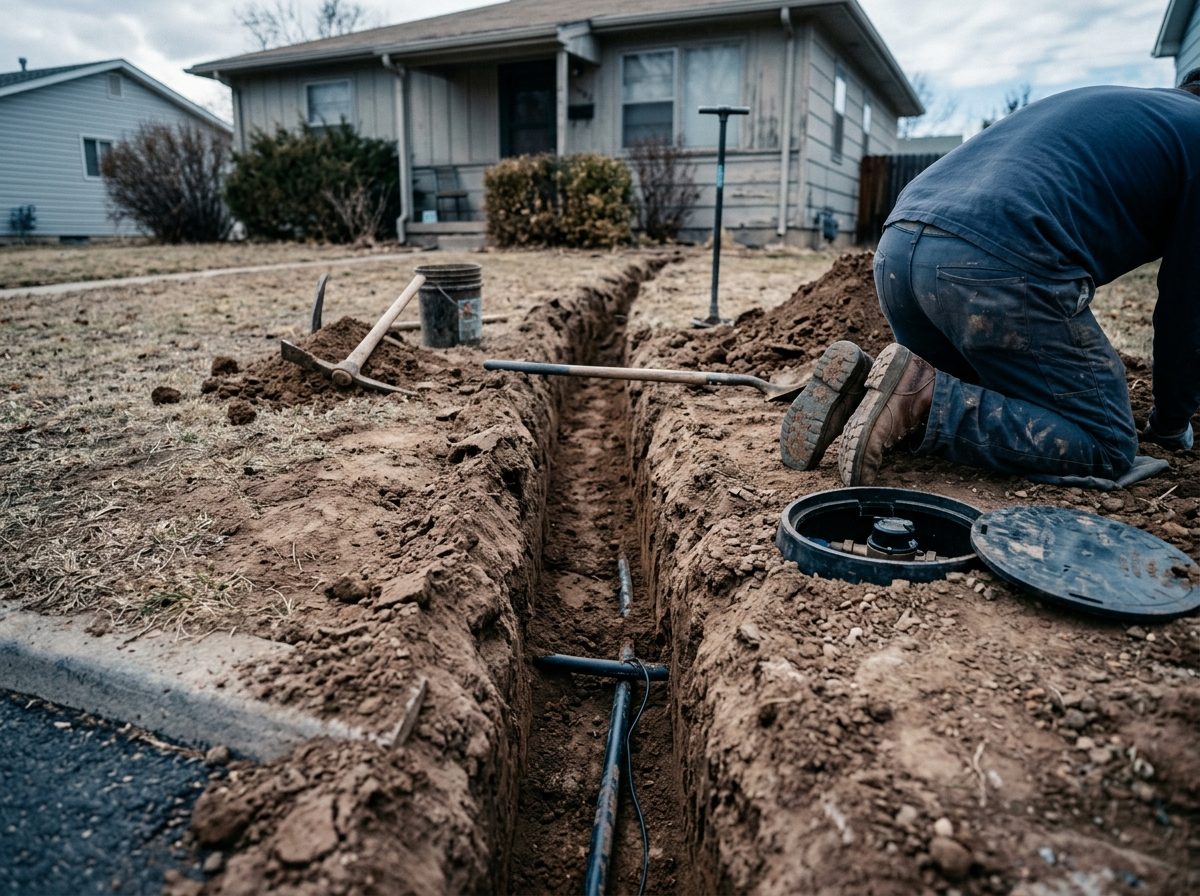
The characteristic problem of a large property is a leak nobody sees. There is no ceiling to stain and no floor to soak, so the only signs are indirect: pressure that has slowly fallen, ground that stays damp or unusually green, a pump running more often than it used to, or water use that climbed with no change in habits.
Confirming it is straightforward. With everything shut off, watch the pressure gauge or the meter for an hour — movement means water is leaving the system. Where there are isolation valves between structures, closing them one at a time narrows which run is losing water before anyone starts digging, and on a property this size that is worth real money.
Wells, tanks and the three faults
Three things account for most well calls. A pressure tank that has lost its air charge, so the pump starts and stops every few seconds and wears itself out. A pressure switch that has stopped making contact. And a pump at the end of its working life.
All three present as poor pressure or nothing at the tap, so three answers narrow it before anyone drives out: what the gauge reads, whether the pump can be heard running, and whether the breaker has tripped. Water quality is worth testing too — composition varies property to property, and out here nobody else is testing it for you.
Nothing at the tap? Gauge reading, pump noise, breaker — those three narrow it fast.
Ask about a well systemDeep frost and hydrants
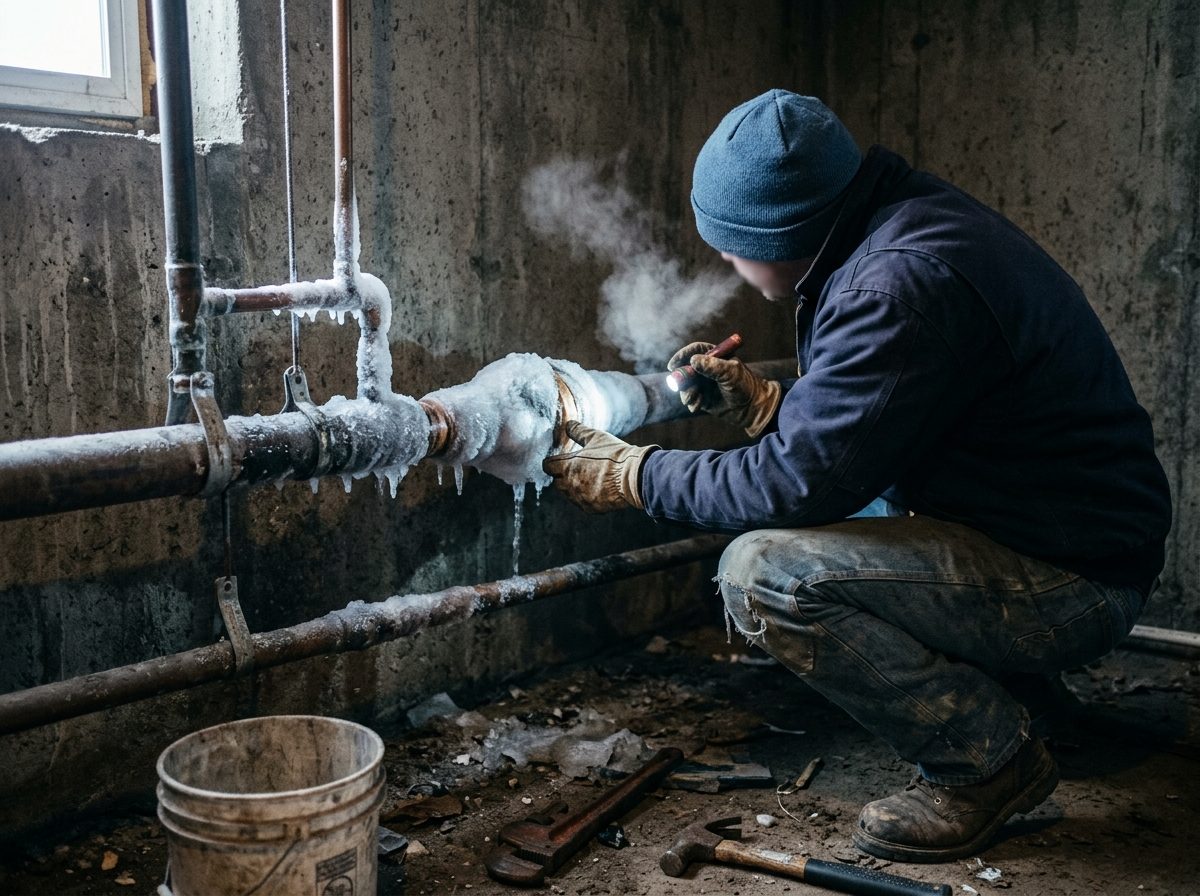
Frost runs deeper here than in the sheltered metro and there is little protection from wind. Buried lines, hydrants and stock tank feeds all sit closer to the frost line than an equivalent installation further south, and anything above ground is losing heat continuously.
Frost-free hydrants are the classic failure. They are built to drain their standpipe below the frost line whenever they close, and one that weeps has usually stopped draining. Water standing in that pipe through a hard freeze splits it underground, and the repair becomes excavation in frozen ground rather than a fitting swap. Test them in autumn, every year.
Hydrant weeping or stiff? Deal with it before the freeze, not after it splits.
Ask about a yard hydrantWhere your cleanout is, and why it matters
A sewer cleanout is an access point into the lateral, capped at ground level or just inside the building, and it exists so the line can be reached without opening anything. It is the single most useful piece of infrastructure on a property during a backup, and a great many owners have no idea where theirs is — or whether they have one at all.
The difference it makes is practical. With an accessible cleanout, clearing a blocked lateral is a direct job from a known point. Without one, access has to be gained through a roof vent, by pulling a toilet, or by locating and excavating the line — which is slower, more disruptive and more expensive, and all of it happens while the house cannot use its drains. On an older property the cleanout sometimes exists but has been buried under a patio, a flowerbed or a layer of gravel added since, which amounts to the same thing.
So the useful work is finding it while nothing is wrong. Look near where the line leaves the building, typically on the side the street is on, for a capped pipe at or just below ground level. Clear what has grown or been laid over it, confirm the cap can be removed, and mark the position so it can be found under snow. Where a property genuinely has no cleanout, adding one is worth considering as planned work — it is a modest job done deliberately and an expensive complication discovered during a backup.
Autumn walk-round
Every hydrant, hose bib, stock tank and pump house, once, before the first hard freeze. Anything that drips or sticks now becomes digging later, and it all fits into one visit.
Nearby communities
Platteville sits on the South Platte in Weld County, with Gilcrest, La Salle, Fort Lupton and Milliken nearby.
Platteville, Colorado
Platteville plumbing questions answered
First confirm there is one: with everything shut off, watch the pressure gauge or meter for an hour. Movement means water is leaving the system. If there are isolation valves between buildings, closing them one at a time narrows which run is losing water, which saves a great deal of excavation.
That suggests either a leak on the system or a pressure tank losing its air charge. Checking the tank is quick and inexpensive. If the tank is sound, the next step is isolating sections to work out where water is going, because a buried leak can run for weeks with no visible sign.
Everything from the pressure tank into the house is ordinary plumbing. The pump, drop pipe and wiring down the casing are well-system work and need specific equipment to pull. Saying what the gauge reads and whether the pump runs usually decides which trade is sent.
It is a poor candidate for waiting. The hydrant drains its standpipe below the frost line each time it closes, and one that leaks often no longer drains. Water left in that pipe through a hard freeze splits it below ground, and here that means digging in deeply frozen soil.
Yes. Out here nobody else is testing it for you, and composition varies property to property in a way municipal supply does not. Hardness and iron affect appliances; other results affect the people drinking it. Test before buying treatment so the equipment matches the actual problem.
It depends who is already working this direction, and you will be told plainly. For urgent problems the advice on the phone matters as much as arrival time. For routine work, a booked visit is usually faster in practice than waiting for an emergency opening.
That is how work out here should be scheduled. Give a full list when you call — house, shop, barn, hydrants, tanks — so the right parts come on the truck. A second trip for one fitting is the expensive part of rural plumbing.
Three to five years for most households, sooner where the tank is small or the household is large. Every drain slowing at once rather than one fixture is the classic signal, along with unusually lush growth over the field or a backup after a busy weekend.
It is a capped access point into your sewer lateral, usually near where the line leaves the building on the street side, at or just below ground level. With one, clearing a blockage is direct; without one, access means the roof vent, pulling a toilet, or digging. Find it and clear anything laid over it before you need it.
Usually, yes, and it is worth doing as planned work rather than discovering the lack of one mid-backup. It is a modest job when scheduled — locating the lateral, opening a small access and fitting a proper capped riser — and it permanently changes what every future drain problem on the property costs to deal with.
Weld County farm country
Platteville, Gilcrest, La Salle, Fort Lupton and the surrounding farms.
(833) 621-2904 — answered 24/7, statewide.