Plumber in Fort Lupton, CO — 24/7 by phone
Home / Areas / Northern Colorado / Fort Lupton
Fort Lupton is a farm town with a functioning grid — town water and sewer in the centre, and working agricultural property immediately outside it. Those two conditions produce genuinely different plumbing calls from the same phone number, and the first useful question is which one you are.
A farm town with a proper grid
In town, the housing is older on the whole and the plumbing questions are the standard ones for a long-settled place: supply pipe that has narrowed with age in the oldest streets, drain lines that have roughened, sewer laterals of the same era as the street, and heaters that fail on their own schedule.
Outside town, plumbing stops being a house system. A working property may have several hundred feet of buried line, a shop and a barn with their own supply, stock water, and two or three frost-free hydrants — all fed either from town service or from a private well.
Property with outbuildings? Say how many structures take water when you call.
Ask about a property visit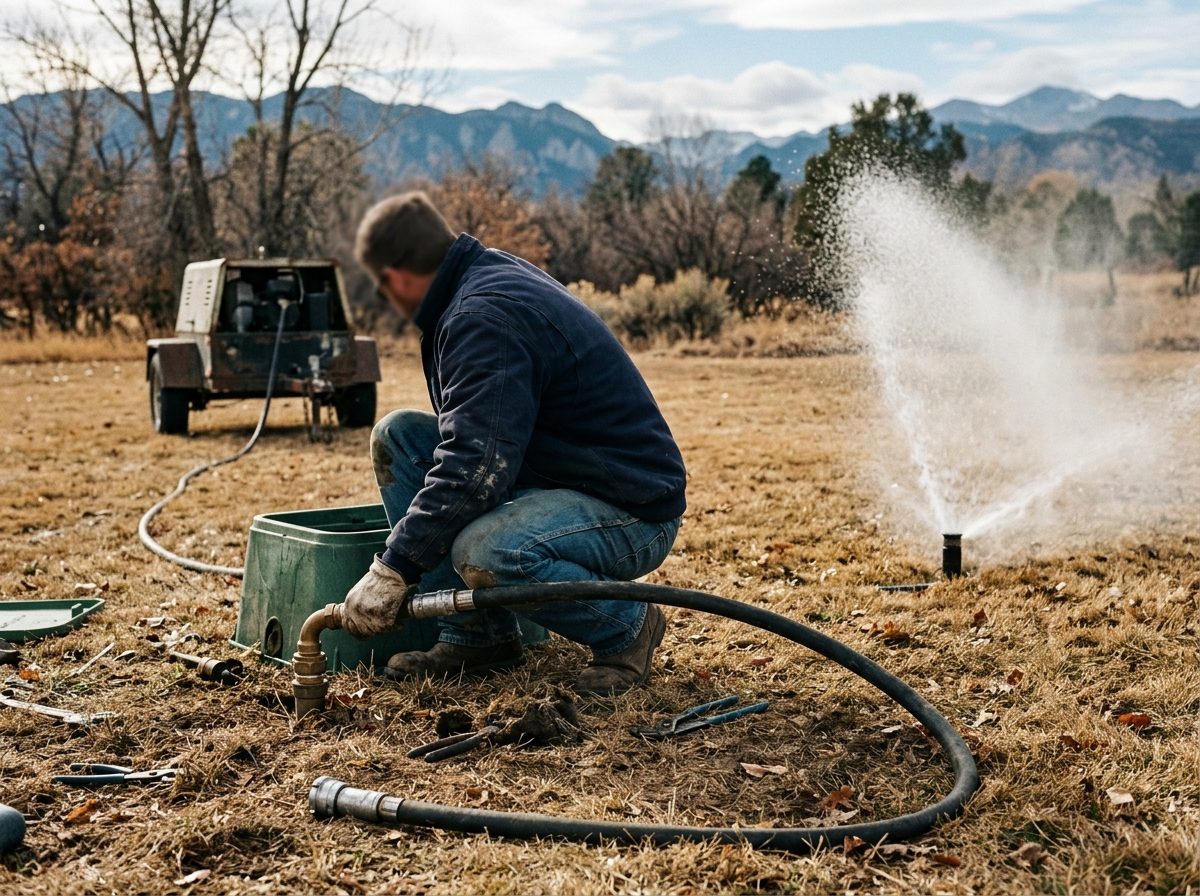
Farm plumbing is property plumbing
The characteristic problems out here are about distance and exposure rather than about anything exotic. Long buried runs develop leaks that go unnoticed for weeks, because there is no ceiling to stain — the signs are pressure that has slowly dropped, ground that stays damp or unusually green, or water use that climbed with no change in habits.
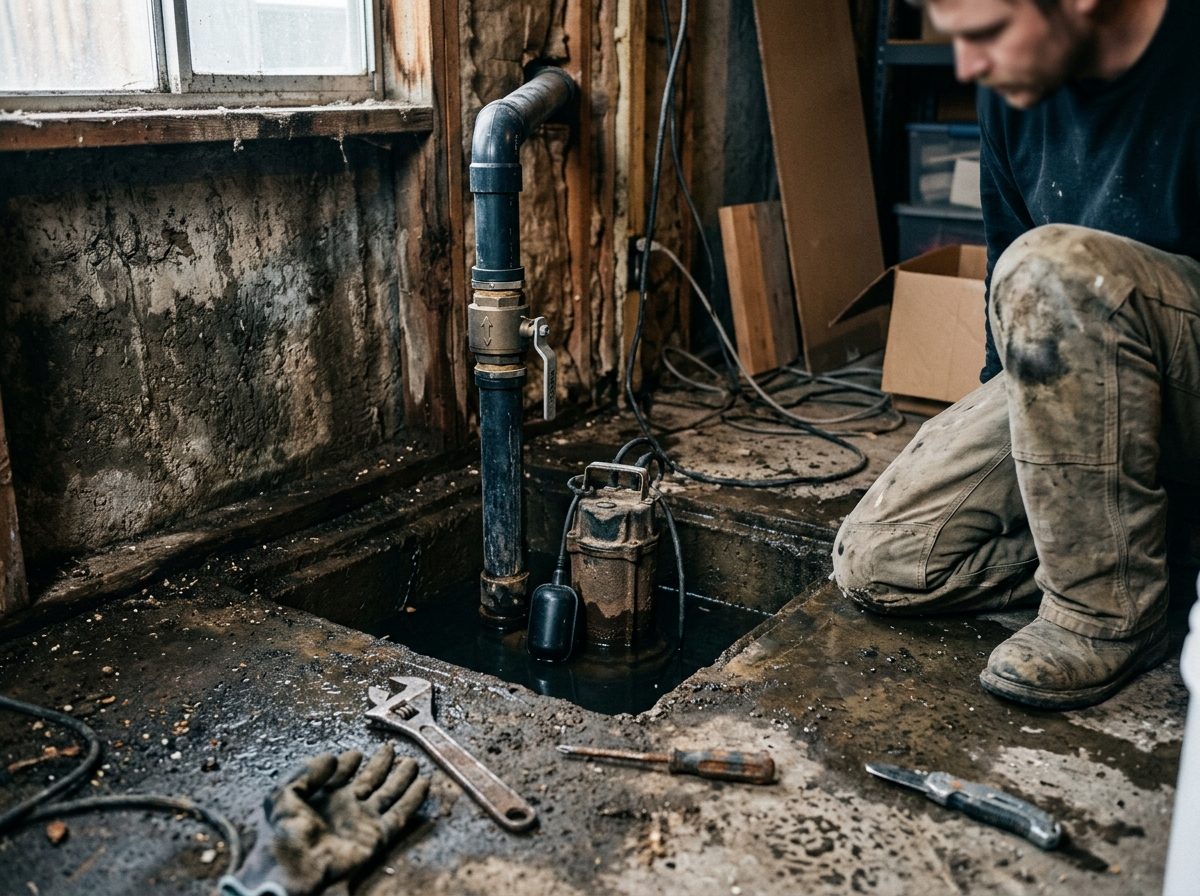
Stock tanks bring float valves that stick and overflow. Hydrants weep or refuse to shut off. And where a property is on a well, the failure list narrows to three things: a pressure tank that has lost its air charge and is cycling the pump to death, a pressure switch that has stopped making contact, or a pump at the end of its working life.
Hard water on town supply and wells
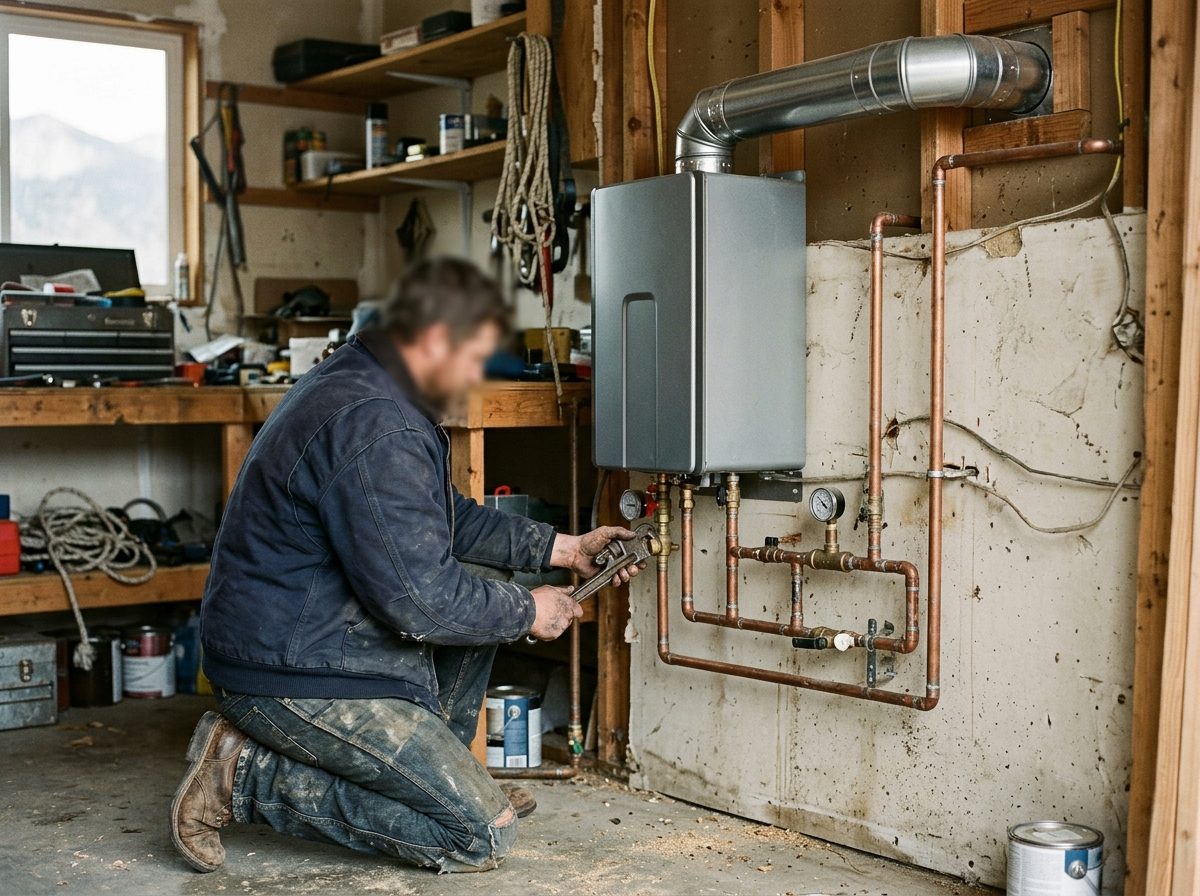
Mineral content is high whichever source you are on, and the water heater absorbs most of it. Sediment settles across the tank floor so the burner heats through scale rather than steel; electric elements scale directly and fail early; recovery slows until a household that never ran out of hot water starts running out.
Draining the tank annually is the cheapest life extension available. On a well, test the water as well — composition varies property to property in a way municipal supply does not, and hardness, iron and other results call for different equipment. Buying treatment before testing is how households end up with the wrong system and the same complaint.
On a well and unsure about the water? Test before buying any treatment.
Ask about a water testFrost depth and buried lines
Frost runs deeper here than in the sheltered metro, and there is little protection from wind. Buried lines, hydrants and stock tank feeds all sit closer to the frost line than an equivalent installation further south, and anything above ground loses heat continuously.
Frost-free hydrants deserve specific attention. They are built to drain their standpipe below the frost line whenever they close, and one that weeps often no longer drains. Water standing in that pipe through a hard freeze splits it underground, and the repair becomes excavation in frozen ground rather than a fitting swap.
Hydrant weeping or stiff? Deal with it before the freeze, not after it splits.
Ask about a yard hydrantPropane and natural gas are not interchangeable
Properties around the edge of town run on propane where the gas main does not reach, and the two fuels are close enough in everyday use that people assume appliances move between them freely. They do not. Propane carries considerably more energy per unit volume and is delivered at a different pressure, so an appliance set up for one will not burn correctly on the other without being converted.
Running an appliance on the wrong fuel is not a performance question, it is a combustion question. Too much gas for the air available produces incomplete combustion, soot, and carbon monoxide — and the appliance may appear to work throughout. That is the reason conversion is done with the manufacturer’s kit for that specific model rather than by adjusting something until the flame looks right, and the reason it is inspected work.
Two situations bring this up repeatedly. A second-hand appliance bought for a property whose fuel differs from wherever it came from, which is common enough to be worth warning about. And a property that changes from propane to a mains connection, where every gas appliance in the building needs addressing rather than just the one being installed. In both cases the honest answer sometimes is that conversion costs more than the appliance is worth, which is better to hear before it is installed than after.
Autumn walk-round
Every hydrant, hose bib, stock tank and pump house, once, before the first hard freeze. Anything that drips or sticks now becomes digging later, and it all fits into one scheduled visit.
Nearby communities
Fort Lupton sits in southern Weld County, with Platteville, Dacono, Hudson, Brighton and Keenesburg nearby.
Fort Lupton, Colorado
Fort Lupton plumbing questions answered
It is a poor candidate for waiting. The hydrant drains its standpipe below the frost line each time it closes, and one that leaks often no longer drains properly. Water left standing in that pipe through a hard freeze splits it underground, converting a modest repair into digging in frozen ground.
On a property with long buried runs, an underground leak is a real possibility and it can continue for weeks without any visible sign. Watch the meter with everything shut off for an hour; movement means water is leaving the system. If there are isolation valves, closing them one at a time narrows which run is losing water.
It depends where the fault is. Everything from the pressure tank into the house is ordinary plumbing. The pump, drop pipe and wiring down the casing are well-system work and need specific equipment. Saying what the gauge reads and whether the pump runs settles which trade should come.
That is short-cycling, and the usual cause is a pressure tank that has lost its air charge. The tank should hold a cushion so the pump runs once every few minutes. Left alone, short-cycling wears a pump out quickly, so it is worth fixing promptly rather than tolerating.
Yes, and out here nobody else is doing it for you. Composition varies property to property, so hardness, iron and other results differ from a neighbour’s. Test before buying treatment equipment, so the equipment addresses the problem you actually have rather than the one in a brochure.
In town, same-day is normal for urgent problems. On outlying properties it depends more on who is already working that direction, and a booked visit is often faster in practice than waiting for an emergency gap. You will get an honest window either way.
That is the sensible approach out here. Give a full list when you call — house, shop, barn, hydrants, tanks — so the right parts come on the truck. A second trip for a fitting that could have been on the first is the expensive part of rural plumbing.
Three to five years for most households, sooner where the tank is small or the household large. Every drain slowing at once rather than one fixture is the classic signal that the tank rather than the plumbing needs attention, along with unusually green growth over the field.
Not without converting it properly, using the manufacturer’s kit for that model. The two fuels differ in energy content and supply pressure, and an unconverted appliance burns incorrectly — producing soot and carbon monoxide while often appearing to work normally. It is inspected work for that reason, and on a second-hand appliance conversion sometimes costs more than the unit is worth.
Treat all of them as serious. Leave the building, do not operate switches or anything that could spark, and call from outside once you are clear. A faint intermittent smell near an appliance still warrants a proper check rather than being watched — the reason to be strict is that the cases that turn out badly are indistinguishable at the start from the ones that do not.
Southern Weld County
Fort Lupton, Platteville, Hudson, Dacono and the surrounding farms.
(833) 621-2904 — answered 24/7, statewide.